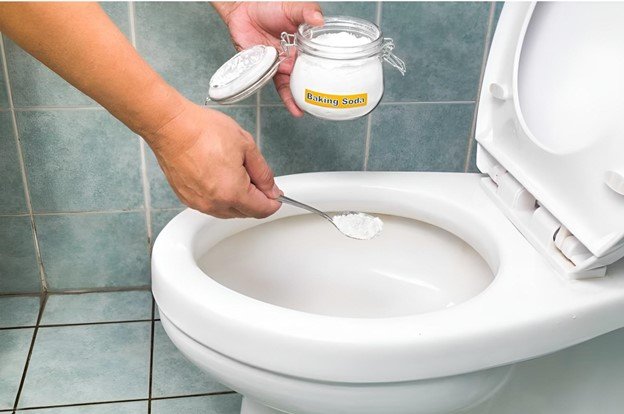
Baking soda unclogs a toilet by reacting with vinegar to create pressure and break down organic buildup. Add 1 cup baking soda, 2 cups vinegar, wait 10–15 minutes, then flush with hot water. This works best for light to moderate clogs, not solid blockages. This guide explains the effectiveness, myths and challenges surrounding the idea of ‘how to unclog a toilet with baking soda’.
How to Unclog a Toilet with Baking Soda Step-by-Step
Add baking soda and vinegar, wait 10–15 minutes, then flush with hot water to clear light clogs
Baking soda is one of the safest and most accessible ways to unclog a toilet without using harsh chemicals. The process relies on a controlled chemical reaction that produces carbon dioxide gas, which agitates the clog and helps break apart organic material. Unlike commercial drain cleaners, this method is gentle on pipes and ideal for households that want an eco-friendly solution.
To get the best results, the steps must be followed in the correct sequence. Skipping steps or rushing the reaction often leads to failure, especially with moderate clogs. The goal is to allow enough time for the reaction to penetrate the blockage before flushing.
Step-by-step method:
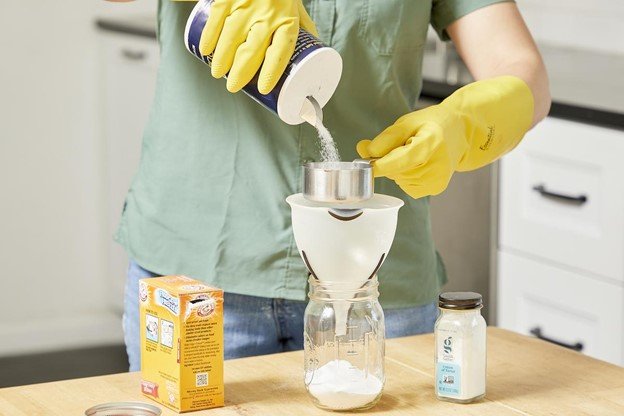
- Pour 1 cup baking soda directly into the toilet bowl
- Slowly add 2 cups white vinegar
- Let the mixture fizz and react for 10–15 minutes
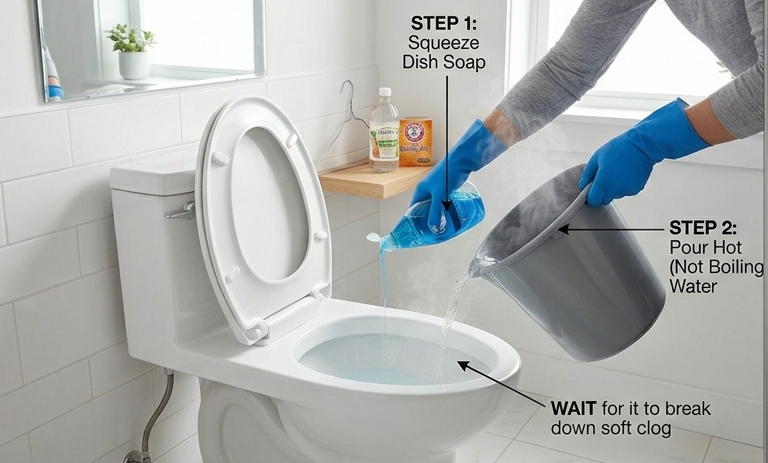
- Carefully pour hot (not boiling) water into the bowl
- Wait another 5 minutes, then flush
Pro tips for better results:
- Use warm water first if the bowl is cold
- Repeat the process once for moderate clogs
- Avoid flushing immediately after adding vinegar
What Should You Do Based on Your Situation?
Choose the method based on clog severity and water level.
| Situation | Action |
| Slow draining toilet | Use baking soda method |
| Partial clog | Repeat baking soda + hot water |
| Fully blocked | Use plunger immediately |
| Water rising | DO NOT add vinegar, use plunger |
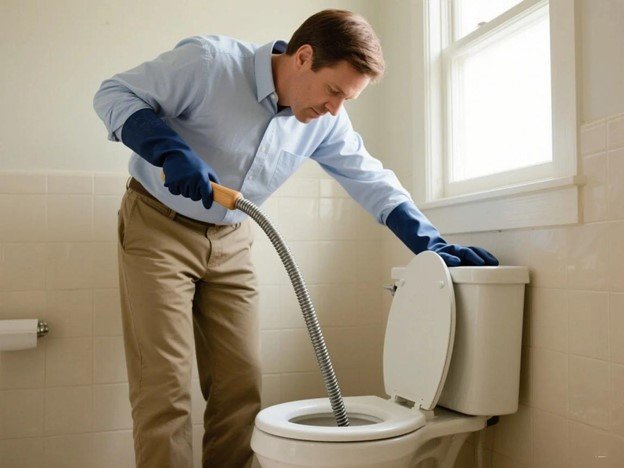
| Object stuck | Use auger, not baking soda |
Why Does Baking Soda Unclog a Toilet?
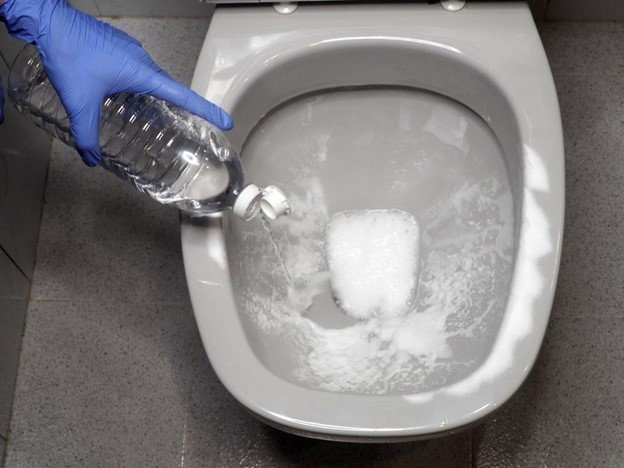
It creates a fizzing reaction that loosens and breaks down organic clogs.
The effectiveness of baking soda comes from its chemical interaction with vinegar. Baking soda is a mild alkaline substance, while vinegar is acidic. When combined, they produce carbon dioxide gas, which creates a bubbling effect. This bubbling action helps dislodge debris, loosen compacted waste, and break apart grease or soap residue inside the pipe.
However, the reaction alone is not enough. The addition of hot water plays a critical role by softening grease and helping flush away loosened particles. This combination of chemical agitation and thermal breakdown makes the method effective for certain types of clogs but not all.
What actually happens inside the pipe:
- CO₂ bubbles push against the clog
- Foam expands into tight spaces
- Organic matter starts breaking down
- Hot water dissolves grease and residue
Limitations of the reaction:
- Not strong enough for solid blockages
- Cannot move heavy or lodged objects
- Less effective in completely dry pipes
What Should You Do Based on Your Toilet Clog Situation? (Step-by-Step Decision System)
Choose the correct unclogging method based on water level, clog type, and severity to avoid making the problem worse.
A structured decision system turns your approach from guesswork into precision. When a toilet clogs, most users react without assessing the situation, which leads to common mistakes like adding more liquid to an already full bowl or relying on baking soda for a solid blockage. This section removes that uncertainty and gives you a clear, situation-based action plan.
In real scenarios, acting without evaluation increases risk and delays resolution. A rising water level can overflow within seconds, while a dense blockage won’t respond to chemical reactions at all. By matching your exact situation to the correct method, you save time, avoid damage, and improve your chances of fixing the clog on the first attempt.
Follow this decision system:
- Low water + slow drain → use baking soda method
- Normal water + partial clog → repeat baking soda cycle
- High water level → avoid adding liquid, use plunger
- Suspected solid object → skip baking soda, use auger
- No improvement after 2 attempts → switch to mechanical method
Which Clogs Can Baking Soda Fix?
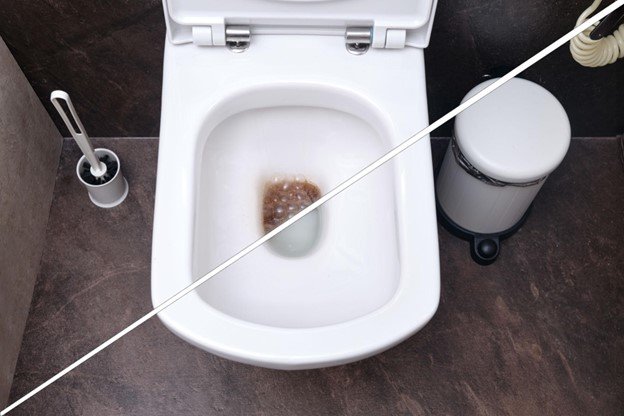
It works best for soft clogs like toilet paper and waste, not solid objects.
Understanding the type of clog is the most important factor in deciding whether baking soda will work. Many homeowners assume this method is universal, but its effectiveness depends entirely on what is causing the blockage. Organic materials respond well to chemical reactions, while solid objects do not.
If your toilet is draining slowly or partially blocked, baking soda is a strong first option. However, if water is not draining at all or the clog is caused by a foreign object, you will need a different approach such as plunging or mechanical removal.
Clog Effectiveness Table
| Clog Type | Effectiveness | Why |
| Toilet paper buildup | High | Easily dissolves |
| Human waste | High | Breaks down naturally |
| Grease or soap | Medium | Needs hot water |
| Hair | Low | Doesn’t dissolve easily |
| Foreign objects | None | No chemical effect |
How to identify your clog type:
- Slow drain → likely organic
- Sudden blockage → possible object
- Gurgling sound → partial clog
- Overflow risk → severe blockage
How Long Does Baking Soda Take to Work?
Most clogs clear within 5–20 minutes depending on severity.
Timing is a critical factor that many people overlook. The reaction between baking soda and vinegar begins immediately, but the actual unclogging process takes time. Rushing the flush is one of the most common reasons this method fails. The longer the solution sits, the deeper it penetrates into the clog.
For best results, allow the mixture to sit undisturbed before adding hot water. In some cases, repeating the process once can significantly improve effectiveness, especially for moderate clogs that need additional breakdown.
Time Expectation System
- Light clog → 5–10 minutes
- Moderate clog → 10–20 minutes
- Repeat cycle → +10 minutes
- Severe clog → unlikely to work
Timing tips:
- Do not flush immediately
- Let foam fully settle
- Use second cycle if needed
How Severe Is Your Toilet Clog? (Clog Severity Classification Guide)
Identifying clog severity helps you choose the right method and avoid wasted effort.
Most users misjudge clog severity, which leads to applying the wrong solution. A slow drain is very different from a full blockage, but many treat them the same. This classification system removes confusion and helps users diagnose their situation instantly.
By mapping visible signs to severity levels, you turn your content into a diagnostic tool. Users don’t need plumbing knowledge. They simply match their situation and follow the correct action, improving success rate and reducing trial and error.
Use this classification system:
- Light → slow draining water → use baking soda
- Moderate → partial blockage → repeat method
- Severe → no drainage → use plunger
- Critical → rising water → act immediately
- Always match severity to the correct method
What Happens Inside the Pipe During This Process? (Process Flow Breakdown)
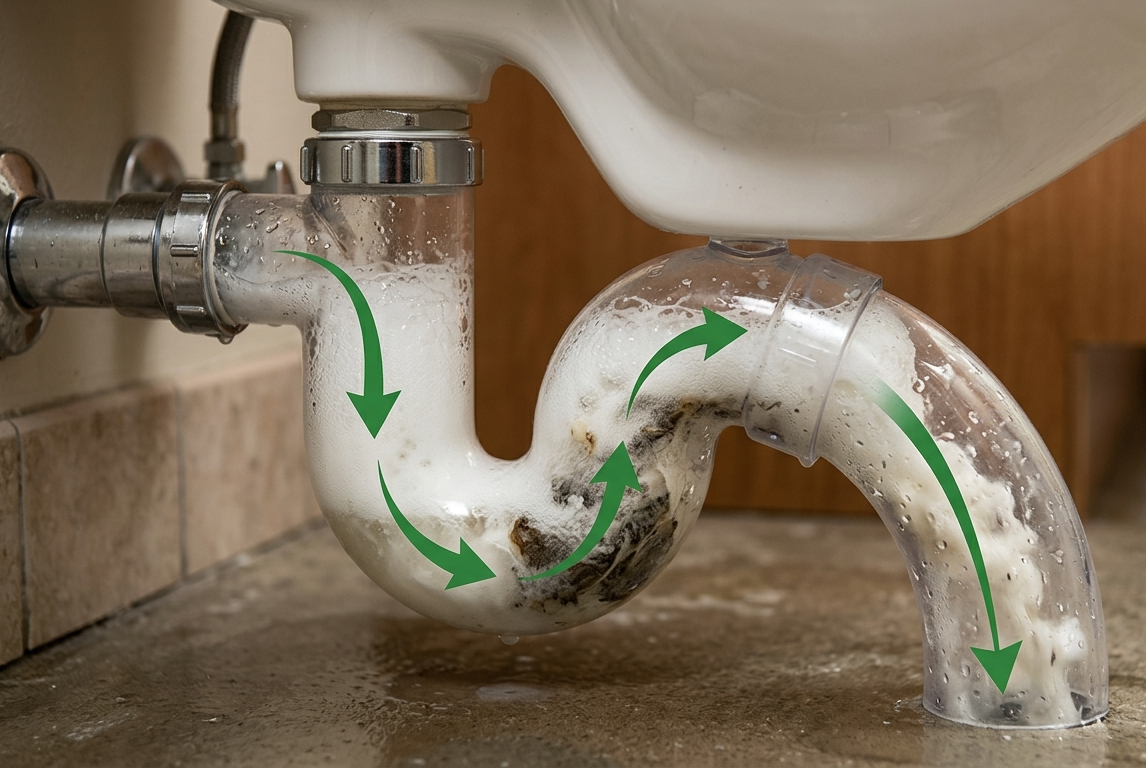
The baking soda creates pressure, loosens debris, and hot water flushes it out.
Understanding the internal process increases confidence and improves execution. When users know what is happening inside the pipe, they are more likely to follow steps correctly and wait the required time instead of rushing the process.
A clear flow also simplifies complex chemistry into an easy-to-follow sequence. Instead of long explanations, users see a logical progression that explains exactly how the clog is removed from start to finish.
Process flow to follow:
- Baking soda enters the pipe
- Vinegar activates chemical reaction
- CO₂ bubbles create pressure
- Debris loosens and breaks apart
- Hot water flushes remaining residue
Is Baking Soda Safe for Toilets and Pipes?
Yes, it is non-corrosive and safe for pipes and septic systems.
One of the biggest advantages of using baking soda is its safety profile. Unlike chemical drain cleaners that contain strong acids or alkalis, baking soda is mild and does not damage pipes, seals, or toilet components. This makes it suitable for regular maintenance as well as emergency unclogging.
For homes with septic systems, this method is especially beneficial because it does not disrupt the natural bacterial balance required for proper waste breakdown. Chemical cleaners, on the other hand, can kill beneficial bacteria and lead to long-term issues.
Why it’s safe:
- Non-toxic and biodegradable
- Does not corrode metal or PVC pipes
- Safe for septic tanks
- No harmful fumes
Safety precautions:
- Avoid boiling water (can crack porcelain)
- Use moderate quantities only
- Do not mix with chemical cleaners
Baking Soda vs Other Methods — Which Works Best?
Baking soda is safer but less powerful than plungers or drain snakes.
Choosing the right unclogging method depends on the severity of the clog and how quickly you need results. Baking soda is ideal for maintenance and mild clogs, while plungers and augers are better for more serious blockages. Chemical cleaners provide fast results but come with safety risks.
A smart approach is to start with baking soda and escalate only if necessary. This minimizes damage risk while still giving you a chance to resolve the issue naturally.
Method Comparison Table
| Method | Strength | Speed | Safety |
| Baking soda + vinegar | Medium | Medium | High |
| Plunger | High | Fast | High |
| Drain snake | Very high | Fast | Medium |
| Chemical cleaner | Very high | Fast | Low |
Decision guide:
- Mild clog → baking soda
- Moderate clog → baking soda + repeat
- Severe clog → plunger or snake
- Emergency → mechanical method
Why Didn’t Baking Soda Work?
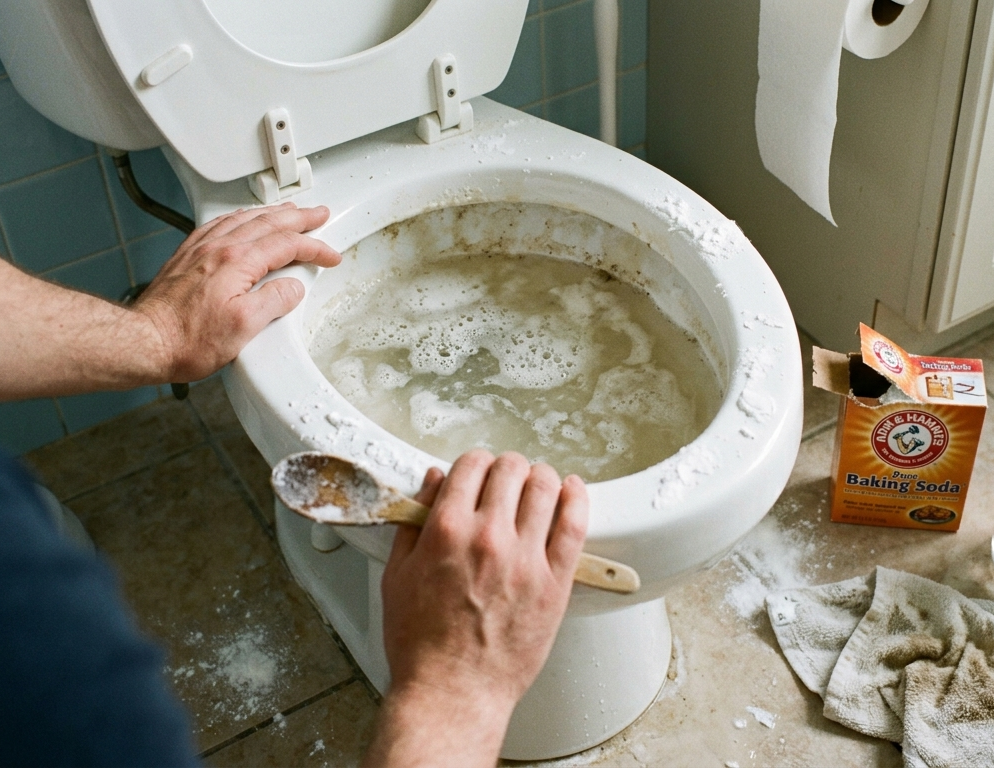
It fails when the clog is solid, deep, or too compact to dissolve.
Failure does not mean the method is ineffective. It simply means the clog exceeds the capability of a chemical reaction. Many users also make mistakes in the process, such as using insufficient quantities or not waiting long enough for the reaction to work.
Before moving to stronger methods, it’s worth diagnosing the issue. In some cases, repeating the process correctly can still solve the problem without needing additional tools.
Common reasons for failure:
- Clog is too compact or solid
- Reaction time was too short
- No hot water used
- Incorrect ratio of ingredients
What to do next:
- Repeat the process once
- Use a plunger after reaction
- Switch to mechanical tools
When Should You NOT Use Baking Soda?
Avoid it when the toilet is fully blocked or at risk of overflowing.
There are situations where using baking soda can make things worse instead of better. If the water level in the toilet is already high, adding more liquid can cause overflow. Similarly, if a solid object is blocking the pipe, chemical methods will have no effect.
Recognizing these situations early helps prevent damage and saves time. In such cases, it is better to move directly to mechanical solutions rather than relying on home remedies.
Avoid baking soda if:
- Water level is near overflow
- Object is visibly stuck
- No drainage at all
- Multiple failed attempts
Better alternatives:
- Use a plunger immediately
- Try a toilet auger
- Call a plumber if needed
Can This Method Prevent Future Toilet Clogs? (Prevention and Maintenance Guide)
Baking soda helps reduce buildup but cannot prevent all types of toilet clogs.
A prevention section adds long-term value and separates your content from competitors. Instead of only solving the current problem, you help users avoid future issues. This increases engagement and positions your content as a complete solution.
This also shifts your article from reactive to proactive. Users trust content that not only fixes problems but also helps maintain results over time. It builds authority and encourages repeat visits.
Prevention strategy to include:
- Use baking soda monthly for maintenance
- Help reduce organic buildup and odors
- Does not prevent solid object blockages
- Avoid flushing non-dissolvable items
- Use additional methods for deeper cleaning
FAQ SECTION
Does baking soda unclog a completely blocked toilet?
No, it works only for light to moderate clogs, not fully blocked toilets.
What happens if you flush too early?
The reaction won’t complete, reducing effectiveness and leaving the clog intact.
Can you use baking soda without vinegar?
It works less effectively because the chemical reaction is missing.
Is vinegar necessary for unclogging?
Yes, it creates the fizzing reaction that breaks down the clog.
Can this method damage old pipes?
No, it is non-corrosive and safe for all pipe types.
How many times can you repeat the process?
Maximum two attempts before switching to another method.
Why does the clog come back after cleaning?
Partial clearing or buildup deeper in the pipe causes recurring clogs.
Can baking soda fix recurring clogs?
It helps temporarily but doesn’t solve underlying issues.
Is it safe for septic systems?
Yes, it does not harm beneficial bacteria.
What should you do if water starts rising?
Stop immediately and use a plunger to prevent overflow.