A clogged garbage disposal can be fixed by turning off power, identifying whether the issue is a clog, jam, or electrical fault, clearing blockages, manually rotating the motor using an Allen wrench, and resetting the unit. The correct fix depends on accurate diagnosis, not guesswork. This article provides an in-depth guide on how to fix a clogged garbage disposal, with all its various ways, techniques and technical know-how on how to execute them effortlessly.
Garbage disposal issues often appear similar but have different causes. Many homeowners assume a clog when the real issue is a jammed impeller or a tripped safety reset. This guide from Homeaholic explains each scenario in detail so you can fix the problem safely, quickly, and correctly without damaging the unit.
How Garbage Disposal Works (And Why It Gets Clogged)
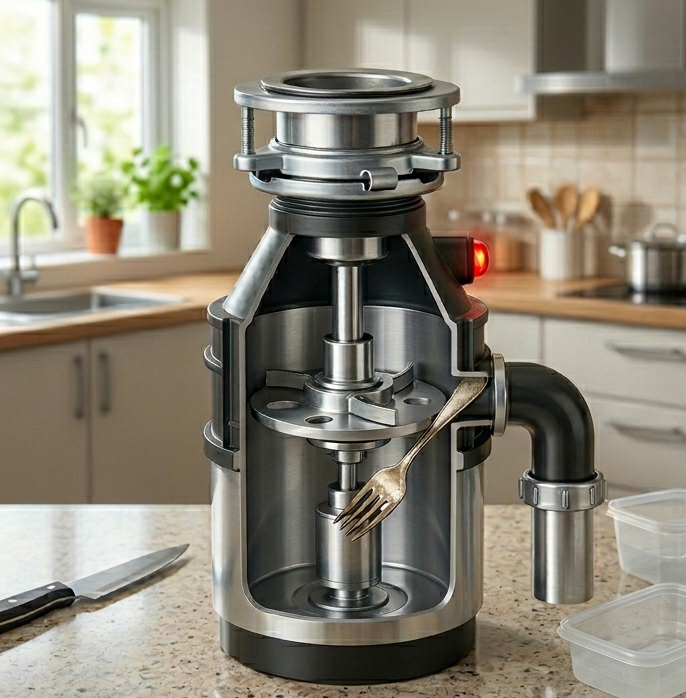
Garbage disposal is not a blender. It does not use sharp blades. Instead, it uses rotating impellers mounted on a spinning plate to push food waste against a grinding ring.
Internal Components Explained:
• Impellers: Push waste outward using centrifugal force
• Grinding Ring: Breaks food into small particles
• Motor: Powers rotation
• Drain Outlet: Flushes waste into pipes
Why Clogs Happen Internally:
Clogs occur when:
- food is not broken down completely
- grease coats internal surfaces
- waste accumulates faster than water can flush
Mechanical Insight:
If waste cannot exit quickly, it builds up inside the chamber or pipe, creating resistance that leads to clogs or jams.
What Causes a Garbage Disposal to Clog?
Garbage disposals clog when waste accumulates faster than it can be broken down and flushed through the drain system. The grinding mechanism is designed for soft food particles, not heavy or sticky materials that restrict flow.
Common Causes:
- Grease and oil buildup that solidifies inside pipes
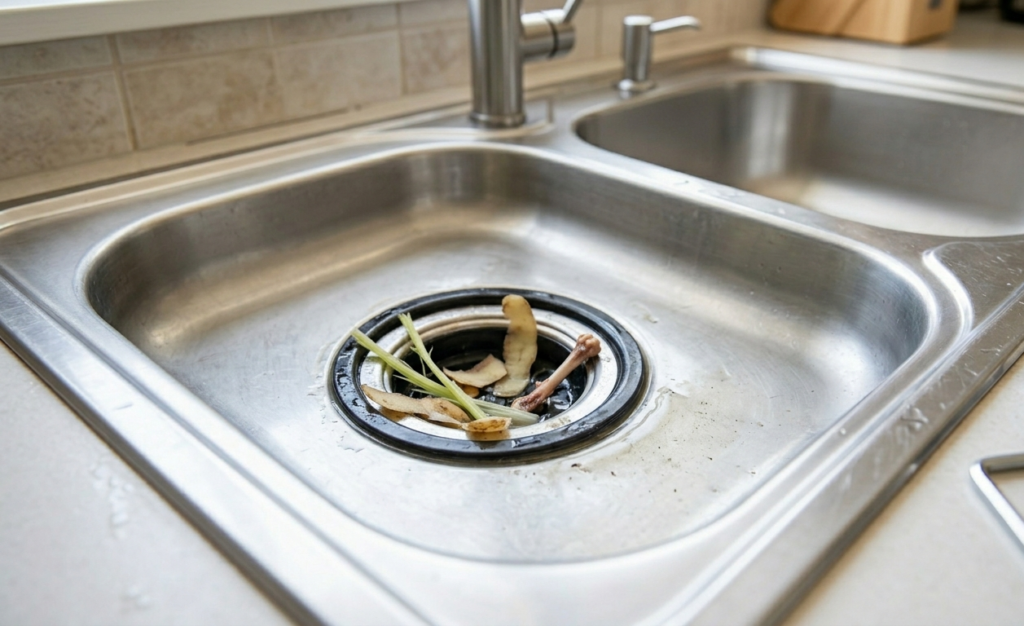
- Fibrous foods such as celery and corn husks that wrap around components
- Starchy foods like rice and pasta that expand with water
- Large food chunks that overload the grinding chamber
- Foreign objects such as utensils or bones
Deeper Insight:
Grease is the leading cause globally because it sticks to pipe walls and traps other debris. Over time, this forms a thick blockage that restricts water flow and leads to repeated clogs. Understanding the cause helps prevent recurrence rather than just treating symptoms.
Types of Garbage Disposal Clogs (Light, Moderate, Severe)
Not all clogs are the same. Understanding severity helps choose the correct solution.
Light Clogs:
- slow draining
- minor food buildup
- easy to fix with flushing or plunging
Moderate Clogs:
- water backup
- partial blockage
- requires P-trap cleaning or manual removal
Severe Clogs:
- complete blockage
- disposal not functioning
- may require disassembly or professional help
Key Insight:
Using a light fix on a severe clog often makes the problem worse by pushing debris deeper into pipes.
How Do You Identify a Clog vs a Jam?
Correct diagnosis is the most important step in fixing a garbage disposal. A clog and a jam require completely different approaches, and using the wrong method can worsen the problem.
Clog (Drain Issue):
- Water drains slowly or backs up
- Disposal may still run normally
- No unusual mechanical noise
Jam (Motor Issue):
- Disposal hums but does not spin
- Grinding sound is absent
- Motor struggles or stops
Advanced Diagnosis Tip:
If water stands in the sink, the issue is usually in the drain system. If the disposal hums without movement, the impeller is stuck. Identifying this difference ensures you apply the correct fix immediately.
Garbage Disposal Troubleshooting Flow (Decision Tree)
Use this system to diagnose issues quickly.
Step 1: Turn On Disposal
- No sound → electrical issue
- Humming → jam
- Normal sound but water backup → clog
Step 2: Check Water Flow
- Slow drain → partial clog
- No drain → full blockage
Step 3: Apply Correct Fix
| Symptom | Cause | Action |
| No power | Electrical | Reset |
| Humming | Jam | Allen wrench |
| Slow drain | Clog | Plunger |
| Full blockage | Pipe clog | Clean P-trap |
Insight:
This structured approach prevents unnecessary repairs and reduces risk of damage.
What Safety Steps Should You Take First?
Safety is critical when working with garbage disposals because they involve electrical components and sharp internal parts.
Essential Safety Steps:
- Turn off the power from the wall switch
- Unplug the unit or switch off the circuit breaker
- Never insert your hand into the disposal
- Use tools like pliers or tongs only
Safety Insight:
Even when switched off, disposals can accidentally activate if power is restored. Treat every repair as a live hazard until fully disconnected. This prevents serious injuries and ensures safe troubleshooting.
How to Fix a Clogged Garbage Disposal Step-by-Step
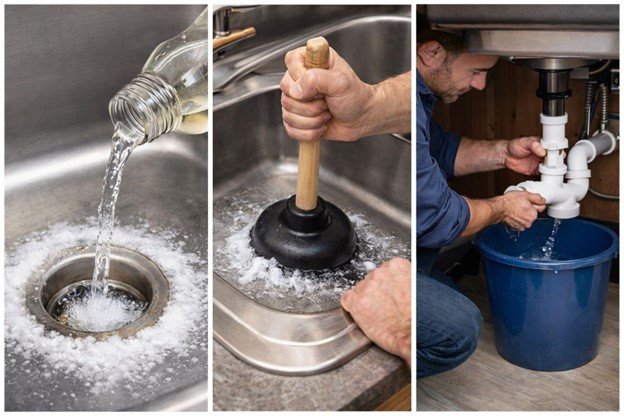
Fixing a clog requires a systematic approach to avoid pushing debris deeper into the system.
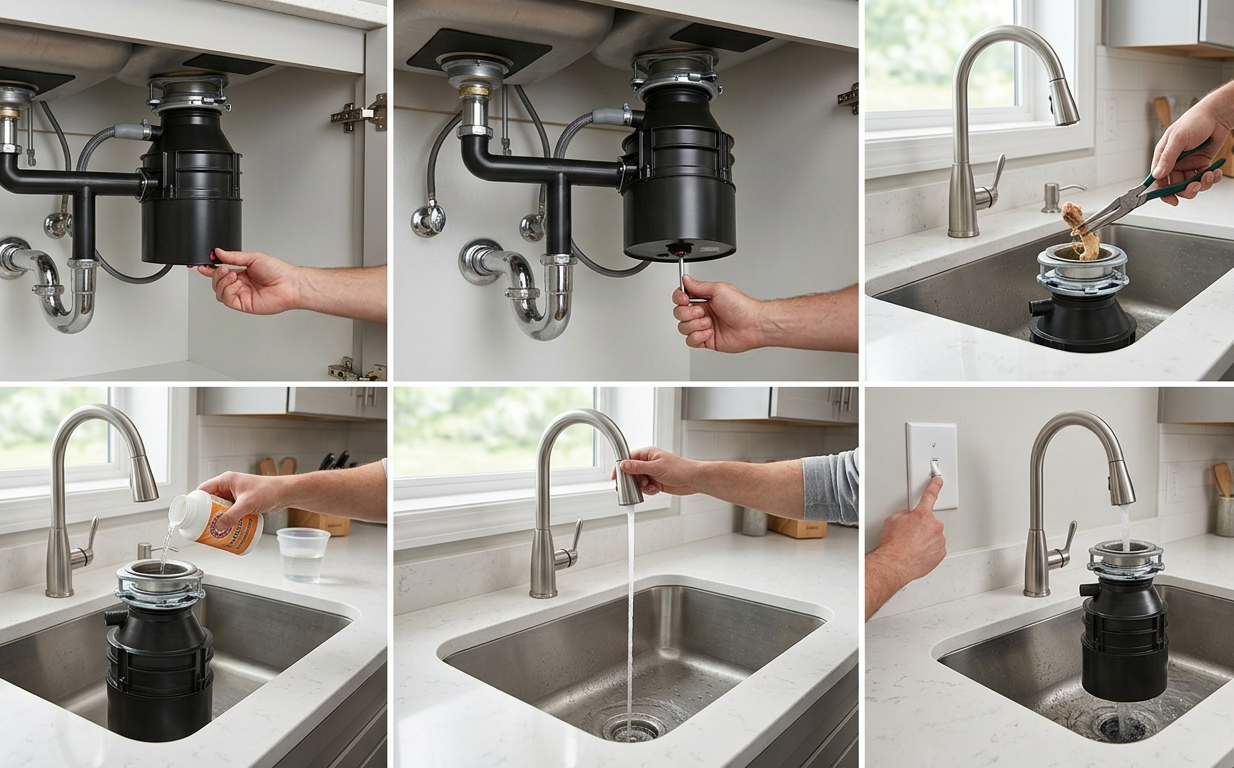
Step 1: Turn Off Power
Always disconnect electricity before starting any repair.
Step 2: Inspect the Disposal
Use a flashlight to check for visible obstructions such as food buildup or foreign objects.
Step 3: Remove Debris
Use pliers or tongs to safely remove any blockage. Avoid forcing objects deeper.
Step 4: Flush with Water
Run warm water to loosen grease and smaller particles.
Step 5: Use a Plunger
Apply steady pressure to dislodge the clog from the drain.
Step 6: Clean the P-Trap
Remove and clean the curved pipe under the sink to clear deeper blockages.
Process Insight:
Working step-by-step prevents damage and ensures the clog is fully removed instead of partially shifted. Most clogs resolve within these steps when performed correctly.
Quick Fix vs Permanent Fix: What Should You Do?
Not all fixes are equal.
Quick Fix:
- plunging
- flushing with water
- temporary removal of debris
Permanent Fix:
- cleaning internal chamber
- removing grease buildup
- changing usage habits
Decision Rule:
If clog repeats → use permanent fix
If clog is rare → quick fix is enough
How to Fix a Garbage Disposal That Is Humming
A humming disposal indicates that the motor is receiving power but cannot rotate due to a jam.
Step-by-Step Fix:
Step 1: Turn Off Power
Always begin with complete power disconnection.
Step 2: Insert Allen Wrench
Locate the hex socket underneath the disposal unit.
Step 3: Rotate the Motor
Turn the wrench back and forth to loosen the jammed impeller.
Step 4: Remove Internal Blockage
Check inside the chamber and remove any stuck debris.
Step 5: Restore Power and Test
Reconnect power and run the unit to confirm normal operation.
Mechanical Insight:
Manual rotation releases pressure inside the motor and frees stuck components without causing damage, making it the safest fix for jams.
How to Reset a Garbage Disposal
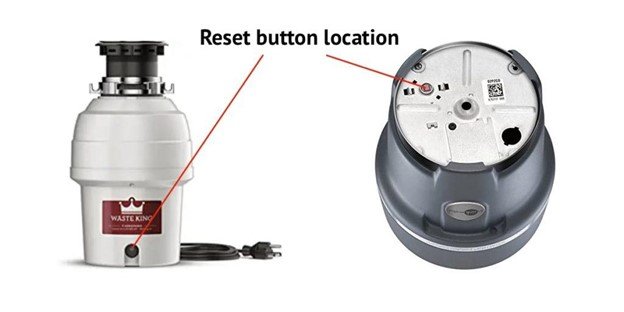
Garbage disposals include a built-in reset mechanism that shuts off power when the motor overheats or jams.
Reset Steps:
- Turn off power
- Locate the red reset button underneath
- Press until it clicks
- Restore power
When Reset Works:
- After clearing jams
- After overheating events
- After electrical interruptions
Important Note:
If the reset button trips repeatedly, the issue may be internal damage or motor failure, requiring replacement.
How to Clear a Drain Connected to the Disposal
Sometimes the disposal itself is functional, but the drain line is clogged.
Signs of Drain Blockage:
- Standing water in sink
- Disposal runs normally
- No unusual sounds
Fix Methods:
- Use a plunger
- Clean the P-trap
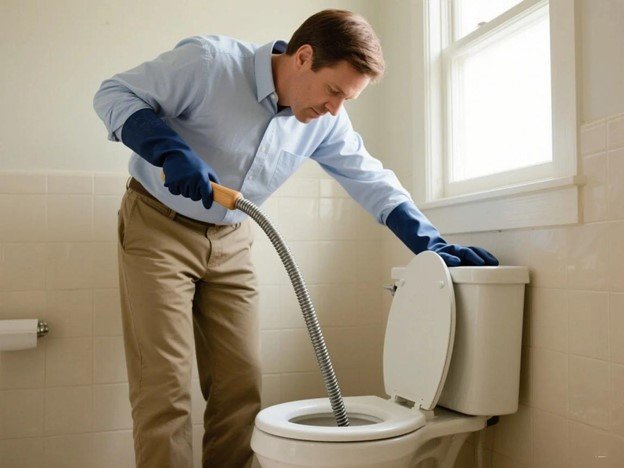
- Use a drain snake for deeper clogs
Important Insight:
Avoid chemical cleaners as they damage internal components and seals. Mechanical cleaning methods are safer and more effective.
How Garbage Disposal Clogs Affect Your Sink Drain System
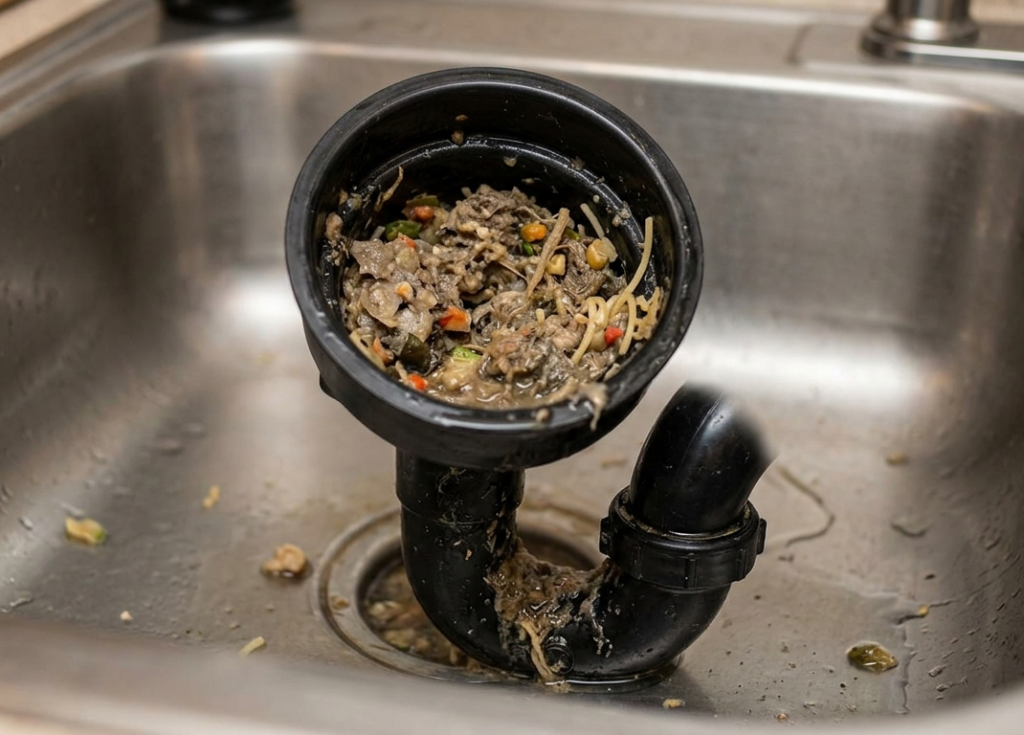
The disposal is connected directly to your sink’s plumbing system, which includes the P-trap and main drain pipe.
How Blockages Spread:
- waste exits disposal into P-trap
- grease sticks to pipe walls
- debris accumulates behind grease
- full blockage forms
Resulting Problems:
- slow drainage
- foul odors
- water backup
Critical Insight:
Many “disposal clogs” are actually pipe clogs located beyond the unit.
What Tools Do You Need for Repair?
Using the correct tools improves safety and efficiency.
Essential Tools:
- Allen wrench for motor rotation
- Pliers or tongs for debris removal
- Plunger for clogs
- Flashlight for inspection
- Screwdriver for disassembly
Additional Tools:
- Drain snake for deeper clogs
- Bucket for P-trap cleaning
- Gloves for protection
Tool Insight:
Most repairs can be completed with basic tools found in a typical household toolkit.
When Should You Replace Instead of Repair?
Not all garbage disposals are worth repairing.
Replace if:
- Motor does not respond after reset
- Frequent clogs occur
- Unit is over 10 years old
- Water leaks from bottom
Cost Insight:
Replacing an old unit is often more cost-effective than repeated repairs, especially when efficiency and reliability are compromised.
Cost to Fix a Clogged Garbage Disposal (DIY vs Plumber)
Understanding cost helps make the right decision.
DIY Cost:
- tools: $10–$50
- time: 30–60 minutes
Professional Cost:
- plumber visit: $100–$300
- replacement: $200–$600+
Cost Insight:
Simple clogs are best handled DIY. Complex issues justify professional repair.
Common Mistakes to Avoid
Avoiding mistakes ensures successful repair.
Common Errors:
- Ignoring power safety
- Using chemical cleaners
- Forcing jammed components
- Misdiagnosing the problem
Key Rule:
Always identify the cause before applying a solution. Random fixes often worsen the issue.
When You Should NOT Attempt DIY Repair
DIY is not always safe or effective.
Avoid DIY If:
- electrical wiring is damaged
- disposal leaks from bottom
- motor does not respond
- unit overheats repeatedly
Safety Insight:
Attempting complex repairs without expertise can cause injury or further damage.
How Weight and Waste Type Affect Disposal Performance
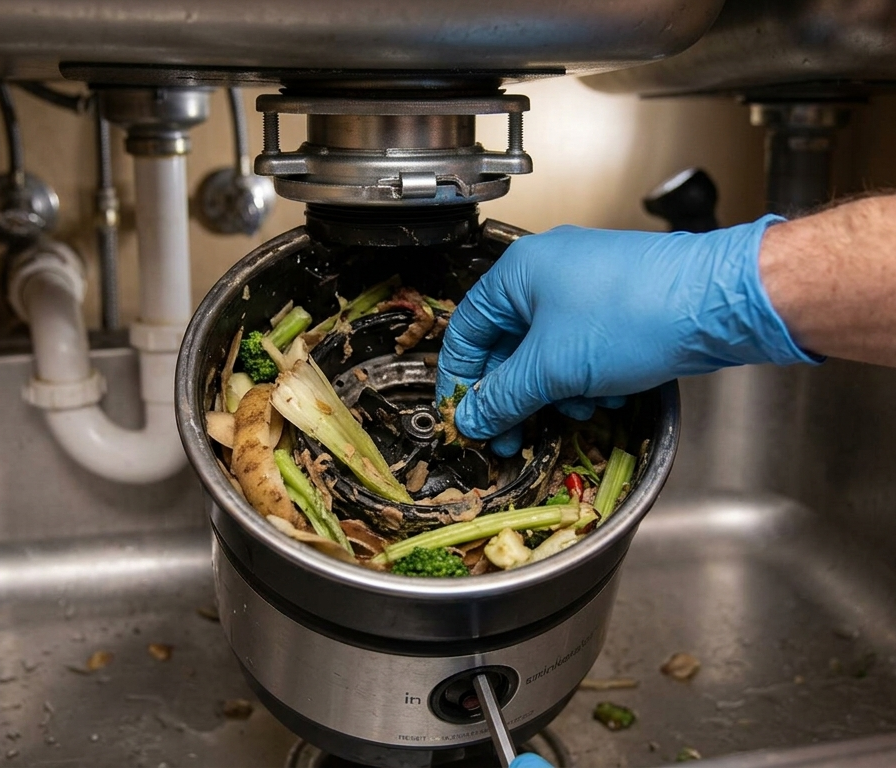
Garbage disposals are designed for specific types of waste.
High-Risk Waste:
- Grease and oils
- Bones
- Fibrous vegetables
Safe Waste:
- Soft food scraps
- Small leftovers
Insight:
Proper usage reduces strain on the motor and prevents frequent clogs.
How to Prevent Future Clogs
Prevention is more effective than repair.
Prevention Tips:
- Run cold water during use
- Avoid grease disposal
- Cut waste into smaller pieces
- Clean regularly
Maintenance Routine:
- Weekly flushing
- Occasional baking soda cleaning
- Regular inspection
Insight:
Consistent habits significantly extend disposal lifespan.
Advanced Garbage Disposal Maintenance System
Preventing clogs requires a consistent system, not occasional cleaning.
Daily Usage Rules:
- always run cold water during operation
- avoid dumping grease
- feed waste gradually
Weekly Maintenance:
- flush with water for 30–60 seconds
- grind small ice cubes to clean chamber
Monthly Cleaning:
- use baking soda and vinegar
- rinse thoroughly
Food Waste Guide:
Avoid:
- grease
- bones
- fibrous foods
Safe:
- soft scraps
- small leftovers
Key Insight:
Proper maintenance reduces clog risk by over 70%.
Real-World Case Study: Repeated Clog Issue
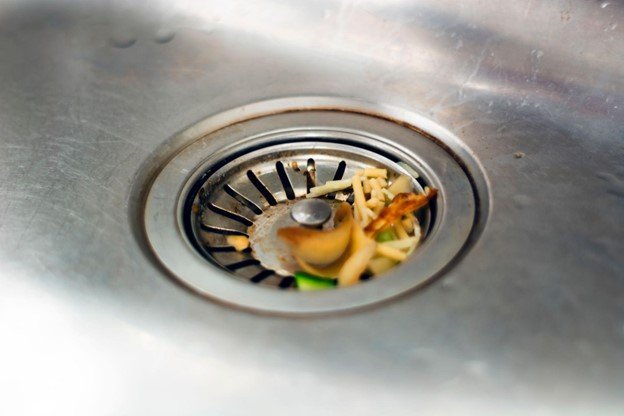
A household experienced constant clogs due to improper usage.
Problem:
- Grease buildup
- Overloading disposal
Solution:
- Deep cleaning
- Behavior change
Result:
- No clogs for 6 months
- Improved efficiency
DIY vs Professional Repair
DIY:
- Cost-effective
- Suitable for minor issues
Professional:
- Required for complex problems
- Ensures safety
Recommendation:
Start with DIY. Call a professional if the issue persists.
Garbage Disposal Troubleshooting Decision Guide
| Symptom | Cause | Solution |
| Humming | Jam | Allen wrench |
| No power | Electrical | Reset |
| Slow drain | Clog | Plunger |
| Leak | Seal issue | Replace |
Expert Insight: Why Most Fixes Fail
Most failures occur due to incorrect diagnosis.
- 60% clogs
- 30% jams
- 10% electrical
Final Insight:
Fixing the root cause ensures long-term performance.
What Happens If You Ignore a Clogged Garbage Disposal?
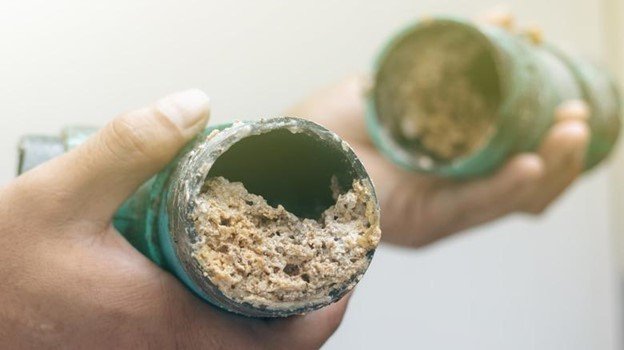
Ignoring a clog can lead to serious issues.
Consequences:
- pipe damage
- motor burnout
- water leakage
- increased repair costs
Long-Term Impact:
Small clogs become major plumbing problems if untreated.
What Most Homeowners Get Wrong About Garbage Disposal Repairs
Most people focus on quick fixes rather than proper diagnosis.
Reality Breakdown:
- 60% issues = clogs
- 30% = jams
- 10% = electrical
Insight:
Understanding the system prevents repeated failures.
Can a Clogged Garbage Disposal Damage Your Plumbing?
Yes, and it often does over time.
How Damage Occurs:
- pressure buildup in pipes
- corrosion from trapped waste
- leaks due to blockages
Prevention Insight:
Fixing clogs early protects both disposal and plumbing system.
FAQ Section
Why is my garbage disposal humming?
It is jammed and needs manual rotation.
Can I fix it without tools?
Only minor clogs can be fixed this way.
Is boiling water safe?
Yes, but not for grease clogs.
Can grease damage disposal?
Yes, it solidifies and blocks pipes.
How long do disposals last?
8–15 years.
Can a clogged disposal burn out the motor?
Yes, prolonged jams can overheat and damage the motor.
Why does my disposal trip the breaker?
Overload or electrical fault causes breaker trips.
Can I run water while fixing it?
No, only after clearing blockages.
Is it safe to use vinegar regularly?
Yes, in moderation for cleaning.