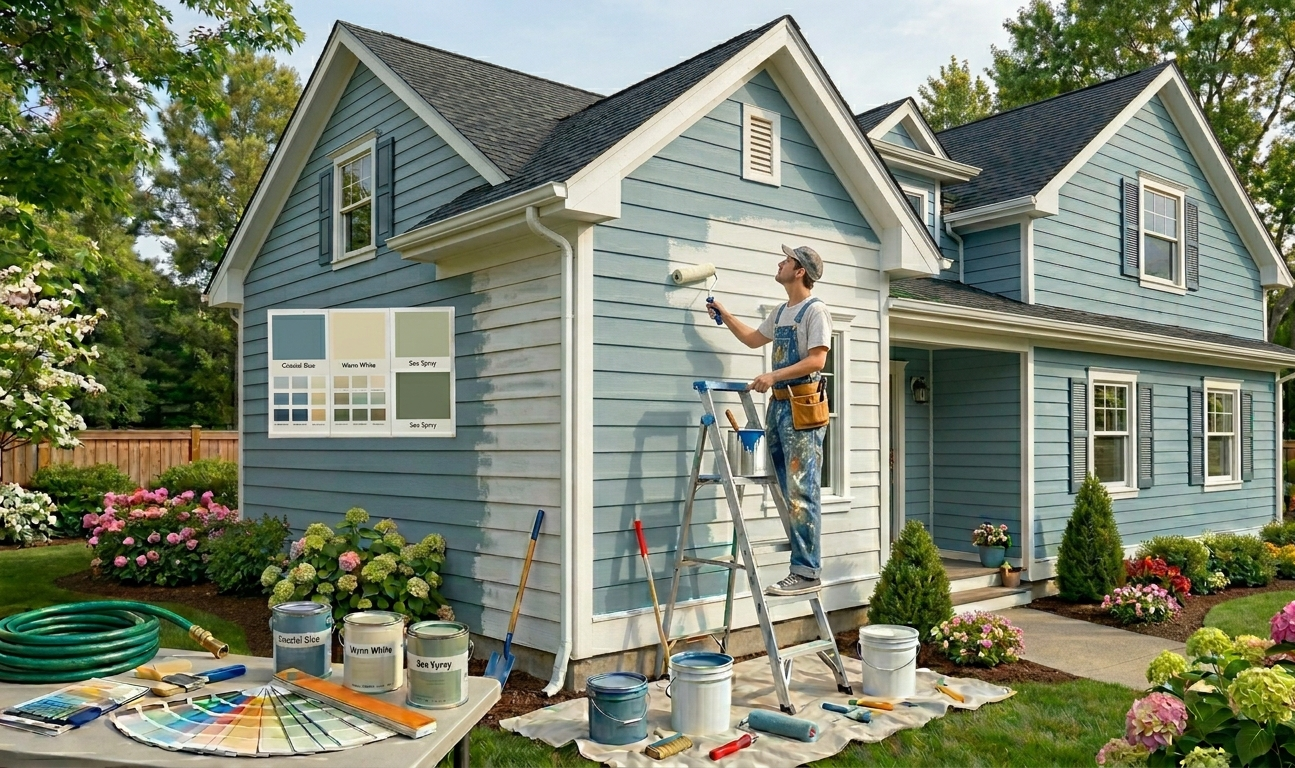
House painting protects surfaces, improves appearance, and increases property value when done with the right paint, preparation, and technique. The best results come from matching paint type to surface, climate, and room function while ensuring proper wall preparation before application.
House painting is more than changing color. It is a protective system that shields walls from moisture, UV damage, mold growth, and wear over time. Whether painting interiors or exteriors, the right decisions at each stage determine durability and finish quality.
What Is House Painting and Why Does It Matter?
House painting is the process of applying protective and decorative coatings to interior and exterior residential surfaces. It preserves structural materials while improving visual appeal.
A properly painted home resists weather damage, stains, cracking, and premature aging. Exterior paint acts as a barrier against rain, heat, and UV rays, while interior paint protects walls from humidity, dust, and daily abrasion.
For homeowners globally, painting is one of the highest-return home improvement investments because it combines maintenance and design in one upgrade.
What Are the Main Types of House Paint?
Different paint formulations serve different purposes. Choosing the wrong one can lead to peeling, fading, or moisture failure.
| Paint Type | Best For | Strength |
| Acrylic Latex | Interior & exterior walls | Durable, flexible |
| Oil-Based Paint | Trim, doors, woodwork | Smooth finish |
| Enamel Paint | Kitchens, bathrooms | Moisture resistant |
| Primer Paint | Surface prep | Adhesion support |
| Elastomeric Coating | Exterior masonry | Crack bridging |
Acrylic latex is now the global standard because it dries quickly, resists cracking, and performs well across climates.
How Do You Choose the Right Paint for Different Surfaces?
Each wall material has different absorption, texture, and adhesion behavior.
Best Surface Matches:
- Drywall → Acrylic latex interior paint
- Wood siding → Exterior acrylic or oil hybrid paint
- Brick walls → Breathable masonry coatings
- Stucco → Elastomeric weather-resistant paint
- Concrete → Waterproof acrylic seal paint
Always test for moisture before painting porous surfaces. Damp walls trap water under paint films and cause blistering.
Interior vs Exterior House Painting: What Is the Difference?
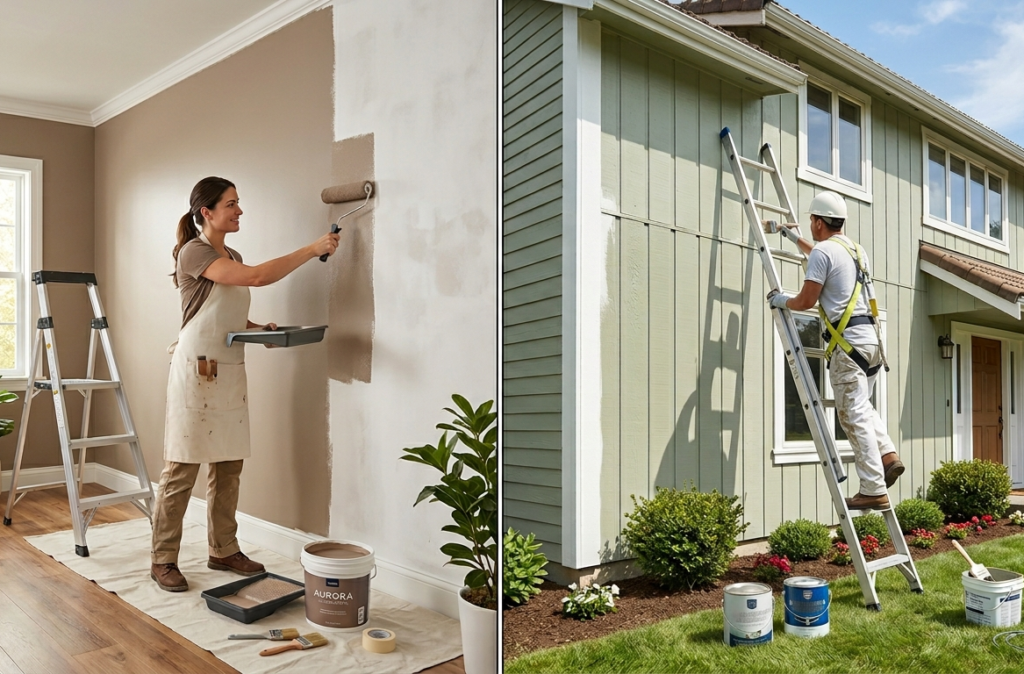
These paints are chemically different and should never be interchanged.
Interior Paint:
Designed for washability, stain resistance, low odor, and indoor air safety.
Exterior Paint:
Engineered for UV protection, temperature expansion, mold resistance, and rain exposure.
Exterior coatings contain stronger binders and weather-resistant additives that interior paints do not require.
How Should You Prepare Walls Before Painting?
Surface preparation determines whether paint lasts 2 years or 12 years.
Essential Preparation Steps:
- Remove dust, grease, and loose debris
- Scrape peeling paint
- Sand uneven patches
- Fill cracks and holes
- Apply primer where needed
- Let surfaces dry fully before coating
Professional painters often say poor preparation causes more failures than poor paint quality.
Advanced Surface Preparation: The Step Professionals Never Skip
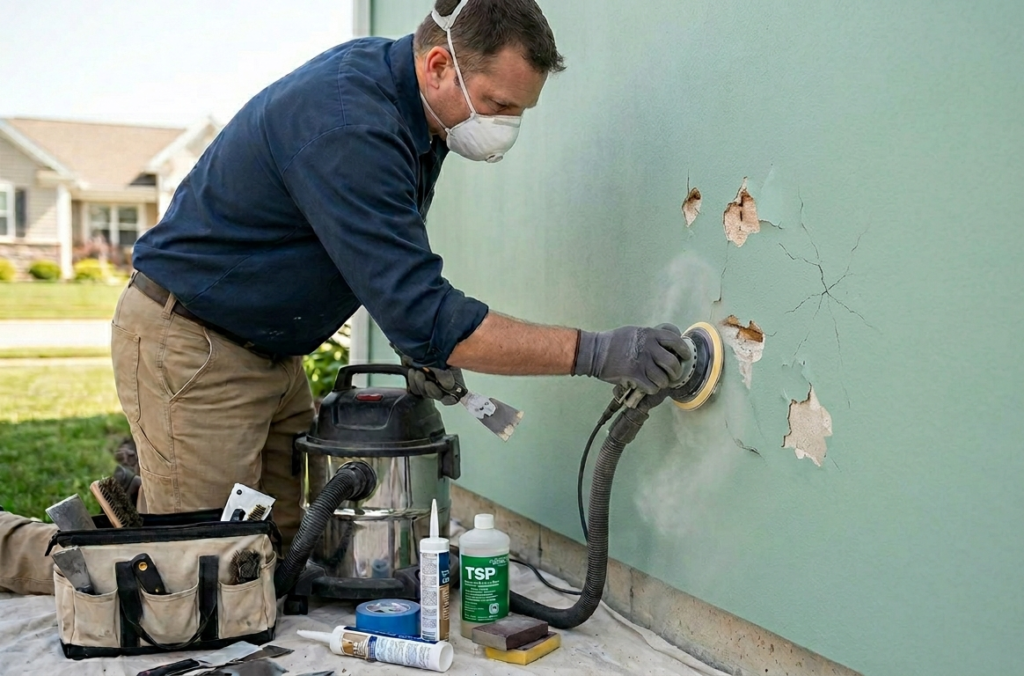
Surface preparation is not just cleaning. It is a controlled process that determines how well paint bonds and how long it lasts.
Moisture Testing Before Painting
Walls must be dry before painting. Even slight moisture leads to bubbling and peeling.
Professional method:
- Tape a plastic sheet (1 ft x 1 ft) to the wall
- Leave for 24 hours
- If condensation appears → wall is too damp
This simple test prevents long-term paint failure.
Adhesion Testing for Old Paint
Before repainting, check if the existing paint layer is stable.
Cross-hatch test:
- Cut a small grid pattern into the paint
- Apply tape and pull it off
- If paint comes off → surface must be stripped
When Full Paint Removal Is Required
Do not repaint over:
- chalking surfaces
- heavily cracked paint
- multiple old paint layers
In such cases, scraping or sanding down to the base surface is necessary.
What Are the Best Paint Finishes for Each Room?
Paint finish affects cleaning ease, reflection, and flaw visibility.
| Finish | Best Room Use | Benefit |
| Matte | Bedrooms, ceilings | Hides imperfections |
| Eggshell | Living rooms | Soft washable sheen |
| Satin | Hallways, family rooms | Durable and cleanable |
| Semi-gloss | Kitchens, baths | Moisture resistant |
| Gloss | Doors, trims | High durability |
Bathrooms and kitchens should always prioritize moisture-resistant finishes.
How Paint Chemistry Affects Durability and Performance
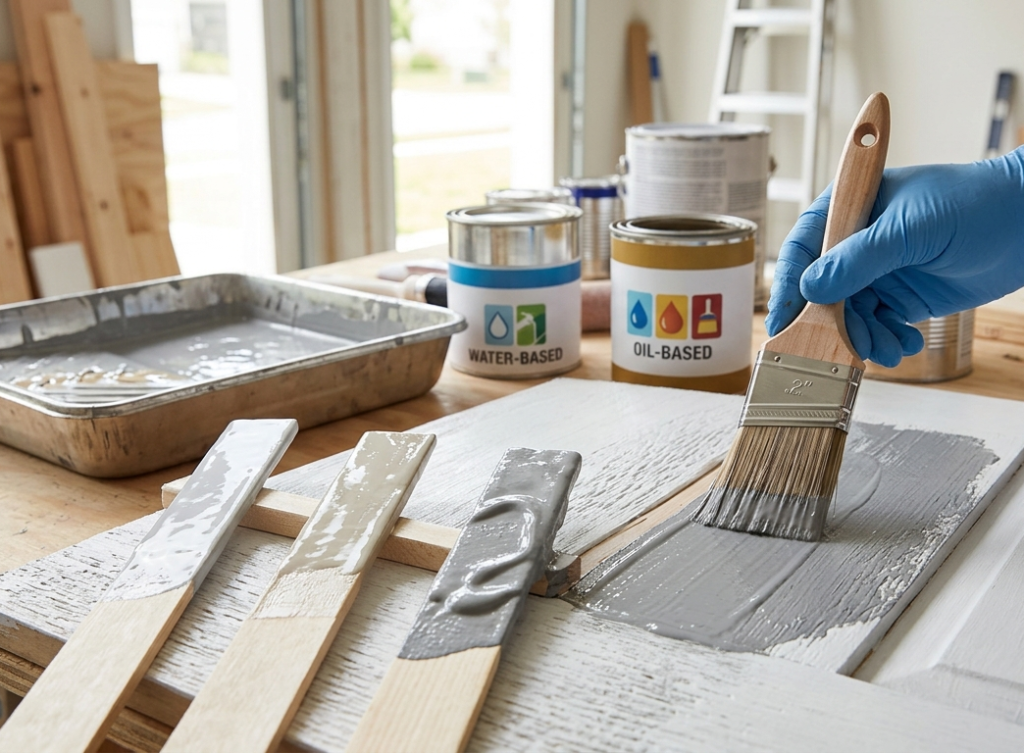
Most homeowners choose paint based on color and finish. Professionals choose based on chemistry.
Acrylic Latex Paint
- Flexible and breathable
- Expands and contracts with temperature
- Best for most climates
Oil-Based Paint
- Harder surface
- Higher durability on trim
- Less flexible over time
Elastomeric Paint
- Thick coating
- Bridges cracks in masonry
- Ideal for exterior walls with micro-cracks
VOC Levels and Indoor Air Quality
Low-VOC paints release fewer harmful chemicals.
Why It Matters:
- Safer for children and elderly
- Reduces indoor air pollution
- Faster odor dissipation
Homeaholic recommends low-VOC or zero-VOC paints for all interior living spaces.
Surface Troubleshooting Matrix: Best Paint Solution by Material
| Surface Type | Common Problem | Best Paint Solution |
| Stucco | Hairline cracks | Elastomeric coating |
| Wood siding | Peeling & expansion | Acrylic exterior latex |
| Brick walls | Moisture trapping | Breathable masonry paint |
| Drywall | Patch flashing | Primer + acrylic latex |
| Concrete | Damp seepage | Waterproof seal acrylic |
This matrix helps users choose paint systems based on real surface behavior, not generic labels.
At Homeaholic, surface-specific preparation is treated as the foundation of durable house painting results.
DIY vs Professional House Painting: Which Is Better?
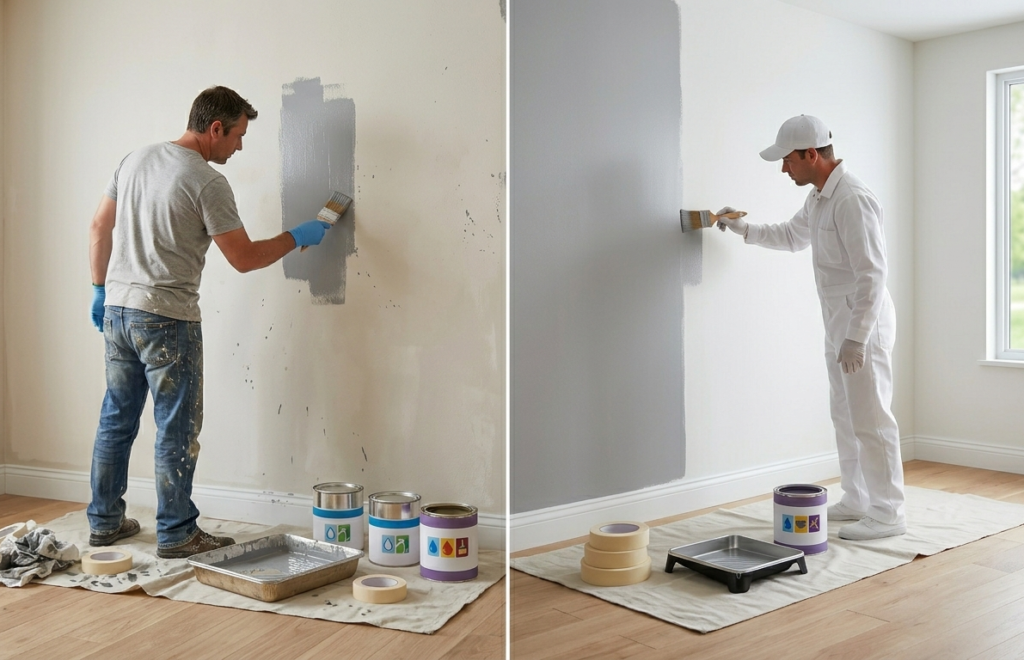
DIY painting saves labor costs, while professional painting delivers precision, speed, and longer-lasting results. However, the right choice depends on your needs and project size.
DIY Is Best For:
- Small rooms
- Accent walls
- Simple repaint jobs
Professional Painting Is Better For:
- Exterior houses
- Multi-story homes
- Damaged surfaces
- Complex texture walls
Improper roller loading, poor edging, and skipped primer layers are common DIY failure points.
Tools and Equipment Required for Professional-Level Results
Using the right tools improves finish quality significantly.
Essential Tools:
- High-quality paint rollers (microfiber for smooth finish)
- Angled brushes for cutting edges
- Paint trays with liners
- Extension poles for ceilings
- Painter’s tape for clean lines
- Drop cloths for surface protection
Spray vs Roller vs Brush — Performance Comparison
| Method | Best Use | Advantage |
| Roller | Walls & ceilings | Even coverage |
| Brush | Edges & trim | Precision |
| Spray | Large exteriors | Speed |
Professionals often combine all three for best results.
How Much Does House Painting Cost Globally?
House painting cost varies by labor market, surface condition, and material quality.
Average Global Ranges:
- Interior repaint: $2–$6 per sq ft
- Exterior repaint: $3–$8 per sq ft
- Full house average: $1,500–$12,000+
Urban regions with high labor rates increase total costs significantly.
Cost Drivers:
- Surface repairs
- Paint brand quality
- Number of coats
- Accessibility difficulty
- Climate-resistant coatings
How Much Paint Do You Need for a House?
Estimating paint correctly prevents waste, cost overruns, and uneven finish results.
Standard Coverage Formula:
1 gallon of paint covers approximately 350 to 400 square feet per coat.
Example Calculation:
If a wall area totals 1,200 square feet:
1,200 ÷ 400 = 3 gallons per coat
For two coats = 6 gallons total
Always Add Extra:
Add 10–15% extra paint for:
- textured walls,
- porous masonry,
- touch-ups,
- future repairs.
Tip:
Dark color changes often require additional coats.
How Long Does House Paint Last?
Paint lifespan depends on environment, paint chemistry, and surface exposure.
| Area | Average Lifespan |
| Interior walls | 5–10 years |
| Exterior wood siding | 4–7 years |
| Stucco exterior | 7–10 years |
| Trim and doors | 3–6 years |
Homes in coastal, humid, or extreme sun regions require more frequent repainting.
Paint Lifespan Breakdown by Surface and Exposure Level
Not all walls age the same. Sun exposure, moisture, and usage determine how fast paint degrades.
| Surface | Exposure Level | Expected Lifespan |
| Interior bedroom wall | Low traffic | 8–12 years |
| Kitchen walls | High grease/moisture | 3–5 years |
| Exterior shaded wall | Low UV | 7–10 years |
| Exterior sun-facing wall | High UV | 3–6 years |
| Coastal exterior | Salt + humidity | 2–5 years |
Key Insight:
UV exposure is the biggest factor in exterior paint degradation globally.
Common House Painting Mistakes to Avoid
Many failures happen from avoidable errors.
Top Mistakes:
- Painting over dirty walls
- Skipping primer
- Ignoring moisture damage
- Applying thick uneven coats
- Painting in bad weather
- Using wrong finish types
Never paint exterior walls before rain or when temperatures fall below manufacturer thresholds.
Why House Paint Fails: Peeling, Bubbling, and Cracking Explained
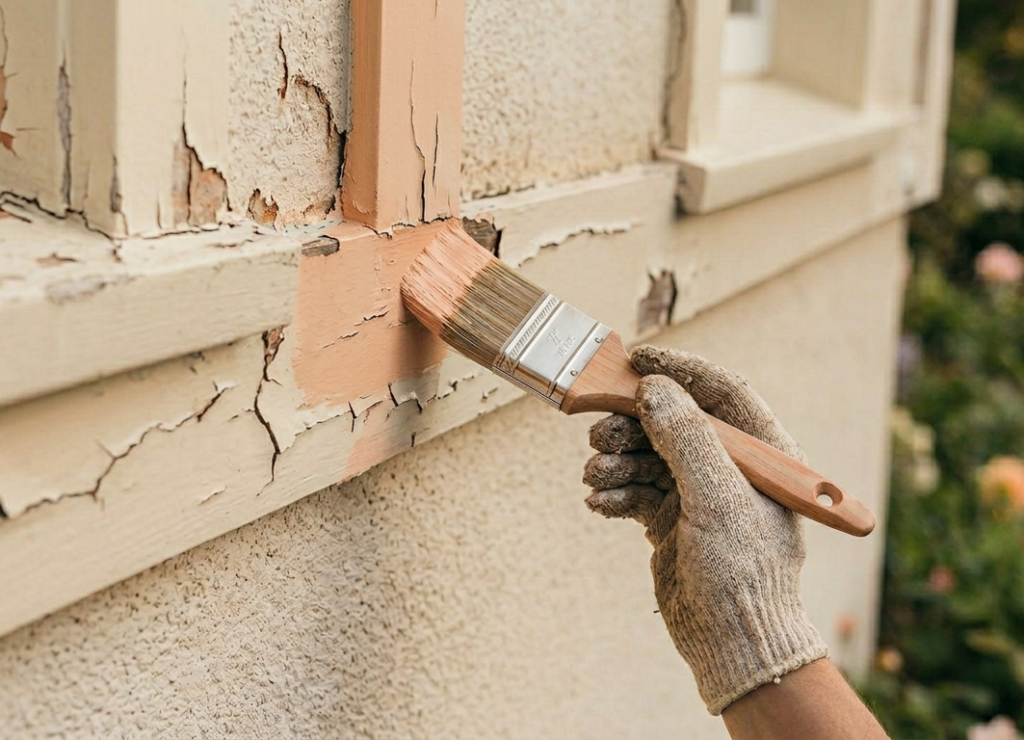
Paint failure is usually caused by moisture, poor adhesion, or environmental stress rather than paint quality alone. Understanding failure patterns helps homeowners prevent expensive repainting cycles.
Peeling Paint
Peeling happens when paint loses adhesion from the surface beneath it. This often occurs because walls were dirty, damp, or unprimed before coating.
Bubbling or Blistering
Bubbles form when moisture or heat gets trapped under drying paint films. Exterior walls exposed to direct sunlight after rain are especially vulnerable.
Cracking and Flaking
Cracking develops when paint layers become brittle over time, often from low-quality paint or repeated extreme temperature changes.
Chalking
Exterior paint may develop powdery residue due to UV breakdown. This is common in low-grade paints without UV stabilizers.
Prevention Rule:
Proper drying time, surface moisture testing, and primer compatibility prevent most paint failures before they begin.
What Most Homeowners Get Wrong About House Painting
Most people focus on paint quality but ignore preparation and environment.
In reality:
- 70% of paint failures come from poor surface prep
- 20% from wrong paint selection
- Only 10% from paint quality itself
This is why professional painters prioritize preparation over brand selection.
How Climate Affects House Painting Results
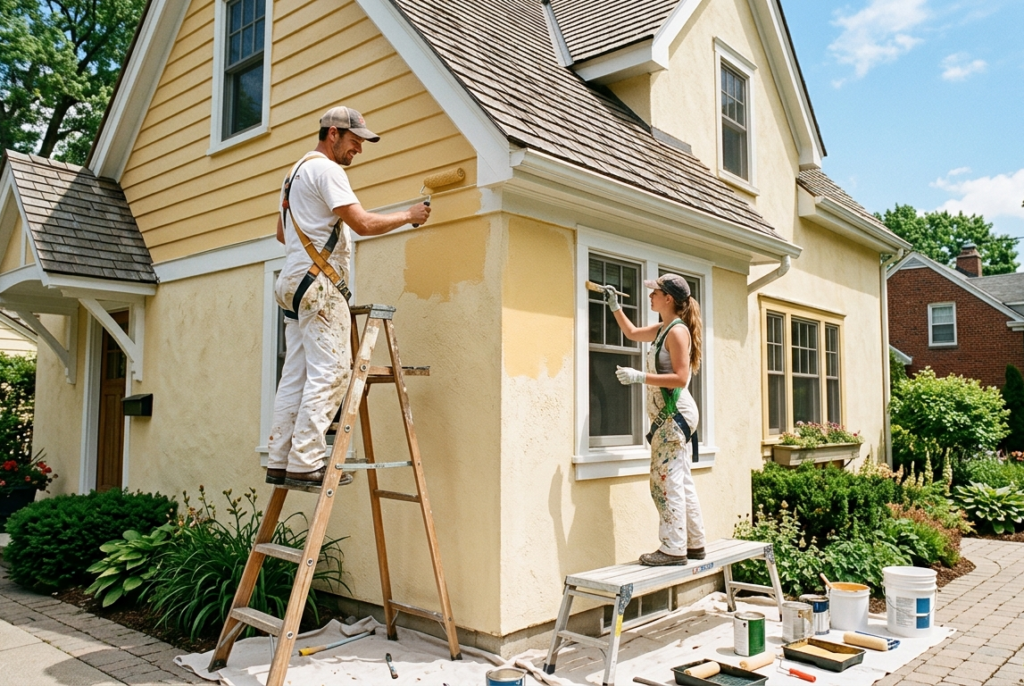
Climate changes paint performance dramatically.
Hot Dry Climates:
Require UV fade-resistant paints.
Humid Tropical Climates:
Need mold-resistant breathable coatings.
Cold Regions:
Require freeze-flex acrylic systems.
Coastal Areas:
Salt-resistant anti-corrosion paint systems work best.
Climate-matched paint lasts significantly longer than generic paint formulas.
Homeaholic recommends climate-matched paint systems rather than one-size-fits-all coatings, especially for exterior walls exposed to harsh weather.
Real-World Case Study: Exterior Paint Performance in Humid Climate
A 2,000-square-foot stucco home in a tropical humid region was repainted using mold-resistant acrylic elastomeric coating after repeated peeling failures with standard latex paint.
Before Upgrade:
- Paint bubbling after 18 months
- Mold spotting on shaded walls
- Frequent patch repairs
After Correct Paint System:
- No bubbling after 6 years
- Mold growth reduced significantly
- Repaint cycle extended from 2 years to projected 8 years
This demonstrates how climate-specific coatings dramatically improve long-term durability.
Homeaholic experts advise testing wall moisture before exterior painting in humid and coastal regions.
Paint Type Comparison Matrix by Climate
| Climate | Recommended Paint |
| Humid | Mold-resistant acrylic latex |
| Dry Hot | UV shield acrylic coating |
| Coastal | Salt-resistant marine-grade exterior paint |
| Cold Snow | Flexible freeze-resistant latex |
How to Maintain Painted Walls for Longer Lifespan
Maintenance extends paint life and delays repainting costs.
Maintenance Checklist:
- Clean dust quarterly
- Remove stains immediately
- Repair cracks early
- Inspect exteriors yearly
- Re-caulk joints when needed
Touch-up repairs prevent larger paint failures from spreading.
Seasonal Painting Strategy: When Is the Best Time to Paint?
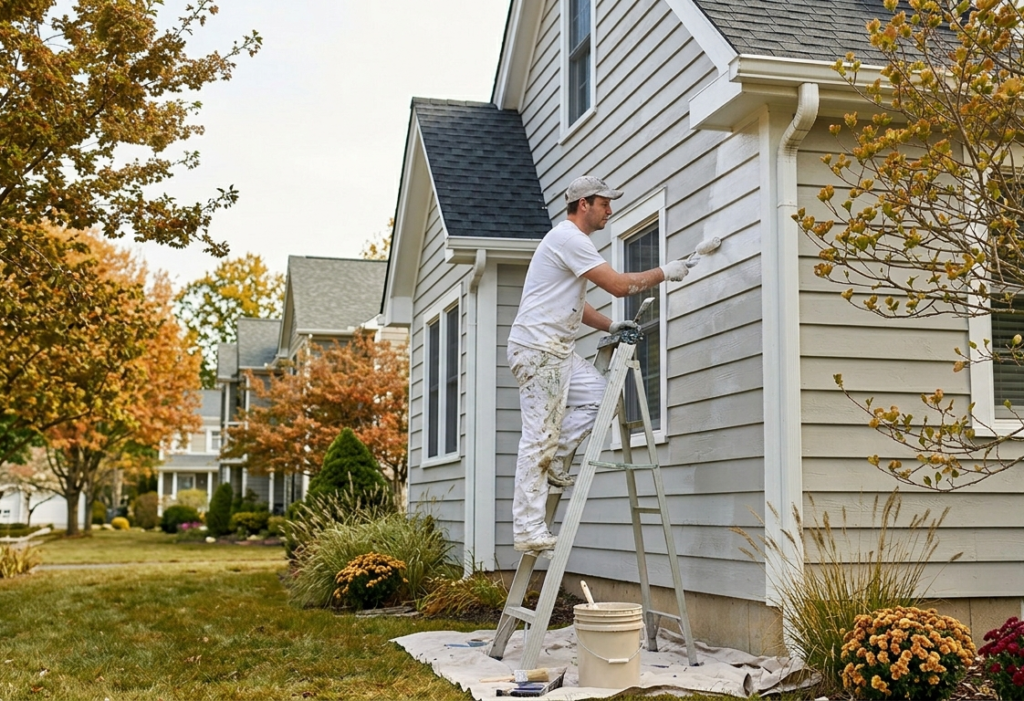
Timing affects paint curing and durability.
Best Conditions:
- Temperature between 10°C to 30°C
- Low humidity
- No rain forecast for 48 hours
Seasonal Breakdown:
Spring:
Best for exterior painting due to moderate temperatures.
Summer:
Good for interior painting, but exterior must avoid direct midday heat.
Autumn:
Ideal for both interior and exterior before cold weather arrives.
Winter:
Only suitable for interior projects with proper ventilation.
Critical Insight:
Paint cures, not just dries. Improper temperature slows curing and weakens durability.
Expert Commentary: Why Primer Matters More Than Most Homeowners Think
Primer is often underestimated, yet it is essential for paint adhesion, color consistency, and stain blocking. On repaired walls, raw plaster, wood, or patched surfaces, skipping primer weakens bonding and shortens lifespan dramatically.
Professional-grade systems always treat primer as structural preparation, not optional extra coating.
House Painting Workflow: Step-by-Step Professional Process
Understanding the full workflow helps achieve consistent results.
Step 1: Inspection
Check for cracks, dampness, and surface damage.
Step 2: Surface Preparation
Clean, sand, repair, and prime surfaces.
Step 3: Primer Application
Ensures proper adhesion and color uniformity.
Step 4: First Coat
Apply evenly using roller or spray.
Step 5: Drying Time
Allow proper curing before second coat.
Step 6: Second Coat
Enhances durability and color depth.
Step 7: Final Inspection
Check for missed spots and inconsistencies.
FAQ Section
How many coats of paint are usually needed?
Two coats are standard for full color consistency and durability.
Can you paint over old paint?
Yes, if the old layer is stable, clean, and not peeling.
What is the safest indoor paint?
Low-VOC or zero-VOC acrylic latex paints are safest indoors.
What temperature is best for exterior painting?
Typically between 50°F and 85°F for most coatings.
How long does paint smell last indoors?
Usually 24 to 72 hours depending on ventilation.
Is spray painting better than roller painting?
Spraying is faster, but rollers provide thicker and more even coverage indoors.
Which finish hides wall flaws best?
Matte finish hides imperfections most effectively.
How often should a house exterior be repainted?
Usually every 5 to 10 years depending on climate and material.
Can you paint over glossy walls?
Yes, but glossy surfaces must first be sanded or deglossed so new paint can adhere properly.
How long should primer dry before painting?
Most primers need 1 to 4 hours, but humidity and temperature may extend drying time.
What happens if the second coat is applied too early?
Applying too early can trap moisture, causing bubbling, streaking, or peeling later.
Should ceilings be painted before walls?
Yes. Painting ceilings first prevents roller splatter from damaging finished wall coats.
Can paint go bad in storage?
Yes. Unopened paint may last 2–10 years depending on type, while opened cans degrade faster if poorly sealed.