
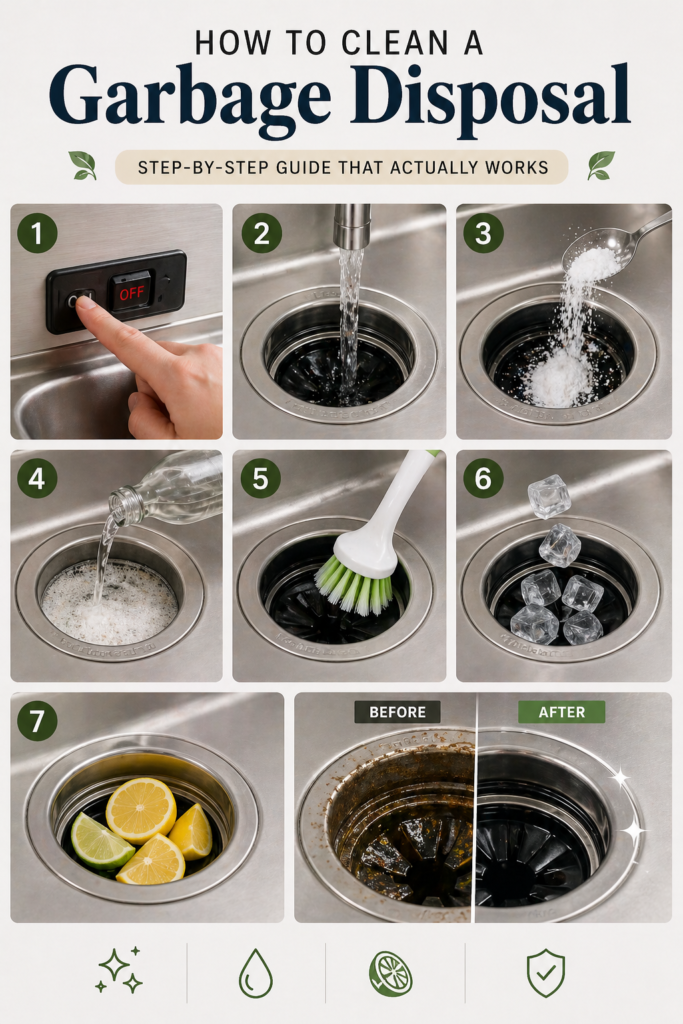
To clean a garbage disposal, turn off power, flush with cold water and dish soap, scrub the splash guard, use baking soda and vinegar to break down buildup, then run ice and citrus peels to remove debris and odor completely.
How to Choose the Right Cleaning Method
The right cleaning method depends on whether your garbage disposal has odor, grease buildup, trapped debris, or long-term neglect.
Not all disposal problems require the same solution. Many homeowners waste time repeating ineffective methods because they don’t match the cleaning approach to the actual issue. For example, using citrus peels might improve smell temporarily, but it won’t remove grease buildup or trapped debris. Similarly, baking soda and vinegar work well for organic residue but won’t fully dislodge solid particles stuck inside the chamber.
A smarter approach is to diagnose the problem first and then apply a targeted cleaning method. This not only saves time but also improves results and prevents unnecessary wear on the disposal. Choosing the correct method ensures that you’re solving the root cause instead of masking symptoms.
Cleaning decision system:
- Bad smell → baking soda + vinegar
- Grease buildup → dish soap + hot water (then cold rinse)
- Debris stuck → ice + salt cleaning
- Heavy buildup → full deep cleaning process
Practical tip:
- Combine methods if multiple issues exist
- Repeat cleaning cycle for severe odor
- Always finish with cold water flush
Decision clarity:
If your disposal smells AND drains slowly, you likely have both grease and debris buildup, which requires a combination approach instead of a single method.
What Is the Best Way to Clean a Garbage Disposal?
The best way combines physical cleaning + chemical breakdown + odor neutralization for complete results.
Most homeowners think running water is enough, but that only clears loose debris. Real buildup happens inside the grinding chamber, under the splash guard, and along the drain walls. Over time, grease residue and microscopic food particles stick to surfaces, forming a layer that traps bacteria. This is why disposals start smelling even when they look clean from the top.
A complete cleaning approach targets every layer of contamination. Mechanical scrubbing removes stuck debris, while natural reactions like baking soda and vinegar break down organic waste. Ice helps knock loose hardened particles, and citrus oils neutralize odor compounds. This multi-layer strategy ensures both hygiene and performance improvement.
Best cleaning system includes:
- Scrubbing splash guard (main odor source)
- Baking soda + vinegar reaction
- Ice + salt mechanical cleaning
- Citrus peel deodorizing
- Cold water flushing
Why this method works better:
- Targets hidden buildup, not just surface waste
- Eliminates odor-causing bacteria, not just smell
- Improves grinding efficiency and drainage
Decision clarity:
If your disposal smells, feels slow, or hasn’t been cleaned in weeks, this full method is required. Quick rinsing alone won’t solve the root problem.
How to Clean a Garbage Disposal Step by Step
Follow this structured process for a complete and safe clean.
Cleaning a garbage disposal isn’t just about throwing in ingredients. The order matters because each step prepares the unit for the next. For example, flushing first removes loose debris so that baking soda and vinegar can directly target buildup instead of being diluted. Similarly, scrubbing the splash guard early removes the biggest source of odor before deeper cleaning begins.
This step-by-step system is designed to cover all contamination zones, from visible surfaces to internal components. Skipping steps leads to partial cleaning, which is why many people notice smells returning quickly. A structured process ensures long-lasting results instead of temporary fixes.
Step-by-step process:
- Turn off power completely
- Flush with cold water + dish soap
- Scrub splash guard thoroughly
- Add baking soda + vinegar (10–15 mins)
- Run ice + salt for internal cleaning
- Add citrus peels for freshness
- Final cold water rinse
Real-world tip:
- Always use cold water during operation
- Never insert hands inside disposal
- Use a brush for safe internal cleaning
Decision clarity:
If your disposal smells mildly, follow the full process once. If odor is strong, repeat vinegar + baking soda twice for deeper breakdown.
Why Does a Garbage Disposal Smell?
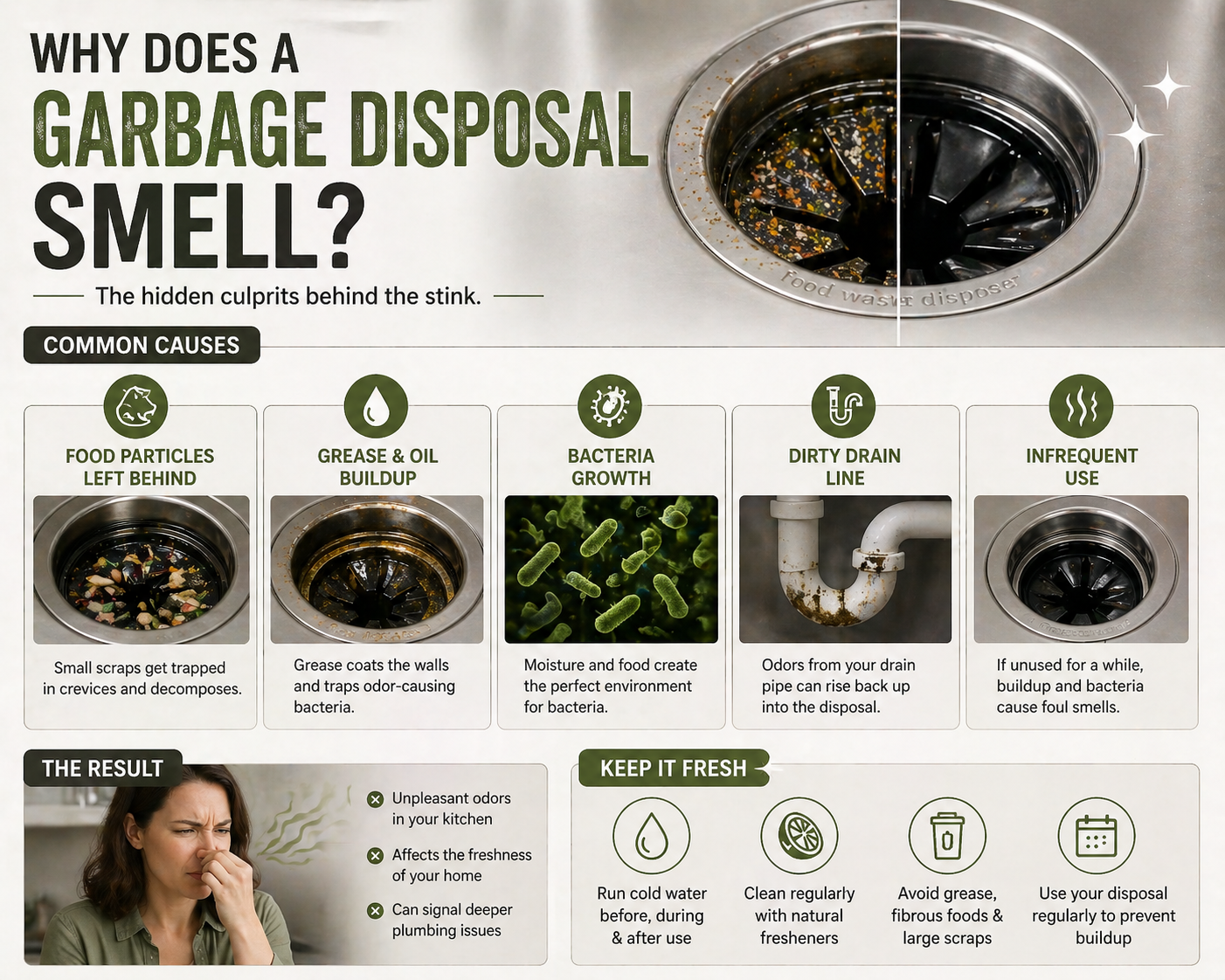
Smell is caused by decomposing food particles + trapped grease + bacterial activity.
Garbage disposals operate in a dark, moist environment, which is ideal for bacterial growth. When food particles get trapped in crevices, they begin to decompose. This process releases sulfur compounds, which are responsible for the classic “rotten egg” smell. The issue becomes worse when grease is involved, as it forms a sticky layer that holds onto waste and prevents proper flushing.
Another overlooked factor is the splash guard. This rubber component traps food particles underneath its folds, where water flow cannot reach effectively. Even if the grinding chamber is clean, a dirty splash guard can continuously release odor, making it seem like the entire system is dirty.
Main odor sources:
- Food waste stuck in chamber
- Grease coating internal surfaces
- Bacterial growth in moist areas
- Dirty splash guard folds
Why odor persists:
- Incomplete cleaning methods
- Lack of regular maintenance
- Using only water without scrubbing
Decision clarity:
If smell returns quickly after cleaning, the issue is likely grease buildup or splash guard contamination, not just surface debris.
How to Remove Bad Smell from Garbage Disposal
Removing odor requires targeting the source, not masking the smell.
Many people use lemon peels alone, which only provides temporary freshness. True odor removal happens when the bacteria and organic residue causing the smell are eliminated. This means combining cleaning agents with mechanical action to break down buildup and flush it out completely.
Different odor intensities require different approaches. Mild smells can be fixed with baking soda and citrus, while strong odors often require repeated cleaning cycles and deeper scrubbing. Understanding this distinction helps avoid frustration when simple methods don’t work.
Odor removal methods:
- Mild odor → baking soda + vinegar
- Moderate odor → add ice + salt cleaning
- Strong odor → deep clean + repeat cycle
- Grease smell → dish soap + hot water flush
What works best:
- Combine methods, don’t rely on one
- Focus on splash guard cleaning
- Repeat process if needed
Decision clarity:
If odor disappears after one cycle, maintenance is enough. If not, perform a full deep clean to remove underlying buildup.
How to Deep Clean a Garbage Disposal (Monthly Method)
Deep cleaning removes hidden buildup and bacterial layers that regular cleaning misses.
Over time, a thin layer called biofilm forms inside the disposal. This layer consists of bacteria and organic residue that stick firmly to surfaces. Regular cleaning may reduce odor but won’t completely remove this layer. Deep cleaning is necessary to reset the system and restore hygiene.
This process involves dismantling accessible parts like the splash guard, soaking them, and manually scrubbing areas that water flow cannot reach. It’s especially important for households that use disposals frequently or process greasy foods.
Deep cleaning process:
- Turn off power
- Remove and soak splash guard
- Scrub chamber manually
- Use baking soda + vinegar
- Run ice + salt cycle
- Finish with citrus
Benefits:
- Removes hardened grease
- Eliminates biofilm
- Restores fresh smell
- Improves performance
Decision clarity:
If your disposal smells even after regular cleaning, deep cleaning is required at least once every 3–4 weeks.
Natural vs Chemical Cleaning Methods: Which Is Better?
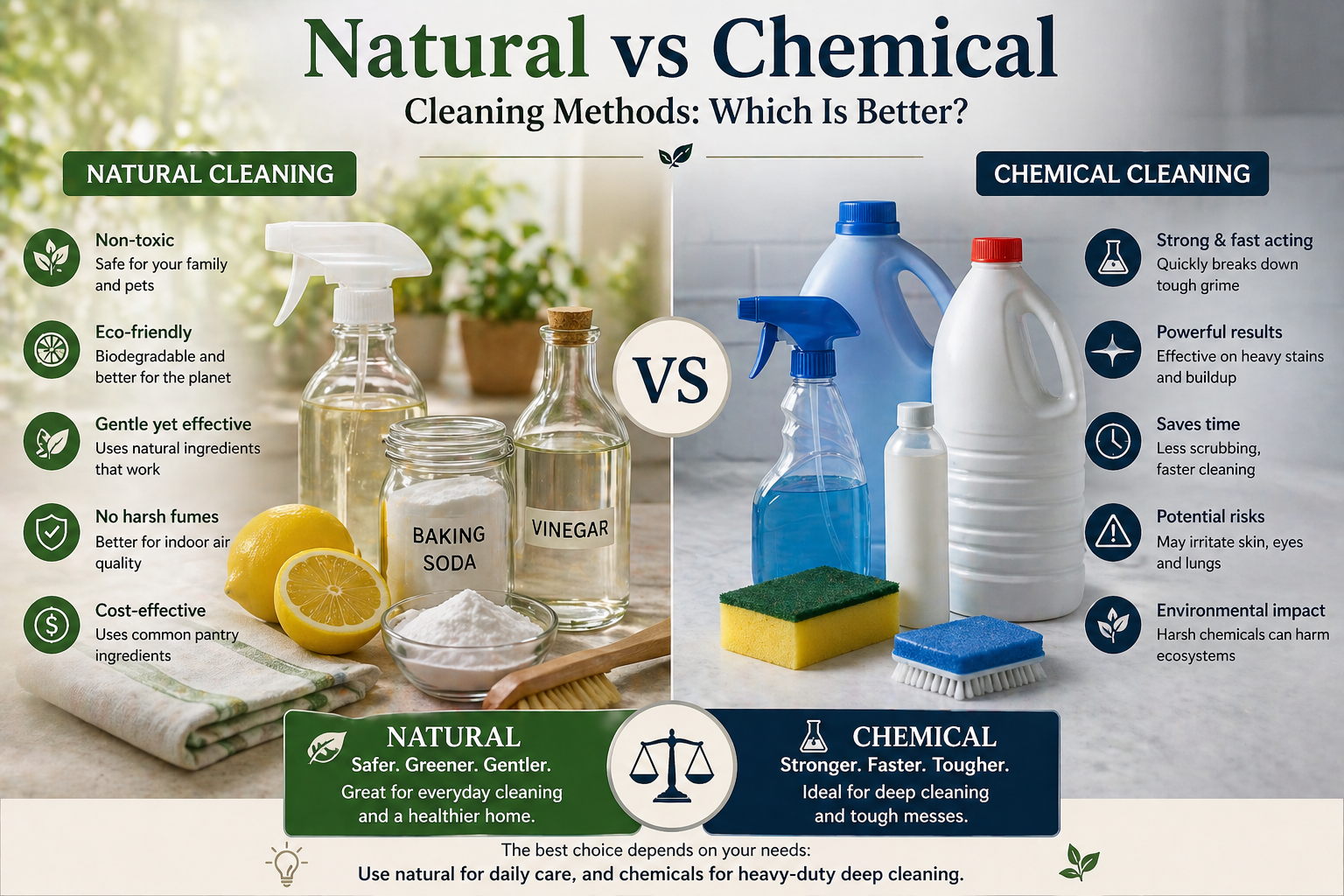
Natural methods are safer, while chemical cleaners are stronger but riskier.
Cleaning methods like baking soda and vinegar are effective for natural routine maintenance. They are safe for pipes, environmentally friendly, and cost-effective. However, they may require repeated use for heavy buildup. Chemical cleaners, on the other hand, are designed for stronger action but can damage internal components if overused.
The key is knowing when to use each method. For most households, natural cleaning is sufficient. Chemical cleaners should only be used occasionally when buildup becomes severe and cannot be removed through regular methods.
Comparison:
- Natural → safe, eco-friendly, consistent use
- Chemical → powerful, occasional use only
- Bleach → avoid due to damage risk
Best strategy:
- Weekly natural cleaning
- Monthly deep cleaning
- Rare chemical use if needed
Decision clarity:
If your disposal is maintained regularly, natural methods are enough. Chemical cleaners are only for neglected systems.
Why These Cleaning Methods Work
Garbage disposal cleaning works by combining chemical reactions and mechanical action to break down organic waste, dissolve grease, and remove bacteria.
Each cleaning method targets a specific type of buildup inside the disposal. Baking soda acts as a mild abrasive and deodorizer, while vinegar contains acetic acid that reacts with organic matter and helps dissolve residue. When combined, they create a foaming reaction that penetrates tight spaces and loosens trapped particles. This is why the mixture is effective for odor removal and light cleaning.
Mechanical methods like ice and salt work differently. Ice creates friction inside the grinding chamber, knocking loose debris that has hardened over time. Salt enhances this effect by adding abrasion, helping scrub internal surfaces. Citrus peels add a final layer of freshness by releasing natural oils that neutralize odor compounds instead of just masking them.
How each method contributes:
- Baking soda → neutralizes odor and loosens buildup
- Vinegar → dissolves residue and kills bacteria
- Ice → dislodges stuck debris
- Salt → increases scrubbing power
- Citrus → neutralizes odor compounds
Why combination works best:
- Covers both chemical and physical cleaning
- Targets multiple problem layers
- Provides longer-lasting results
Decision clarity:
If a single method doesn’t solve the problem, it’s because you’re only addressing one layer of buildup. Combining methods ensures complete cleaning.
How Often Should You Clean a Garbage Disposal?
Cleaning frequency depends on usage and food type.
Garbage disposals that handle greasy or fibrous foods require more frequent cleaning. In contrast, light-use disposals may only need maintenance every two weeks. The key is consistency. Waiting until odor appears means buildup has already formed, making cleaning harder and less effective.
A structured cleaning schedule prevents accumulation and keeps the disposal running efficiently. This also reduces long-term wear and potential plumbing issues.
Recommended schedule:
- Light use → every 2 weeks
- Normal use → weekly
- Heavy use → 2–3 times/week
Deep cleaning:
- Every 3–4 weeks
Signs you need cleaning:
- Bad odor
- Slow drainage
- Unusual noise
- Visible residue
Decision clarity:
If you cook daily, treat disposal cleaning as part of your weekly kitchen routine, not an occasional task.
What Should You Never Put in a Garbage Disposal?
Certain materials cause clogs, damage, and long-term issues.
Garbage disposals are designed for soft food waste, not everything. Hard items can damage components, while fibrous foods wrap around moving parts. Grease is especially problematic because it coats pipes and traps debris, leading to blockages over time.
Understanding what to avoid is just as important as cleaning. Prevention reduces the need for frequent maintenance and extends the lifespan of the disposal.
Avoid these:
- Grease and oil
- Coffee grounds
- Eggshells
- Fibrous foods (celery, corn husk)
- Bones
- Pasta and rice
Why they’re harmful:
- Grease hardens in pipes
- Fibers wrap around impellers
- Starches expand and clog
Decision clarity:
If your disposal clogs frequently, your usage habits—not your cleaning routine—are likely the problem.
Garbage Disposal Cleaning Checklist (Quick Reference)
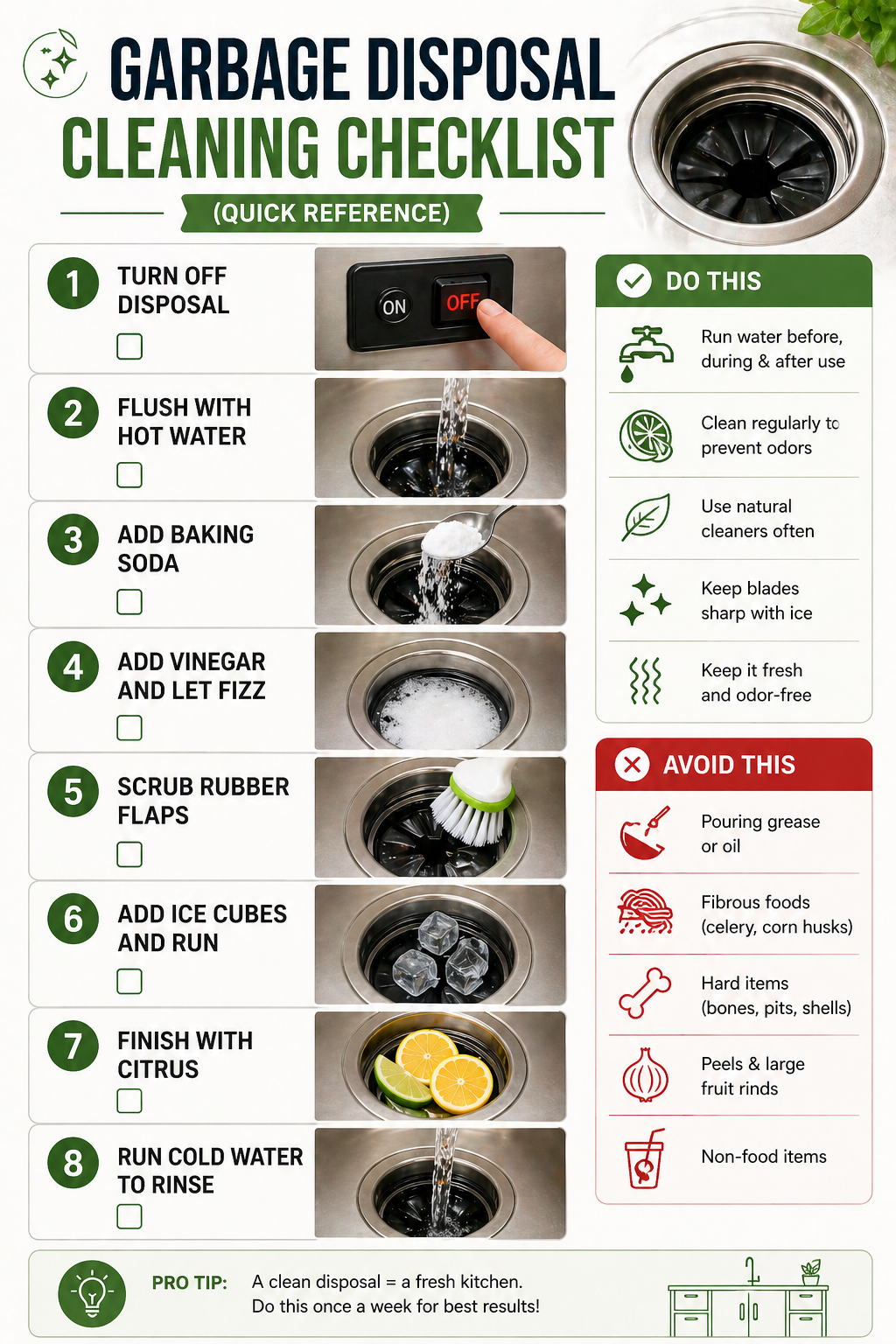
Use this as a weekly maintenance system.
A checklist simplifies cleaning and ensures no critical step is missed. Most disposal issues happen because cleaning is inconsistent or incomplete. Following a structured routine eliminates buildup before it becomes a problem.
This checklist is designed for efficiency, allowing you to maintain your disposal in under 10 minutes while preventing long-term issues.
Weekly checklist:
- Run cold water before and after use
- Clean splash guard
- Use baking soda + vinegar
- Add citrus peels
- Run ice occasionally
Monthly:
- Deep clean process
Benefits:
- Prevents odor buildup
- Maintains performance
- Reduces repair risk
Decision clarity:
Consistency beats intensity. A simple weekly routine is more effective than occasional deep cleaning.
How Long Does It Take to Clean a Garbage Disposal?
Cleaning a garbage disposal typically takes between 5 to 25 minutes depending on the level of buildup and the method used.
Time expectations are important because many users either rush the process or assume cleaning requires too much effort. In reality, most disposal cleaning tasks can be completed quickly if done regularly. A simple rinse and deodorizing cycle takes only a few minutes, while a full deep clean requires slightly more time but delivers significantly better results.
The duration depends on how long buildup has been accumulating. A lightly used disposal can be cleaned in under 10 minutes, while a neglected one may require repeated cycles and scrubbing. Understanding these time ranges helps set realistic expectations and encourages consistent maintenance instead of delay.
Time breakdown:
- Quick clean → 5–10 minutes
- Standard clean → 10–15 minutes
- Deep clean → 20–25 minutes
What affects cleaning time:
- Amount of grease buildup
- Frequency of cleaning
- Type of food waste processed
- Whether deep cleaning is required
Decision clarity:
If cleaning takes longer than 25 minutes, the disposal likely has heavy buildup or underlying issues that may require deeper intervention.
When Cleaning Doesn’t Work: Signs You Need Repair
Not all problems are cleaning-related.
If your disposal continues to malfunction after thorough cleaning, the issue may be mechanical. Components like the motor or impeller can wear out over time, and blockages deeper in the plumbing system may require professional intervention.
Recognizing these signs early helps avoid further damage and costly repairs.
Warning signs:
- Disposal won’t turn on
- Humming sound only
- Frequent clogs
- Water backing up
Possible causes:
- Jammed impeller
- Motor failure
- Drain blockage
Decision clarity:
If cleaning doesn’t restore normal function, stop troubleshooting and consult a plumber to avoid worsening the issue.
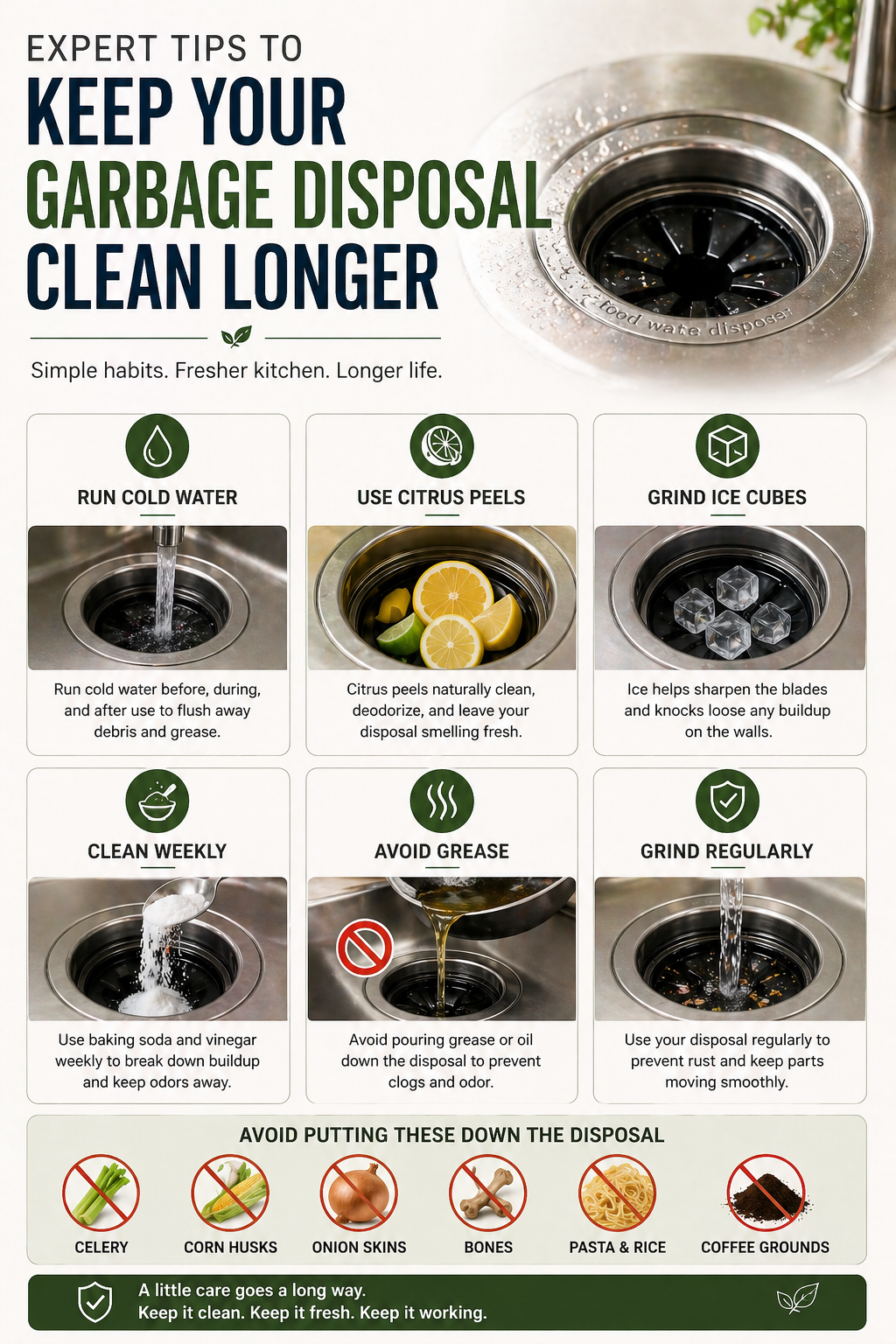
Expert Tips to Keep Your Garbage Disposal Clean Longer
Prevention reduces effort and extends lifespan.
Most disposal problems are caused by daily habits, not lack of cleaning. Small changes in how you use the disposal can significantly reduce buildup and odor formation. These habits are simple but highly effective when applied consistently.
Maintaining a clean disposal isn’t about frequent deep cleaning—it’s about smart usage and routine care.
Best practices:
- Always use cold water
- Run disposal regularly
- Cut large food pieces
- Avoid overloading
- Clean splash guard weekly
Long-term benefits:
- Fewer odors
- Better performance
- Longer lifespan
- Reduced repair costs
Decision clarity:
Adopt these habits and your disposal will stay clean with minimal effort.
Expert Insight: What Professionals Recommend
Professional plumbers recommend weekly maintenance cleaning and proper usage habits to extend garbage disposal lifespan by up to 30–40%.
From a professional perspective, most garbage disposal failures are preventable. Plumbers often see units that fail prematurely due to grease buildup, improper usage, and lack of routine cleaning. According to industry experience, disposals that are maintained weekly and used correctly last significantly longer and perform more efficiently.
Experts emphasize that cleaning alone is not enough. Proper usage habits, such as avoiding problematic foods and running cold water consistently, play an equally important role. Combining preventive habits with regular cleaning creates a balanced system that minimizes wear and reduces the likelihood of clogs or mechanical failure.
Professional recommendations:
- Clean disposal weekly using natural methods
- Deep clean once every 3–4 weeks
- Avoid grease and fibrous foods
- Always run cold water during use
- Inspect and clean splash guard regularly
Long-term benefits:
- Extended disposal lifespan
- Reduced repair costs
- Improved performance
- Consistent odor control
Decision clarity:
If you follow both cleaning routines and proper usage habits, your garbage disposal will remain efficient and problem-free for years.
Recommended Tools for Cleaning a Garbage Disposal
Using the right tools makes garbage disposal cleaning safer, faster, and more effective.
While most cleaning can be done using household items, having a few dedicated tools can significantly improve results. Tools designed for disposal cleaning help reach areas that are otherwise difficult to clean, such as the inner chamber and underside of the splash guard. They also reduce the risk of injury by allowing you to clean without inserting your hands into the unit.
Choosing the right tools depends on how frequently you clean your disposal and the level of buildup you typically encounter. For regular maintenance, simple tools are sufficient, while deeper cleaning may benefit from specialized products.
Useful tools:
- Long-handle scrub brush
- Disposal cleaning pods
- Natural enzyme cleaners
- Flexible cleaning wand
Why tools matter:
- Improve cleaning efficiency
- Reach hidden areas
- Reduce safety risks
- Enhance long-term maintenance
Decision clarity:
If you clean your disposal regularly, basic tools are enough. If buildup is frequent, investing in specialized cleaning tools will save time and effort.
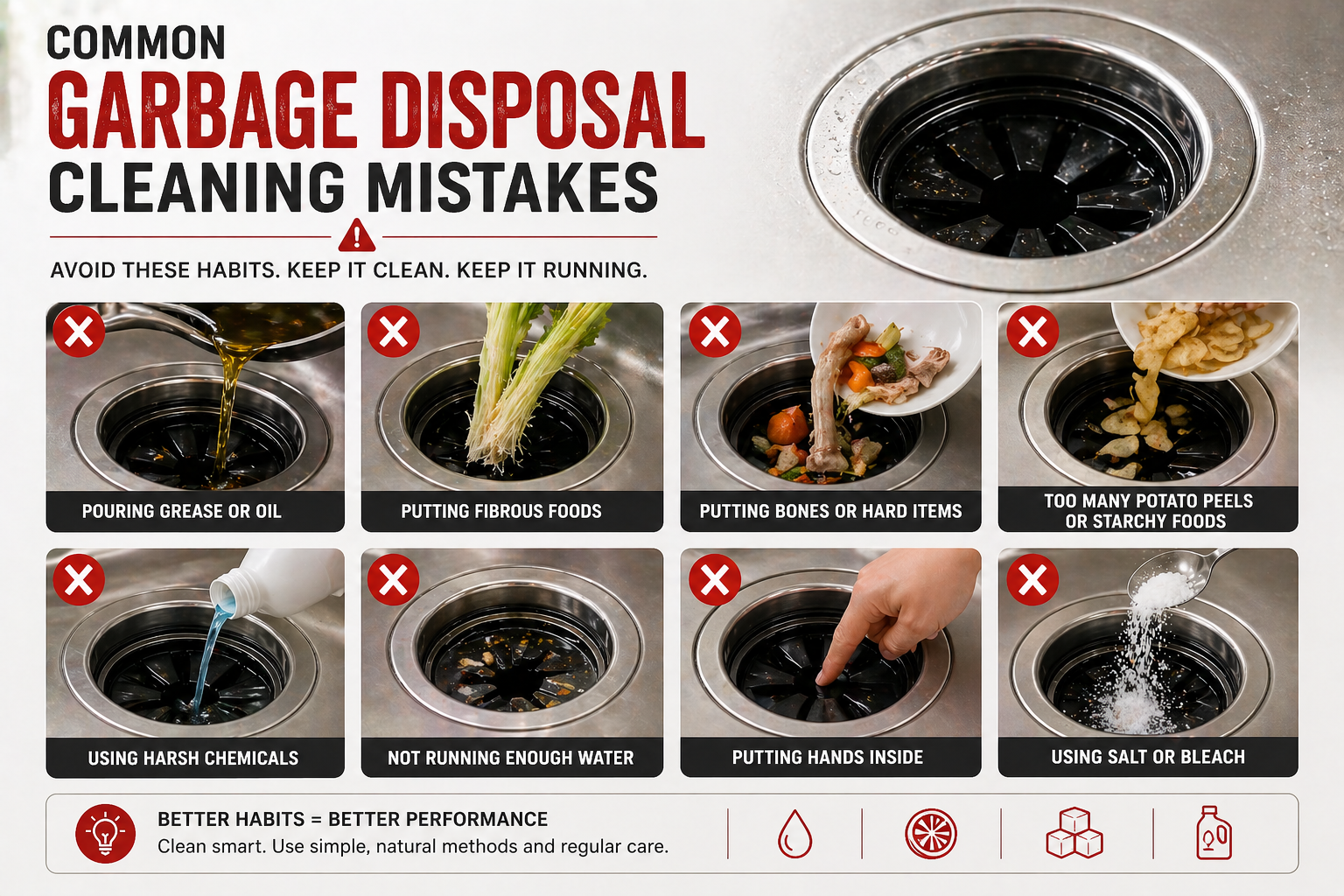
Common Garbage Disposal Cleaning Mistakes
Most garbage disposal problems are caused by incorrect cleaning habits rather than lack of cleaning.
Many homeowners unknowingly make mistakes that either reduce cleaning effectiveness or create new problems. One of the most common errors is using hot water while running the disposal. While hot water helps dissolve grease temporarily, it allows it to travel deeper into the pipes where it cools and solidifies, leading to clogs. Another frequent mistake is relying only on deodorizing methods like lemon peels without actually removing buildup.
Ignoring the splash guard is another critical oversight. This area traps the most food particles and bacteria, making it the primary source of odor. Additionally, using harsh chemicals like bleach can damage internal components and harm plumbing systems over time. Understanding and avoiding these mistakes ensures that your cleaning routine is both effective and safe.
Common mistakes:
- Using hot water during grinding
- Using bleach or harsh chemicals
- Ignoring splash guard cleaning
- Overloading disposal with waste
- Skipping regular maintenance
Better approach:
- Use cold water during operation
- Clean splash guard weekly
- Use natural cleaning methods consistently
Decision clarity:
If your disposal smells or clogs frequently despite cleaning, your method is likely incorrect rather than insufficient.
FAQs
Can I use vinegar in my garbage disposal?
Yes, vinegar is safe and helps break down buildup and kill bacteria.
Does ice sharpen garbage disposal blades?
No, disposals don’t have sharp blades. Ice helps clean by dislodging debris.
Is bleach safe for garbage disposal?
No, bleach can damage components and harm pipes.
How long does cleaning take?
Basic cleaning takes 10–15 minutes. Deep cleaning takes 20–25 minutes.
Why does my disposal still smell after cleaning?
Most likely the splash guard or drain pipes are still dirty.
Can I clean disposal without removing it?
Yes, all cleaning steps can be done while installed.
How do you clean a garbage disposal quickly?
For a quick clean, run cold water, add dish soap, then pour baking soda and vinegar. Let it sit for 10 minutes, rinse, and finish with citrus peels for freshness.
What is the best natural cleaner for a garbage disposal?
Baking soda and vinegar are the best natural cleaners as they break down organic waste, neutralize odors, and clean safely without damaging the disposal or pipes.
Can I use vinegar and baking soda in my garbage disposal?
Yes, they are safe and effective together. The foaming reaction helps loosen debris and remove odor when left for 10–15 minutes before rinsing.
How often should I clean my garbage disposal?
Clean it at least once a week and perform a deep clean every 3–4 weeks. Heavy usage may require more frequent maintenance.
Why does my garbage disposal still smell after cleaning?
The most common reason is a dirty splash guard or buildup in the drain. Re-clean thoroughly and focus on hidden areas like rubber flaps.
Is it safe to use bleach in a garbage disposal?
No, bleach can damage internal components and pipes. Use safer alternatives like baking soda, vinegar, or enzyme cleaners instead.
Does ice really clean a garbage disposal?
Yes, ice helps dislodge stuck debris through mechanical action. It works even better when combined with salt for added scrubbing power.
What can I put in my garbage disposal to make it smell better?
Citrus peels like lemon or orange help neutralize odors and leave a fresh scent. Always clean the disposal first for best results.
Can a clogged garbage disposal be fixed by cleaning?
Yes, minor clogs caused by food buildup can often be cleared with cleaning methods. Severe blockages may require manual removal or repair.
What is the safest way to clean a garbage disposal?
Turn off power, use cold water, and clean with baking soda, vinegar, and a brush. Avoid putting hands inside and skip harsh chemicals.
