
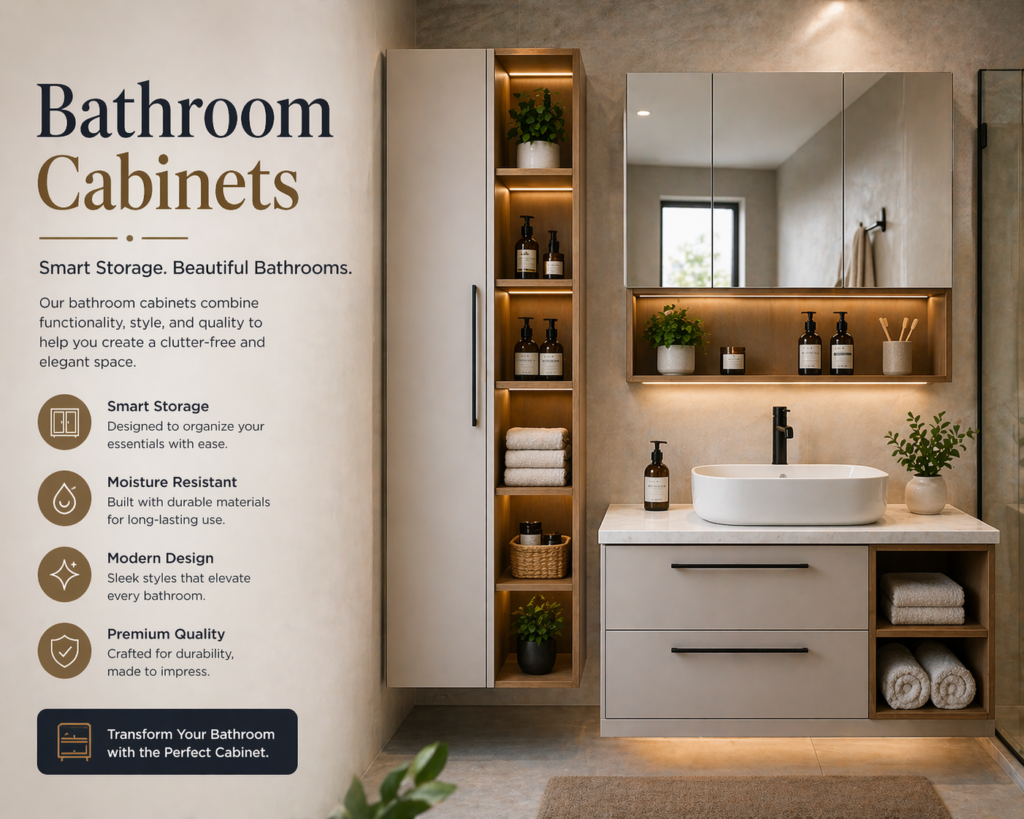
Bathroom cabinets are storage units designed to organize toiletries, protect items from moisture, and enhance bathroom functionality. The best cabinets combine water-resistant materials, efficient internal layout, and the right installation type to match space, usage, and humidity conditions.
Bathroom cabinets are not just storage boxes. They are engineered to survive moisture, daily use, and temperature changes while maintaining structure and appearance over time.
What Are Bathroom Cabinets and How Do They Work?
Bathroom cabinets are enclosed storage systems installed in bathrooms to store personal care items, cleaning supplies, and accessories.
They work by:
- protecting contents from moisture exposure
- organizing items using shelves and drawers
- maximizing vertical and hidden storage space
Modern cabinets also integrate mirrors, lighting, and soft-close hardware for improved usability.
What Are the Different Types of Bathroom Cabinets?
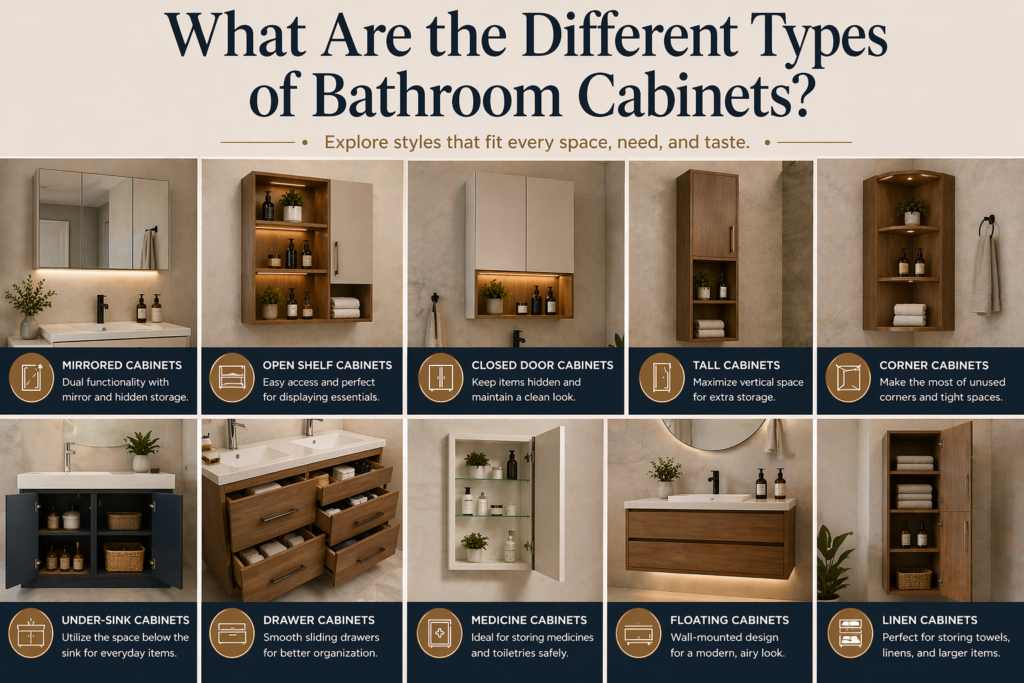
Bathroom cabinets come in multiple configurations based on space and function.
Common Types:
Wall-Mounted Cabinets
Installed above sinks or toilets. Ideal for saving floor space.
Freestanding Cabinets
Placed directly on the floor. Offer larger storage capacity.
Vanity Cabinets
Integrated with sinks. Combine storage with functional design.
Recessed Cabinets
Built into the wall cavity. Provide hidden storage without occupying space.
How Do You Choose the Right Bathroom Cabinets?
Choosing the right cabinet depends on space, moisture level, and usage.
Key Decision Factors:
- Bathroom size
- Storage needs
- Humidity exposure
- Installation type
- Design compatibility
Practical Rule:
Small bathrooms benefit from vertical or wall-mounted cabinets, while larger bathrooms can support freestanding or double vanity cabinets.
Homeaholic recommends prioritizing function first, then design.
What Is the Difference Between Bathroom Cabinets and Vanities?
Bathroom cabinets and vanities are often confused, but they serve different purposes.
Bathroom Cabinets:
- Used purely for storage
- Installed on walls or floors
- Do not include sink integration
Bathroom Vanities:
- Combine cabinet + sink + countertop
- Serve both storage and functional washing needs
Key Decision Rule:
If your goal is storage expansion, choose cabinets.
If your goal is sink replacement with storage, choose a vanity.
Practical Insight:
Many modern bathrooms combine both to maximize space and usability.
Which Materials Are Best for Bathroom Cabinets?
Material determines durability, moisture resistance, and lifespan.
Material Comparison Table
| Material | Moisture Resistance | Durability | Best Use |
| Solid Wood | Medium | High | Luxury bathrooms |
| MDF | Low–Medium | Medium | Budget interiors |
| Plywood | High | High | Best overall choice |
| PVC | Very High | Medium | High humidity areas |
| Stainless Steel | Excellent | Very High | Modern, industrial bathrooms |
Why Bathroom Cabinets Fail: Swelling, Warping, and Mold Explained
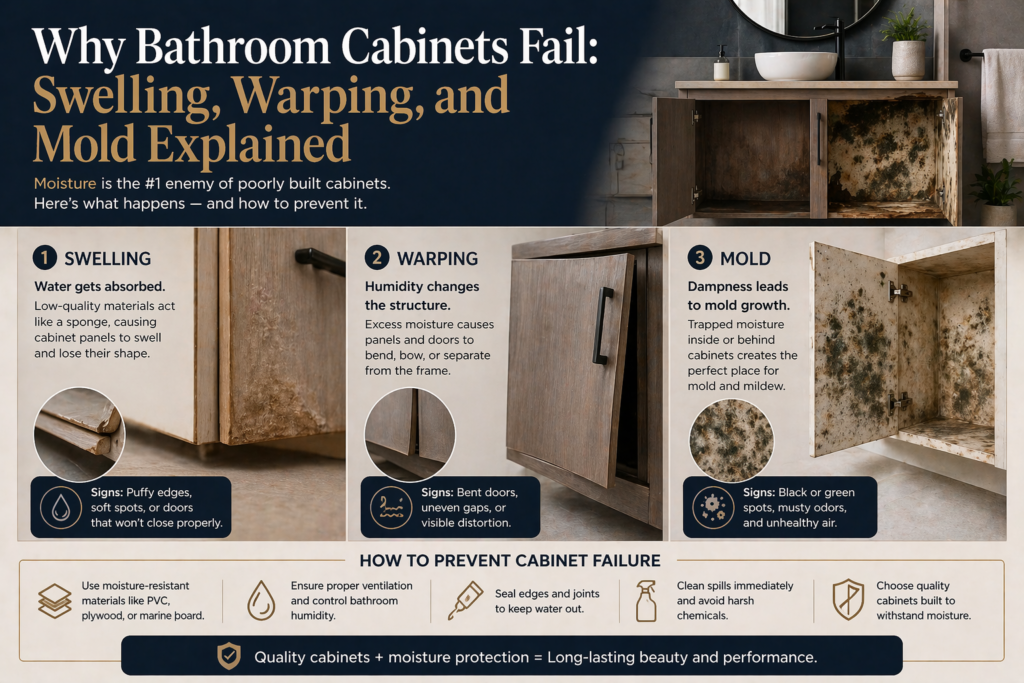
Bathroom cabinets fail primarily due to moisture exposure, poor material selection, and weak sealing. Understanding failure patterns helps prevent early replacement.
Swelling and Expansion
MDF and low-grade wood absorb moisture through edges. This causes panels to expand, lose shape, and permanently deform.
Warping
Uneven humidity causes wood panels to bend. This leads to misaligned doors and uneven gaps.
Mold Growth Inside Cabinets
Poor ventilation traps humidity inside cabinets, especially under sinks. This creates mold-prone environments.
Laminate Peeling
Low-quality laminates separate from the base material when exposed to steam and water.
Prevention Rule
Always use sealed edges, moisture-resistant materials, and proper ventilation to prevent long-term damage.
Key Insight:
Plywood offers the best balance of strength and moisture resistance, while PVC is ideal for extreme humidity environments.
Wall-Mounted vs Freestanding Bathroom Cabinets: Which Is Better?
Both types serve different needs.
| Feature | Wall-Mounted | Freestanding |
| Space efficiency | High | Medium |
| Storage capacity | Medium | High |
| Cleaning ease | Easy | Moderate |
| Installation | Complex | Simple |
Recommendation:
Wall-mounted cabinets are best for modern compact spaces, while freestanding cabinets work better in larger bathrooms.
Bathroom Cabinets Hardware Explained: Hinges, Rails, and Longevity
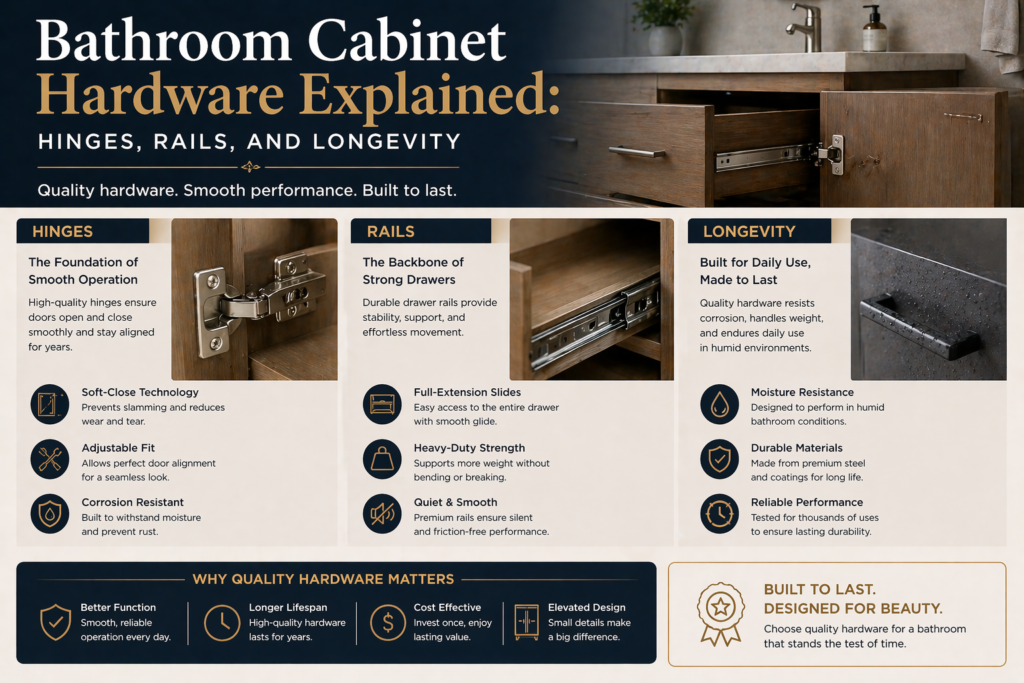
Hardware quality directly affects cabinet lifespan.
Soft-Close Hinges
- Prevent door slamming
- Reduce wear over time
- Last longer than standard hinges
Drawer Rails
- Ball-bearing rails provide smoother operation
- Cheap rails fail within 2–3 years
Handle vs Handleless Design
- Handles offer durability
- Push-to-open systems require higher-quality mechanisms
Key Insight:
Hardware failure is one of the most common reasons cabinets feel “old” even when structure is intact.
What Is the Ideal Size and Depth for Bathroom Cabinets?
Cabinet size directly affects usability and comfort.
Standard Dimensions:
- Depth: 18–24 inches
- Height: 30–36 inches
- Width: 24–60 inches
Small Bathroom Tip:
Use narrow cabinets (12–18 inches depth) to avoid crowding.
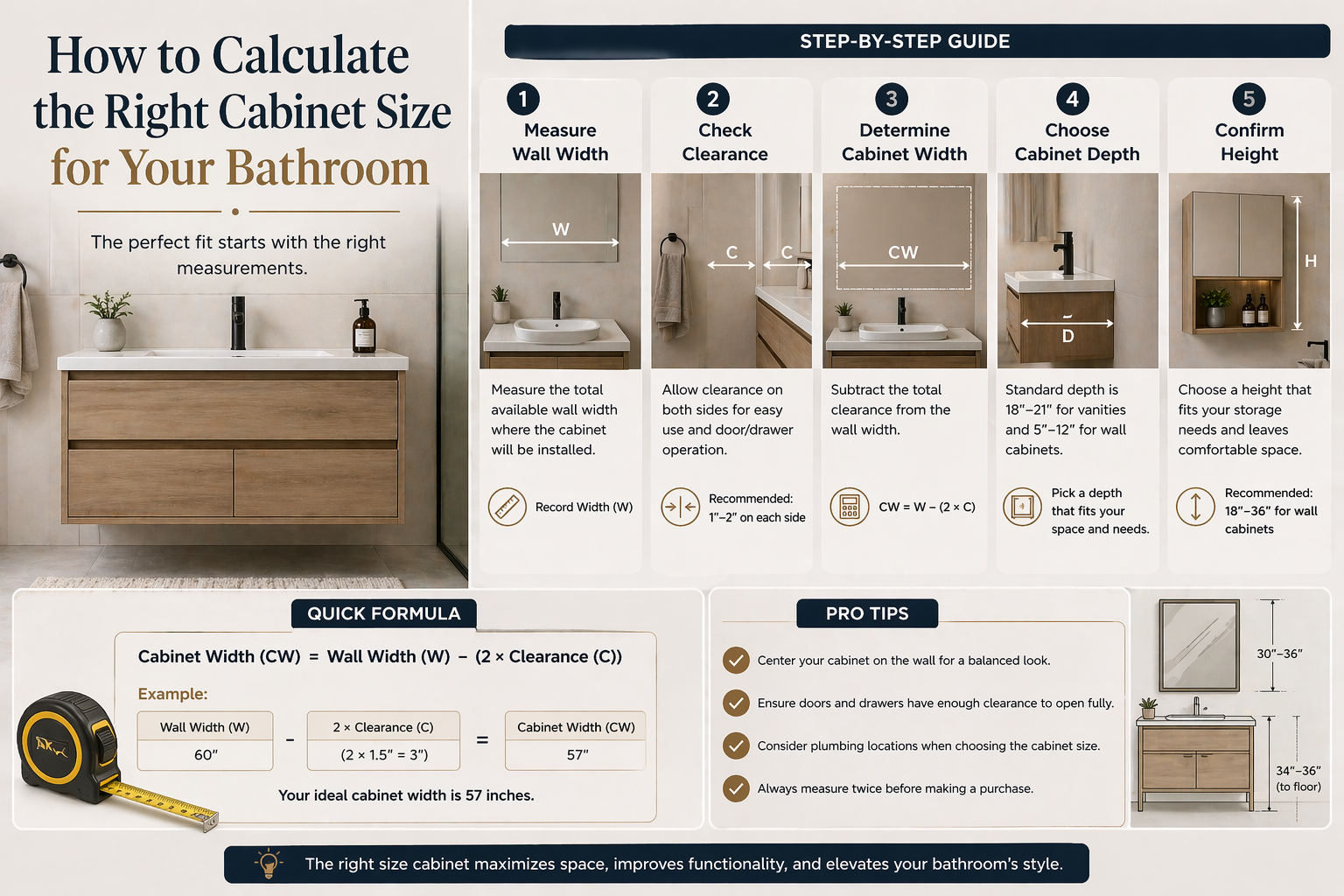
How to Calculate the Right Cabinet Size for Your Bathroom?
Choosing the correct size ensures comfort and usability.
Basic Calculation Method:
- Measure total bathroom width
- Leave at least 30 inches clearance for movement
- Allocate remaining space for cabinet width
Depth Selection Rule:
- Small bathrooms → 12–18 inches
- Standard bathrooms → 18–24 inches
- Large bathrooms → 24+ inches
Height Consideration:
- Standard vanity height: 32–36 inches
- Wall-mounted cabinets should align with eye level
Interactive Bathroom Cabinets Size Calculator
Use this simple method to estimate the ideal cabinet size for your bathroom layout.
Step-by-Step Input Method:
- Measure total bathroom width (in inches)
- Subtract minimum movement clearance (30–36 inches)
- Divide remaining space for cabinet allocation
Example Calculation:
- Bathroom width: 72 inches
- Clearance space: 36 inches
- Remaining space: 36 inches
- Ideal cabinet width = 30–36 inches
Quick Reference Table:
| Bathroom Width | Recommended Cabinet Size |
| 48” | 18–24” cabinet |
| 60” | 24–30” cabinet |
| 72” | 30–36” cabinet |
| 96”+ | 48–60” cabinet |
Homeaholic Insight:
Oversized cabinets reduce usability more than they increase storage.
How Do Bathroom Cabinets Perform in Humid Environments?
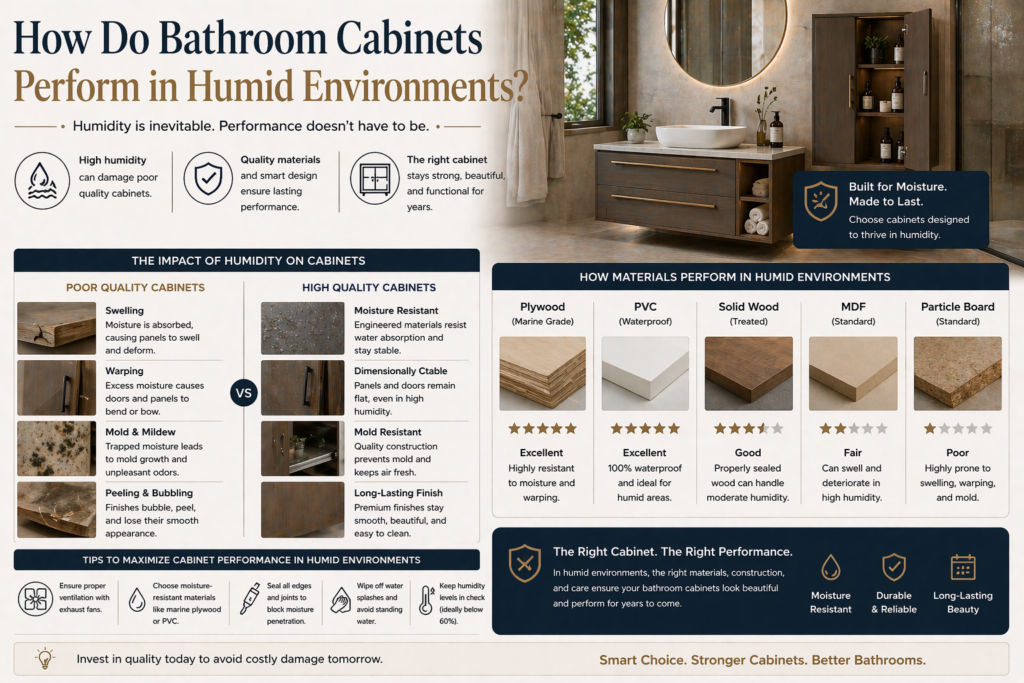
Humidity is the biggest threat to cabinet durability.
Common Effects:
- swelling
- warping
- mold growth
- laminate peeling
Best Solutions:
- waterproof coatings
- sealed edges
- moisture-resistant materials
Are Bathroom Cabinets Waterproof or Water-Resistant?
No cabinet is completely waterproof unless made from non-porous materials like PVC or stainless steel.
Water-Resistant Cabinets:
- Treated wood or plywood
- Laminated surfaces
- Sealed edges
Waterproof Cabinets:
- PVC cabinets
- Metal cabinets
Important Distinction:
Water-resistant cabinets can handle humidity,
but waterproof cabinets can handle direct water exposure.
Homeaholic Recommendation:
Use waterproof cabinets near sinks and water-prone areas.
Material Stress Test Comparison: Heat, Water, and Load
Different materials react differently under stress conditions.
| Material | Water Exposure | Heat Resistance | Load Strength |
| MDF | Poor | Medium | Low |
| Plywood | Good | High | High |
| PVC | Excellent | Medium | Medium |
| Steel | Excellent | Very High | Very High |
Key Insight:
Plywood provides the best balance across all stress factors, making it the most reliable long-term material.
Moisture Performance Matrix
| Material | Humidity Performance |
| MDF | Poor (swells easily) |
| Wood | Moderate |
| Plywood | Good |
| PVC | Excellent |
| Steel | Excellent |
Real-World Case Study: Bathroom Cabinets Failure in High Humidity
A small bathroom using MDF cabinets experienced swelling and edge damage within 18 months due to poor ventilation.
After replacing with PVC cabinets:
- no swelling after 4 years
- improved durability
- zero maintenance issues
This shows how material choice directly affects lifespan.
How Much Do Bathroom Cabinets Cost Globally?
Costs vary based on material, size, and customization.
Average Price Range:
- Basic cabinets: $100–$500
- Mid-range: $500–$1,500
- Premium/custom: $1,500–$5,000+
Cost Drivers:
- material type
- hardware quality
- custom design
- installation complexity
What Factors Affect Bathroom Cabinets Pricing?
Pricing is not just about material.
Key Pricing Factors:
- Material quality
- Cabinet size
- Hardware type
- Customization level
- Installation complexity
- Brand reputation
Hidden Cost Insight:
Cheap cabinets often cost more long-term due to early replacement.
How Long Do Bathroom Cabinets Last?
Cabinet lifespan depends on material and usage.
| Material | Lifespan |
| MDF | 3–7 years |
| Wood | 8–15 years |
| Plywood | 10–20 years |
| PVC | 10–15 years |
| Steel | 15–25 years |
How to Maintain Bathroom Cabinets for Maximum Lifespan?
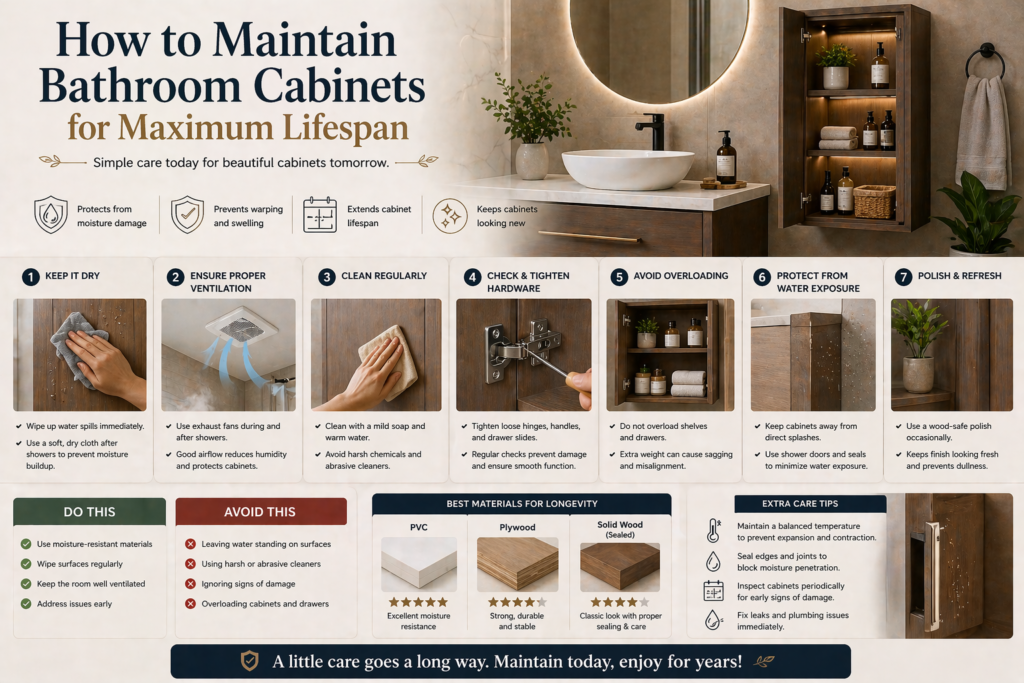
Proper maintenance can extend cabinet life by years.
Maintenance Routine:
- Wipe moisture immediately
- Clean surfaces weekly
- Check hinges every 3–6 months
- Re-seal edges if damaged
Ventilation Rule:
Bathrooms without ventilation reduce cabinet lifespan by up to 50%.
Long-Term Insight:
Maintenance is the cheapest way to delay cabinet replacement.
What Are Common Bathroom Cabinets Problems and How to Avoid Them?
Common Issues:
- swelling due to water exposure
- loose hinges
- mold buildup
- peeling laminates
Prevention:
- use moisture-resistant materials
- install proper ventilation
- avoid water accumulation
- maintain sealing and edges
How to Maximize Storage with Bathroom Cabinets?
Storage efficiency matters more than cabinet size.
Smart Storage Tips:
- use adjustable shelves
- install drawer dividers
- choose vertical cabinets
- use hidden compartments
How to Design Bathroom Cabinets Storage for Maximum Efficiency
Storage efficiency depends on layout, not just cabinet size.
Drawer vs Shelf Efficiency
- Drawers provide easier access and visibility
- Shelves offer larger storage but lower accessibility
Vertical vs Horizontal Storage
- Vertical cabinets maximize small bathroom space
- Horizontal cabinets work better in large bathrooms
Hidden Storage Optimization
- Use internal organizers
- Add pull-out trays
- Install under-sink compartments
Efficiency Rule:
A well-designed cabinet can store 30–50% more usable items than a poorly organized one of the same size.
Bathroom Cabinets Storage Planner (Smart Layout System)
Design your cabinet layout based on usage zones.
Step 1: Categorize Items
- Daily use items (toothbrush, skincare)
- Weekly use items (towels, cleaning supplies)
- Rare use items (backup products)
Step 2: Assign Storage Zones
| Zone | Placement |
| Top shelves | Rare use items |
| Middle shelves | Daily use items |
| Bottom area | Heavy or bulky items |
Step 3: Optimize Accessibility
- Use drawers for small items
- Use shelves for large items
- Add dividers for organization
Efficiency Insight:
Proper zoning improves accessibility by up to 50% compared to random storage.
Storage Efficiency Comparison
| Cabinet Type | Efficiency Score |
| Recessed | High |
| Wall-mounted | Medium |
| Freestanding | Medium |
| Vanity | High |

What Most Homeowners Get Wrong About Bathroom Cabinets?
Most people choose cabinets based on appearance alone.
In reality:
- 60% of failures come from moisture damage
- 25% from poor installation
- 15% from low-quality hardware
Material and installation matter more than design.
DIY vs Custom Bathroom Cabinets: Which Should You Choose?
DIY Cabinets:
- lower cost
- limited customization
Custom Cabinets:
- perfect fit
- higher durability
- premium design
Recommendation:
Custom cabinets are better for long-term performance and space optimization.
Ready-Made vs Custom Bathroom Cabinets: Which Is Better?
Ready-Made Cabinets:
- Lower cost
- Faster installation
- Limited size options
Custom Cabinets:
- Perfect fit
- Better material control
- Higher long-term value
Decision Rule:
Choose ready-made for budget and speed.
Choose custom for durability and precision.
Bathroom Cabinets Installation: Key Considerations
Proper installation prevents long-term issues.
Key Points:
- secure wall anchoring
- level alignment
- moisture sealing
- correct height positioning
Bathroom Cabinets Installation Mistakes That Cause Long-Term Damage
Improper installation leads to structural failure.
Common Mistakes:‘
- Weak wall anchoring
- Installing on hollow drywall without support
- Incorrect leveling
- Ignoring tile drilling risks
Wall Load Insight:
Floating cabinets must be anchored into studs or concrete walls.
Failure to do so can lead to collapse under weight.
Expert Insight: Why Moisture Resistance Matters More Than Design
Most homeowners choose cabinets based on appearance. However, moisture resistance determines whether cabinets last 2 years or 15 years.
Homeaholic experts recommend always prioritizing material performance over aesthetics in high-humidity environments.
Real-World Case Study: Small Bathroom Storage Upgrade
A compact bathroom with limited storage used a traditional freestanding cabinet.
Problem:
- cluttered countertop
- poor accessibility
- inefficient storage
Upgrade:
Installed wall-mounted vertical cabinet with internal organizers.
Result:
- 40% increase in usable storage
- cleaner layout
- improved accessibility
How Bathroom Cabinets Impact Overall Bathroom Value
Bathroom cabinets directly influence property value.
Value Impact Factors:
- material quality
- design consistency
- storage functionality
- durability
Real Estate Insight:
Upgraded cabinets can increase perceived bathroom value significantly during resale.
Bathroom Cabinets Design Trends (Global Perspective)
Modern bathroom cabinet design is evolving globally.
Current Trends:
- Floating cabinets for minimalist spaces
- Handleless push-to-open designs
- Matte finishes over gloss
- Integrated lighting systems
- Natural wood textures
Design Insight:
Minimalist cabinets are gaining popularity due to space efficiency and modern aesthetics.
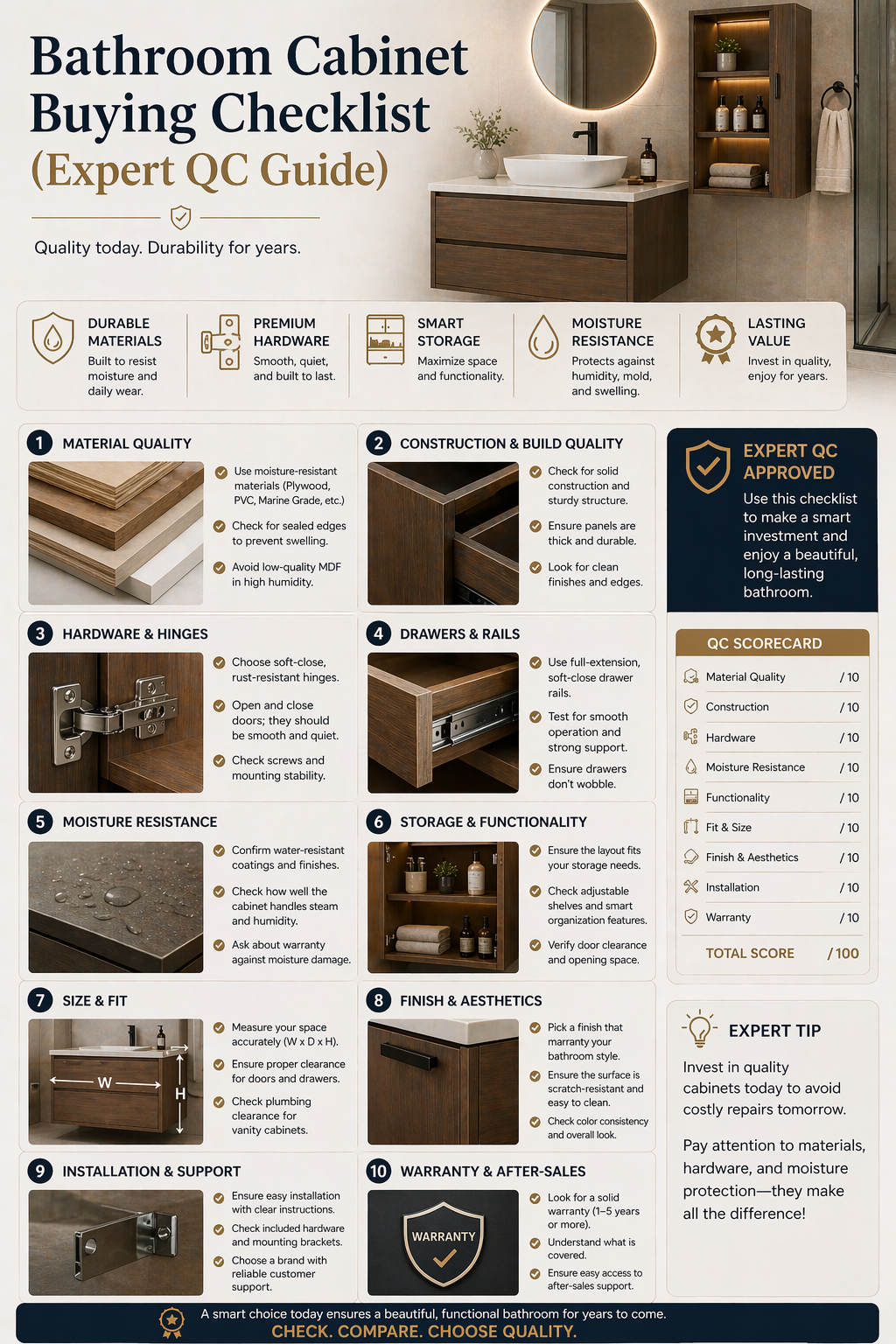
Bathroom Cabinets Buying Checklist (Expert QC Guide)
Use this checklist before purchasing:
- Material is moisture-resistant
- Edges are fully sealed
- Hinges are soft-close and durable
- Cabinet size fits space correctly
- Ventilation is considered
- Warranty is provided
Homeaholic Recommendation:
Always inspect edge sealing and internal structure, not just external design.
Bathroom Cabinets Comparison Tool (Decision Matrix)
Use this comparison system to choose the best cabinet type for your needs.
Cabinet Type Comparison
| Feature | Wall-Mounted | Freestanding | Recessed | Vanity |
| Space Saving | High | Medium | Very High | Medium |
| Storage Capacity | Medium | High | Medium | High |
| Installation Complexity | High | Low | Very High | Medium |
| Cost | Medium | Low–Medium | High | Medium–High |
| Best For | Small bathrooms | Large bathrooms | Minimalist spaces | Functional use |
Material Comparison
| Material | Moisture Resistance | Durability | Best Use |
| MDF | Low | Medium | Budget use |
| Plywood | High | High | Standard best choice |
| PVC | Very High | Medium | High humidity |
| Steel | Excellent | Very High | Premium durability |
Decision Rule:
- Choose wall-mounted for small spaces
- Choose freestanding for storage capacity
- Choose PVC or steel for humid environments
- Choose plywood for long-term balance
FAQ Section
What is the best material for bathroom cabinets?
Plywood and PVC are the best choices due to high moisture resistance and durability.
Are MDF cabinets suitable for bathrooms?
They are budget-friendly but prone to swelling in humid conditions.
What is the difference between vanity and cabinet?
A vanity includes a sink, while a cabinet is purely for storage.
How deep should a bathroom cabinet be?
Standard depth ranges from 18 to 24 inches.
Can bathroom cabinets be waterproof?
PVC and stainless steel cabinets offer near waterproof performance.
Are floating cabinets strong enough?
Yes, when properly installed with wall anchors.
How to prevent mold in cabinets?
Ensure ventilation and avoid moisture buildup.
How often should cabinets be replaced?
Typically, every 10–20 years depending on material.
Can bathroom cabinets rot from inside?
Yes, especially MDF cabinets exposed to hidden moisture over time.
Are soft-close hinges worth it?
Yes, they significantly extend cabinet lifespan and reduce wear.
What is the weight limit of floating cabinets?
Typically 50–100 kg depending on installation and wall type.
Can water seep through laminate edges?
Yes, if edges are not properly sealed.
Why do cabinet doors become uneven?
Hinge loosening or structural warping causes misalignment.
