
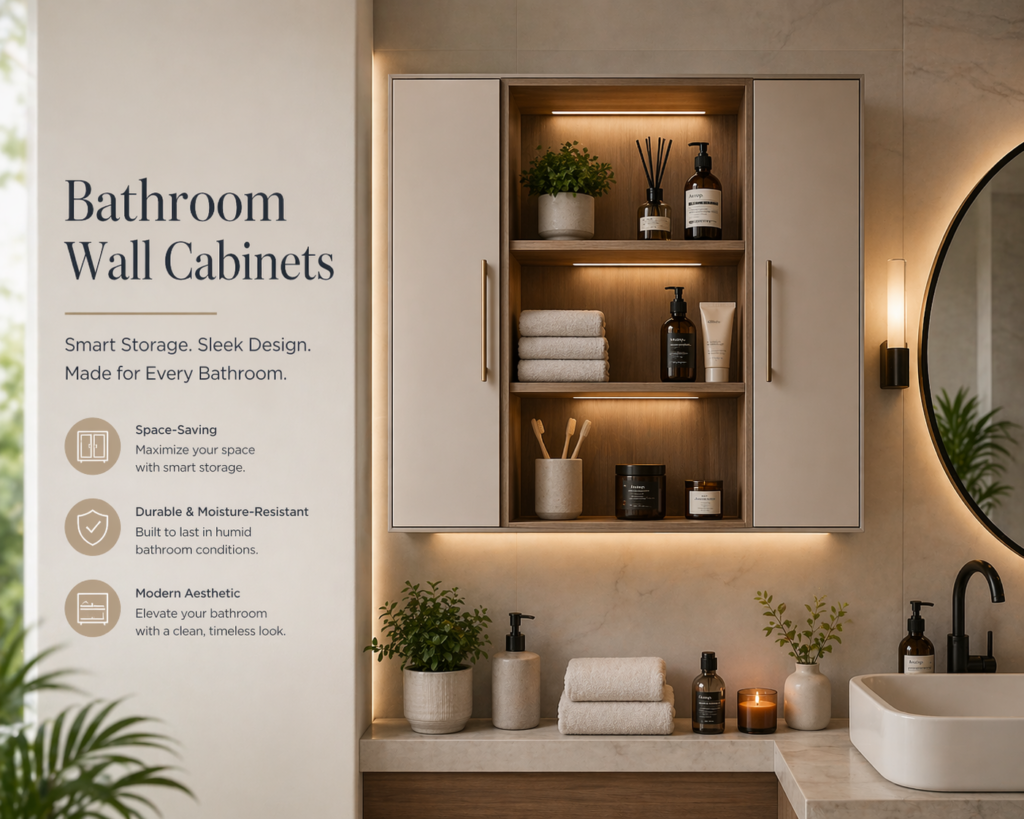
Bathroom wall cabinets are wall-mounted storage units designed to organize toiletries, medicines, and essentials without occupying floor space. They come in types like surface-mounted, recessed, mirrored, and corner cabinets. The best choice depends on your bathroom size, humidity level, storage needs, and wall structure.
Bathroom wall cabinets: (Quick Summary)
- Save floor space and reduce clutter
- Improve organization and hygiene
- Work best in small and medium bathrooms
- Last 5–20 years depending on material
- Cost between $30 and $800+ globally
What Are Bathroom Wall Cabinets?
Bathroom wall cabinets are vertical storage units fixed to the wall, typically above sinks, toilets, or unused wall space. Their primary function is to maximize storage without using floor area, making them essential in modern bathroom layouts.
Traditionally, bathrooms relied heavily on vanity cabinets for storage. However, as urban homes became smaller, the need for vertical storage solutions increased. Wall cabinets evolved to fill this gap by offering accessible storage without overcrowding the space.
From a functional standpoint, wall cabinets help divide storage into zones. Daily-use items such as toothbrushes and skincare products are kept within easy reach, while less frequently used items remain stored but organized. This improves both usability and hygiene.
In modern bathroom design systems, these cabinets are not standalone pieces. They are part of a broader bathroom organization strategy that includes vanities, shelves, and concealed storage. When used correctly, they reduce clutter, improve accessibility, and enhance the overall look of the bathroom.
What Types of Bathroom Wall Cabinets Exist?
Bathroom wall cabinets are designed in multiple formats, each suited for specific layouts and use cases.
Surface-Mounted Cabinets
These are installed directly onto the wall surface. They are easy to install and do not require structural modification.
They are ideal for rental homes or quick renovations. However, since they project outward, they require enough clearance to avoid obstructing movement in tight bathrooms.
Best for: Quick installation, rental spaces, and budget setups.
Recessed (In-Wall) Cabinets
Recessed cabinets are built into the wall cavity, creating a flush and minimal appearance.
They save more space than surface-mounted cabinets and are preferred in modern designs. However, installation requires cutting into the wall and ensuring no plumbing or electrical lines are affected.
Best for: Minimalist bathrooms and long-term home setups.
Mirrored Cabinets (Medicine Cabinets)
These combine a storage cabinet with a front-facing mirror. They are typically installed above the sink.
Advanced models include LED lighting and anti-fog technology, making them highly functional.
Best for: Compact bathrooms and dual-purpose functionality.
Corner Cabinets
These are designed to fit into unused corners. They make use of otherwise wasted space.
While storage capacity is limited, they are highly effective in small bathrooms.
Best for: Small bathrooms with limited wall space.
Open + Closed Combination Cabinets
These combine open shelves with closed compartments.
They allow quick access to frequently used items while keeping clutter hidden.
Best for: Balanced storage and display.
Bathroom Wall Cabinets vs Vanity Cabinets — What’s the Difference?
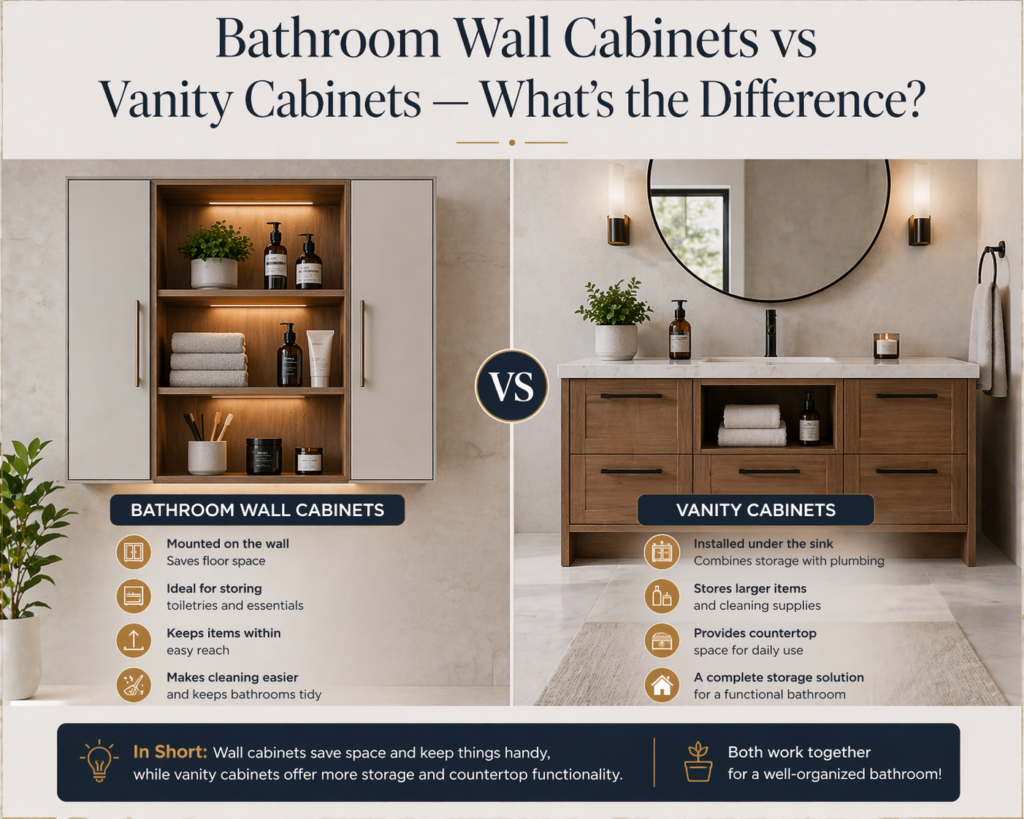
Bathroom wall cabinets and vanity cabinets serve different purposes, and understanding their differences helps in making the right storage decision.
Wall cabinets are mounted above ground level, typically on unused vertical surfaces. Their primary advantage is space efficiency. They do not occupy floor space, making them ideal for small bathrooms. They are best used for storing lightweight items such as toiletries, medicines, and personal care products.
Vanity cabinets, on the other hand, are installed below the sink and rest on the floor. They provide significantly more storage capacity and are designed to hold heavier items like cleaning supplies, extra towels, and plumbing fixtures. However, they consume floor space, which can make small bathrooms feel more cramped.
From a design perspective, wall cabinets contribute to a clean and open look, while vanity cabinets provide a grounded, functional base. In most modern bathrooms, both are used together to create a balanced storage system.
Another key difference is accessibility. Wall cabinets offer easy access to frequently used items at eye level, while vanity cabinets require bending or reaching down.
The best approach is not to choose one over the other but to use both strategically. Wall cabinets handle daily essentials, while vanity cabinets manage bulk storage. This combination maximizes efficiency and maintains a clutter-free environment.
What Are the Best Bathroom Wall Cabinets by Use Case?
The best cabinet depends on how your bathroom is used and the conditions inside it.
| Use Case | Best Cabinet Type | Reason |
| Small Bathroom | Slim wall-mounted | Saves space |
| Luxury Bathroom | Solid wood + LED | Premium appearance |
| High Humidity | PVC / Aluminum | Water resistant |
| Rental Homes | Surface-mounted | Easy installation |
| Minimalist Design | Recessed cabinet | Clean look |
Choosing based on use case ensures both performance and long-term satisfaction.
How to Choose the Right Bathroom Wall Cabinet?
Selecting the right cabinet involves more than picking a design. It requires evaluating space, usage, and environmental conditions.
Step 1: Measure Your Space
Measure width, height, and depth. Standard depth ranges from 4 to 12 inches.
If your bathroom is small, choose shallow cabinets to prevent obstruction.
Step 2: Check Wall Strength
Concrete walls support heavy cabinets. Drywall requires anchors or studs.
Ignoring wall strength can lead to installation failure.
Step 3: Evaluate Storage Needs
Identify what you plan to store. Toiletries, medicines, and cleaning items require different shelf configurations.
Adjustable shelves offer flexibility.
Step 4: Consider Accessibility
Install cabinets at a comfortable height. Standard placement is 48–60 inches from the floor.
Step 5: Choose Material Based on Environment
Humidity plays a major role. Bathrooms with poor ventilation require moisture-resistant materials.
Step 6: Match Design Style
Ensure the cabinet complements your bathroom theme. Consistency improves visual appeal.
Practical Decision Framework
- If bathroom < 40 sq ft → choose slim cabinet
- If humidity is high → choose PVC or aluminum
- If aesthetic is priority → choose recessed or mirrored cabinet
- If installation must be simple → choose surface-mounted
What Is the Best Material for Bathroom Wall Cabinets?
Material selection determines durability, maintenance, and performance.
Material Comparison Table
| Material | Durability | Water Resistance | Lifespan | Best Use |
| MDF | Medium | Moderate | 5–10 years | Budget setups |
| Solid Wood | High | Low | 10–20 years | Luxury bathrooms |
| PVC / WPC | High | Excellent | 10–15 years | Humid areas |
| Stainless Steel | Very High | Excellent | 15–25 years | Industrial style |
| Aluminum | High | Excellent | 10–20 years | Lightweight setups |
How Does Humidity Affect Bathroom Cabinets?
Humidity is the biggest factor affecting cabinet lifespan.
MDF absorbs moisture, which leads to swelling and deformation over time. Solid wood can warp if not properly sealed. Metal cabinets resist moisture but may develop rust if not treated.
PVC and aluminum perform best because they do not absorb water. This makes them ideal for high-humidity environments such as coastal areas or poorly ventilated bathrooms.
Key Insight:
PVC cabinets can last up to twice as long as MDF cabinets in humid conditions.
Humidity Resistance Score
| Material | Score (10) |
| PVC / WPC | 10 |
| Aluminum | 9 |
| Stainless Steel | 9 |
| MDF | 6 |
| Solid Wood | 5 |
What Problems Do Bathroom Wall Cabinets Solve?
Bathroom wall cabinets solve several practical problems that most users face daily but often overlook.
The first major issue is countertop clutter. Without proper storage, items like toothbrushes, skincare products, and medicines accumulate around the sink. This not only reduces usable space but also creates a messy and unhygienic environment. Wall cabinets eliminate this problem by providing a dedicated storage area above the working zone.
Another problem is inefficient space usage. Bathrooms, especially in urban homes, are often compact. Floor cabinets take up valuable space and restrict movement. Wall cabinets use vertical space instead, keeping the floor clear and improving overall accessibility.
Hygiene is another concern. Items left exposed on open surfaces are more likely to collect dust, water splashes, and bacteria. Closed cabinets protect these items, maintaining cleanliness and reducing contamination risk.
Storage accessibility is also improved. Instead of searching through multiple drawers or shelves, items can be organized systematically within a cabinet. Adjustable shelves further enhance usability by accommodating different item sizes.
Finally, wall cabinets contribute to visual organization. A clutter-free bathroom appears larger and more comfortable. This improves both user experience and perceived value of the space.
In short, bathroom wall cabinets transform disorganized, inefficient bathrooms into structured, functional spaces.
Are Bathroom Wall Cabinets Good for Small Bathrooms?
Yes. Wall cabinets are one of the most effective solutions for small bathrooms.
They utilize vertical space, keeping the floor clear and improving movement.
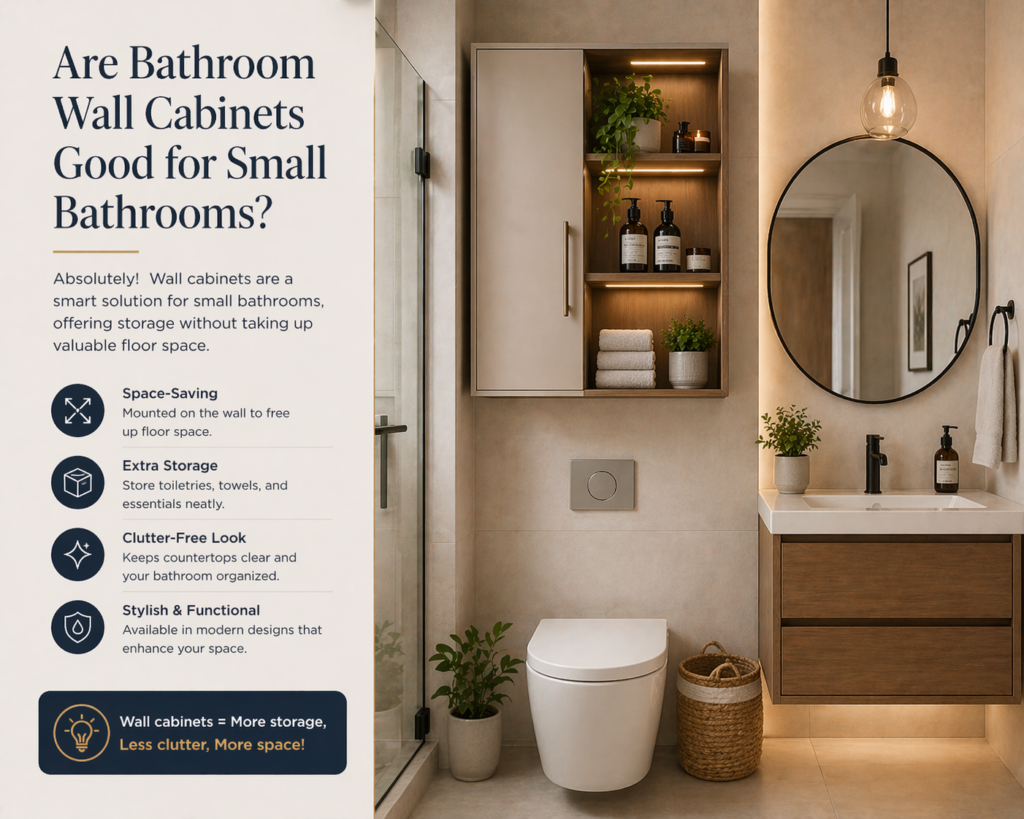
Space Optimization Strategies
- Install above the toilet
- Use narrow cabinets on side walls
- Combine mirror + cabinet
- Stack vertically instead of using wide units
Mini Case Example
A compact bathroom (5×7 ft) improved storage efficiency by 40% after installing a slim cabinet above the toilet. Counter clutter reduced significantly, and daily items became easier to access.
Bathroom Wall Cabinets vs Shelves — Which Is Better?
Both serve different purposes.
| Feature | Cabinets | Shelves |
| Storage Capacity | High | Medium |
| Protection | Yes | No |
| Accessibility | Moderate | High |
| Aesthetic | Clean | Open |
Practical Insight
Cabinets are better for concealed storage and hygiene. Shelves work best for decorative or frequently used items.
A hybrid setup provides the best balance.
What Is the Ideal Size and Placement for Bathroom Wall Cabinets?
The ideal size depends on your bathroom layout and user comfort.
| Bathroom Size | Recommended Width | Placement |
| Small | 12–24 inches | Above toilet |
| Medium | 24–36 inches | Above sink |
| Large | 36–48 inches | Feature wall |
Placement Guidelines
- Maintain eye-level accessibility
- Avoid blocking mirrors or lighting
- Keep safe distance from water sources
How to Install Bathroom Wall Cabinets (Step-by-Step)?
Proper installation ensures safety and durability.
Step-by-Step Process
- Mark position using a level
- Locate wall studs
- Drill pilot holes
- Install brackets
- Mount cabinet
- Check alignment
What Wall Type Is Best for Installation?
- Concrete walls: Strong and reliable
- Drywall: Requires anchors or studs
- Tile walls: Need careful drilling
Safety Considerations
- Avoid drilling into plumbing lines
- Do not overload cabinets
- Use proper mounting hardware
How Much Weight Can Bathroom Wall Cabinets Hold?
Weight capacity depends on installation and wall type.
- Stud-mounted cabinets: 50–100 lbs
- Drywall with anchors: 20–40 lbs
Overloading can cause structural damage.
How Much Do Bathroom Wall Cabinets Cost Globally?
| Type | Price Range |
| Basic MDF | $30–$100 |
| PVC Cabinets | $100–$300 |
| Premium Wood | $300–$800 |
| Designer Units | $800+ |
Cost Factors
- Material
- Size
- Features
- Installation
ROI Insight
Well-designed cabinets improve usability and can increase property appeal during resale.
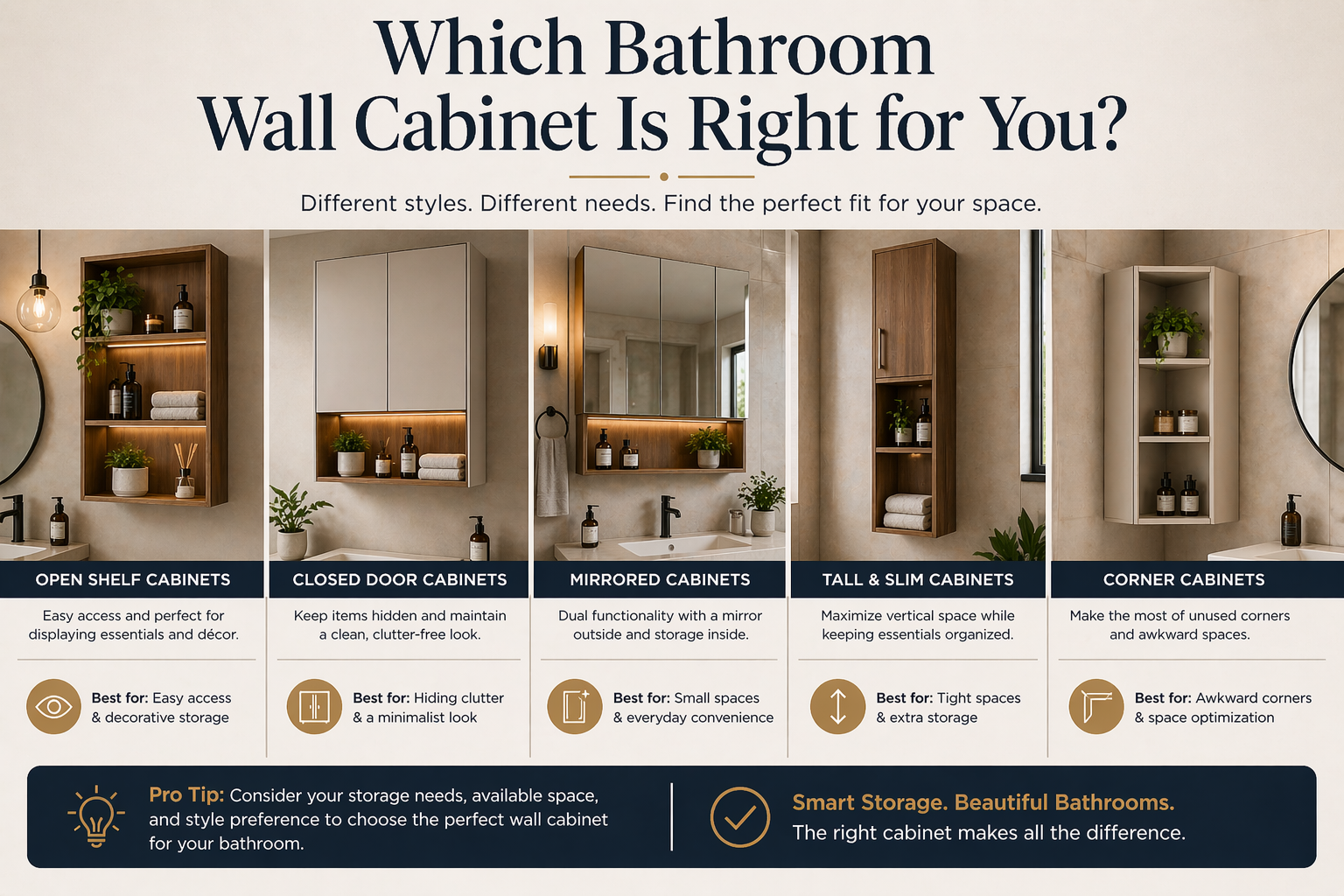
Which Bathroom Wall Cabinet Is Right for You?
Choosing the right bathroom wall cabinet depends on how your bathroom is used daily. A one-size-fits-all approach does not work because storage needs vary significantly between users.
For families, storage demand is higher. Multiple users mean more toiletries, hygiene products, and daily essentials. In such cases, wider cabinets with adjustable shelves are the best choice. They allow organized storage and prevent overcrowding.
For individuals or single users, compact cabinets are more practical. A mirrored cabinet above the sink often provides enough storage while serving dual functionality. This setup reduces the need for additional fixtures and keeps the layout simple.
Rental homes require flexibility. Surface-mounted cabinets are ideal because they are easy to install and remove without permanent wall modifications. This avoids damage and maintains compliance with rental agreements.
For luxury or high-end bathrooms, aesthetics and integration matter more. Recessed cabinets with LED lighting and soft-close mechanisms create a premium look. These cabinets blend into the wall and enhance the overall design.
For small bathrooms, narrow vertical cabinets or corner units are the best fit. They utilize unused wall space without interfering with movement.
The correct choice depends on three factors: available space, number of users, and humidity level. Aligning these ensures both functionality and long-term satisfaction.
How Long Do Bathroom Wall Cabinets Last?
| Material | Lifespan |
| MDF | 5–10 years |
| Wood | 10–20 years |
| PVC | 10–15 years |
| Metal | 15–25 years |
Failure Causes
- Moisture exposure
- Poor installation
- Low-quality materials
Maintenance Tips
- Clean regularly
- Avoid water accumulation
- Inspect hinges
What Do Experts Recommend for Bathroom Wall Cabinets?
Professionals prioritize durability, moisture resistance, and long-term usability over aesthetics alone. In real-world installations, the most common failure point in bathroom wall cabinets is material breakdown due to humidity. For this reason, experts consistently recommend PVC, WPC, or aluminum cabinets for bathrooms with poor ventilation or high moisture exposure. These materials do not absorb water, which prevents swelling, warping, and long-term structural damage.
For homeowners planning permanent installations, recessed cabinets are often the preferred choice. They provide a seamless, built-in look that integrates with the wall, increasing both visual appeal and property value. Interior designers frequently use recessed cabinets in modern bathrooms because they reduce visual clutter and create a cleaner layout.
In contrast, for rental properties or temporary setups, surface-mounted cabinets are the practical recommendation. They are easier to install, require minimal structural changes, and can be removed without damaging walls.
Experts also emphasize correct installation over cabinet quality alone. A high-end cabinet installed on weak drywall without proper anchoring can fail faster than a mid-range cabinet properly mounted into wall studs. This is why installation method, wall type, and load distribution are critical factors.
The key takeaway is simple: match the cabinet to your environment. Moisture level, wall structure, and usage frequency should guide your decision more than design trends.
How Do You Maintain Bathroom Wall Cabinets?
Proper maintenance extends lifespan.
Cleaning by Material
- MDF: Use dry cloth
- Wood: Use mild cleaner
- PVC: Use damp cloth
- Metal: Prevent rust buildup
Mold Prevention
- Ensure ventilation
- Use moisture absorbers
- Keep doors slightly open
How Do Bathroom Wall Cabinets Impact Design?
Cabinets influence both function and aesthetics.
They create visual balance and define storage zones. Choosing the right color and finish enhances the bathroom’s theme.
Design Tips
- Match cabinet with vanity
- Use light colors for small spaces
- Use mirrors to create illusion of space
Quick Decision Guide
Choosing the right bathroom wall cabinet becomes simple when you follow a structured decision approach based on your specific needs.
If your bathroom is small or under 40 square feet, a slim wall-mounted cabinet is the most efficient option. It saves space and prevents obstruction while still providing essential storage.
If your bathroom experiences high humidity or poor ventilation, material selection becomes critical. PVC or aluminum cabinets are the safest choices because they resist moisture and maintain structural integrity over time.
For users focused on aesthetics, recessed cabinets are the best option. They integrate into the wall, creating a seamless and modern appearance. This is especially effective in minimalist or luxury bathroom designs.
If installation convenience is your priority, surface-mounted cabinets are the easiest to work with. They require minimal tools and can be installed quickly without major structural changes.
For multi-user households, choose cabinets with multiple shelves and larger width. This ensures that storage remains organized even with increased usage.
This decision framework removes guesswork. Instead of focusing only on design, it aligns your choice with space, environment, and functionality. That is what ensures long-term performance and satisfaction.
What Are the Latest Bathroom Wall Cabinet Trends?
Modern trends focus on functionality and minimalism.
- LED-lit cabinets
- Smart cabinets with charging ports
- Recessed minimalist designs
- Matte finishes
These trends improve both usability and visual appeal.
What Mistakes Should You Avoid When Buying Bathroom Wall Cabinets?
- Choosing wrong material for humidity
- Ignoring wall strength
- Selecting incorrect size
- Poor placement
Avoiding these mistakes ensures long-term performance.
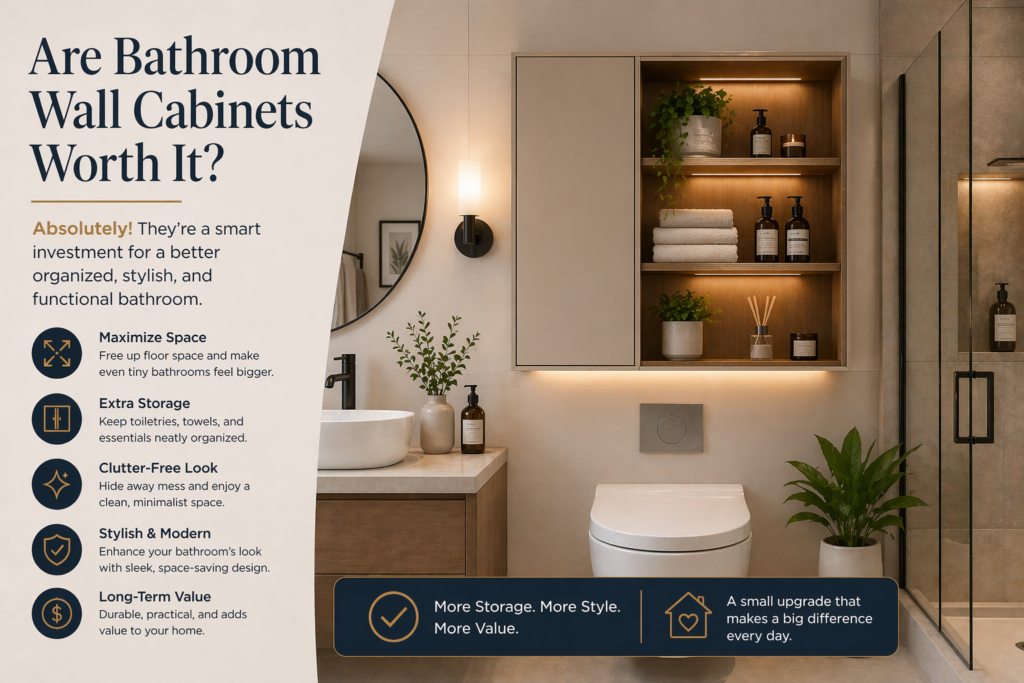
Are Bathroom Wall Cabinets Worth It?
Yes. They provide high utility, improve organization, and enhance aesthetics.
They are especially valuable in small bathrooms where space optimization is critical.
Expert Buying Checklist
- Measure space
- Choose moisture-resistant material
- Check wall strength
- Select proper size
- Match design
FAQ Section
What is the standard depth of bathroom wall cabinets?
4–12 inches depending on storage needs.
Can cabinets be installed above toilets?
Yes, it is a common and effective placement.
Are wooden cabinets suitable for bathrooms?
Yes, if properly sealed.
Do cabinets require drilling?
Most do, for secure installation.
What is the ideal installation height?
48–60 inches from the floor.
Which material lasts longest?
Metal and PVC offer the best durability.
