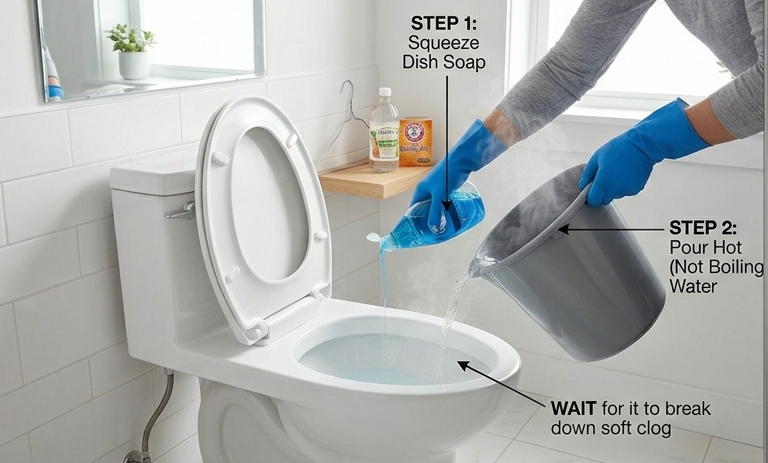
Yes, you can unclog a toilet without a plunger if the blockage is minor and you choose the right method for the situation. The safest starting options are usually hot, not boiling, water and dish soap for soft clogs, while tougher or deeper clogs are better handled with a toilet auger. If the bowl is already full or water is rising, stop flushing first and control overflow before trying anything else.
Freshness note
This guide reflects current plumber-backed and home-repair guidance on no-plunger toilet unclogging methods, with emphasis on safest-first decisions, overflow control, and knowing when to switch to a stronger tool.
Homeaholic recommends starting with the lowest-risk method first, then escalating based on bowl level, clog type, and whether the toilet shows any real improvement after the first attempt.
Can you unclog a toilet without a plunger?
Yes, you can unclog a toilet without a plunger if the clog is minor and you choose the right method for the clog type and bowl condition.
You usually can, but only if the clog matches the method. Current guidance from plumber-backed and home-repair sources consistently treats no-plunger fixes as most effective for minor obstructions such as excess toilet paper or soft organic buildup. That is why this topic should not be framed as a list of magic tricks. It should be framed as a decision guide. If the clog is soft and recent, several household methods can work. If the problem involves wipes, a foreign object, or repeated backups, the right answer changes quickly.
What makes this page useful is not just the number of methods. It is the order. The best-performing advice today follows a simple logic. Start with the safest low-force method, watch the bowl level, and escalate only when the signals tell you the blockage is deeper or tougher than a light DIY fix. That is how you avoid turning a small clog into an overflow, scratched porcelain, or wasted time.
- Minor soft clogs can often clear without a plunger
- Deeper or repeat clogs usually need stronger tools
- Rising water changes the first step completely
- The safest method is not always the strongest method
What should you do first before trying any method?
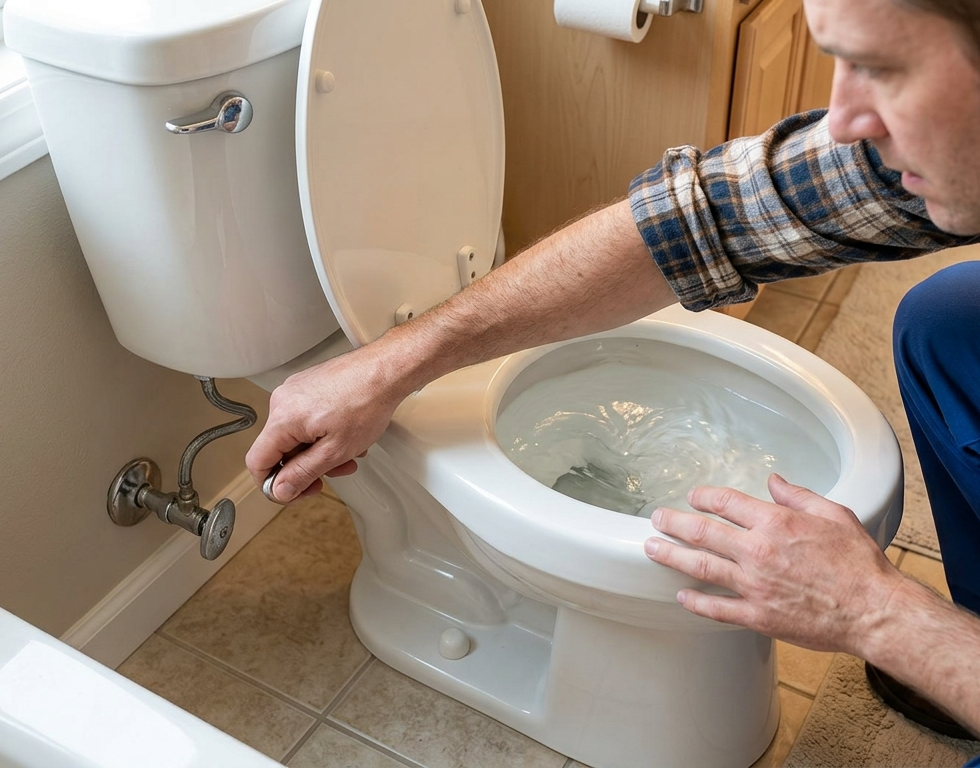
Stop flushing first and control overflow risk before trying any no-plunger method.
If the toilet is clogged and the water level looks high, your first job is not clearing the clog. It is preventing overflow. Current guidance says to stop flushing and, if needed, turn off the water using the shutoff valve near the toilet base. That single step prevents more water from entering the bowl and gives you room to think clearly. If the bowl is high but stable, let it settle before adding soap, water, or anything else.
Once the situation is stable, assess the likely cause. A fresh paper-heavy flush is very different from a toilet that clogs every week or one that may have a toy, wipe, or hygiene product stuck inside. This assessment matters because the safest-first route works best when the clog is soft and recent. It matters less when the blockage is physical, deep, or recurring. Users get better results when they identify the clog type before choosing the method.
- Stop flushing if the bowl is high
- Turn off the shutoff valve if water keeps rising
- Let the level settle before adding anything
- Think about what was flushed last
- Choose the method based on the likely clog type
Which no-plunger method should you try first?
Start with the lowest-risk method first, usually hot water or dish soap and hot water for a soft recent clog.
For a standard household emergency, the safest first option is usually dish soap plus hot, not boiling, water. Current sources repeat this because it is low-risk, easy to try, and especially useful for clogs caused by excess toilet paper or organic material. The soap helps lubricate the blockage, while the hot water can help loosen it enough to move through the trap. This is not the strongest method, but it is often the smartest first step when the bowl is stable and the clog seems soft.
If you want the bigger picture, think in layers. Dish soap and hot water are the low-risk first layer. Baking soda and vinegar are an alternative for some soft clogs. A toilet brush can sometimes work as a temporary pressure tool if nothing else is available. A toilet auger is the strongest real no-plunger tool because it is designed for toilet clogs specifically. That layered approach gives the page a stronger intent match than treating every method as equally good.
- Start with the lowest-risk method first
- Use soap and hot water for soft recent clogs
- Use a toilet brush only as a short-term backup
- Use a toilet auger for deeper resistance
- Skip weak repeats when there is no progress
Can Hot Water Alone Unclog a Toilet?
Hot water alone can help with a soft recent clog, but it should never be boiling.
Hot water alone can sometimes clear a toilet clog when the blockage is soft, recent, and not packed tightly into the trap. This method works best when the clog is mostly excess toilet paper or light organic waste and the bowl is stable enough to handle added water safely. The key detail is temperature. Use hot water, not boiling water. Current home-repair guidance consistently warns that boiling water can crack porcelain and create avoidable damage, which makes controlled hot water the safer version of this method.
Hot water alone is usually less effective than dish soap plus hot water because soap improves lubrication and helps soft material slide through the trap more easily. That means hot water by itself is a reasonable first try when you have no soap nearby, but it should still be treated as a quick test, not a guaranteed fix. If the bowl does not improve after one careful attempt, move up to dish soap, a toilet auger, or a stronger escalation step instead of repeating weak methods too long.
- Best for fresh toilet paper clogs
- Use only when the bowl is stable
- Never use boiling water
- Escalate quickly if nothing changes
How do you unclog a toilet with dish soap and hot water?
Add dish soap, wait a few minutes, pour in hot non-boiling water, and flush only when the bowl looks stable.
The usual process is simple. Add dish soap to the bowl, wait several minutes, then pour in hot, not boiling, water. Current guidance commonly places the wait time around 10 to 15 minutes, though some sources allow longer depending on the clog. The important part is not speed. It is letting the soap move toward the blockage before adding controlled heat and water pressure. Multiple sources also warn against using boiling water because it can crack porcelain or create other damage risks.
This method works best when the clog is soft and the toilet still drains at least a little. It is a poor fit for wipes, toys, or dense obstructions. Real-world success usually shows up in small signs first. The bowl may stop looking tense, the water may lower slightly, or the flush may improve instead of fully clearing at once. If nothing changes after one careful attempt, that is usually your cue to switch methods rather than keep repeating the same one.
- Add dish soap first
- Wait before adding water
- Use hot, not boiling, water
- Flush only when the bowl level looks stable
- Switch methods if there is no visible improvement
Can baking soda and vinegar clear a toilet clog?
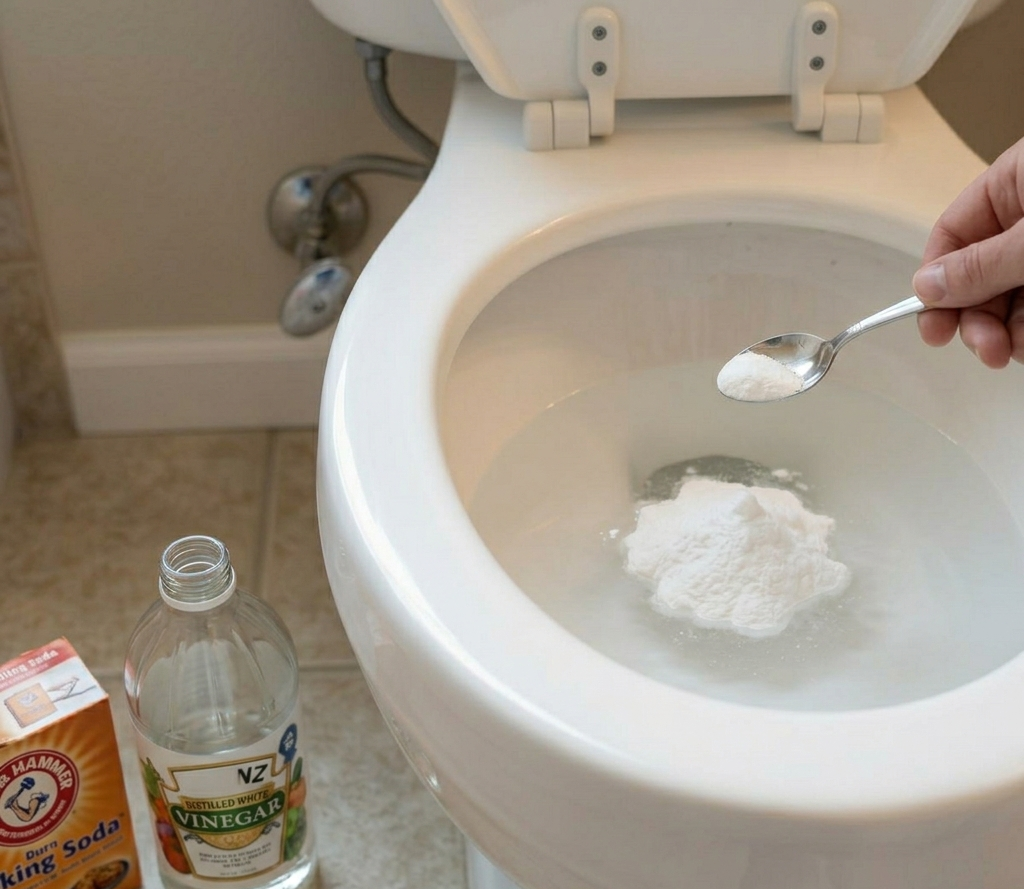
Baking soda and vinegar can help with a light soft clog when the bowl has enough room for a safe reaction.
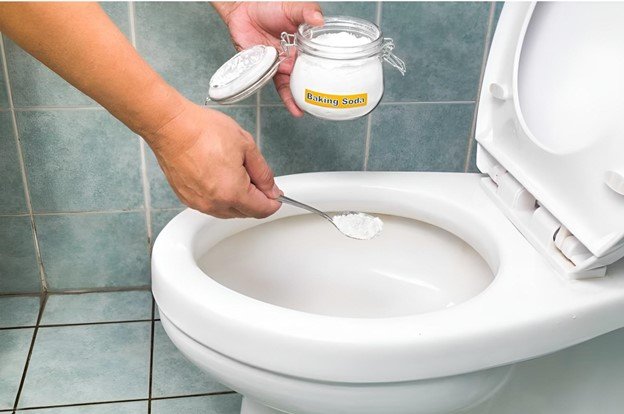
Baking soda and vinegar can help with some soft clogs, but it is still a secondary method, not a universal fix. Current toilet-specific guidance recommends adding baking soda before vinegar so the reaction happens in the bowl rather than too early. The foaming action may help loosen buildup, especially when the blockage is light and the bowl is not already near overflow. It is still aimed at minor clogs, not deep or solid obstructions.
The main decision here is whether the bowl has enough space for a foaming reaction. If the water is already high, this is not the first method to test because an active reaction can make a stressful situation messier. That is why soap and hot water often win as the safer first option. Baking soda and vinegar are more useful when the water level is controlled and you want another soft-clog method before moving to a physical tool.
- Add baking soda before vinegar
- Use it only when the bowl has room
- Best for minor soft buildup
- Not suitable for foreign objects
- Move to a physical tool if it fails
Can a toilet brush work instead of a plunger?
A toilet brush can work as a short-term backup for a very light clog, but it is weaker than a plunger or auger.
A toilet brush can work as a short-term substitute when you have nothing else and the clog seems light. Current guidance suggests angling the brush into the drain opening, twisting, pushing, and pulling to loosen the blockage. This is not as effective as a real plunger, but it can help shift a minor obstruction when the bristles or handle create enough movement to disturb the clog. It is an emergency workaround, not a primary long-term solution.
The key limitation is control. A brush is less efficient, less hygienic, and less specialized than a plunger or auger. It may help if the clog is shallow and soft, but it should not keep you stuck in repeat attempts. If the brush does not produce a quick change, the better next move is usually a stronger tool, especially a toilet auger if the blockage feels deeper. This is one of those methods that is useful because it is available, not because it is best.
- Use a toilet brush only as a backup
- Twist and push gently, not aggressively
- Stop quickly if it is doing nothing
- Treat it as an emergency substitute, not a full solution
Should you use a wire hanger, wet-dry vacuum, or other tools?
These methods exist, but they belong lower in the decision order. Current guidance mentions a wire hanger, wet-dry vacuum, and even improvised pressure methods as possible no-plunger options. The problem is that they carry more risk, more mess, or both. A wire hanger can be rough on the toilet if used carelessly. A wet-dry vacuum can work, but only if the person already has the right setup and knows how to handle the mess safely. These are not the best first answers for most households.
A better rule is this. If you are already stepping beyond soap, water, baking soda, or a toilet brush, you are near the point where a purpose-built toilet auger becomes the smarter choice. Current guidance is very clear that a toilet auger is designed for toilets in a way that standard tools are not. So while improvised tools can sometimes work, they are often outclassed by a proper auger in both safety and effectiveness.
- Wire hangers are possible but not preferred
- Wet-dry vacuums are optional, not first-line
- Improvised tools usually lose to a toilet auger
- Avoid standard drain snakes in a toilet
When is a toilet auger the best no-plunger option?
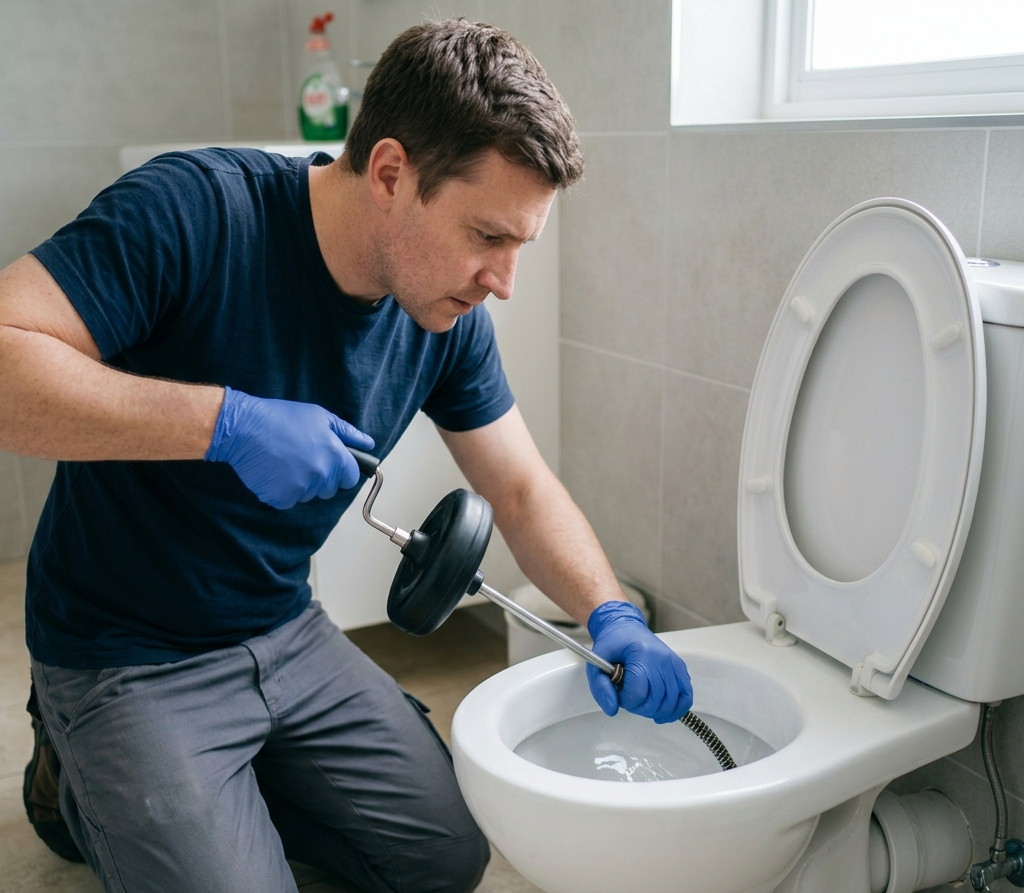
A toilet auger is the best no-plunger tool when low-risk methods fail or the clog feels deeper and tougher.
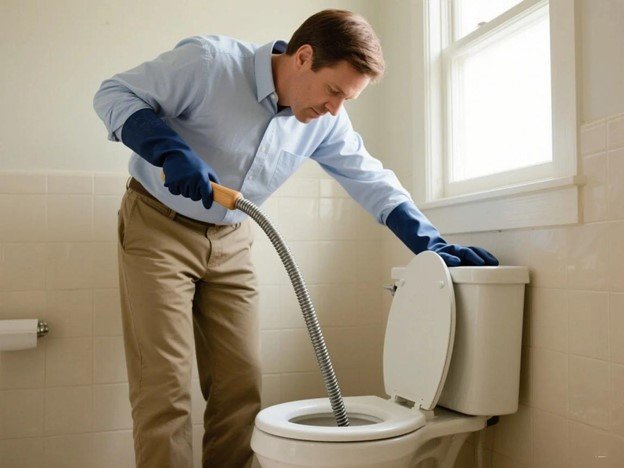
A toilet auger, also called a closet auger, is the best no-plunger option when the blockage feels deeper, tougher, or unmoved by low-force methods. Current guidance describes it as a toilet-specific drain-clearing tool with a cable and protective design meant to reach into the toilet trap without scratching the bowl. Compared with generic drain tools, it is the more appropriate choice because it is built for this exact job.
This is the point where many articles become too vague, but the user needs a clear threshold. If soap and hot water do nothing, if the clog returns quickly, or if the obstruction feels physically lodged, an auger is the right escalation. It is stronger than the household hacks but still sits below calling a plumber in the decision chain. For this topic, that makes the auger the true bridge between “quick DIY” and “professional help.”
- Best for deeper or stubborn clogs
- Safer for toilets than a standard drain snake
- Good next step after failed low-risk methods
- Stronger than soap, vinegar, or a brush
What if the toilet bowl is already full?
Do not flush again, stabilize the water level first, and only try a method when the bowl is safe to work with.
If the bowl is already full, do not flush again. Turn off the water at the shutoff valve if the level keeps rising, then wait for the water to settle before trying any unclogging method. That is the clearest current overflow guidance, and it matters because panic flushing is one of the fastest ways to turn a clog into a floor cleanup. Once the level is controlled, you can choose a method based on the likely cause of the blockage.
A full bowl also changes which no-plunger methods are sensible. Soap and carefully added hot water can still work once there is room, but a foaming method like baking soda and vinegar needs more caution. This is also the point where repeated failures should end quickly. If the bowl keeps refilling, the toilet overflows easily, or there are other drainage problems nearby, the issue may be bigger than a single bowl clog.
- Do not flush a full bowl again
- Shut off the water if it keeps rising
- Wait for the level to drop before acting
- Use extra caution with foaming methods
- Escalate faster if the problem keeps returning
Which methods should you avoid?
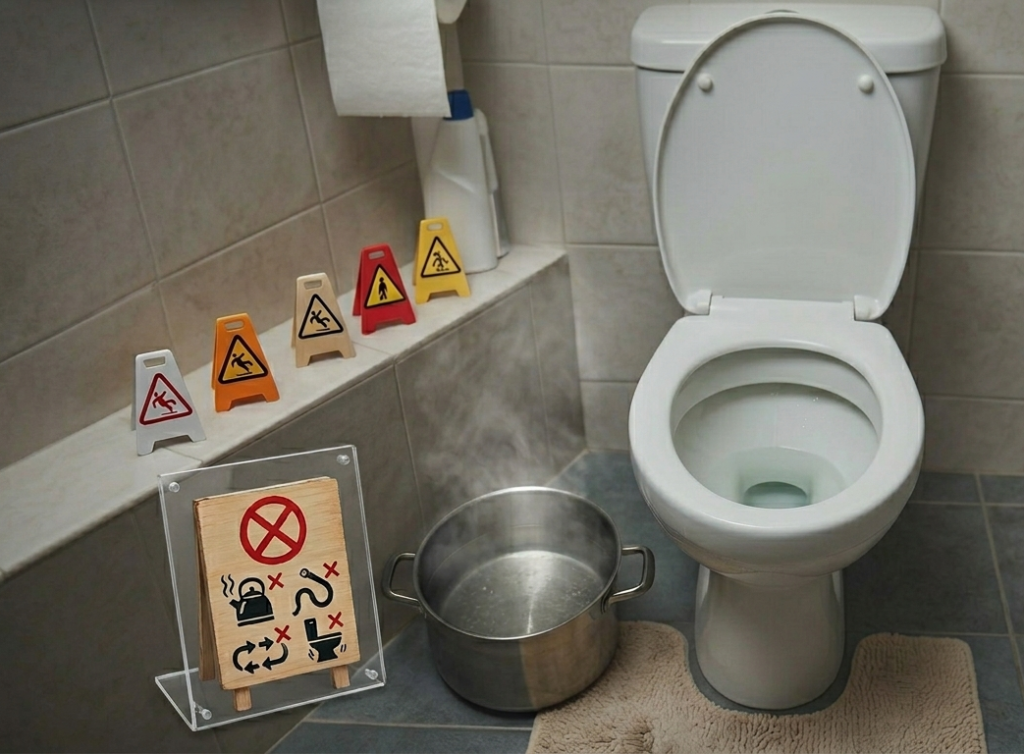
Avoid boiling water, the wrong drain tools, and repeated weak attempts when the clog is not improving.
The biggest method to avoid is boiling water. Current sources repeatedly recommend hot, not boiling, water because truly boiling water can crack porcelain or otherwise create damage risk. The next method to avoid is using the wrong tool for the fixture. One current Spruce guide explicitly warns not to use a standard drain snake in a toilet, because toilets require a differently designed auger. Those two mistakes alone explain a lot of failed DIY attempts.
The other bad habit is repetition without signals. If the bowl is still high, the clog is not responding, or the toilet has a pattern of recurring blockage, pushing the same weak method over and over usually adds risk instead of value. The page should make this very clear. DIY works best when each method is treated like a test. If the test shows no progress, move up the decision ladder instead of forcing another round.
- Avoid boiling water
- Avoid standard drain snakes in toilets
- Avoid endless repeat attempts
- Avoid forcing a method when the bowl is unstable
- Avoid treating a repeat clog like a one-time clog
Should You Use Chemical Drain Cleaners in a Toilet?
Chemical drain cleaners are not the preferred first solution for toilet clogs.
Chemical drain cleaners are not the preferred solution for toilet clogs. The better current guidance focuses on mechanical or low-risk household methods first, such as hot water, dish soap, baking soda and vinegar, or a toilet auger, because these approaches reduce the chance of damaging the toilet or creating a harsher cleanup problem. Chemical products may seem like a shortcut, but they do not solve the core decision issue, which is whether the clog is soft, deep, object-related, or part of a bigger plumbing problem.
This section matters because users searching no-plunger methods are often one step away from pouring in something aggressive out of frustration. That is exactly when the page should slow them down. A safer-first page performs better when it makes the escalation path obvious. If low-risk methods fail, the next better move is usually a toilet auger or a plumber, not a harsher chemical experiment. The right sequence is what makes the advice trustworthy and usable in real homes.
- Do not jump straight to harsh chemical solutions
- Use low-risk methods first
- Escalate to an auger before experimenting blindly
- Treat repeated clogs as a diagnosis issue, not just a clog issue
When should you call a plumber?
Call a plumber when the clog keeps returning, feels deeper than the toilet trap, or affects more than one drain.
Call a plumber when the clog stops looking like a small bowl problem and starts looking like a plumbing problem. Current guidance points to the same red flags over and over: repeated clogs, sewage backup signs, multiple slow drains, or a suspected foreign object. These are the conditions where home methods lose their value quickly because the issue may sit deeper in the system or require removal rather than loosening.
This threshold matters because users often stay too long in DIY mode. A good no-plunger guide should not just empower the reader. It should also tell them when to stop. If the auger does not fix it, if the bowl overflows easily, or if other drains are misbehaving at the same time, the most practical step is professional diagnosis. Strong pages rank better when they remove hesitation and give a real stop point.
- Call if the clog keeps coming back
- Call if sewage backup is possible
- Call if multiple fixtures drain poorly
- Call if a foreign object may be stuck
- Call if the auger fails too
How do you prevent toilet clogs in the future?
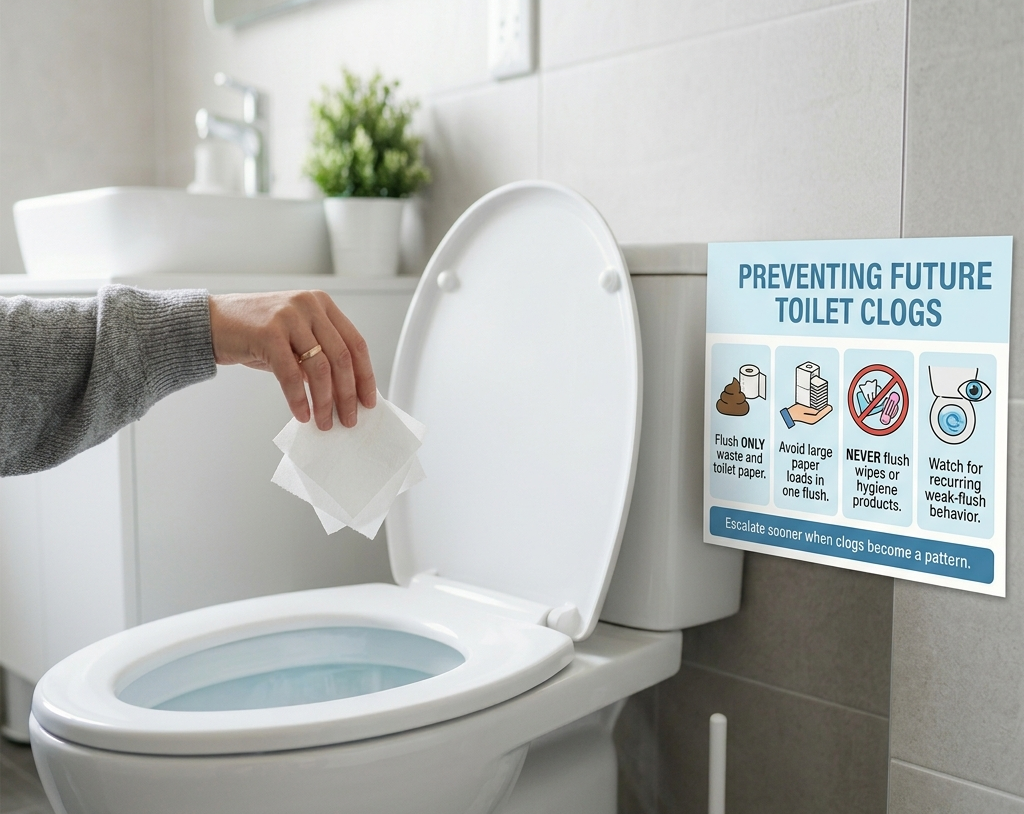
Prevent most toilet clogs by flushing only waste and toilet paper and acting early when weak-flush patterns begin.
Most prevention advice is simple because the main causes are simple. Current no-plunger and unclogging guides consistently point to excess toilet paper and flushing the wrong items as the most common triggers. That means the best prevention plan is still the least glamorous one: flush only human waste and toilet paper, avoid oversized paper loads, and pay attention when the toilet starts showing weak or incomplete flushes.
The other prevention insight is pattern recognition. A one-off paper clog is not the same as a toilet that clogs every few days. Repeated issues suggest a deeper blockage, a performance problem, or a fixture that needs more than emergency hacks. That is why prevention content should not end with “do not flush wipes.” It should also tell the reader to notice recurrence early and escalate sooner next time.
- Flush only waste and toilet paper
- Avoid large paper loads in one flush
- Never flush wipes or hygiene products
- Watch for recurring weak-flush behavior
- Escalate sooner when clogs become a pattern
Quick method comparison
The safest-first order below reflects current guidance on common no-plunger methods, their likely use cases, and where they fit in the escalation chain.
| Method | Best For | Strength | Risk | Time to Test | Stop When |
| Hot water alone | Fresh soft paper clog | Medium | Low | 5 to 10 min | Bowl stays high or unchanged |
| Dish soap + hot water | Soft recent clog | Medium to high | Low | 10 to 20 min | No visible improvement |
| Baking soda + vinegar | Light soft buildup | Medium | Medium | 15 to 30 min | Bowl is too full or reaction adds risk |
| Toilet brush | Very light shallow clog | Low | Medium | Seconds to 2 min | It is doing nothing quickly |
| Toilet auger | Deep or stubborn clog | High | Low to medium | Immediate to 5 min | Clog persists or feels beyond trap |
| Plumber | Recurring, severe, or unclear issue | Highest | Lowest DIY risk | Immediate call | Multiple drains, sewage signs, repeat failure |
Which No-Plunger Method Works Best for Each Type of Clog?
The best no-plunger method depends less on creativity and more on clog type. Current guidance consistently shows that soft paper-based clogs respond best to low-risk methods like hot water or dish soap and hot water, while deeper, tougher, or physically lodged obstructions usually need a toilet auger or faster escalation. This matters because many failed DIY attempts happen when people use the right method on the wrong blockage. A toilet paper clog, a wipe-related clog, and a foreign object clog should not be treated the same way.
This mapping section improves decision clarity because it tells the reader what the clog probably is before telling them what to do. That is especially important for parent pages like this one. A broad no-plunger guide should help users sort the problem first, then choose the method. If the toilet has clogged repeatedly or another drain is also acting up, the issue may already be bigger than a bowl-level blockage, and household methods should move down the list quickly.
- Toilet paper clog: hot water or dish soap first
- Soft organic clog: dish soap plus hot water
- Light buildup: baking soda and vinegar
- Deep stubborn clog: toilet auger
- Wipes, toys, or repeat clogs: escalate faster
Best method by scenario
This scenario matrix helps users choose faster instead of reading every method as if it fits every clog. The choices below follow the same current safest-first logic used across plumber-backed and home-repair guidance.
| Situation | Best first move |
| Fresh toilet paper clog | Dish soap + hot water |
| Bowl already full | Stop flushing, control water level first |
| Light clog, no soap available | Hot water if bowl is stable |
| Nothing works after one attempt | Move to a toilet auger |
| Suspected object or repeat clog | Skip hacks and escalate |
Real-World Example of the Right No-Plunger Decision
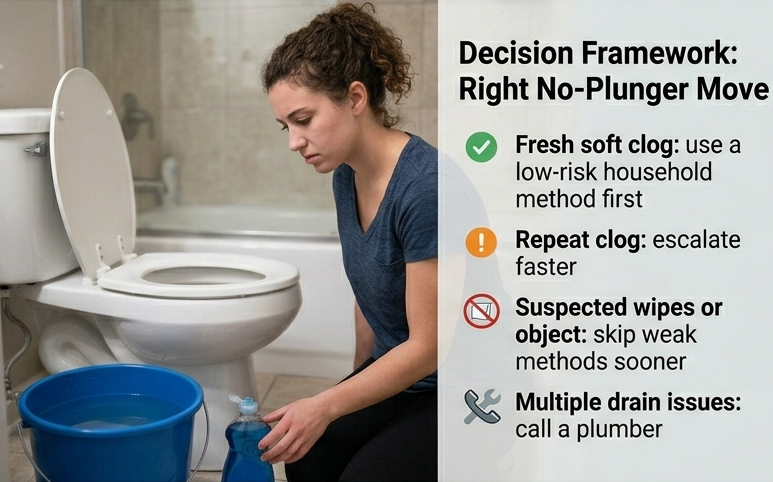
Imagine a toilet that clogged right after a heavy toilet-paper flush. The bowl is high, but not rising, and there is no plunger nearby. This is the kind of situation where a safest-first method makes sense. Because the likely blockage is soft and recent, dish soap and hot water are the right first move. Current guidance supports this logic because those methods work best on minor obstructions and are less aggressive than improvised tools or stronger escalation steps.
Now compare that with a different situation. The toilet has clogged twice this week, the bowl stays high for a long time, and someone may have flushed wipes. That is no longer the same problem. A toilet auger becomes the smarter next tool, and if other drains are acting up too, a plumber is the better call. This kind of comparison strengthens the page because it turns methods into decisions. Readers do not just need options. They need to know which option fits their exact situation.
- Fresh soft clog: use a low-risk household method first
- Repeat clog: escalate faster
- Suspected wipes or object: skip weak methods sooner
- Multiple drain issues: call a plumber
FAQ
Can hot water alone unclog a toilet without a plunger?
Sometimes, yes. Current guidance includes hot water as a viable option for minor clogs, especially when the blockage is soft and the bowl is stable. The warning stays the same: use hot, not boiling, water.
Is dish soap the best no-plunger method?
It is often the best first method for soft recent clogs because it is low-risk and easy to try, but it is not the strongest overall option. A toilet auger is the stronger no-plunger tool for deeper clogs.
Does baking soda and vinegar really work in a toilet?
It can help with some light clogs, especially when the bowl has room and the blockage is soft. Current toilet-specific guidance still treats it as a minor-clog method, not a fix for deep or solid obstructions.
Can I use a toilet brush instead of a plunger?
As an emergency backup, yes. Current guidance says a toilet brush can sometimes loosen a clog by twisting and pushing into the drain opening, but it is still weaker than a plunger or auger.
Should I use a regular drain snake in a toilet?
No. Current guidance warns that toilets need a toilet auger or closet auger rather than a standard drain snake.
What if the toilet water keeps rising?
Stop flushing and turn off the shutoff valve if needed. Overflow-control guidance puts water shutoff first, then bowl stabilization before any unclogging attempt.
When should I stop trying DIY methods?
Stop when there is no progress after a reasonable attempt, when the bowl stays unstable, when the clog keeps returning, or when you suspect a foreign object or wider drainage issue.
What is the best no-plunger tool to buy?
Among current no-plunger options, a toilet auger is the most purpose-built and effective tool for deeper toilet clogs.