
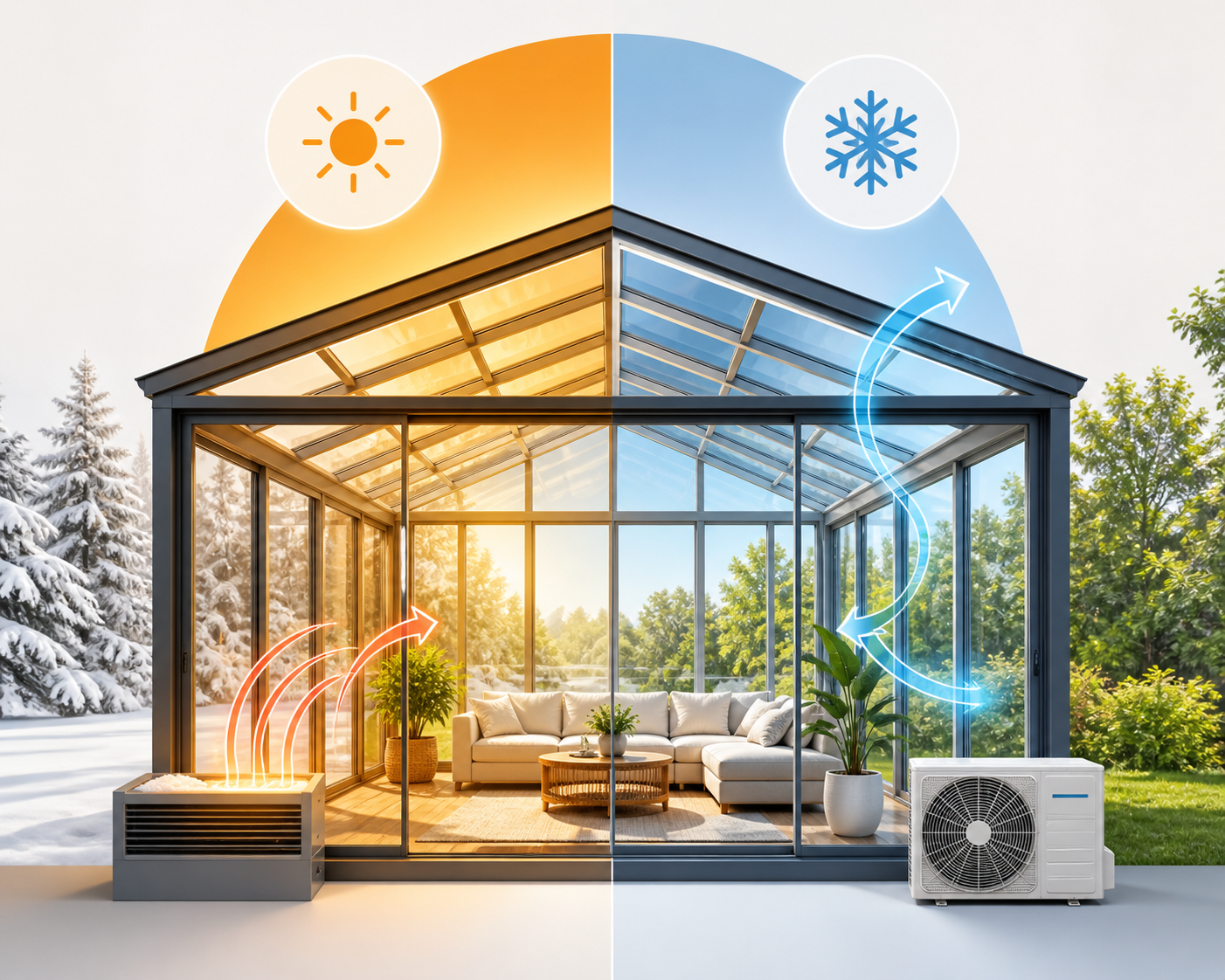
Sunroom heating and cooling require systems that handle intense sunlight, temperature swings, and insulation variability. The most effective solution is a ductless mini-split system, which provides both heating and cooling efficiently. Portable AC units and space heaters work short-term, but long-term comfort depends on proper insulation, window performance, and correct BTU sizing.
Sunrooms behave differently from the rest of the house. Large glass areas trap solar heat during the day and lose it quickly at night. This creates extreme temperature variation that standard HVAC setups struggle to manage. Without a system designed for these conditions, the space becomes unusable in peak summer and winter months. The goal is not just to add heating or cooling, but to stabilize the environment across seasons.
Heating and cooling decisions should always align with how the sunroom is built and used. If the structure, insulation, and exposure levels are not clearly defined, system selection becomes inefficient.
Refer to the complete sunroom design guide to understand how structure and usage directly impact HVAC performance before choosing a system.
How Sunroom Temperature Behavior Affects HVAC Performance
Sunroom temperature is controlled by solar heat gain, insulation quality, and airflow, which determines how heating and cooling systems perform.
Sunrooms heat up quickly during the day due to sunlight entering through glass surfaces. At night, the same space loses heat rapidly. This constant expansion and contraction of temperature creates a dynamic load that standard HVAC systems are not designed to handle. Systems must adapt to rapid changes rather than steady conditions.
Key drivers:
- Solar heat gain through windows
- Heat loss through glass and structure
- Airflow and ventilation patterns
- Insulation stability
Why Heating and Cooling a Sunroom Is Different?
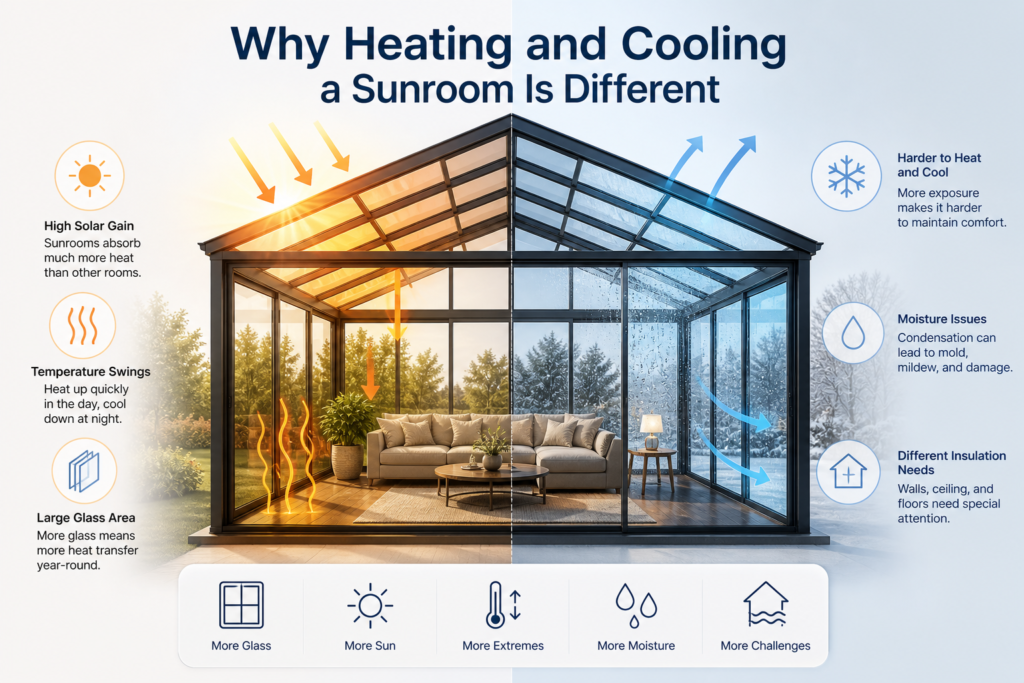
Sunrooms experience higher heat gain and faster heat loss due to glass exposure, making temperature control more difficult than standard rooms.
Glass allows sunlight to enter but does not block heat effectively. This creates a greenhouse effect where temperatures rise quickly during the day. At night, the same glass surfaces allow heat to escape, causing rapid cooling. This constant fluctuation increases energy demand and reduces comfort.
Air circulation also behaves differently. Hot air accumulates near the ceiling, while cooler air settles below. Without proper airflow management, even strong systems struggle to maintain consistent temperature.
Key challenges:
- High solar heat gain through windows
- Rapid heat loss during cooler periods
- Uneven temperature distribution
- Increased HVAC load compared to normal rooms
Why Is My Sunroom Hotter Than the Rest of the House?
Sunrooms are hotter because glass allows heat to enter but does not prevent it from accumulating inside.
Sunlight enters through windows and heats surfaces such as flooring and furniture. These surfaces then release heat into the air, raising the overall temperature. Unlike insulated walls, glass provides minimal resistance to heat transfer, which increases indoor temperature quickly.
Main causes of overheating:
- Direct sunlight exposure
- Poor window glazing
- Lack of ventilation
- Weak insulation
How Sunroom Type (3-Season vs 4-Season) Affects HVAC Needs
3-season sunrooms require flexible, low-cost solutions, while 4-season sunrooms need permanent HVAC systems for consistent comfort.
3-season sunrooms are not fully insulated or connected to central systems. They experience outdoor-like conditions, so heating and cooling must be adaptable. Portable units and localized systems work best here.
4-season sunrooms are insulated and integrated with the home. These require stable, efficient systems that maintain consistent temperature year-round.
HVAC Fit by Sunroom Type
| System Type | 3-Season | 4-Season | Why |
| Mini Split | ✅ Excellent | ✅ Excellent | Efficient and flexible |
| Portable AC | ✅ Good | ⚠️ Limited | Temporary cooling |
| Central HVAC | ❌ Weak | ⚠️ Conditional | Often underpowered |
| Space Heater | ✅ Good | ⚠️ Limited | Spot heating only |
Heating and cooling choices should align with environmental conditions, not just system availability.
See how sunroom insulation affects temperature stability before selecting HVAC solutions.
What Is the Best Heating and Cooling System for a Sunroom?
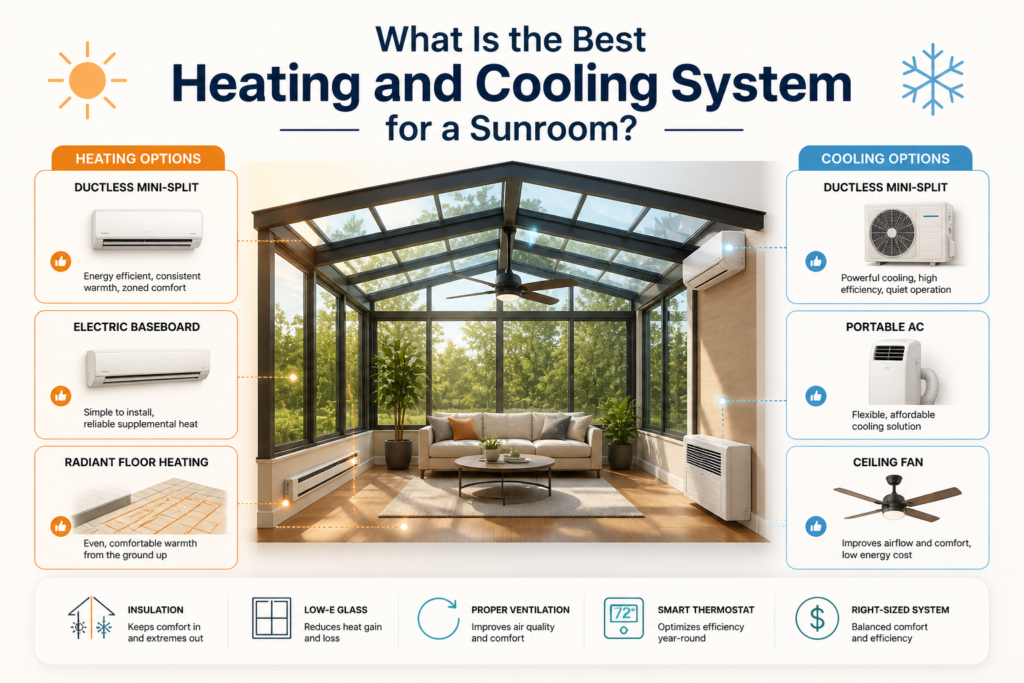
A ductless mini-split system is the best overall solution because it provides efficient heating and cooling with precise control.
Mini-split systems work independently from central HVAC and deliver targeted temperature control. They are designed to handle variable loads, making them ideal for sunrooms where conditions change throughout the day.
Portable systems are useful but limited. They lack efficiency and struggle in extreme conditions. Central HVAC systems often fail because they are not designed for high glass exposure areas.
System Comparison
| System | Efficiency | Cost | Performance | Best Use |
| Mini Split | High | Medium–High | Excellent | Year-round use |
| Portable AC | Low | Low | Moderate | Short-term cooling |
| Space Heater | Medium | Low | Limited | Spot heating |
| Central HVAC | Medium | High | Inconsistent | Only with upgrades |
How Many BTUs Does a Sunroom Need
BTU requirements depend on size, sunlight exposure, and insulation quality, with sunrooms needing more capacity than standard rooms.
Sunrooms require higher BTU output because of heat gain through windows. A standard calculation is not enough. You must account for glass area and exposure direction.
BTU Estimation Guide
| Room Size | Base BTU | Adjusted for Sunroom |
| 100 sq ft | 5,000 | 6,000–7,000 |
| 200 sq ft | 10,000 | 12,000–14,000 |
| 300 sq ft | 14,000 | 18,000–20,000 |
Incorrect sizing leads to inefficiency, higher costs, and poor comfort.
Cooling Load vs System Recommendation
| Condition | Cooling Load | Recommended System |
| Low sunlight | Low | Portable AC |
| Moderate sunlight | Medium | Mini split |
| High sunlight | High | Mini split + shading |
| Poor insulation | Very High | Improve insulation first |
Portable cooling systems often fail in sunrooms because they cannot offset continuous solar heat gain. Their capacity is designed for enclosed rooms, not glass-heavy environments. This leads to constant operation without achieving desired temperature.
What Size Mini Split for a Sunroom
Mini split size depends on room size, sunlight exposure, and insulation, with sunrooms requiring higher capacity than standard rooms.
Sunrooms need more cooling power because of heat gain through glass. A typical room may require 20 BTU per sq ft, but sunrooms often need 25–35 BTU per sq ft depending on exposure.
Mini Split Sizing Guide
| Room Size | Standard BTU | Sunroom Adjusted |
| 100 sq ft | 5,000 | 6,000–8,000 |
| 200 sq ft | 10,000 | 12,000–15,000 |
| 300 sq ft | 14,000 | 18,000–22,000 |
Sizing tips:
- Increase capacity for high sunlight exposure
- Consider insulation quality
- Avoid undersizing systems
Best Cooling Options for Sunrooms
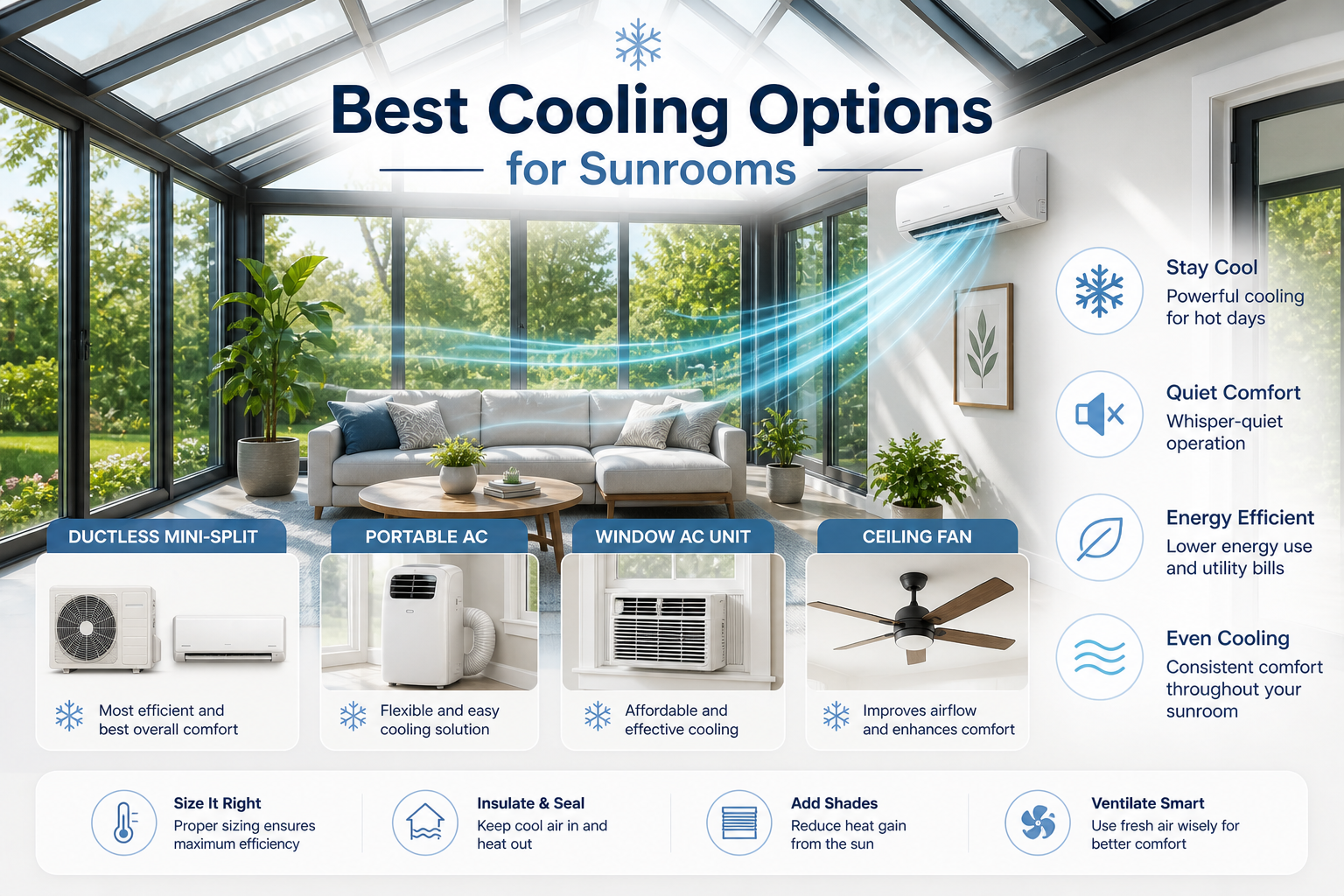
Cooling systems must handle high heat gain and maintain airflow to prevent overheating.
Mini-splits provide consistent cooling, while portable AC units offer flexibility. Fans support airflow but cannot replace active cooling systems.
Cooling a sunroom is not just about lowering temperature. It is about controlling solar heat gain, airflow, and surface heat retention at the same time. Sunrooms receive continuous sunlight through glass, which traps heat and raises indoor temperature faster than any other room. This is why standard cooling solutions often fail. Systems must not only cool the air but also handle the constant heat load created by windows. Without proper system selection, even powerful AC units will struggle during peak hours.
Mini-split systems perform best because they provide consistent cooling and adapt to changing heat conditions throughout the day. Portable AC units offer flexibility but lack efficiency, especially in larger or high-exposure sunrooms. Fans help circulate air but cannot reduce actual temperature. Real-world performance shows that combining airflow with active cooling delivers the most stable results. Placement also matters. Cooling units must be positioned to counter heat zones near windows, otherwise the room develops uneven temperature pockets.
Cooling System Comparison
| System | Cooling Power | Efficiency | Coverage | Best Use |
| Mini Split | High | High | Full room | Primary cooling |
| Portable AC | Medium | Low | Partial | Temporary use |
| Ceiling Fan | Low | High | Airflow only | Support system |
| Ventilation | Low | High | Heat release | Supplement |
Portable cooling systems often fail in sunrooms because they cannot offset continuous solar heat gain. Their capacity is designed for enclosed rooms, not glass-heavy environments. This leads to constant operation without achieving desired temperature.
Best cooling approach:
- Use mini-split systems for primary temperature control
- Combine with fans to improve air circulation
- Vent hot air through windows or vents when possible
- Position units away from direct sunlight zones
The amount of heat entering a sunroom is directly controlled by the window system. Glass type, coatings, and orientation determine solar heat gain, which directly increases cooling demand. Without controlling this, even high-capacity systems struggle.
See sunroom window performance and glazing types to understand heat entry.
How to Cool a Sunroom Without AC
Cooling without AC relies on airflow, shading, and heat reduction rather than active temperature control.
While not as effective as AC, passive cooling strategies can reduce heat buildup. These methods work best in moderate climates or low-exposure sunrooms.
Cooling methods without AC:
- Cross ventilation using windows and doors
- Ceiling fans to improve air movement
- Window shading or blinds
- Reflective films to reduce heat gain
These approaches reduce temperature but cannot fully replace active cooling systems in high-heat conditions.
How Airflow and Ventilation Improve Sunroom Temperature Control
Airflow removes trapped heat and helps distribute cool air evenly, improving overall temperature control.
Sunrooms trap hot air near the ceiling, creating uneven temperature zones. Without proper airflow, cooling systems must work harder to maintain comfort. Ventilation allows hot air to escape and reduces internal heat buildup.
Airflow improvement methods:
- Use ceiling fans to circulate air
- Create cross ventilation with windows
- Install vents to release trapped heat
- Position HVAC units for balanced airflow
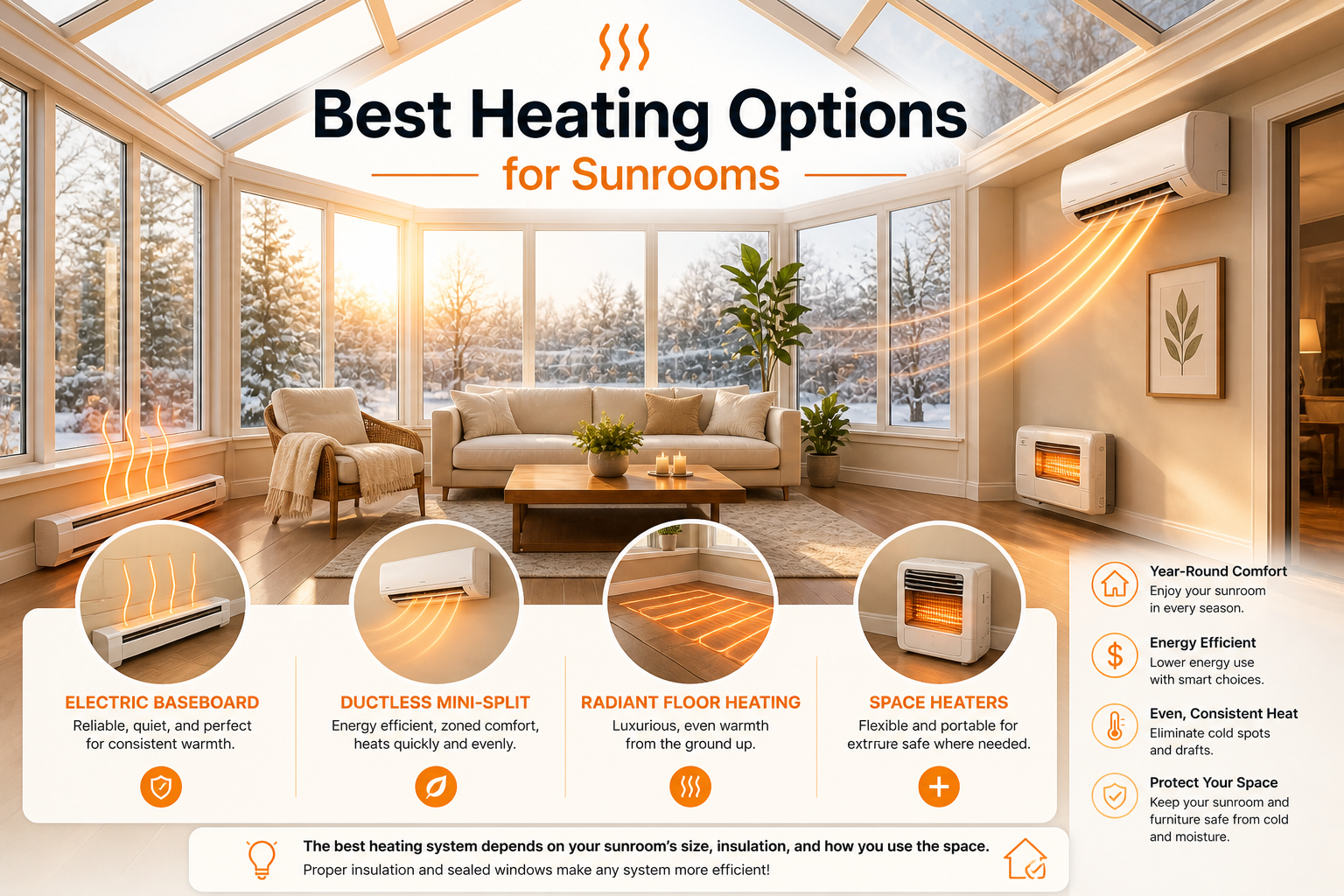
Best Heating Options for Sunrooms
Heating must compensate for rapid heat loss and maintain comfort during colder months.
Radiant heating and mini-split systems perform best because they provide consistent warmth. Space heaters are useful but limited in coverage.
Heating a sunroom is not about producing heat alone. It is about retaining warmth in a space that naturally loses heat faster than any other room due to glass exposure. During colder months, heat escapes quickly through windows, making standard heating systems inefficient if not properly matched to the environment. This is why localized and radiant heating solutions perform better than traditional forced-air systems in many sunroom setups.
Mini-split systems provide the most balanced solution because they deliver controlled heating without relying on ductwork. Radiant floor heating offers superior comfort by warming surfaces instead of air, which reduces heat loss and improves energy efficiency. Space heaters and infrared units work for small areas but cannot maintain consistent temperature across the entire room. Real-world usage shows that combining insulation with the right heating system significantly improves performance and reduces energy consumption.
Heating System Comparison
| System | Heating Efficiency | Coverage | Energy Cost | Best Use |
| Mini Split | High | Full room | Medium | Year-round heating |
| Radiant Floor | Very High | Even heat | Medium–High | Comfort + efficiency |
| Infrared Heater | Medium | Targeted | Low | Spot heating |
| Space Heater | Low–Medium | Limited | Low | Temporary use |
Best heating approach:
- Use mini-split systems for consistent heating
- Install radiant heating for long-term comfort
- Combine with insulation to reduce heat loss
- Use portable heaters only as supplemental support
HVAC efficiency depends on how well the sunroom retains or blocks heat. Without insulation, systems run continuously and lose effectiveness.
Learn how sunroom insulation systems regulate temperature stability.
Can You Use Central HVAC for a Sunroom
Central HVAC can work only if properly sized and extended, but it is often insufficient on its own.
Most central systems are designed for the main house, not high-exposure areas. Extending ducts without recalculating load leads to uneven temperature and inefficiency.
Dedicated systems perform better because they address sunroom-specific conditions.
Heating a sunroom is not about producing heat alone. It is about retaining warmth in a space that naturally loses heat faster than any other room due to glass exposure. During colder months, heat escapes quickly through windows, making standard heating systems inefficient if not properly matched to the environment. This is why localized and radiant heating solutions perform better than traditional forced-air systems in many sunroom setups.
Mini-split systems provide the most balanced solution because they deliver controlled heating without relying on ductwork. Radiant floor heating offers superior comfort by warming surfaces instead of air, which reduces heat loss and improves energy efficiency. Space heaters and infrared units work for small areas but cannot maintain consistent temperature across the entire room. Real-world usage shows that combining insulation with the right heating system significantly improves performance and reduces energy consumption.
Heating System Comparison
| System | Heating Efficiency | Coverage | Energy Cost | Best Use |
| Mini Split | High | Full room | Medium | Year-round heating |
| Radiant Floor | Very High | Even heat | Medium–High | Comfort + efficiency |
| Infrared Heater | Medium | Targeted | Low | Spot heating |
| Space Heater | Low–Medium | Limited | Low | Temporary use |
Best heating approach:
- Use mini-split systems for consistent heating
- Install radiant heating for long-term comfort
- Combine with insulation to reduce heat loss
- Use portable heaters only as supplemental support
Heating efficiency depends heavily on how well the space retains warmth. See how sunroom insulation systems reduce heat loss and improve overall heating performance.
Is a Mini Split Worth It for a Sunroom?
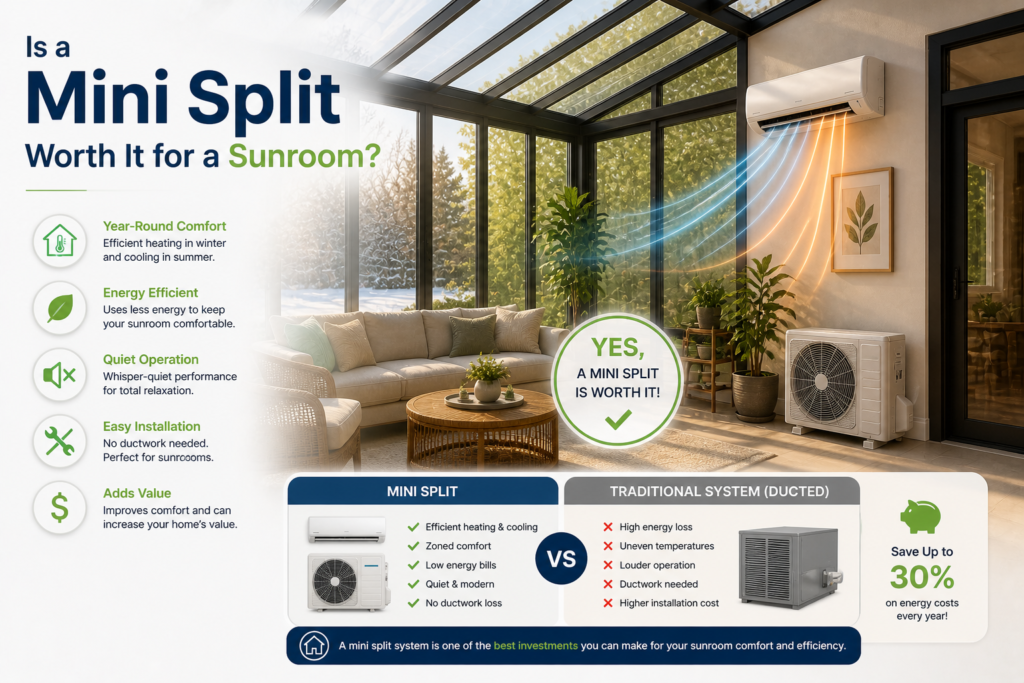
Yes, a mini split is worth it because it provides efficient, year-round temperature control specifically suited for sunroom conditions.
Mini splits operate independently and adjust to changing heat loads throughout the day. Unlike central HVAC, they deliver targeted cooling and heating without overloading the system.
Why mini splits perform best:
- High energy efficiency
- Independent temperature control
- Handles fluctuating heat conditions
- Works in both 3-season and 4-season setups
How Windows Affect Heating and Cooling Performance
Windows control solar heat gain, which directly impacts cooling demand and overall comfort.
Glass type determines how much heat enters the room. Poor glazing increases cooling load and energy costs, while efficient glass reduces heat gain.
Windows are the primary driver of temperature behavior in a sunroom. They control how much solar heat enters during the day and how much heat escapes at night. Standard glass allows significant heat transfer, which increases cooling demand in summer and heating demand in winter. This makes window performance one of the most critical factors in HVAC efficiency.
High-performance glazing reduces heat gain and improves temperature stability. Glass coatings, tinting, and orientation all influence how sunlight interacts with the space. Real-world performance shows that upgrading windows can reduce cooling load more effectively than upgrading HVAC systems alone. Without proper window control, even the best heating and cooling systems operate inefficiently.
Window Impact on Temperature
| Window Type | Heat Gain | Heat Loss | HVAC Impact |
| Single Pane | High | High | Very high load |
| Double Pane | Medium | Medium | Moderate load |
| Low-E Glass | Low | Low | Reduced load |
Window optimization strategies:
- Use low-E or coated glass to reduce heat gain
- Add shading or tinting for high-exposure areas
- Position HVAC to counter window heat zones
- Minimize direct sunlight exposure where possible
Understanding sunroom window systems is essential because they directly control heating and cooling efficiency.
How Insulation Impacts HVAC Efficiency
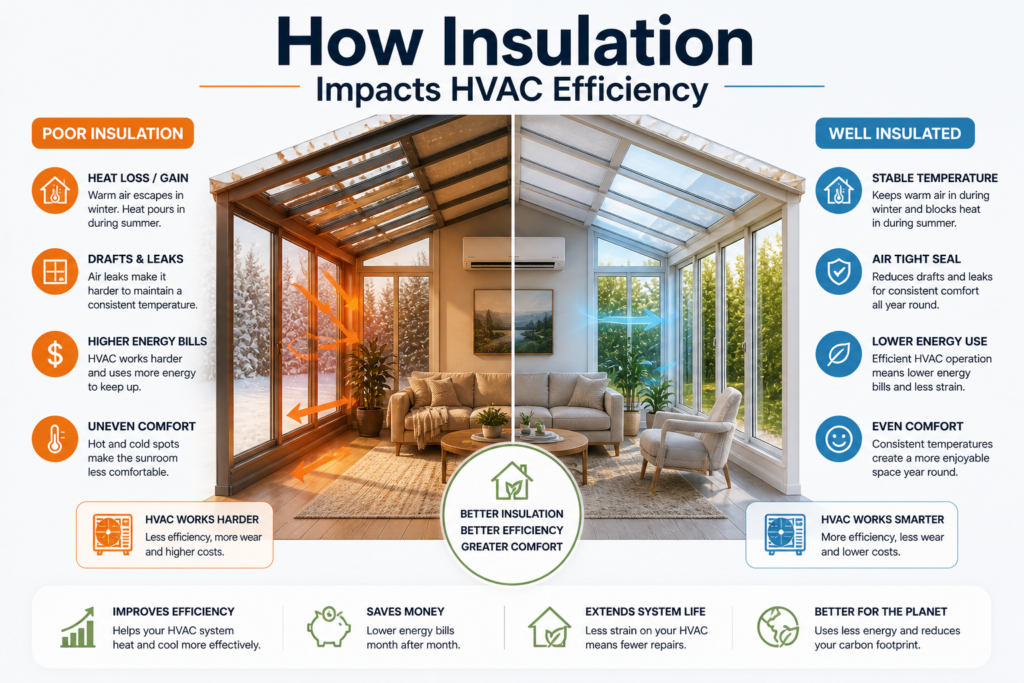
Insulation stabilizes temperature and reduces energy demand, improving system performance.
Without insulation, heating and cooling systems work harder to maintain comfort. This increases energy costs and reduces system lifespan.
Insulation acts as the stabilizing layer that allows heating and cooling systems to work efficiently. Without insulation, heat escapes quickly in winter and enters rapidly in summer, forcing HVAC systems to run continuously. This increases energy costs and reduces system lifespan. Insulation helps maintain a consistent indoor temperature, reducing the workload on heating and cooling systems.
In real-world use, even high-performance HVAC systems fail to deliver comfort when insulation is poor. Temperature swings remain high, and energy consumption increases significantly. Proper insulation reduces these fluctuations, allowing systems to operate more efficiently and maintain stable conditions throughout the day.
Insulation Impact on Efficiency
| Insulation Level | Temperature Stability | Energy Cost | HVAC Load |
| Poor | Low | High | Very high |
| Moderate | Medium | Medium | Moderate |
| High | High | Low | Low |
Insulation benefits:
- Reduces heat loss and heat gain
- Improves HVAC efficiency
- Lowers energy costs
- Extends system lifespan
Learn how sunroom insulation systems create stable indoor environments and improve heating and cooling performance.
How Flooring and Furniture Affect Temperature Control
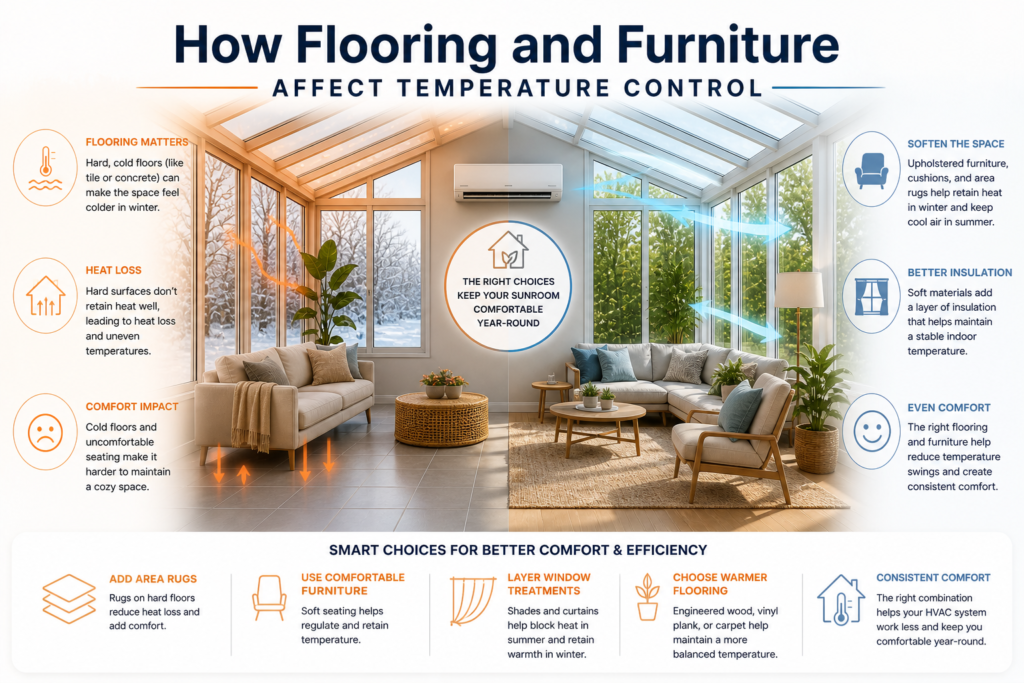
Flooring and furniture influence heat absorption, retention, and airflow within the sunroom.
Flooring and furniture influence how heat is absorbed, retained, and distributed within a sunroom. Hard surfaces like tile and concrete absorb heat during the day and release it slowly, which can increase indoor temperature even after sunlight decreases. Softer materials and rugs can reduce heat absorption and improve comfort.
Furniture placement also affects airflow and temperature distribution. Large furniture pieces can block airflow, creating hot and cold zones within the room. Real-world setups often show uneven temperature due to poor layout rather than weak HVAC systems. Proper arrangement improves airflow and allows systems to distribute air evenly.
Heat Behavior by Material
| Element | Heat Absorption | Heat Retention | Impact |
| Tile/Concrete | High | High | Increases temperature |
| Vinyl | Medium | Medium | Balanced |
| Rugs/Fabric | Low | Low | Improves comfort |
Optimization tips:
- Use balanced flooring materials to control heat
- Avoid blocking airflow with furniture
- Place furniture away from direct heat zones
- Combine layout with HVAC placement
Flooring materials influence how heat is stored and released inside the room. Hard surfaces absorb heat and affect temperature balance.
Explore how sunroom flooring impacts heat behavior and comfort.
Furniture layout affects airflow and can trap heat in certain areas, reducing cooling efficiency.
See how sunroom furniture placement impacts airflow and temperature control.
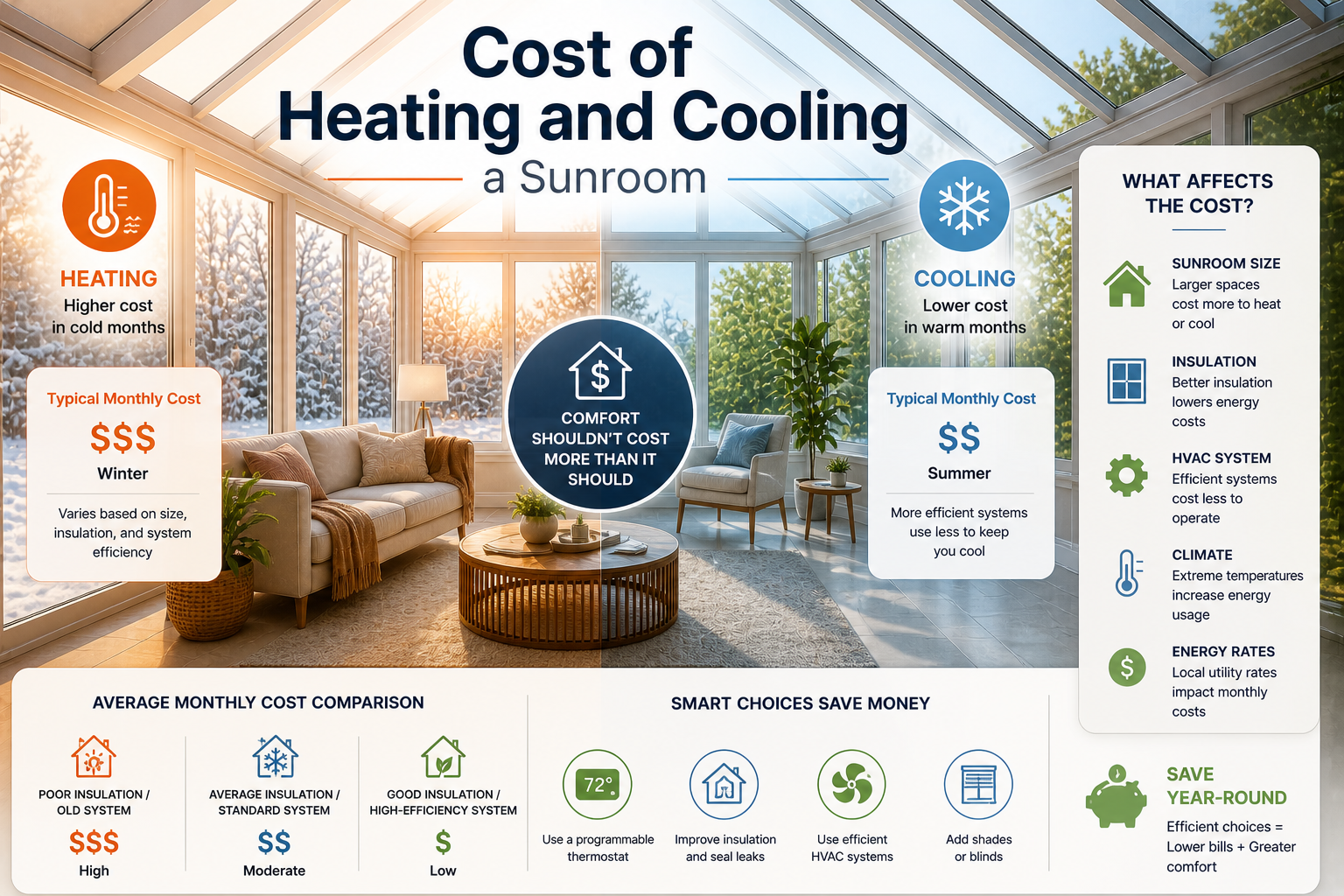
Cost of Heating and Cooling a Sunroom
Costs vary based on system type, installation, and energy efficiency.
Mini-split systems require higher upfront costs but provide long-term savings. Portable systems are cheaper initially but less efficient overtime.
Heating and cooling costs depend on system type, installation, and efficiency. Mini-split systems require higher upfront investment but deliver better long-term savings due to energy efficiency. Portable systems are cheaper initially but consume more energy over time and provide inconsistent performance.
Real-world cost comparison shows that investing in efficient systems reduces overall expenses within a few years. Poor system selection leads to higher energy bills and frequent upgrades. Cost should be evaluated based on long-term performance rather than initial price alone.
Cost Comparison
| System | Initial Cost | Operating Cost | Long-Term Value |
| Mini Split | High | Low | High |
| Portable AC | Low | High | Low |
| Space Heater | Low | Medium | Low |
| Radiant Heating | Medium–High | Low | High |
Cost strategy:
- Invest in efficient systems for long-term savings
- Avoid relying solely on temporary solutions
- Balance installation cost with energy efficiency
- Consider insulation to reduce operating cost
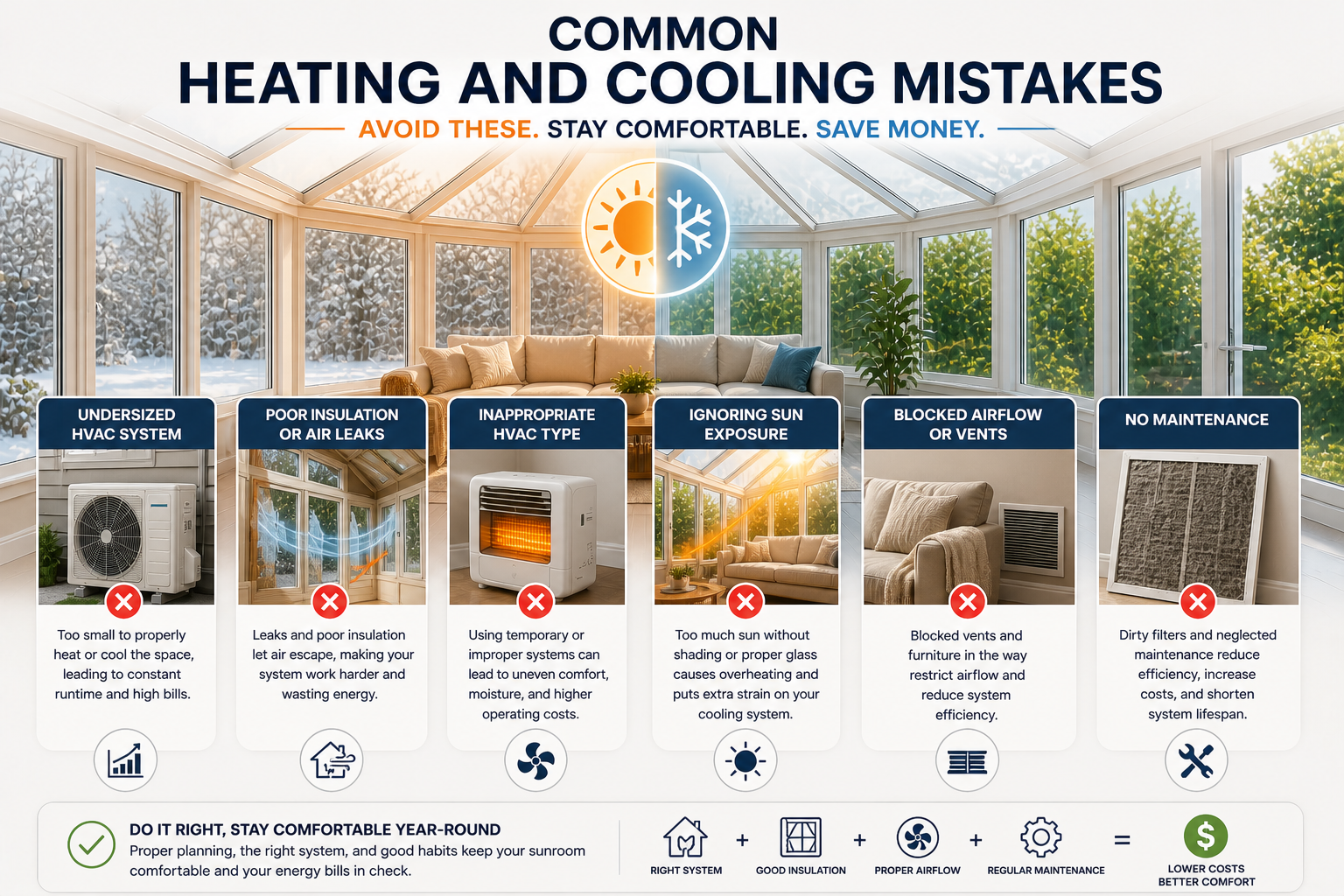
Common Heating and Cooling Mistakes
Most heating and cooling failures occur due to incorrect system selection and poor planning.
The most common issue is underestimating the impact of sunlight and insulation. Systems are installed without proper sizing, leading to inefficient performance and discomfort. Another frequent mistake is relying on temporary solutions like portable AC units for long-term use.
A common real-world issue occurs when homeowners rely solely on portable AC units in high-exposure sunrooms. These systems run continuously but fail to maintain temperature during peak heat, resulting in overheating despite high energy usage. This highlights the importance of choosing systems based on environmental conditions rather than convenience.
Common Mistakes and Impact
| Mistake | Result | Impact |
| Undersized system | Poor cooling/heating | High discomfort |
| No insulation | High energy loss | Increased cost |
| Overuse of portable units | Inefficiency | High bills |
| Poor airflow planning | Uneven temperature | Reduced comfort |
Mistake prevention:
- Calculate correct BTU requirements
- Invest in proper insulation
- Use dedicated HVAC systems
- Plan airflow and ventilation carefully
A common real-world failure occurs when a standard window AC unit is installed in a large sunroom with heavy sunlight exposure. During peak hours, the unit runs continuously but fails to reduce temperature because incoming heat exceeds cooling capacity. This results in high energy bills with minimal comfort improvement.
Expert Checklist
Choosing the right heating and cooling system requires evaluating multiple factors together. Sunlight exposure, insulation quality, and room size all influence system performance. A structured decision process ensures that the selected system delivers consistent comfort and efficiency.
Real-world success comes from aligning system capacity with environmental conditions. Overpowered systems waste energy, while underpowered systems fail to maintain comfort. The goal is to achieve balance between performance, cost, and long-term usability.
Decision checklist:
- Evaluate sunlight exposure and window type
- Determine insulation level
- Calculate BTU requirements accurately
- Choose system based on usage needs
- Plan airflow and ventilation layout
Quick Decision Table
| Condition | Best Solution |
| High sunlight | Mini split + window control |
| Poor insulation | Upgrade insulation first |
| Budget setup | Portable + fans (temporary) |
| Year-round use | Mini split system |
| Large sunroom | Zoned or dual systems |
FAQs
What is the best way to heat and cool a sunroom?
A ductless mini-split system provides the most efficient year-round solution.
How do you cool a sunroom without AC?
Use ventilation, fans, and shading, but these are limited solutions.
Is a mini split worth it for a sunroom?
Yes, it offers the best balance of efficiency, comfort, and control.
Can a sunroom be used year-round?
Yes, with proper insulation and HVAC system.
How much does it cost to heat and cool a sunroom?
Costs depend on system type, but mini-splits offer the best long-term value.













0 Comments