
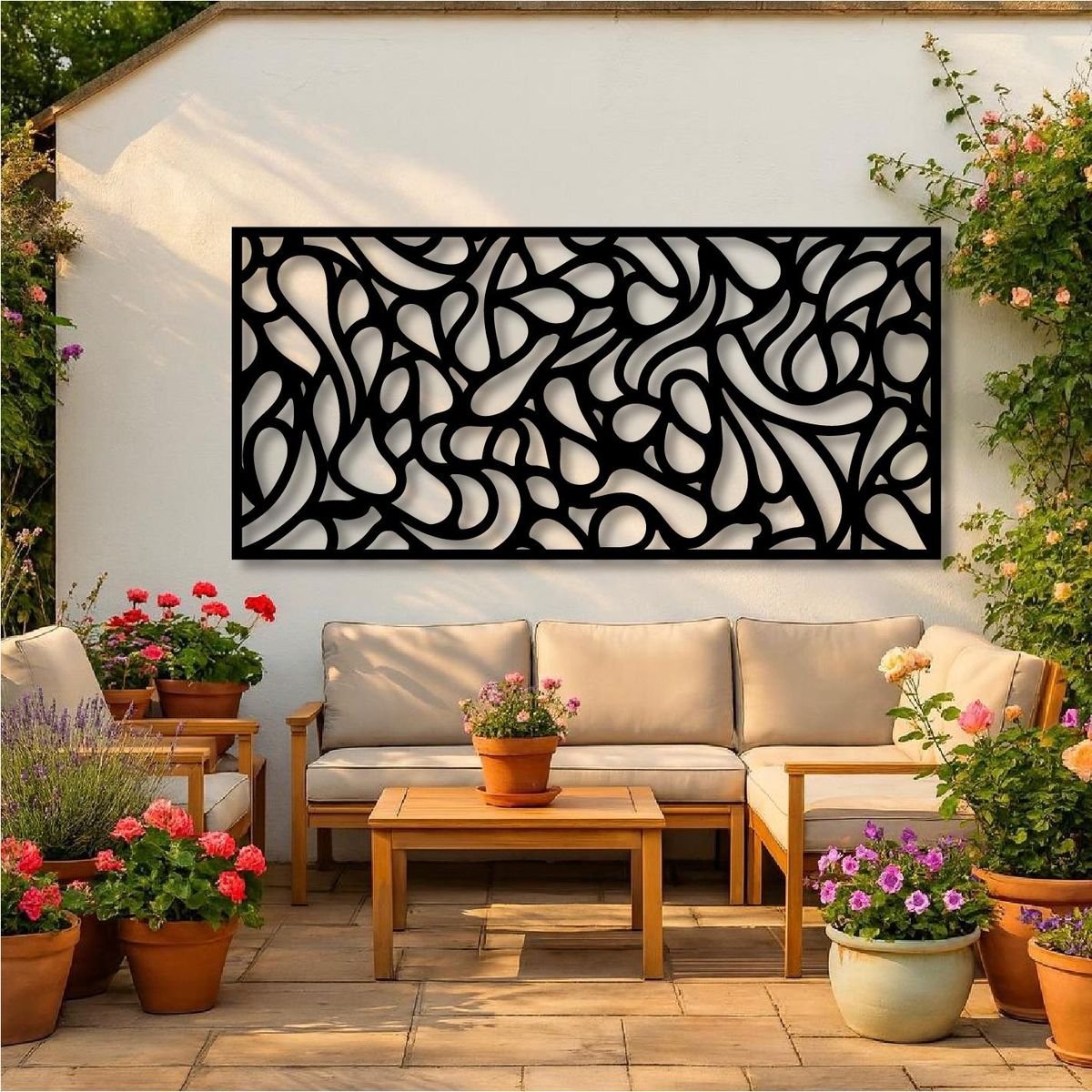
Outdoor metal wall art is decorative metal artwork designed to withstand weather exposure. Its durability depends on material choice, protective coatings, and climate conditions. Aluminum, corten steel, and powder-coated steel perform best outdoors when selected and maintained correctly.
Outdoor Metal Wall Art — Key Takeaways (30-Second Read)
- Outdoor metal wall art must be material-matched to climate, not just labeled “outdoor.”
- Aluminum is the safest choice across most regions due to natural corrosion resistance.
- Corten steel is designed to rust intentionally and must be placed carefully to avoid staining.
- Powder-coated steel performs well only when coatings remain intact and airflow is maintained.
- Most failures start behind the artwork, caused by trapped moisture and poor mounting.
- Climate factors like salt air, UV intensity, freeze-thaw cycles, and humidity matter more than price.
- Proper mounting with standoff gaps and corrosion-safe fasteners doubles lifespan.
- Outdoor metal wall art is low maintenance, not maintenance-free.
What is outdoor metal wall art and how is it different from indoor pieces?
Outdoor metal wall art is specifically engineered to survive rain, humidity, sunlight, and temperature changes. Unlike indoor pieces, it must resist corrosion, paint failure, and structural fatigue caused by weather exposure.
Indoor metal wall art often uses similar base metals, but the difference lies in surface treatment, coating thickness, and mounting design. Using indoor-only metal art outdoors is one of the most common causes of rust complaints and early failure.
Outdoor-rated metal wall art prioritizes protection first, appearance second.
Outdoor metal wall art is not simply indoor art placed outside. It is engineered for continuous environmental stress. Rain, UV radiation, wind vibration, temperature swings, and airborne pollutants all act on the surface simultaneously.
The primary difference lies in failure tolerance. Indoor metal art assumes stable conditions. Outdoor metal wall art assumes damage will eventually attempt to occur and is designed to delay, localize, and slow that damage.
Outdoor-rated pieces typically use:
- Thicker base metal to resist flexing
- Fully sealed edges to prevent moisture ingress
- Coatings designed for UV and thermal cycling
- Mounting systems that allow airflow and drainage
This difference is why visually similar pieces can age very differently outdoors.
Which metals are best for outdoor metal wall art?
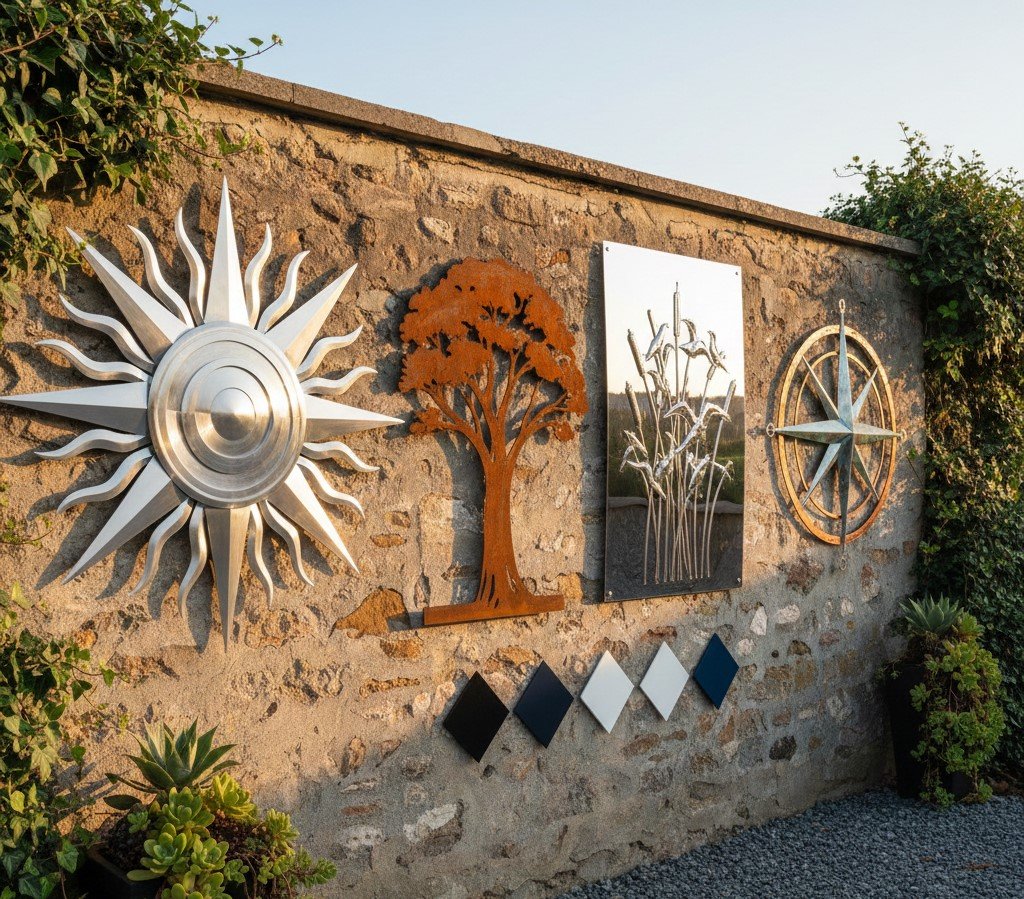
Short answer: aluminum, corten steel, and coated steel.
Choosing the correct metal is the single most important decision for outdoor longevity.
Aluminum (Best all-around outdoor performer)
Aluminum forms a natural oxide layer that prevents further corrosion. It does not rust, even when scratched. This makes it ideal for:
- Coastal environments
- High-humidity regions
- Covered or uncovered exterior walls
- Installations where maintenance access is limited
Its lighter weight also reduces stress on masonry and fasteners.
Corten steel (Intentional weathering)
Corten steel is selected for aesthetic corrosion, not protection through coating. The rust layer stabilizes and slows further oxidation.
Important realities:
- Early-stage runoff can stain concrete or stucco
- Not ideal for areas with constant water exposure
- Requires acceptance of visual change over time
Corten is architectural, not decorative. It works best when the environment complements its aging process.
Powder-coated steel (Controlled exposure solution)
Powder-coated steel performs well only while the coating remains intact. Once compromised, rust can spread beneath the surface.
Best use cases:
- Covered patios
- Exterior walls with minimal rain exposure
- Regions with moderate climate stability
Steel allows sharper designs than aluminum but demands inspection discipline.
Metals that should generally be avoided outdoors
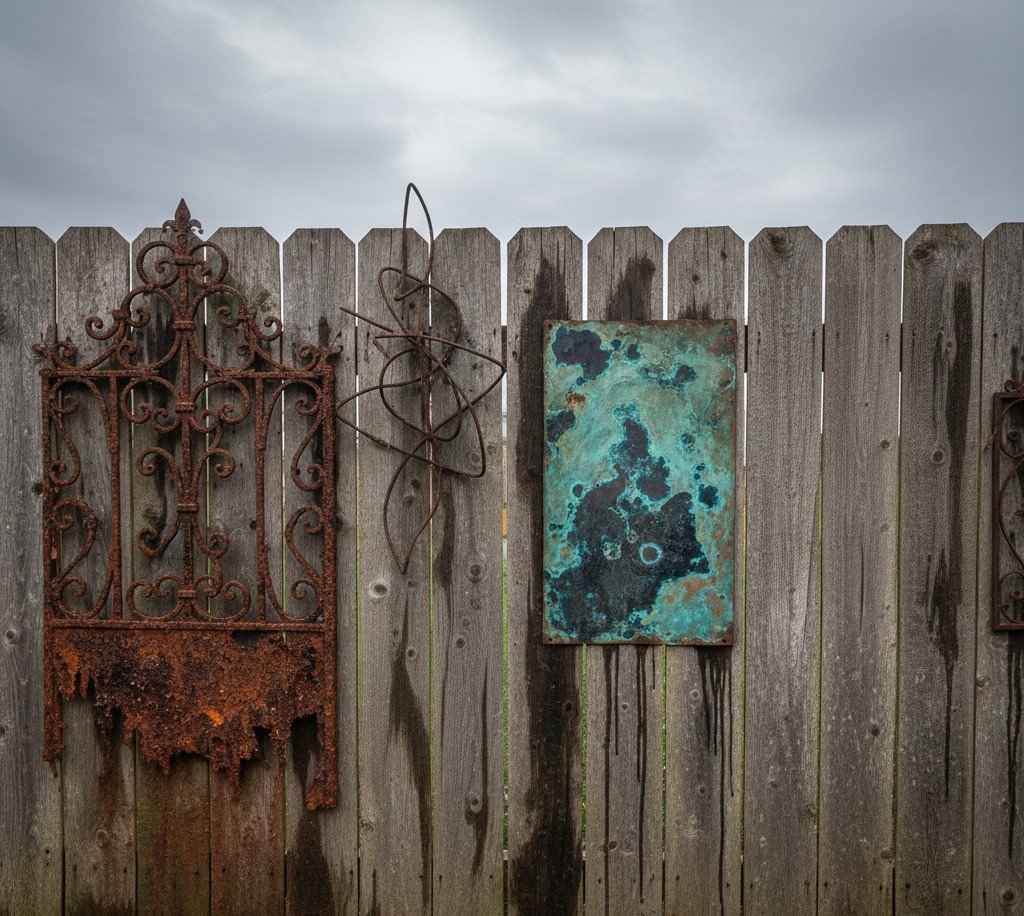
Bare iron, untreated steel, and decorative indoor metal pieces should not be used outdoors. These materials corrode quickly when exposed to moisture and sunlight, even in mild climates.
If the product description does not clearly state outdoor suitability, assume it is indoor-only.
Avoiding the wrong metal prevents 80% of outdoor failures.
Bare iron
Iron oxidizes aggressively outdoors. Even sealed iron deteriorates quickly once the seal is breached.
Decorative indoor steel
Indoor steel art often uses thin coatings designed for appearance, not endurance.
Mixed-metal constructions without isolation
Different metals in contact can cause galvanic corrosion when moisture is present.
If the manufacturer does not explicitly state outdoor rating, assume indoor-only.
How rust actually forms on outdoor metal wall art
Rust is oxidation caused by moisture and oxygen interacting with iron-based metals.
In outdoor settings, rust accelerates due to:
- Rain and condensation
- High humidity
- Salt in coastal air
- Scratches or chips in protective coatings
This is why coating integrity matters more than metal thickness.
Rust begins microscopically. Moisture enters through:
- Micro-cracks in coatings
- Cut edges left untreated
- Fastener holes
- Contact points with damp walls
Once oxygen and moisture reach bare steel, oxidation spreads laterally beneath coatings. This is why rust often appears far from the original chip.
Corten steel is the exception because its oxide layer is self-limiting. Traditional steel is not.
Understanding this mechanism explains why edge sealing and airflow matter as much as coating thickness.
Outdoor coatings explained: what really protects metal?
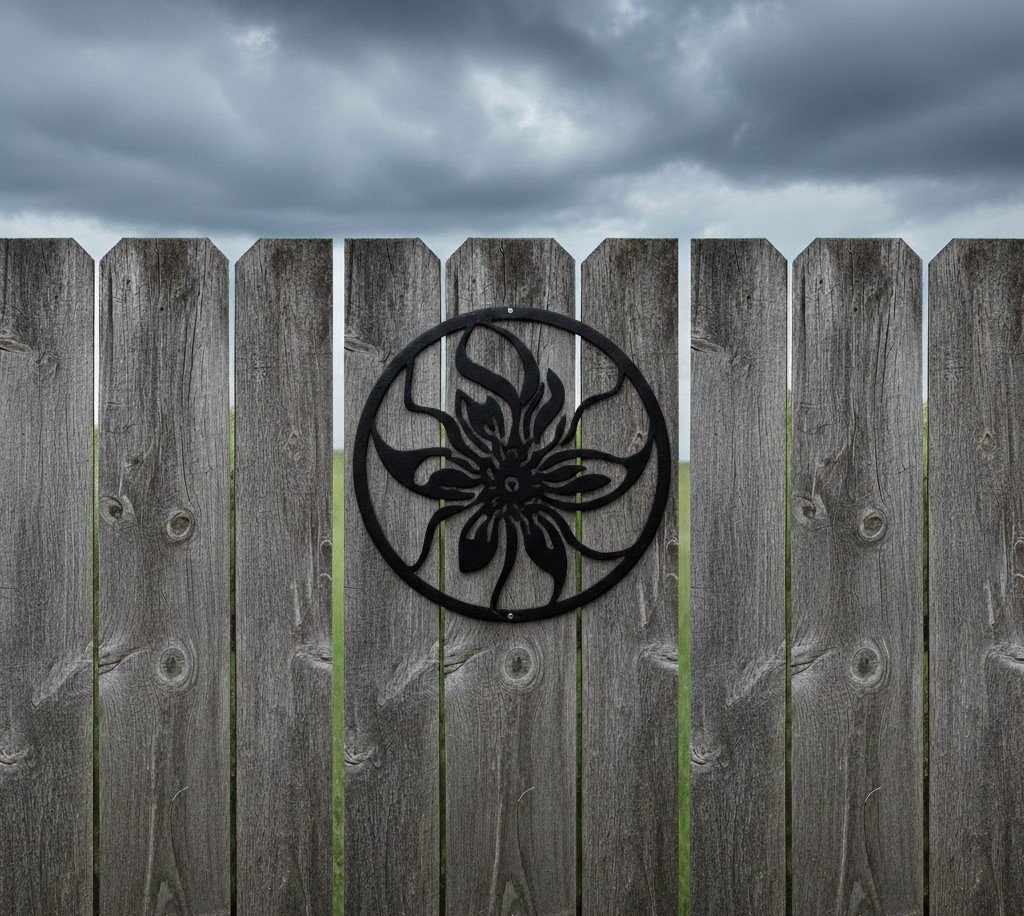
Short answer: coatings are the real defense, not the metal alone.
Powder coating
Powder coating is baked onto the metal, creating a thick, even layer. It resists UV fading, chipping, and moisture penetration. Matte powder coatings perform best outdoors because they hide wear better than gloss.
Powder coating is electrostatically applied and heat-cured. It provides:
- Uniform thickness
- Strong adhesion
- UV resistance when formulated correctly
Failure usually begins at edges or impact points.
Galvanization
Galvanized steel is coated with zinc to prevent corrosion. It performs well outdoors but limits color options and design flexibility.
Sealants and clear coats
Clear sealants are often used on corten steel or decorative outdoor pieces. They slow corrosion but require reapplication over time.
No coating is permanent. Maintenance expectations must be realistic.
Coatings are sacrificial barriers. They fail slowly so the metal does not fail quickly.
Does outdoor metal wall art fade in sunlight?
Yes, but quality coatings fade slowly and evenly.
Sunlight degrades pigments through UV exposure. Fading is gradual and unavoidable, but it can be managed.
Key factors:
- Dark colors absorb more heat
- Matte finishes show fading less than gloss
- UV-stabilized powder coatings last significantly longer
Uniform fading is acceptable. Patchy fading indicates coating inconsistency.
How climate affects outdoor metal wall art lifespan
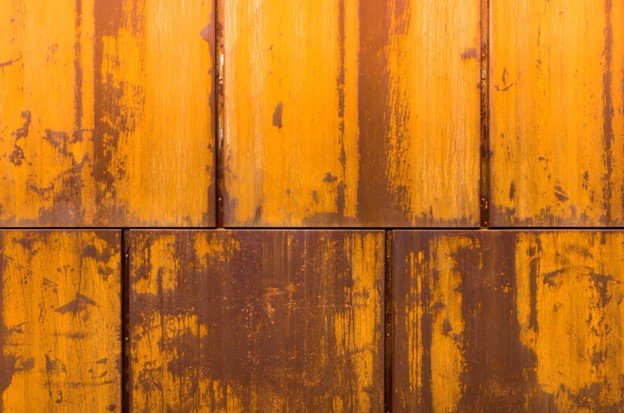
Climate is the single biggest variable.
Humid and coastal climates
Salt and moisture accelerate corrosion. Aluminum and corten steel perform best here. Powder-coated steel requires closer inspection and maintenance.
Hot and dry climates
Heat stresses coatings and accelerates fading. Lighter finishes and thicker coatings perform better.
Cold climates
Freeze-thaw cycles can cause micro-cracks in coatings. Proper drainage and sealed edges matter more than material thickness.
Desert climates
UV and heat stress coatings. Thermal expansion can cause cracking over time.
Outdoor metal wall art climate-zone decision matrix
Outdoor metal wall art does not fail uniformly across the world. Climate determines material stress, coating decay speed, and maintenance burden more than brand or price.
Use this matrix to match material and design choices to real environmental conditions.
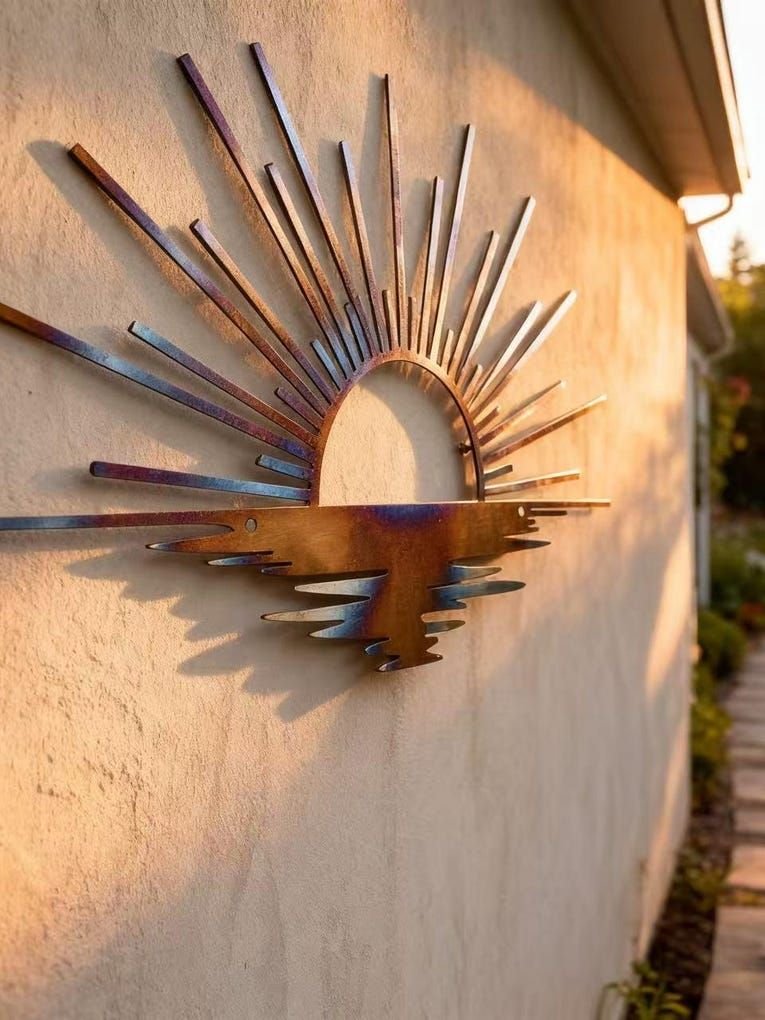
Coastal climates (salt air, high humidity)
Typical conditions
- Salt particles in the air
- Persistent humidity
- Accelerated electrochemical corrosion
Best materials
- Aluminum (top choice)
- Corten steel (with runoff awareness)
Materials to avoid
- Powder-coated steel without marine-grade coating
- Bare or decorative steel
Finish guidance
- Matte finishes preferred
- Avoid thin clear coats
- Expect faster aging even with correct materials
Hidden risk
Salt creeps into microscopic coating defects and continues corroding even after surfaces dry. This makes edge sealing and fastener quality critical.
Maintenance reality
Annual inspection is non-negotiable. Aluminum dramatically reduces long-term risk in coastal zones.
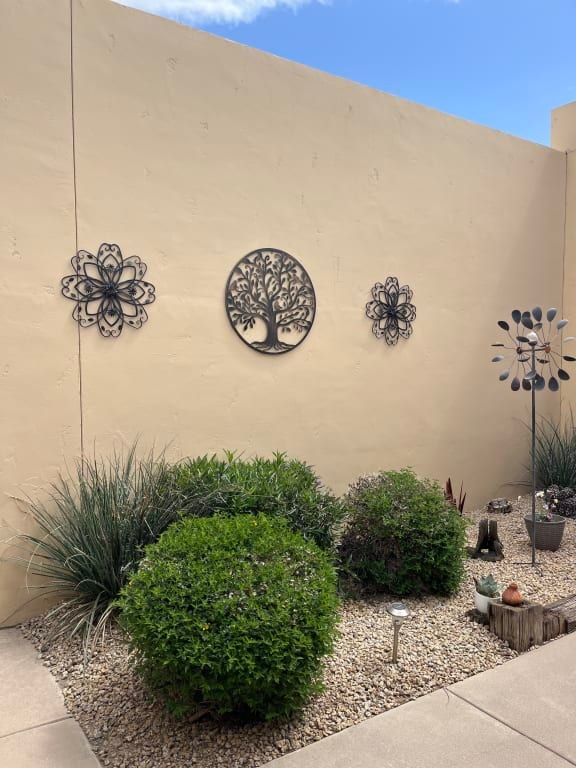
Humid tropical climates (rainfall, heat, vegetation)
Typical conditions
- Frequent rain
- Warm temperatures
- Organic debris buildup (pollen, leaves)
Best materials
- Aluminum
- Corten steel (with airflow)
Materials to avoid
- Flush-mounted steel
- Designs with horizontal water traps
Finish guidance
- Powder coating acceptable only with proper airflow
- Avoid recessed crevices that collect moisture
Hidden risk
Organic debris retains moisture and creates corrosion hotspots behind the artwork, even if the front looks clean.
Maintenance reality
Cleaning is less important than keeping airflow paths open. Standoff mounting is essential.
Hot, dry climates (intense sun, large temperature swings)
Typical conditions
- High UV exposure
- Day–night temperature shifts
- Low humidity
Best materials
- Aluminum
- Powder-coated steel with UV-stable pigments
Materials to avoid
- Thin coatings
- Dark gloss finishes in full sun
Finish guidance
- Light or neutral colors age more evenly
- Matte finishes hide thermal stress better
Hidden risk
Thermal expansion and contraction slowly fracture coatings. This happens invisibly before rust appears.
Maintenance reality
Visual inspections for cracking matter more than cleaning. Heat stress, not moisture, is the enemy.
Cold and freeze-thaw climates (snow, ice, seasonal moisture)
Typical conditions
- Freeze–thaw cycles
- Snow melt exposure
- Condensation during temperature changes
Best materials
- Aluminum
- Galvanized or high-quality powder-coated steel
Materials to avoid
- Poorly sealed steel edges
- Designs that trap water at the bottom
Finish guidance
- Sealed edges and drainage paths are critical
- Avoid flush mounting against masonry
Hidden risk
Water expands when frozen, widening microscopic coating failures. This accelerates corrosion internally.
Maintenance reality
Spring inspections are crucial. Catch damage after winter before it propagates.
Mild temperate climates (moderate rain, limited extremes)
Typical conditions
- Balanced humidity
- Limited temperature extremes
Best materials
- Aluminum
- Powder-coated steel
- Corten steel (design-driven choice)
Materials to avoid
- Untreated indoor-only metals
Finish guidance
- Broad flexibility
- Aesthetic choice matters more than survival here
Hidden risk
Complacency. Mild climates still corrode metal slowly if drainage and airflow are ignored.
Maintenance reality
Low effort, but not zero. Even mild climates benefit from yearly checks.
Climate-driven material selection summary table
| Climate Zone | Safest Material | Acceptable Alternative | Highest Risk Choice |
| Coastal | Aluminum | Corten steel | Coated steel |
| Humid / Tropical | Aluminum | Corten steel | Flush steel |
| Hot / Dry | Aluminum | UV-stable steel | Dark gloss finishes |
| Cold / Freeze-thaw | Aluminum | Galvanized steel | Poorly sealed steel |
| Mild / Temperate | Aluminum | Powder-coated steel | Indoor-only metal |
This table compresses decades of outdoor failure patterns into one glance.
How climate should influence design choice (Not just material)
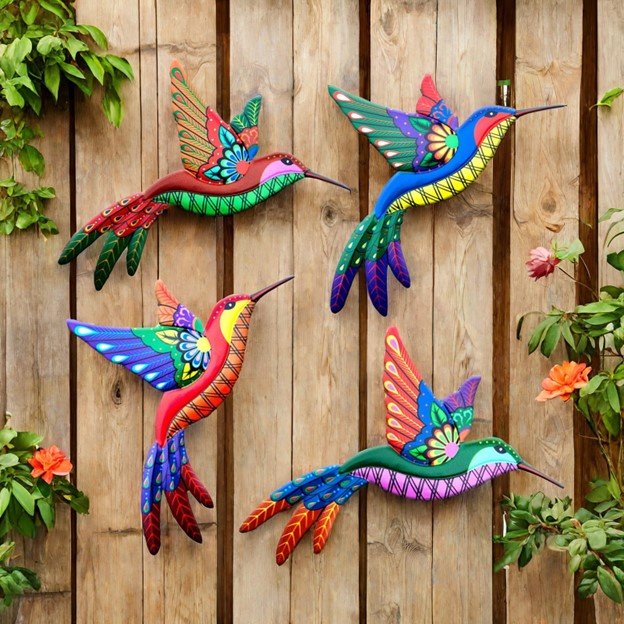
Material alone is not enough. Climate should influence design geometry.
- Wet climates benefit from open designs with negative space
- Hot climates benefit from thinner profiles to reduce heat stress
- Windy regions benefit from multi-point mounting designs
- Cold climates benefit from downward-draining shapes
Design that ignores climate fails even when the material is correct.
Region-specific examples: how outdoor metal wall art behaves in the real world
Outdoor metal wall art succeeds or fails based on regional exposure patterns, not just general climate labels. Below are concrete, geography-based examples that reflect how metal behaves in practice, not theory.
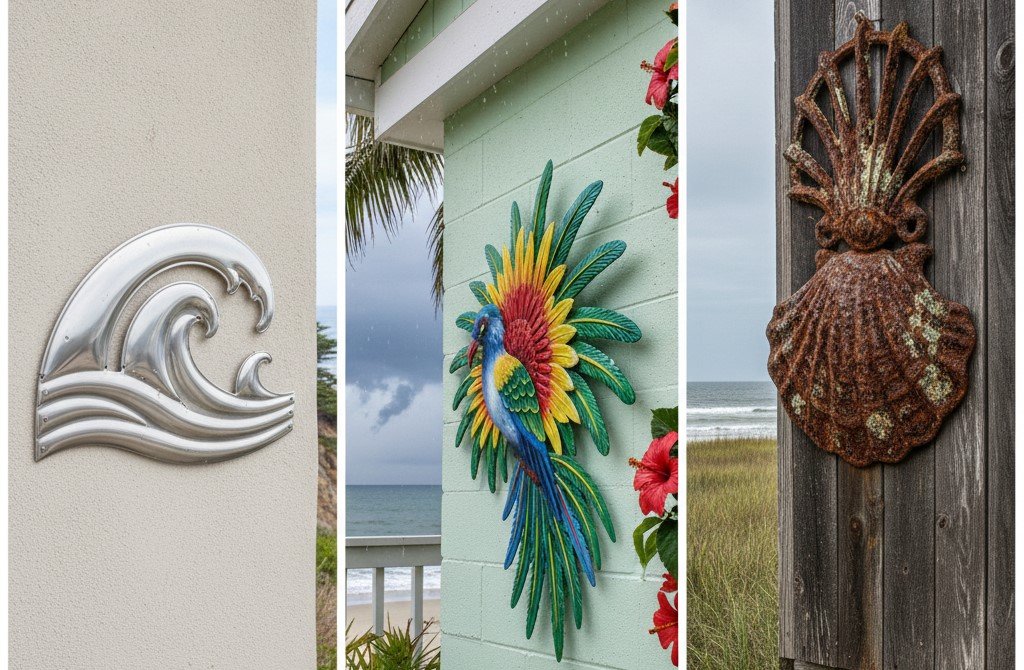
United States (by major exposure zones)
Coastal United States (California coast, Florida, Carolinas)
Primary threats
- Salt air corrosion
- Constant humidity
- Wind-driven moisture
What works best
- Aluminum wall art with standoff mounting
- Corten steel used away from white stucco or concrete
What fails most often
- Powder-coated steel mounted flush to walls
- Decorative steel with thin coatings
Hidden insight
Even when rain is minimal, salt in the air alone corrodes steel. Many failures occur on shaded walls where moisture lingers longer.
Southwestern US (Arizona, Nevada, inland California)
Primary threats
- Intense UV radiation
- Extreme day–night temperature swings
What works best
- Aluminum
- Powder-coated steel with UV-stable pigments
What fails most often
- Dark gloss finishes
- Thin coatings that crack under heat stress
Hidden insight
In desert regions, coatings fail from thermal fatigue, not rust. Cracks form first, corrosion follows later.
Northern US & Canada (Midwest, Northeast)
Primary threats
- Freeze–thaw cycles
- Snow melt and condensation
What works best
- Aluminum
- Galvanized steel with sealed edges
What fails most often
- Steel with unsealed lower edges
- Art mounted where snow accumulates beneath it
Hidden insight
Damage accelerates in early spring when melting snow repeatedly wets and dries the same surfaces.
United Kingdom & Western Europe
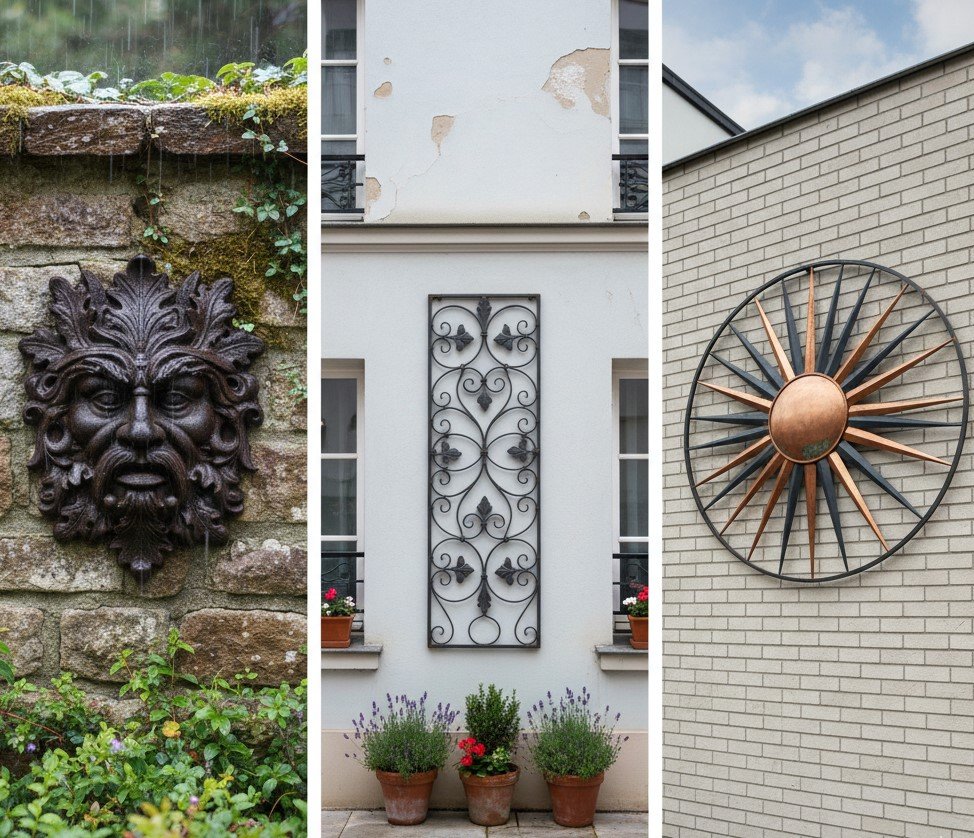
UK, Ireland, Netherlands
Primary threats
- Persistent dampness
- Limited drying cycles
What works best
- Aluminum
- Corten steel with good airflow
What fails most often
- Flush-mounted steel
- Designs with horizontal ledges
Hidden insight
Corrosion often starts on the backside of the artwork because walls stay damp longer than the air.
Southern Europe (Spain, Italy, Greece)
Primary threats
- Strong sunlight
- Coastal salt exposure
What works best
- Aluminum
- Light-colored powder-coated steel
What fails most often
- Dark finishes in direct sun
- Steel without UV-rated coatings
Hidden insight
UV degradation shows before rust. Fading is the early warning sign.
Middle East (Gulf & arid regions)
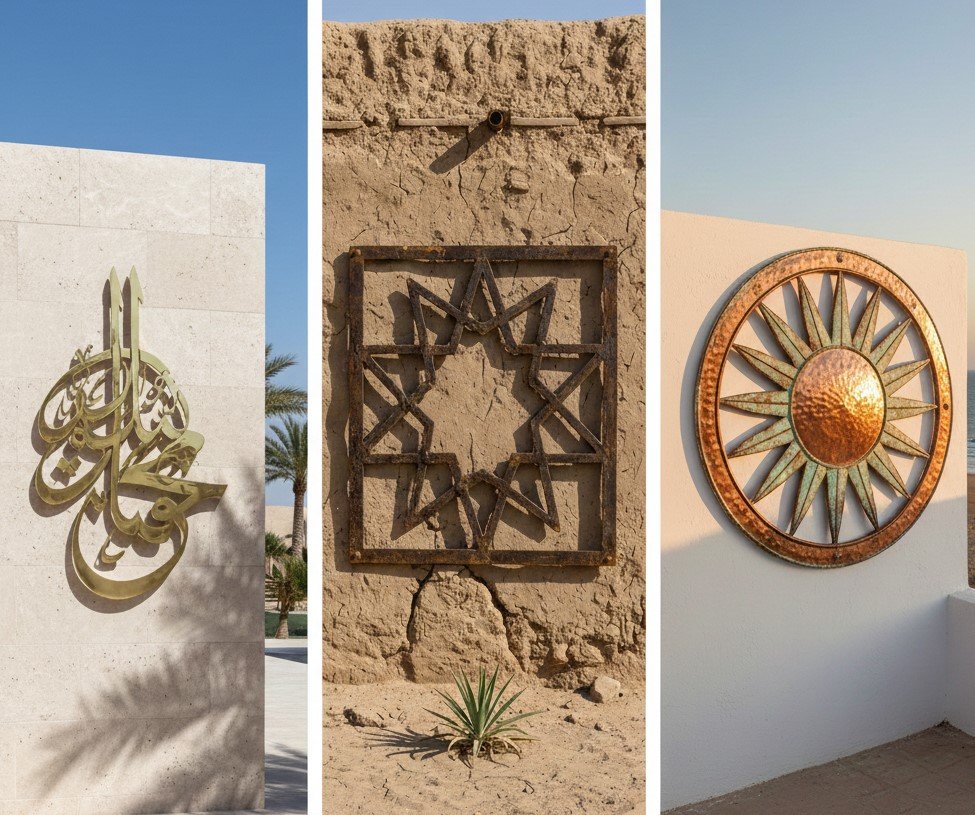
UAE, Saudi Arabia, Qatar
Primary threats
- Extreme heat
- Wind-borne sand
- Coastal salt air in many cities
What works best
- Aluminum (dominant choice)
- Minimalist designs with fewer crevices
What fails most often
- Steel art with complex cutouts
- Glossy finishes that show abrasion
Hidden insight
Sand acts as a micro-abrasive, slowly wearing down coatings even without rain.
South Asia:
Pakistan, India (urban & semi-urban)
Primary threats
- Monsoon humidity
- Dust accumulation
- Air pollution
What works best
- Aluminum
- Powder-coated steel with standoff mounts
What fails most often
- Flush-mounted steel
- Poor fasteners that corrode faster than the art
Hidden insight
Pollution particles accelerate corrosion by holding moisture against surfaces longer than clean dust.
Southeast Asia
Malaysia, Indonesia, Thailand
Primary threats
- Constant humidity
- Biological growth (mold, algae nearby)
What works best
- Aluminum
- Open designs with strong airflow
What fails most often
- Dense steel designs
- Art mounted near vegetation
Hidden insight
Metal may survive, but surrounding biological growth can trap moisture and create localized corrosion zones.
Australia & New Zealand
Coastal Australia
Primary threats
- Salt air
- Strong sun
What works best
- Aluminum
- Marine-grade powder coatings
What fails most often
- Decorative steel imported without climate adaptation
Hidden insight
Australian sun accelerates both fading and coating brittleness faster than many regions.
Africa
North Africa (Mediterranean & desert edges)
Primary threats
- Heat
- Dust
- Coastal salt in some regions
What works best
- Aluminum
- Corten steel in architectural settings
What fails most often
- Thin painted steel
Hidden insight
Dust buildup is more damaging than rainfall because it traps moisture overnight.
Why region-specific thinking matters (Mentor synthesis)
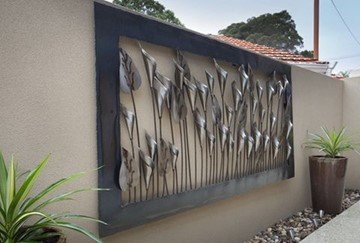
Two homes can have identical metal wall art.
One lasts 20 years.
The other fails in 4.
The difference is rarely the product.
It’s exposure alignment.
Most buyers ask, “Is this outdoor-safe?”
Experts ask, “Is this safe here?”
That distinction is why region-specific guidance separates authority content from décor blogs.
Where outdoor metal wall art works best
Outdoor metal wall art performs well on:
- Exterior feature walls
- Garden walls and fences
- Patios and courtyards
- Covered verandas and balconies
Fully exposed walls require the highest-grade materials and coatings.
Outdoor metal wall art performs best when:
- Installed on vertical, well-drained surfaces
- Not exposed to constant water flow
- Protected from ground splashback
- Positioned where airflow is unrestricted
Covered patios extend lifespan dramatically without compromising visual impact.
Mounting outdoor metal wall art safely
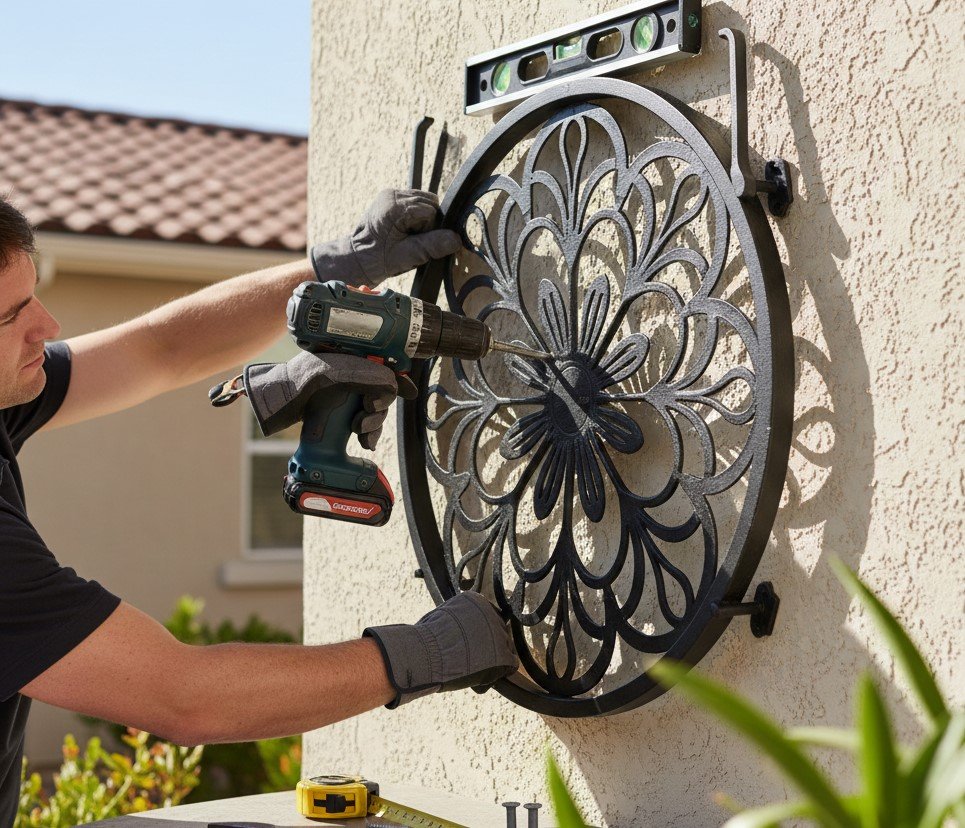
Outdoor mounting must account for wind, vibration, and moisture.
Outdoor mounting must address three forces:
- Gravity
- Wind uplift
- Moisture accumulation
Best practices:
- Use stainless steel or galvanized fasteners
- Avoid trapping water behind the artwork
- Use standoff mounts to allow airflow
- Secure heavy pieces into masonry or studs
Improper mounting shortens lifespan more than weather alone.
Maintenance expectations for outdoor metal wall art
Outdoor metal wall art does not fail suddenly. It fails quietly and progressively. The purpose of maintenance is not to keep the art looking new, but to interrupt corrosion pathways before they become structural.
What most guides never explain is that 95% of damage happens behind the artwork, not on the visible face.
What actually needs maintenance (and what doesn’t)
Outdoor metal wall art does not require:
- Polishing
- Frequent washing
- Seasonal recoating (unless specified)
- Cosmetic perfection
It does require:
- Periodic inspection of edges, fasteners, and rear surfaces
- Early intervention when coatings are breached
- Ensuring airflow and drainage remain unobstructed
Neglecting inspection is what shortens lifespan, not exposure alone.
The invisible enemy: trapped moisture
Moisture trapped between metal and wall is more destructive than rain exposure. Dust, pollen, and organic debris act like sponges, holding water against the metal for extended periods.
This is why stand-off mounting and rear ventilation are not optional extras. They are lifespan multipliers.
How long does outdoor metal wall art last?
Lifespan should be understood in phases, not years.
Phase 1: Visual integrity
This is when the art looks exactly as intended. For aluminum, this phase can last decades. For powder-coated steel, it may last 5–10 years depending on exposure.
Phase 2: Controlled aging
Minor fading, patina development, or surface texture changes appear. At this stage, the artwork is still structurally sound. Corten steel spends most of its life in this phase by design.
Phase 3: Structural risk
This phase begins when corrosion spreads beneath coatings or fasteners loosen due to vibration. Without intervention, damage accelerates exponentially.
Maintenance determines whether Phase 2 lasts five years or twenty.
Outdoor metal wall art vs stone, wood, and resin
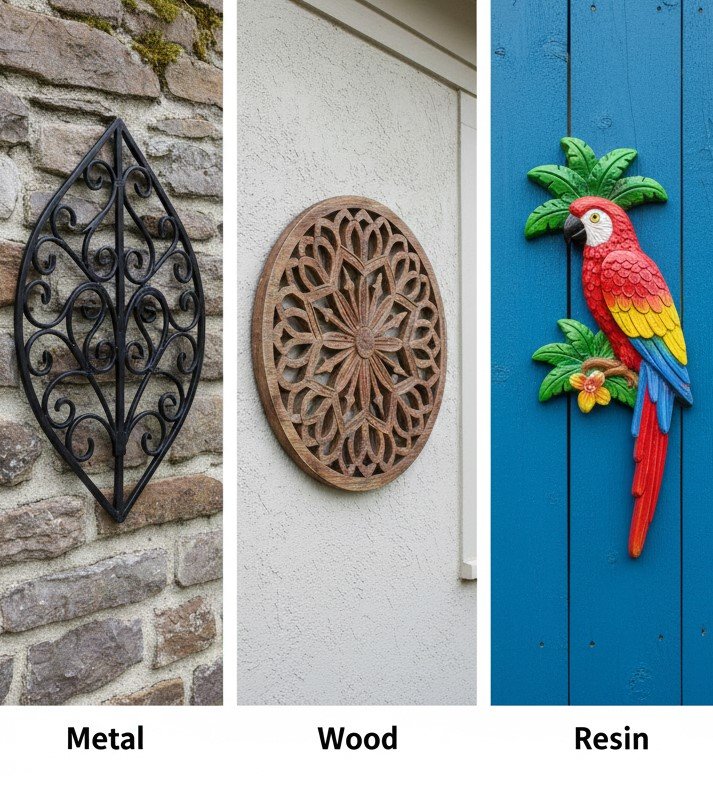
Metal outperforms wood and resin in durability. Wood requires frequent sealing. Resin fades and cracks. Stone is durable but heavy and limited in design flexibility.
Metal offers the best balance of design freedom and structural longevity.
The true comparison is not appearance, but total ownership cost.
Wood
- Requires sealing every 1–3 years
- Susceptible to rot, insects, and warping
- Often fails structurally before it looks damaged
Resin
- UV degradation causes brittleness
- Cracking is irreversible
- Lighter weight hides structural weakness
Stone
- Extremely durable
- Limited design flexibility
- High wall load and installation cost
Metal sits in the optimal middle. It balances durability, design freedom, and maintainability better than any alternative when chosen correctly.
Common mistakes people make with outdoor metal wall art
- Using indoor-rated pieces outdoors
- Ignoring drainage and airflow
- Mounting directly against walls
- Choosing glossy finishes for full sun exposure
- Assuming “rust-proof” means maintenance-free
These mistakes explain most negative experiences.
Most mistakes are conceptual, not practical.
Mistake 1: Believing “rust-proof” means maintenance-free
No metal system is maintenance-free outdoors. “Rust-resistant” means slower failure, not immunity.
Mistake 2: Ignoring fasteners
Fasteners often fail before the artwork. Using non-rated screws introduces galvanic corrosion, even when the artwork itself is sound.
Mistake 3: Treating walls as neutral surfaces
Exterior walls absorb moisture. Mounting metal directly against stucco, brick, or concrete creates a moisture reservoir that accelerates corrosion.
Mistake 4: Choosing aesthetics over climate
A design that works beautifully in a dry climate may fail rapidly in coastal or tropical regions.
Most negative experiences trace back to one of these errors.
How to choose outdoor metal wall art before buying
Ask five questions:
- Is the material explicitly outdoor-rated?
- What coating or finish is used?
- How will it be mounted and ventilated?
- What climate will it face year-round?
- Am I comfortable with natural aging or patina?
Clear answers mean fewer regrets.
Beyond basic questions, experts ask deeper ones:
- Are edges sealed or raw?
- Are mounting points isolated from the main surface?
- Is the coating thickness specified or vague?
- Has the design accounted for thermal expansion?
- Will runoff stain adjacent surfaces?
High-quality outdoor metal art answers these questions implicitly through design, not marketing language.
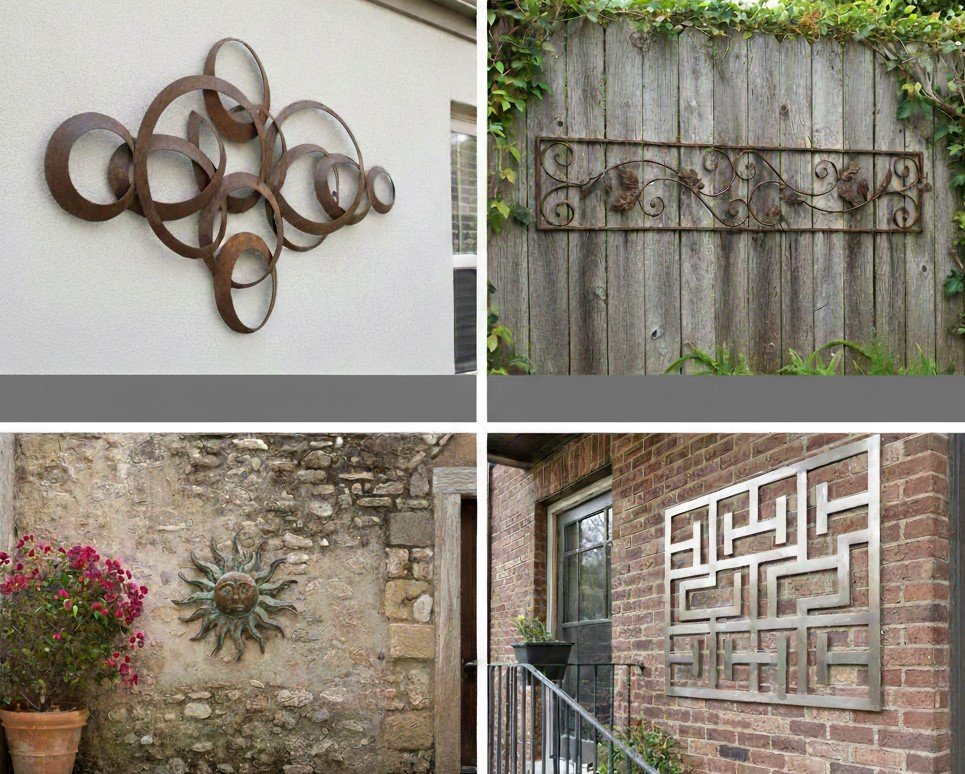
Outdoor metal wall art placement by location type
Exterior house walls
These walls often trap heat and moisture. North-facing walls retain moisture longer. South-facing walls receive maximum UV. Placement should consider orientation, not just aesthetics.
Garden walls and fences
Ground proximity increases splashback contamination. Elevating the artwork even slightly above ground level reduces exposure significantly.
Courtyards
Courtyards create microclimates. Limited airflow can trap humidity. Designs with more negative space perform better here.
Balconies
Wind shear and vibration matter more than rain. Secure mounting and vibration-resistant fasteners are critical.
Wind load and vibration considerations
Wind does not need to be extreme to cause damage.
Repeated micro-movements loosen fasteners, enlarge mounting holes, and fracture coatings around stress points. Over time, this creates entry points for moisture.
Designs with:
- Multiple mounting points
- Distributed weight
- Slight flexibility
perform better than rigid, single-point mounts.
This is rarely discussed but crucial for longevity.
Drainage, airflow, and wall protection
Airflow is corrosion control.
Even a 5–10 mm gap behind the artwork allows evaporation to occur. Without this gap, moisture cycles accelerate corrosion dramatically.
Drainage matters because water will always find the lowest point. Designs that trap water at horizontal edges fail faster than those with downward-facing geometry.
Wall protection matters because staining and wall degradation often occur before metal failure, creating secondary damage.
The psychology of outdoor metal wall art aging
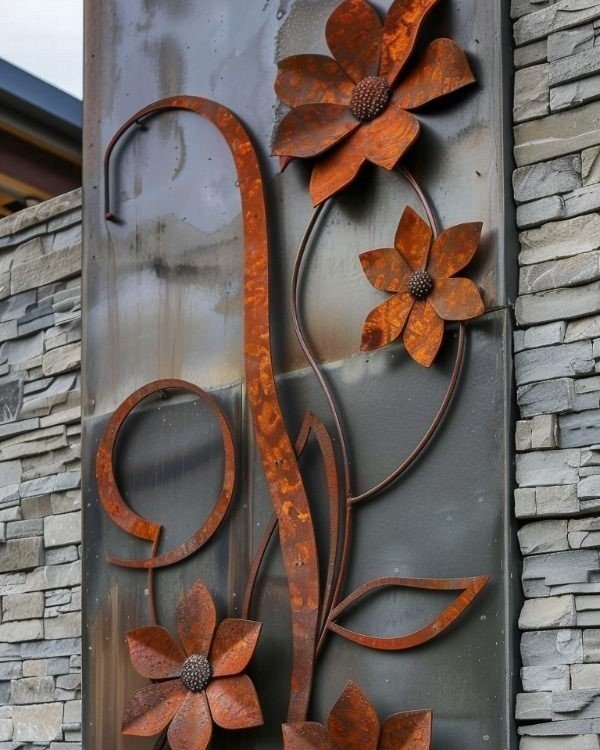
Unlike indoor décor, outdoor metal art is expected to age. The key is predictable aging.
Corten steel ages visibly but honestly. Aluminum changes subtly. Powder-coated steel should age slowly and evenly.
Problems arise when aging is patchy, unexpected, or uncontrolled. Understanding and accepting the intended aging path is part of a good purchase decision.
When outdoor metal wall art is the wrong choice
Outdoor metal wall art is durable, but it is not universal. Knowing when not to use it prevents wasted money and premature failure.
1. Constant water exposure zones
If the wall is regularly soaked by sprinklers, roof runoff, or ground splashback, metal wall art is a poor choice unless fully marine-rated aluminum is used.
Continuous wetting defeats most coatings faster than weather exposure alone.
2. Walls with no mounting flexibility
Outdoor metal wall art should not be installed where:
- Standoff mounting is impossible
- Airflow behind the piece is blocked
- Fasteners cannot be properly anchored
Flush mounting against damp masonry dramatically shortens lifespan.
3. Extremely high-traffic or impact-prone areas
In narrow walkways, public-facing walls, or areas where objects regularly hit the surface, metal art suffers coating damage that quickly becomes corrosion entry points.
In these locations, stone or recessed wall treatments perform better.
4. Environments where visual aging is unacceptable
Metal ages honestly.
If the space requires a permanently pristine appearance with zero tolerance for fading, patina, or texture change, outdoor metal wall art may not align with expectations.
Corten steel, in particular, should be avoided in such cases.
5. Highly corrosive industrial zones
Areas with heavy chemical pollution, industrial exhaust, or acidic airborne particles accelerate coating breakdown beyond normal climate models.
In these environments, even aluminum may require frequent inspection.
6. When maintenance access is impossible
Outdoor metal wall art assumes periodic inspection.
If the installation location makes access unsafe or impractical, selecting materials that require no inspection at all (such as stone) may be the better long-term decision.
Why Homeaholic treats outdoor metal wall art differently
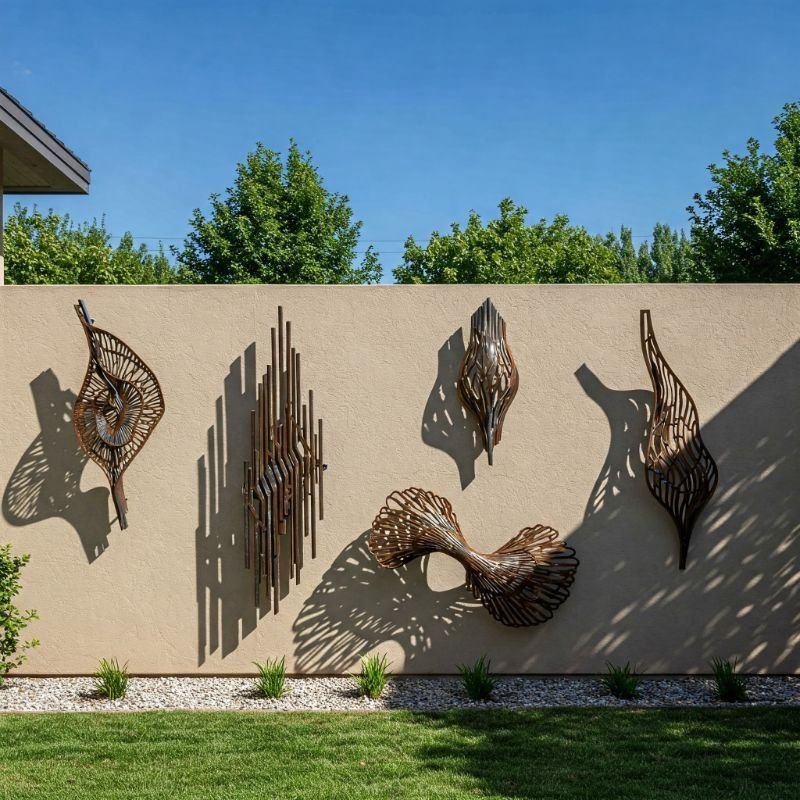
At Homeaholic, outdoor metal wall art is evaluated the same way exterior architectural elements are evaluated: by exposure tolerance, material truth, and lifecycle behavior.
This approach rejects trend-driven selection in favor of environmental realism. Outdoor décor must coexist with weather, not fight it.
That philosophy is what separates decorative failure from lasting installation.
Frequently Asked Questions
Can outdoor metal wall art be used in coastal areas?
Yes, but aluminum or corten steel is strongly recommended.
Will outdoor metal wall art stain walls?
Corten steel may stain during early weathering. Proper spacing prevents this.
Can outdoor metal wall art be repainted?
Yes, but surface preparation is critical for adhesion.
Does outdoor metal wall art attract heat?
Dark finishes absorb heat but do not damage exterior walls when mounted with airflow.
Is outdoor metal wall art safe in high winds?
Yes, when mounted securely with appropriate fasteners.Can outdoor metal wall art be used indoors later?
Yes, once cleaned and stabilized.







0 Comments