
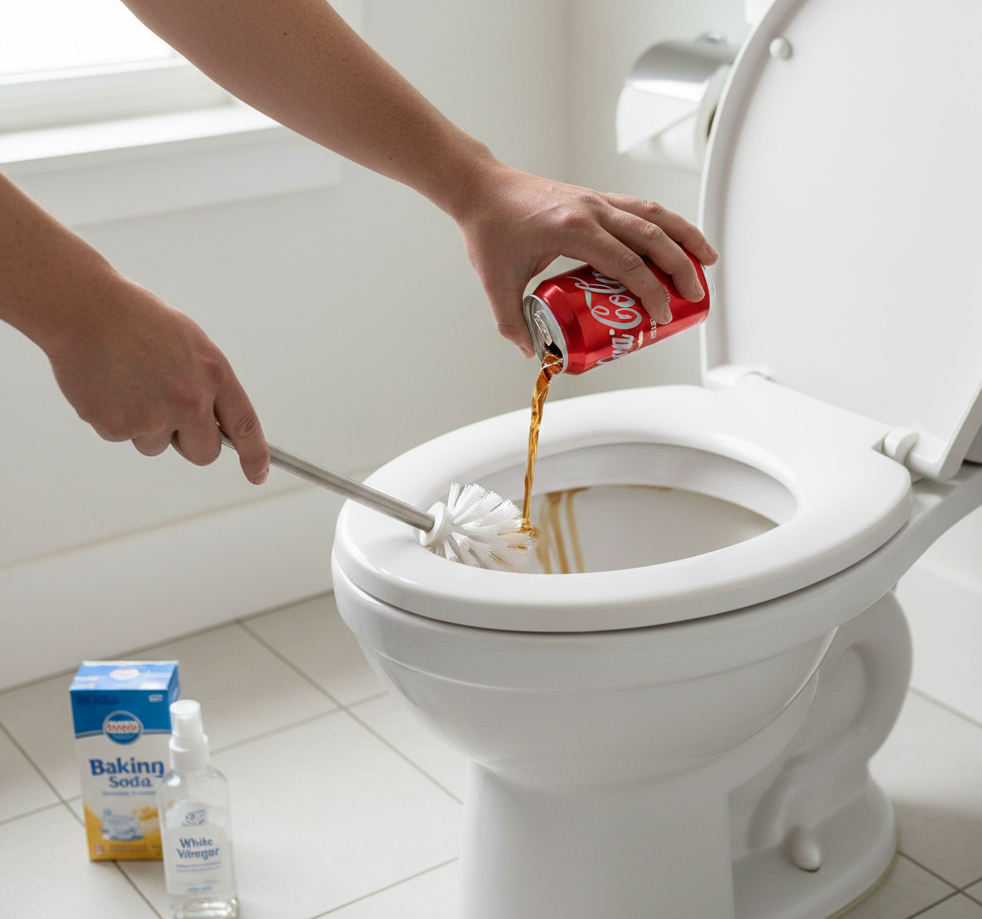
Coke can help loosen limescale and mineral stains in a toilet due to its phosphoric acid content. It does not disinfect or kill germs. For best results, Coke should be used as a descaling aid, followed by proper scrubbing and a disinfecting cleaner. This guide helps debunk a lot of myths while explaining the true scenarios of how to clean a toilet with coke for better understanding of when to utilize this specific way of cleaning a toilet.
Why People Use Coke to Clean Toilets
The idea of cleaning a toilet with Coke has circulated for decades. It sounds strange, but it isn’t completely made up. Coke contains phosphoric acid, the same type of acid used in some commercial descalers.
This makes people curious. If Coke can dissolve mineral buildup, could it clean a toilet cheaply and easily?
The short answer is yes, to a limited extent. The long answer is where most online guides fall short.
The Chemistry Behind Cleaning a Toilet With Coke
Coke’s cleaning power comes from phosphoric acid, not carbonation, sugar, or caffeine.
Phosphoric acid reacts with:
- Calcium deposits
- Limescale
- Light rust stains
These are mineral-based stains commonly found in toilet bowls, especially in areas with hard water.
What Coke does not contain:
- Disinfectants
- Antibacterial agents
- Surfactants for grease removal
This distinction matters because a toilet needs both cleaning and disinfection.
What Coke Can Actually Clean in a Toilet

Limescale and Mineral Buildup
Coke can soften and loosen white or yellow mineral deposits caused by hard water. These stains are acidic-reactive, which makes Coke mildly effective.
Light Rust Stains
Coke may reduce light rust rings because phosphoric acid reacts with iron oxide. Results are usually cosmetic, not complete removal.
Surface-Level Discoloration
Coke can help fade surface stains that haven’t bonded deeply to porcelain.
These effects depend heavily on contact time and scrubbing.
What Coke Cannot Clean (This Is Critical)
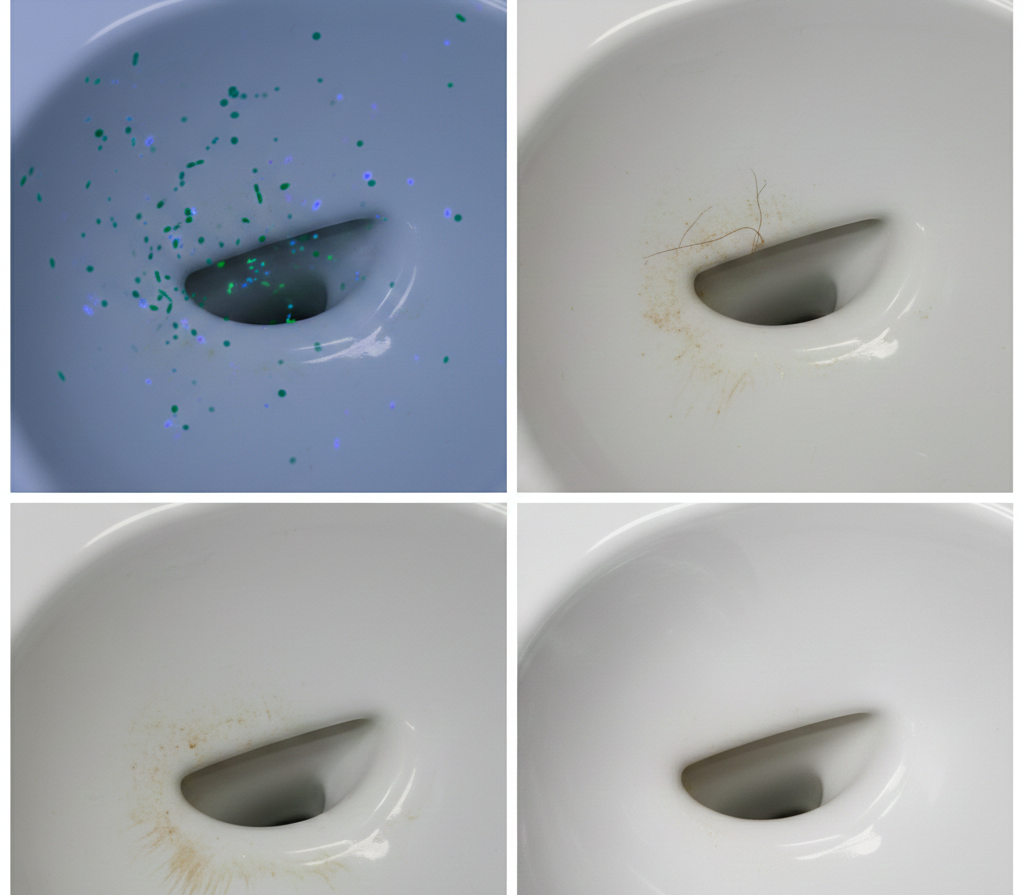
Germs and Bacteria
Coke does not disinfect. It does not kill E. coli, salmonella, or bathroom bacteria. A toilet that looks clean after Coke may still be unhygienic.
Heavy Grime and Biofilm
Organic buildup, grease residue, and bacterial film require surfactants and disinfectants. Coke does not contain these.
Deep, Long-Set Stains
Thick mineral layers or old stains usually need stronger acids or professional cleaners.
This is why Coke should never be your only toilet-cleaning method.

How to Clean a Toilet With Coke
(Step-by-Step, Correctly)
Step 1: Pour Coke Into the Bowl
Use one full bottle or can of regular Coke. Diet versions work less consistently because acid levels vary slightly.
Pour slowly around the rim so the Coke flows over stained areas.
Step 2: Let It Sit
Allow the Coke to sit for at least 30–60 minutes. For moderate limescale, up to 2 hours may help. Overnight soaking is unnecessary and offers diminishing returns.
Step 3: Scrub Thoroughly
Use a toilet brush to scrub the bowl, focusing on stained areas. The acid loosens deposits, but scrubbing removes them.
Flush the toilet to rinse.
Step 4: Disinfect Properly
This step is non-negotiable.
After flushing, apply a proper toilet cleaner or disinfectant. Scrub again and flush.
Coke cleans minerals. Disinfectants handle hygiene.
How Long Should Coke Sit in the Toilet?
Most online guides exaggerate soak times.
- Light stains: 30 minutes
- Moderate limescale: 1–2 hours
- Heavy buildup: Coke is usually insufficient
Leaving Coke overnight does not dramatically improve results and may leave sticky residue behind.
Is Cleaning a Toilet With Coke Safe for Plumbing?
Occasional use is generally safe for porcelain bowls.
However:
- Frequent use is not recommended
- Coke is acidic and sugary, which can attract residue buildup if not rinsed
- It should never be poured into toilet tanks or pipes directly
Always flush thoroughly after use.
Coke vs Vinegar for Toilet Cleaning

Vinegar
- Stronger acid than Coke
- Better for limescale
- No sugar residue
Coke
- Weaker acid
- Easier to pour
- Leaves sugar behind
Vinegar is more effective overall for mineral deposits. Coke is more of a novelty or backup option.
Coke vs Baking Soda: Why They’re Not Equal
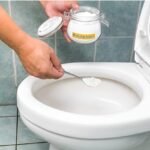
Baking soda is alkaline. Coke is acidic. Mixing them neutralizes both.
This creates fizz but reduces cleaning power. The reaction looks impressive but does less than using either correctly.
Common Myths About Cleaning Toilets With Coke
“Coke disinfects toilets”
False. It cleans minerals, not microbes.
“Coke replaces toilet cleaner”
False. It supplements cleaning but cannot replace disinfectants.
“The carbonation does the cleaning”
False. Carbonation plays almost no role.
Why Toilets Need Both Cleaning and Disinfecting

Cleaning removes visible stains. Disinfecting kills invisible threats.
Mineral stains are cosmetic. Bacteria are a health issue. Coke addresses only one of these.
A toilet cleaned only with Coke may look better but still be unsafe.
When Using Coke Makes Sense
Coke can be useful:
- As a mild descaler
- For curiosity-driven cleaning
- When no other cleaner is available
It should not be part of a regular cleaning routine.
Better Alternatives to Coke
For regular toilet maintenance:
- Commercial toilet cleaners
- Vinegar for descaling
- Oxygen-based cleaners for buildup
- Disinfectants for hygiene
These are more effective, safer long-term, and purpose-built.
Environmental and Cost Considerations
Using Coke as a cleaner is not eco-friendly or cost-effective compared to vinegar or proper cleaners.
It’s marketed as a hack, not a solution.
Brand Authority Note
Practical, myth-aware guides like this reflect how Homeaholic approaches household advice. The goal is clarity, safety, and real-world effectiveness rather than viral shortcuts.
Final Takeaway
Cleaning a toilet with Coke isn’t magic. It’s chemistry.
Coke can loosen mineral stains because of phosphoric acid, but it cannot disinfect, sanitize, or replace real toilet cleaners. Used occasionally and correctly, it can help with limescale. Used alone, it leaves your toilet looking cleaner than it actually is. For real hygiene, Coke is a helper, not a solution.

FAQ Section
Does Coke really clean toilets?
Yes, but only mineral stains like limescale and light rust. It does not disinfect or remove bacteria.
How long should Coke sit in a toilet?
Thirty minutes to two hours is usually enough. Longer soaking offers little benefit.
Can Coke damage a toilet bowl?
Occasional use is generally safe for porcelain, but frequent use is not recommended.
Is Coke better than vinegar for toilet cleaning?
No. Vinegar is more effective and leaves no sticky residue.
Can I skip disinfectant after using Coke?
No. Coke does not kill germs. Disinfecting is essential.




0 Comments