
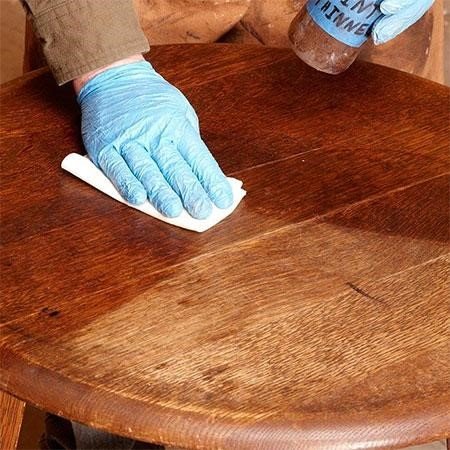
In regards to ‘How to Clean Old wood furniture’, it should be dusted first, tested in a hidden spot, cleaned with the mildest method the surface can safely tolerate, and dried immediately. Sealed pieces often handle light damp cleaning, but waxed, unfinished, antique, or unstable finishes need more caution. If the finish softens, flakes, or transfers to the cloth, stop and switch to preservation-focused care or professional help.
This guide follows current home-care and conservation consensus. The safest approach is not the strongest cleaner. It is the right cleaner for the finish in front of you. That is what protects shine, color, patina, and long-term value.
What should you check before cleaning old wood furniture?
Check the finish type, test a hidden area, and look for any sign that the surface is unstable before using moisture or cleaner
Before you clean anything, figure out what you are actually touching. Old wood furniture may be sealed, waxed, oiled, unfinished, or carrying an original antique finish. That matters because water, soap, and solvents do not behave the same way on each surface. Canadian conservation guidance specifically recommends determining the type and stability of the coating before cleaning, because the wrong method can change the finish rather than just remove dirt.
Start with four checks in a low-visibility area. Look for flaking, crazing, stickiness, color transfer, or dulling after a light test. If a dry cloth lifts finish, if a slightly damp cloth leaves a mark, or if the surface feels soft, pause the DIY cleaning plan. That usually means the finish is unstable, very old, or incompatible with routine wet cleaning.
- Check whether the piece is sealed, waxed, oiled, or unfinished
- Test in an inconspicuous spot first
- Look for flaking, clouding, or color transfer
- Check hardware, carvings, and joints for trapped grime
- Stop if the finish reacts badly to the test
How can you tell if old wood furniture is sealed, waxed, or unfinished?
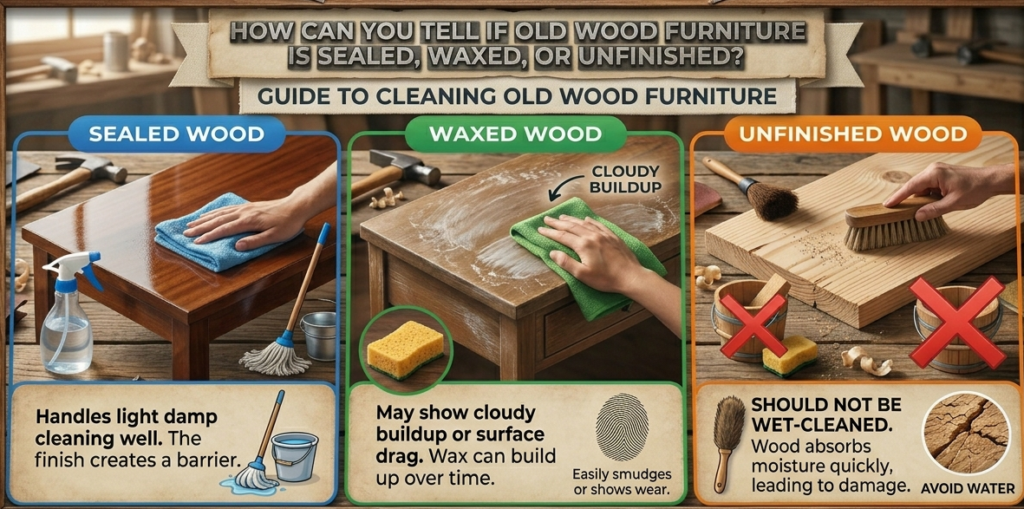
Surface feel, absorbency, buildup, and hidden-spot testing give the safest early clues about finish type.
The safest cleaning method depends on what is sitting on top of the wood, not just the age of the piece. Current conservation guidance says coating type and coating stability should be identified before cleaning because the wrong method can alter the finish instead of removing dirt. In practical terms, sealed wood usually feels more closed and less absorbent, while unfinished wood often looks more porous and should not be wet-cleaned. Waxed surfaces may feel slightly draggy, cloudy, or uneven if old wax and dust have built up over time.
You do not need a lab test to make a safer first decision. Start with surface clues and a hidden-spot test. If a dry cloth lifts color, if a lightly damp cloth leaves a cloudy area, or if the surface feels soft or tacky, the finish may be unstable. That is your signal to stop using routine cleaners and move into preservation mode. Homeaholic should frame this clearly because finish identification is what separates safe care from accidental damage.
- Sealed wood usually handles light damp cleaning better
- Waxed wood may show cloudy buildup or surface drag
- Unfinished wood should not be wet-cleaned
- Any bad reaction in a test spot means stop and reassess
What is the safest cleaner for old wood furniture?
The safest cleaner is the mildest method the finish can tolerate, usually dusting first and minimal moisture only when the surface is stable.
For most routine cleaning, the safest starting point is simple dust removal followed by a soft cloth that is only slightly damp, not wet. Martha Stewart and the Canadian Conservation Institute both support a mild, controlled approach, and conservation guidance adds an important caution for older furniture made before World War I, which may be more sensitive to water.
That means there is no single “best cleaner” for every old piece. On stable sealed finishes, a diluted mild cleaner can work. On fragile or historically significant finishes, dry dusting or extremely limited damp cleaning is often safer. The goal is not to make the piece look aggressively stripped and bright. The goal is to remove surface soil without changing the finish underneath.
- Start with a soft dry cloth or soft brush
- Use a slightly damp cloth only if the finish appears stable
- Keep moisture low and dry immediately
- Clean with the grain
- Avoid soaking the surface or flooding carved areas
Can you use water, dish soap, or vinegar on old wood?
Use minimal water and diluted mild soap cautiously, but do not treat vinegar as the default cleaner for old wood furniture.
Water is not automatically wrong, but excess water is. Current guidance supports minimal moisture on stable finished wood, followed by immediate drying. That is very different from wet wiping, spraying directly onto the piece, or letting moisture sit on the surface or around joints. Unfinished wood should not be wet-cleaned, and older water-sensitive finishes need much more caution.
Dish soap can be acceptable in a very diluted mix on some stable finished wood, especially for light surface grime, but vinegar should not be treated as a default cleaner for old wood furniture. Recent guidance says vinegar can dull finished wood over time, and The Spruce specifically warns against using it on waxed wood because the acid can damage the wax and leave the surface dull or cloudy. Mild diluted soap comes before vinegar, and vinegar should be avoided on waxed, unfinished, antique, or uncertain finishes unless you have a very specific reason, a confirmed compatible surface, and a successful hidden-spot test.
- Use water only in small amounts
- Prefer diluted mild soap over vinegar for general cleaning
- Do not spray liquid directly onto the furniture
- Avoid vinegar on waxed or unfinished wood
- Dry immediately after any damp cleaning
When should you use mineral spirits instead of soap?
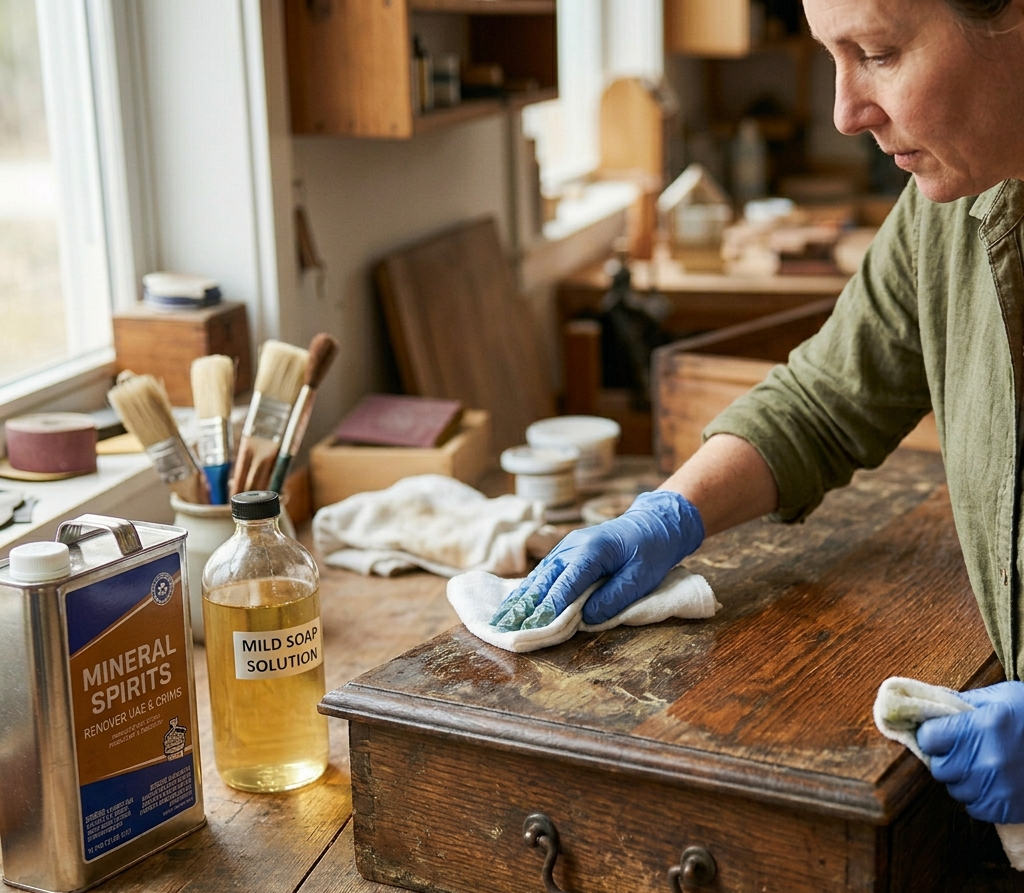
Use mineral spirits only when stable finished wood has stubborn wax, grease, or polish buildup that mild soap is not removing.
Mineral spirits become more useful when the problem is not ordinary dust, but old wax, oily residue, sticky grime, or built-up polish that soap is not removing cleanly. Both Minwax and Southern Living describe mineral spirits as a practical option for wax and dirt buildup, but they also stress testing first and allowing the surface to dry fully afterward.
This is where many articles get sloppy. Mineral spirits are not your first cleaner for every piece. They are a targeted next step when the finish is stable and surface buildup is the issue. If the furniture is truly antique, museum-like, or has an original finish you are trying to preserve, be more conservative and test even more carefully. If the finish softens, smears, or changes color, stop immediately.
- Use mineral spirits for waxy or greasy buildup
- Test first in a hidden spot
- Apply with a soft cloth, not a soaked rag
- Wipe with the grain
- Let the wood dry completely before judging the result
How do you clean antique or heirloom wood furniture?
Clean antiques with the least aggressive method possible and preserve the original finish whenever you can.
Antique and heirloom pieces need a preservation mindset, not just a cleaning mindset. Conservation guidance stresses that original finishes and aged surfaces can be part of the object’s value. That means aggressive scrubbing, repeated wet cleaning, and experimental DIY remedies can reduce value even if the piece looks temporarily brighter.
For antiques, start with dry dusting using a soft cloth or a soft brush for carvings and crevices. If more cleaning is necessary, use the gentlest compatible method and test carefully. Canadian conservation guidance also notes that some older furniture is water-sensitive enough that even damp dusting may be too much, in which case a dry cloth or a cloth with some odorless paint thinner may be the safer route. If the finish is unstable or the furniture needs extensive cleaning or repair, refer it to a conservator.
Old furniture is not always antique furniture
A very useful distinction for readers is this: old everyday furniture and true antique or heirloom furniture are not automatically cleaned the same way. A stable mid-century or late-20th-century piece with a routine finish may tolerate finish-safe household cleaning after testing. A genuine antique, a family heirloom, or a piece with an original finish should be treated more conservatively because cleaning decisions can affect both appearance and value. Conservation guidance repeatedly supports preserving original surfaces where possible and escalating sooner when finish stability or historical value is involved.
This contrast sharpens the authority of the page. It tells readers that age alone is not the only variable. Value, finish originality, and surface condition matter just as much. That lets Homeaholic serve both everyday furniture owners and preservation-minded readers without flattening both audiences into the same advice.
- Old everyday furniture often allows careful routine cleaning
- Antique or heirloom furniture needs a preservation-first approach
- Original finish matters more on high-value or historic pieces
- The older and more irreplaceable the piece, the sooner you should escalate
Mini case example
A thrifted 1970s side table with a stable varnish can usually handle light soap-and-water cleaning after testing. A family heirloom sideboard with a thin original finish, surface crazing, and loose veneer should be treated completely differently. In that case, preserving the finish matters more than chasing a brighter look, and the safer move is limited cleaning or professional conservation.
How do you remove sticky buildup, wax, or grease from wood?
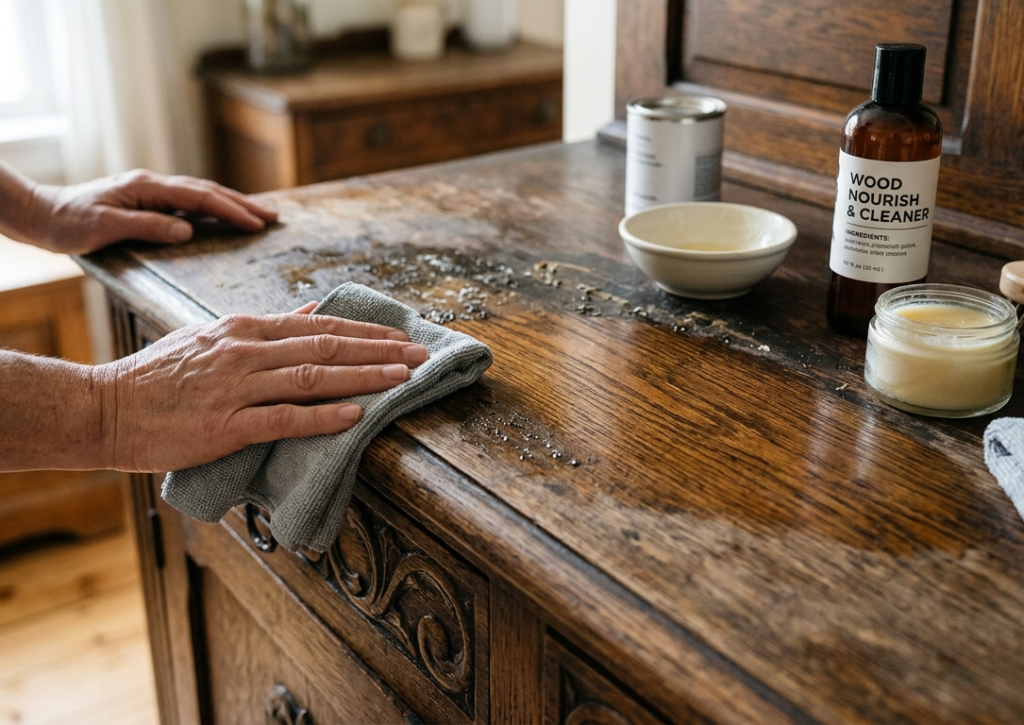
Start with the gentlest surface-cleaning method, then escalate only if the finish remains stable.
Sticky wood can mean two different things. Sometimes it is just grime, wax, cooking grease, or furniture polish buildup. Other times it signals finish failure, where the coating itself is degrading. That distinction matters because soap can help the first problem, while the second often needs a more careful restoration or conservation decision.
For ordinary buildup on stable finished wood, start with diluted mild soap and minimal water. If the residue remains tacky, mineral spirits may be more effective for removing old wax and dirt layers. Southern Living specifically notes mineral spirits for tougher grease and buildup, with testing first and immediate drying. If the stickiness returns quickly or the finish smears under light pressure, stop treating it like a cleaning problem and treat it like a finish problem.
- Dust first so grit does not scratch the surface
- Try diluted mild soap on stable finished wood
- Move to mineral spirits only if buildup remains
- Do not saturate edges, joints, or veneer lines
- Stop if the finish feels soft or transfers to the cloth
Is the stickiness just buildup, or is the finish failing?
If the surface smears, softens, or transfers color, the issue is likely finish failure rather than removable dirt.
Sticky wood furniture is not always dirty. Sometimes the tacky feel comes from old wax, polish, cooking residue, or airborne grease settling on the surface. In those cases, gentle cleaning or carefully tested mineral spirits may solve the problem. But current conservation guidance also makes an important distinction: if the finish softens, smears, transfers color to the cloth, or stays tacky even after careful cleaning, the issue may be finish instability rather than removable buildup.
This distinction matters because the wrong next step can turn a recoverable surface into a restoration problem. If the residue sits on top and improves with gentle cleaning, you are probably dealing with surface buildup. If the coating itself reacts, that is your stop point. Homeaholic should present this as a decision system, not a cleaning trick, because users often keep adding stronger products when the smarter move is to stop and reassess the finish.
| What you see | What it likely means | Best next move |
| Surface grime lifts slowly | Dirt or wax buildup | Mild soap or tested mineral spirits |
| Sticky feel improves after wiping | Residue on top of finish | Continue cautiously |
| Color transfers to cloth | Finish reacting | Stop immediately |
| Surface stays soft or tacky | Finish failure or instability | Escalate to conservator or restorer |
How should you clean carvings, hardware areas, joints, and veneer edges?
Use a soft brush, minimal moisture, and immediate drying to avoid pushing liquid into vulnerable details.
Detailed furniture needs a slower cleaning method than flat tabletops. Dust and grime often collect around carved trim, turned legs, drawer pulls, joints, and veneer lines, and these areas are easier to damage because liquid can hide there longer. Conservation guidance supports careful handling and minimal moisture, which makes soft brushes and controlled wiping better choices than flooding the area with cleaner.
For Homeaholic, this is a high-value practical section because it solves the part users often get wrong. A lightly damp cloth may be safe on a stable flat surface, but it is not the same as pushing moisture into seams, under hardware, or along veneer edges. Use a soft brush to lift dust out first, then wipe carefully and dry immediately. The objective is to remove grime without feeding moisture into the most vulnerable parts of the furniture.
- Use a soft brush for carvings and trim
- Keep liquids away from joints and veneer edges
- Wipe around hardware instead of soaking it
- Dry detailed areas immediately with a separate cloth
- Stop if veneer edges look lifted or fragile
What should you never use on old wood furniture?
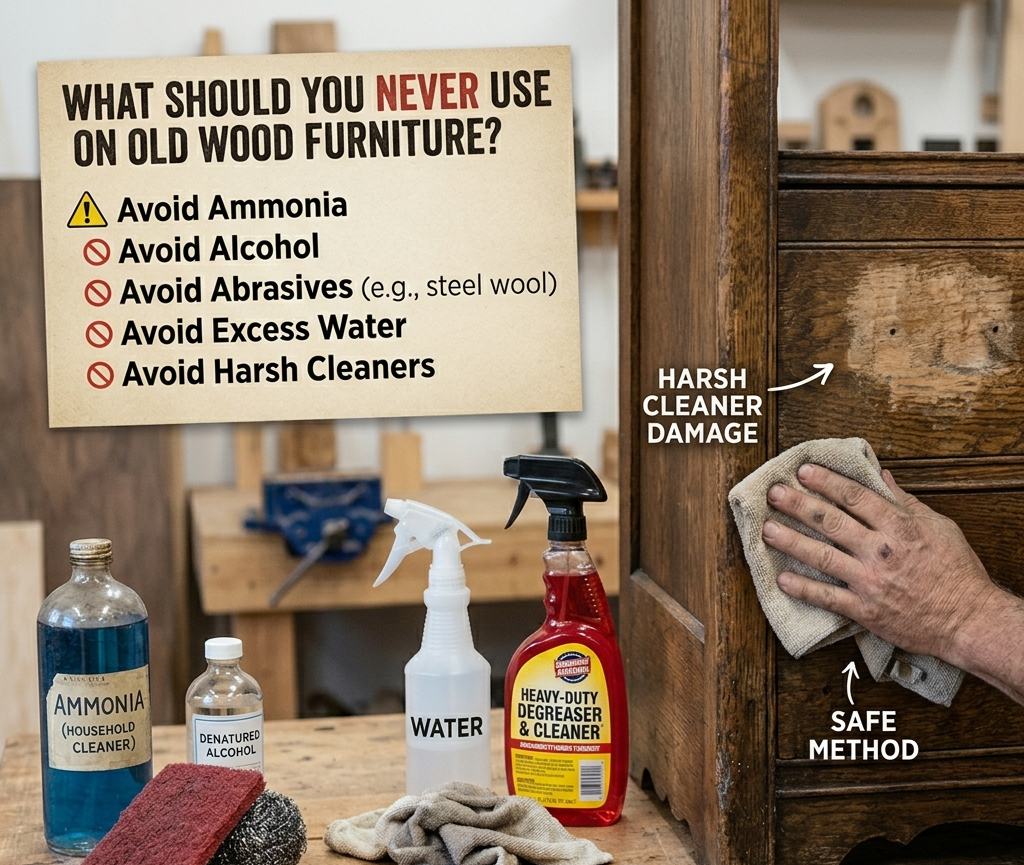
Avoid ammonia, alcohol, abrasives, excess water, and harsh cleaners that can strip or dull old finishes.
Avoid ammonia-based glass cleaners, rubbing alcohol, harsh abrasives, bleach-based products, direct spray saturation, and aggressive “miracle” DIY mixes. Recent guidance warns that ammonia can strip protective finishes and natural oils from wood furniture, while rubbing alcohol can strip varnish or paint from wood. Conservation guidance also pushes against overuse of random oils, waxes, and home remedies marketed as wood “food.”
This matters because damage often comes from the cleaner, not the dirt. A product that works on glass, tile, or counters can be completely wrong for old wood. The safest rule is to avoid strong chemistry unless you know exactly why the surface needs it and how the finish responds. If a product cannot clearly be justified for wood furniture, do not make this piece the experiment.
What not to use table
The table below reflects current guidance on common products that can harm old wood finishes or create avoidable risk.
| Product or habit | Why it is risky |
| Ammonia-based cleaners | Can strip finishes and dry out the surface |
| Rubbing alcohol | Can strip varnish or paint from wood |
| Bleach-based cleaners | Too harsh for wood finishes |
| Vinegar on waxed or unfinished wood | Can dull finish or damage shine |
| Abrasive pads or scrubbing powders | Can scratch the finish |
| Excess water | Can swell wood, loosen veneer, or stain joints |
| Spraying cleaner directly on the furniture | Causes over-wetting and uneven exposure |
What if the problem is a water ring or cloudy white mark instead of dirt?
White rings and cloudy marks are usually finish or moisture issues, not ordinary cleaning issues.
Not every mark on old wood furniture is a cleaning problem. White rings, haze, and cloudy patches often mean moisture is trapped in or under the finish rather than dirt sitting on top of it. Recent Martha Stewart guidance on water stains makes that distinction clear, which matters for this page because readers often arrive with a visible mark and assume general cleaning is the answer. It often is not.
This page should acknowledge that overlap without trying to solve every stain here. The better strategy is to explain that routine cleaning removes dust and surface grime, while white rings and cloudy marks usually require a separate finish-aware stain-removal approach. That improves query coverage and helps the page feed supporting URLs more naturally.
- White rings usually mean trapped moisture
- Cloudy marks are often finish-related, not dirt-related
- Do not keep rewashing the area hoping it will fade
- Treat stain removal as a separate problem from routine cleaning
When should you stop cleaning and call a professional?
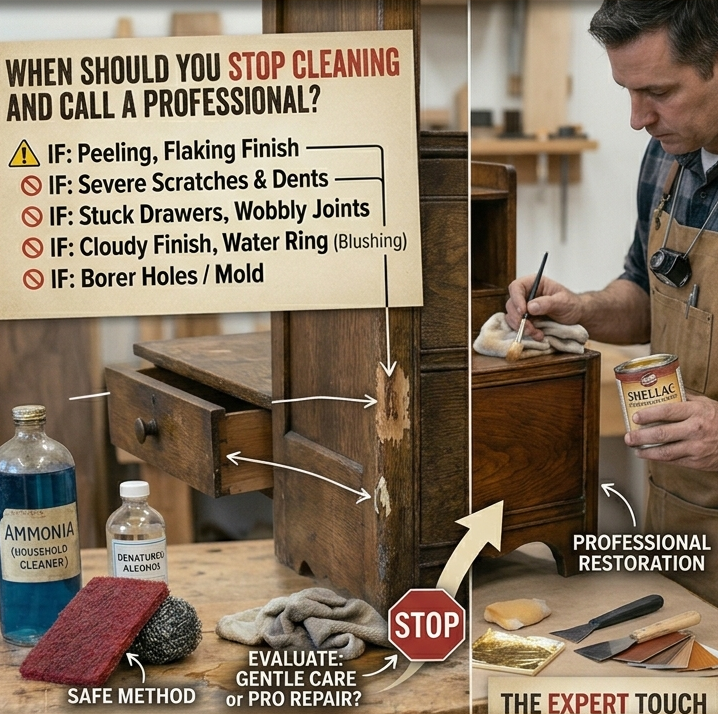
Stop when the finish reacts badly, the piece is valuable, or the problem looks bigger than routine surface dirt.
Stop and escalate when the finish flakes, smears, softens, transfers color to the cloth, or reacts badly in a test spot. Also stop if the furniture is historically important, structurally fragile, heavily veneered, or valuable enough that a mistake would be costly. Conservation guidance is clear that furniture needing extensive cleaning or repair should be referred to a conservator.
A good stopping point protects both the furniture and your results. Cleaning is successful only when it removes soil without creating a second problem. If you are no longer sure whether you are removing dirt or removing finish, the DIY phase is over. That is especially true for antiques, heirlooms, unstable coatings, deep stains, or pieces that may need restoration rather than surface cleaning.
- The finish reacts in the test spot
- Veneer edges look loose or lifted
- The piece has obvious antique or heirloom value
- The surface stays sticky after careful cleaning
- You suspect the problem is finish failure, not surface dirt
How do you protect old wood furniture after cleaning?
Protect old wood furniture with regular dusting, stable conditions, quick spill cleanup, and fewer unnecessary products
After cleaning, the first protection step is simple restraint. Do not rush into feeding oils, layering random polishes, or treating every piece the same way. Canadian conservation guidance explicitly says wood does not need to be “fed,” and stable environmental conditions matter more than routine coating with products.
For everyday care, dust regularly, keep the piece out of direct sun and extreme humidity swings, use coasters or pads where needed, and clean spills quickly. If the finish is compatible, careful, infrequent waxing may be appropriate, but this should be deliberate, not habitual. The best long-term result comes from stable conditions, light maintenance, and not forcing old furniture through repeated deep-clean cycles.
- Dust regularly with a soft cloth
- Keep humidity and temperature stable where possible
- Protect surfaces from water rings and heat marks
- Clean spills quickly
- Use wax only when it is appropriate for the finish, not as a universal fix
Key takeaway
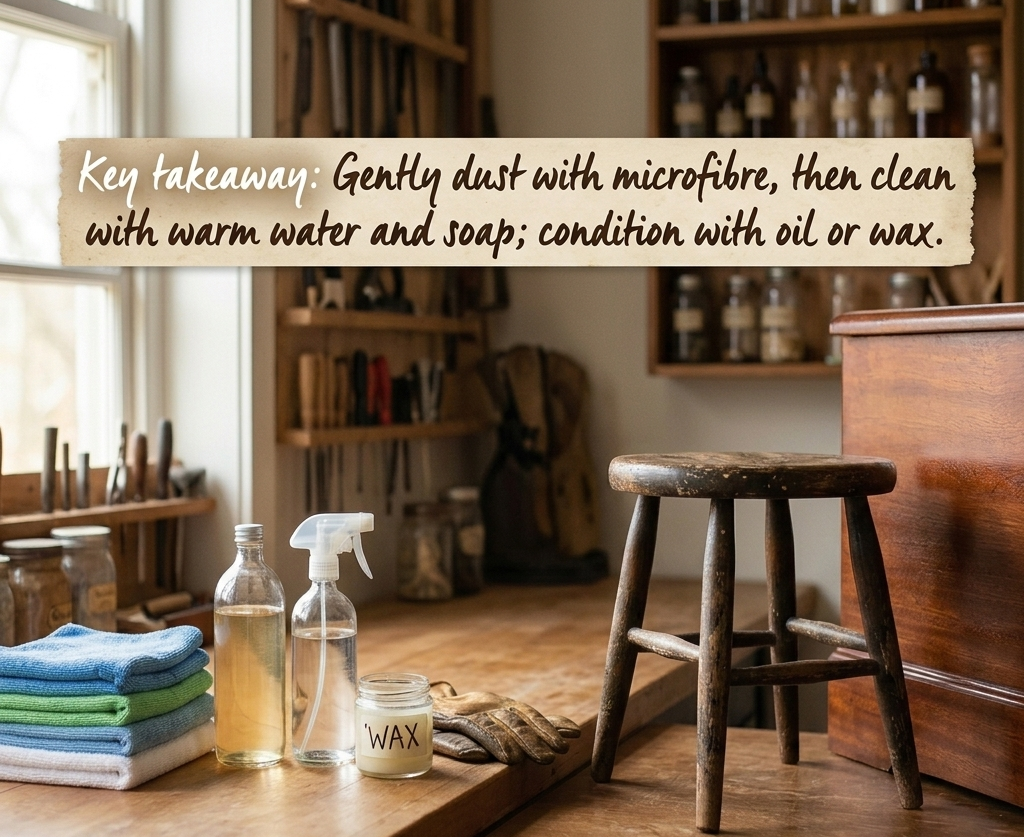
Old wood furniture should be cleaned like a finish-care project, not a generic cleaning task. Dust first identify the surface, test in a hidden spot, use the mildest compatible method, and dry immediately. If the finish reacts, the stickiness behaves like coating failure, or the piece has really antique or heirloom value, stop cleaning and switch to preservation-focused care.
Finish decision matrix
This quick matrix helps choose the safest first move based on finish type and condition. It is built from current home-care, finishing, and conservation guidance that separates stable finished wood from unfinished, waxed, or historically sensitive surfaces.
| Surface type | Safest first move | Use with caution | Best escalation |
| Stable sealed finish | Dust, then lightly damp cloth | Diluted mild soap | Mineral spirits for stubborn buildup |
| Waxed finish | Dry dusting first | Minimal moisture | Test-specific wax/buildup removal |
| Oiled finish | Gentle dry cleaning | Very limited damp cleaning | Finish-specific care |
| Unfinished wood | Dry dusting only | Avoid wet cleaning | Finish-specific restoration help |
| Antique or unstable finish | Preserve first, test carefully | Minimal intervention | Conservator or restorer |
FAQ
What is the safest way to clean old wood furniture?
The safest way is to dust first, test in a hidden spot, use the mildest method the finish can tolerate, and dry immediately. Stable sealed finishes usually handle light damp cleaning better than waxed, unfinished, antique, or unstable finishes.
Can I use Murphy Oil Soap or dish soap on old wood furniture?
A diluted mild soap can be appropriate for some finished wood, but it should be tested first and used with minimal moisture. It is not automatically safe for every old finish.
Is vinegar safe for old wood furniture?
Sometimes, but with important caveats. Recent guidance says vinegar can dull finished wood over time and is a poor choice for waxed or unfinished wood, so it is not the safest default cleaner for old furniture.
When should I use mineral spirits on wood furniture?
Use mineral spirits when stable finished wood has stubborn wax, grease, or polish buildup that mild soap is not removing. Always test first and let the surface dry fully afterward.
How do I clean antique wood furniture without ruining it?
Start with dry dusting, test carefully, and use the gentlest compatible method. If the finish is original, unstable, or historically important, preserve first and involve a conservator when needed.
What should I never use on old wood furniture?
Avoid ammonia-based cleaners, rubbing alcohol, bleach-based products, abrasive pads, and excess water. These can strip finishes, dull the surface, or cause damage.
Why does old wood furniture feel sticky after cleaning?
That usually means either buildup remains on the surface or the finish itself is failing. If careful cleaning does not solve it, treat it as a finish problem rather than repeating stronger cleaners blindly.
How often should I clean old wood furniture?
Routine dusting is usually enough most of the time. Deeper cleaning should be occasional and finish-sensitive, not a frequent habit.







0 Comments