
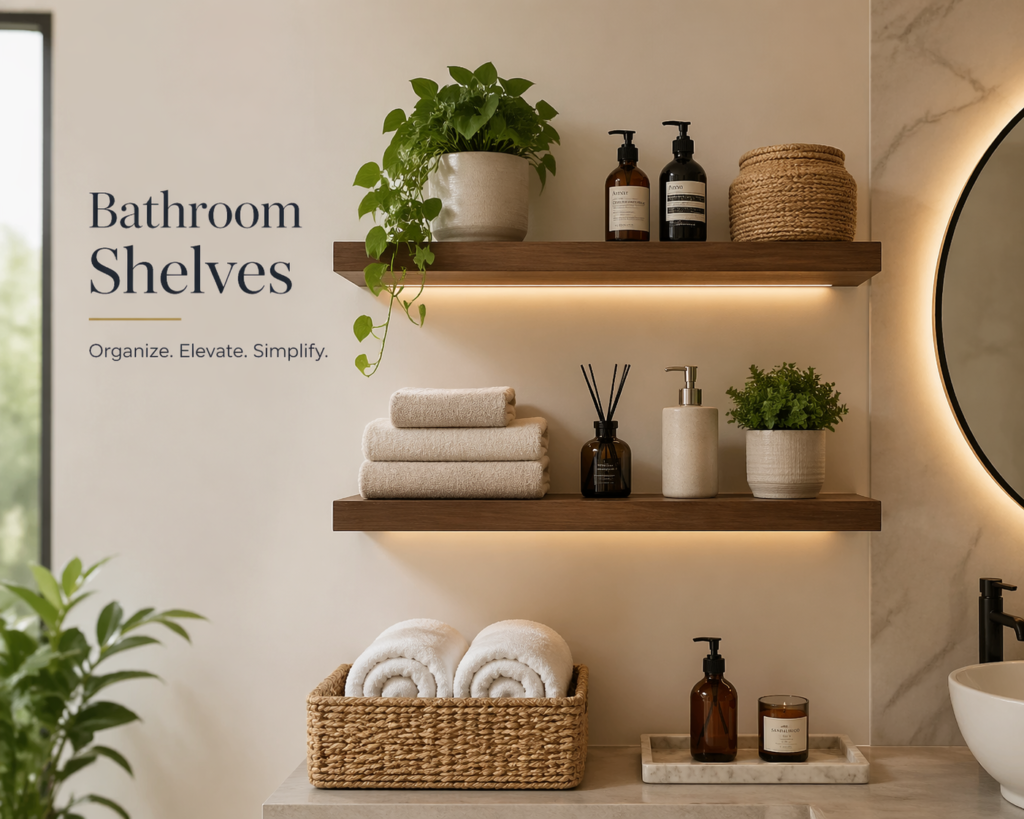
Bathroom shelves are storage units designed to maximize vertical space, organize daily essentials, and improve accessibility in bathrooms. The best shelves combine strong load capacity, moisture-resistant materials, and secure installation methods to ensure safety, durability, and efficient space utilization.
Bathroom shelves are not just decorative. They are structural storage systems that must handle weight, humidity, and frequent use without failure.
What Are Bathroom Shelves and Why Are They Important?
Bathroom shelves are mounted or freestanding platforms used to store toiletries, towels, and daily-use items.
They improve:
- space efficiency
- organization
- accessibility
- bathroom aesthetics
In small bathrooms, shelves often replace cabinets as the primary storage system.
Bathroom shelves are not just storage elements. They function as space management systems that directly influence usability, hygiene, and efficiency.
Functional Importance:
- Reduce clutter on countertops
- Improve daily accessibility
- Separate items by usage frequency
- Prevent water exposure damage to items
Structural Importance:
Shelves distribute load across walls. Poorly designed shelves can damage walls or collapse, making structural understanding critical.
Design Impact:
Well-placed shelves improve:
- visual openness
- minimalism
- perceived space size
What Are the Different Types of Bathroom Shelves?
Different shelf types serve different layouts and storage needs.
Common Types:
- Floating shelves
- Corner shelves
- Wall-mounted bracket shelves
- Over-the-toilet shelves
- Recessed shelves
Beyond basic types, shelves vary based on structural purpose.
Functional Classification:
1. Storage Shelves
Used for towels, bottles, and bulk items.
2. Display Shelves
Used for décor, plants, and aesthetics.
3. Utility Shelves
Placed inside showers or near sinks for daily-use items.
Structural Variants:
- Cantilever shelves (hidden support)
- Multi-tier shelves (stacked storage)
- Modular shelf systems (adjustable units)
Key Insight:
Floating shelves are best for modern aesthetics, while corner shelves maximize unused space.
How Do You Choose the Right Bathroom Shelves?
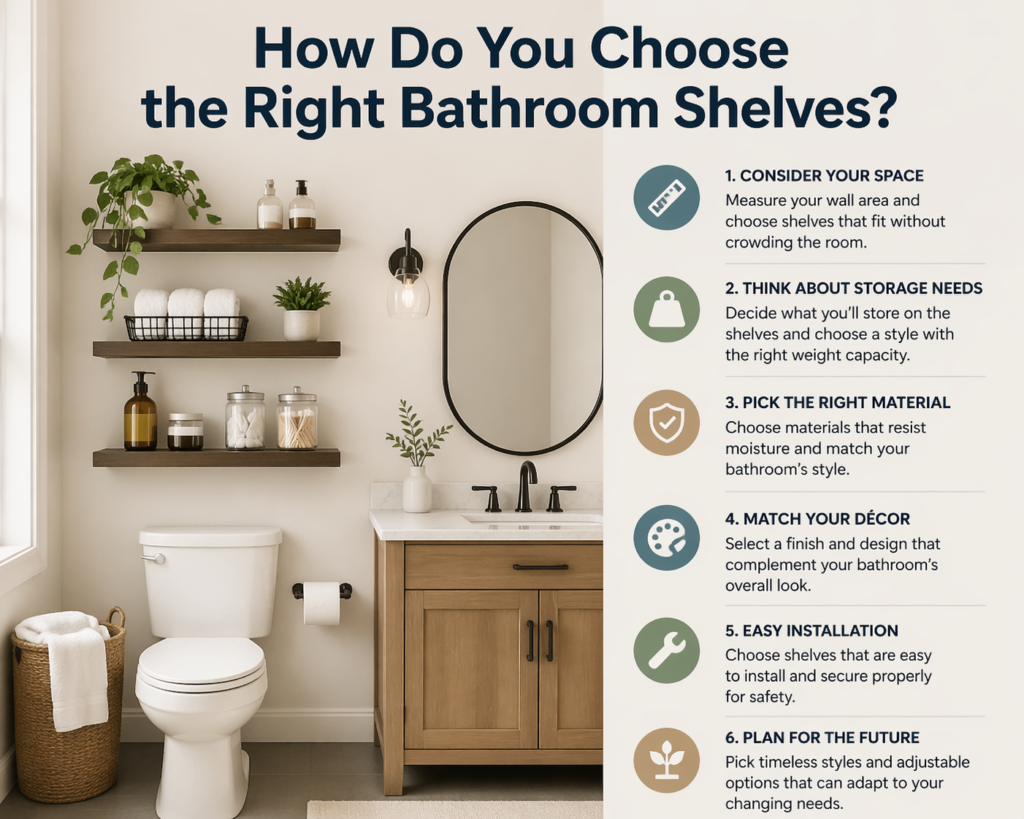
Choosing the right shelves depends on usage, space, and wall type.
Decision Factors:
- available wall space
- storage needs
- load requirements
- humidity exposure
- installation type
Practical Rule:
Use floating shelves for light storage and bracket shelves for heavier loads.
Which Materials Are Best for Bathroom Shelves?
Material determines strength and moisture resistance.
Material Comparison Table
| Material | Moisture Resistance | Strength | Best Use |
| Wood | Medium | High | Decorative storage |
| MDF | Low | Medium | Budget use |
| Glass | High | Medium | Modern designs |
| Metal | High | High | Heavy-duty storage |
| Plastic | Very High | Low–Medium | Wet areas |
Material performance must be evaluated under real bathroom conditions.
Wood Shelves (Detailed Analysis)
- Strong and visually appealing
- Vulnerable to swelling without sealing
- Best used in low-moisture zones
Glass Shelves
- Non-porous and moisture-proof
- Can crack under heavy or uneven load
- Ideal for modern minimal designs
Metal Shelves
- High strength and durability
- Risk of rust if coating fails
- Best for heavy-duty storage
Plastic Shelves
- Completely waterproof
- Lower structural strength
- Suitable for shower areas
Advanced Insight:
Material failure often starts at edges and joints, not flat surfaces.
Homeaholic Insight:
Metal and treated wood offer the best balance between strength and durability.
Floating vs Bracket Bathroom Shelves: Which Is Better?
| Feature | Floating | Bracket |
| Aesthetic | Clean | Visible support |
| Load capacity | Medium | High |
| Installation | Complex | Easier |
| Best Use | Light storage | Heavy items |
Recommendation:
Bracket shelves are safer for heavy storage, while floating shelves are ideal for minimal design.
How Much Weight Can Bathroom Shelves Hold?
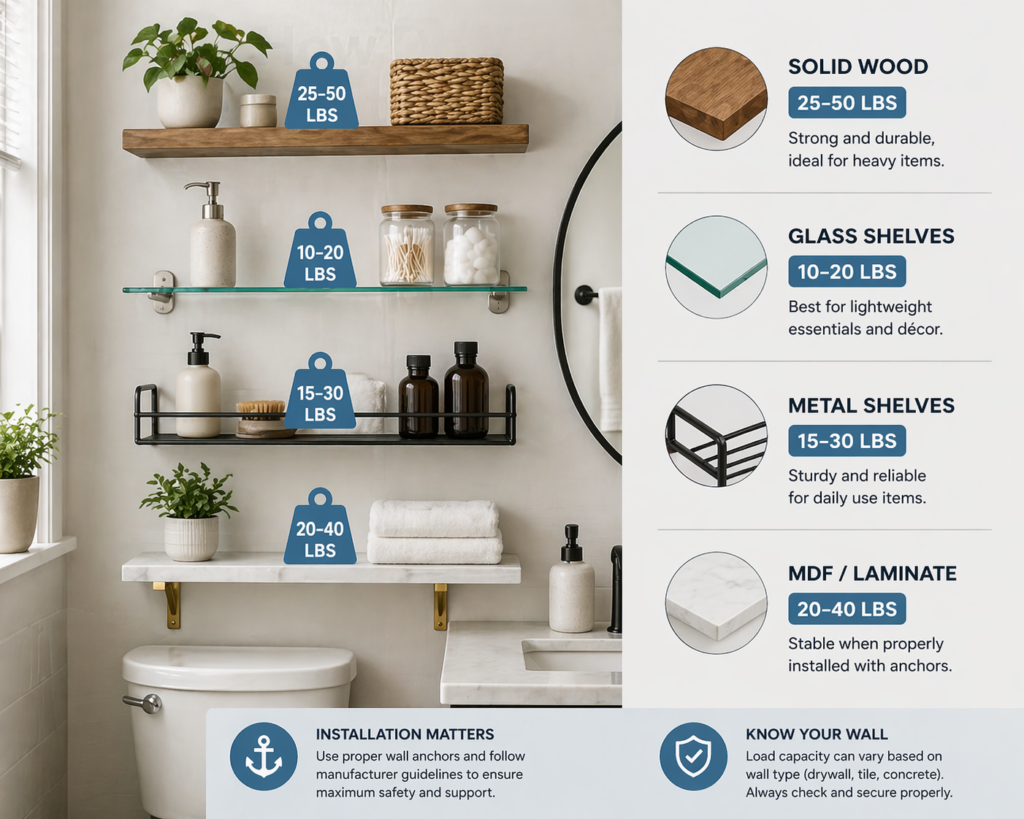
Shelf capacity depends on material and installation.
Load Capacity Guide
| Shelf Type | Weight Capacity |
| Adhesive shelves | 3–5 kg |
| Floating shelves | 5–15 kg |
| Bracket shelves | 15–40 kg |
Load capacity is influenced by three combined factors:
1. Material Strength
Stronger materials like steel outperform wood or plastic.
2. Mounting Method
Anchored shelves hold significantly more weight than adhesive ones.
3. Wall Type
Concrete walls can handle much heavier loads than drywall.
Load Breakdown Example:
- Shelf + anchors on drywall → 10–15 kg
- Shelf + anchors on concrete → 30–50 kg
- Adhesive shelf → 3–5 kg
Critical Insight:
Even strong shelves fail if mounted incorrectly.
Which Walls Are Safe for Bathroom Shelves?
Not all walls can safely support shelves. Wall type directly determines load capacity and installation method.
Drywall (Plasterboard Walls)
- Weak without anchors
- Can hold light to medium loads (5–15 kg)
- Requires wall anchors or studs
Concrete Walls
- Strongest option
- Supports heavy loads (20–50 kg+)
- Requires drilling with masonry tools
Tile Walls
- Strong but fragile surface
- Requires careful drilling to avoid cracks
- Best for medium loads
Brick Walls
- Strong but uneven
- Requires proper anchors
- Ideal for heavy-duty shelves
Safety Rule:
Always match installation type with wall strength.
Ignoring this is the #1 cause of shelf collapse globally.
Critical Insight:
Wall anchoring matters more than shelf material in determining load capacity.
Where Should Bathroom Shelves Be Placed for Maximum Efficiency?
Placement affects usability more than shelf type.
Best Locations:
- above toilet
- beside mirror
- shower corner
- unused wall spaces
Placement should follow usage behavior, not aesthetics alone.
Behavioral Placement Logic:
- Daily-use items → within arm reach
- Heavy items → lower shelves
- Rare items → upper shelves
High-Efficiency Zones:
- Above toilet (unused vertical space)
- Near sink (daily access zone)
- Inside shower (utility zone)
Mistake to Avoid:
Placing shelves too high or too deep reduces usability.
How to Prevent Bathroom Shelves from Rusting, Swelling, or Breaking
Shelf durability depends on preventive care.
Rust Prevention (Metal Shelves):
- Use powder-coated or stainless steel
- Avoid prolonged water exposure
- Dry surfaces regularly
Swelling Prevention (Wood/MDF):
- Apply waterproof sealant
- Avoid direct water contact
- Ensure proper ventilation
Structural Protection:
- Avoid overloading
- Re-tighten screws periodically
- Inspect mounting points
Insight:
Most shelf damage is gradual and preventable.
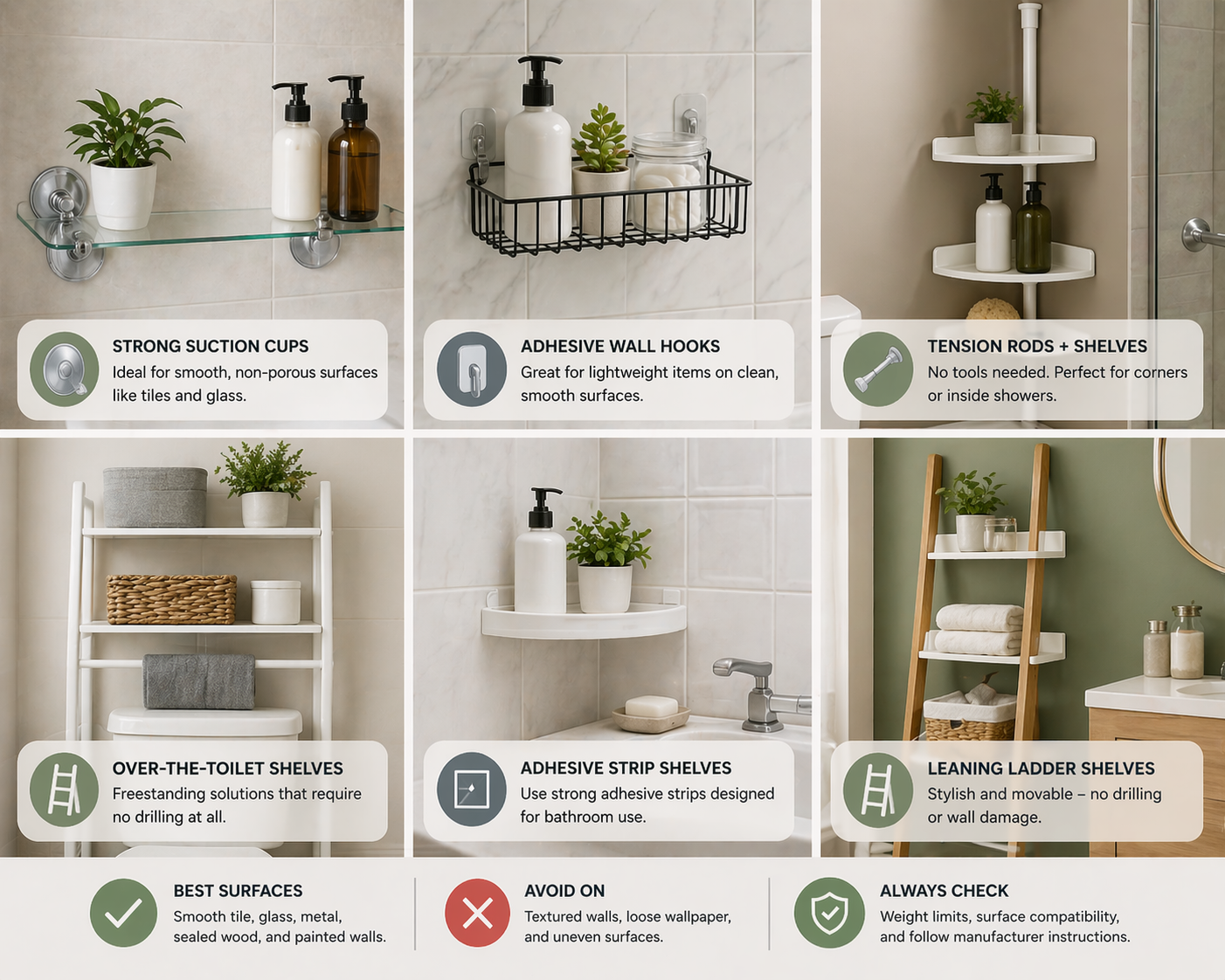
Can Bathroom Shelves Be Installed Without Drilling?
Yes, but with limitations.
Adhesive Installation:
Suitable for:
- light items
- temporary setups
- rental spaces
Limitations:
- low weight capacity
- weak performance in humidity
- risk of sudden detachment
Alternative:
Use suction or tension-based systems, but these are also limited in load capacity.
What Is the Safest Bathroom Shelf Setup?
Safety depends on stability and load handling.
Safest Configuration:
- bracket-mounted shelves
- anchored into studs or concrete
- even weight distribution
Risky Configurations:
adhesive shelves for heavy items
- floating shelves without proper anchors
- overloaded glass shelves
Safety Rule:
If the shelf holds breakable or heavy items, always use drilled installation.
Bathroom Shelves vs Bathroom Cabinets: Which Is Better?
Both serve different roles.
| Feature | Shelves | Cabinets |
| Accessibility | High | Medium |
| Storage Capacity | Medium | High |
| Space Efficiency | High | Medium |
| Protection | Low | High |
Decision Rule:
- Choose shelves for accessibility
- Choose cabinets for storage and protection
How Bathroom Shelves Affect Daily Usability
Shelves directly impact routine efficiency.
Positive Effects:
- faster access to items
- reduced clutter
- improved hygiene
Negative Effects (if poorly designed):
- overcrowding
- difficult access
- safety risks
Insight:
Well-designed shelves reduce daily friction in bathroom use.
Future Trends in Bathroom Shelving Systems
Bathroom storage is evolving.
Emerging Trends:
- modular adjustable shelves
- smart storage systems
- hidden storage integration
- lightweight high-strength materials
Design Shift:
Minimalist and functional designs are replacing bulky storage units.
What Is the Ideal Spacing and Height for Bathroom Shelves?
Shelf placement must follow ergonomic and usability rules.
Standard Height Guidelines:
- Eye-level shelves: 48–60 inches from floor
- Above toilet: 24–30 inches above tank
- Shower shelves: 36–48 inches
Spacing Between Shelves:
- Small items: 8–10 inches
- Medium items: 10–14 inches
- Large items: 14–18 inches
Usability Rule:
Shelves should be reachable without stretching or bending excessively.
Placement Optimization Rule:
| Area | Best Shelf Type |
| Above toilet | Floating |
| Shower | Plastic/metal |
| Corner | Corner shelf |
| Near sink | Small wall shelf |
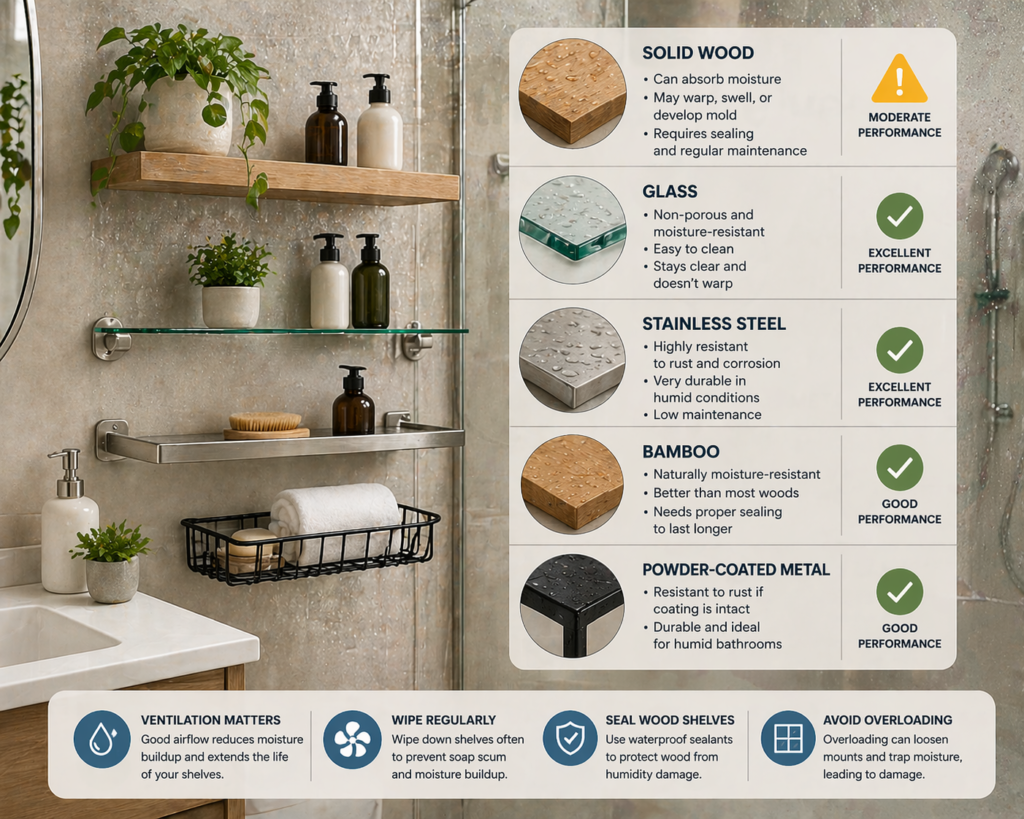
How Do Bathroom Shelves Perform in Humid Environments?
Humidity affects durability and safety.
Common Issues:
- rust (metal)
- swelling (wood/MDF)
- mold buildup
Moisture Performance Matrix
| Material | Performance |
| MDF | Poor |
| Wood | Moderate |
| Glass | Excellent |
| Metal | Excellent (if coated) |
| Plastic | Excellent |
Best Bathroom Shelving Strategy for Small Spaces
Small bathrooms require smart space planning.
Vertical Storage Strategy:
Use multiple stacked shelves instead of wide units.
Corner Optimization:
Install corner shelves to use unused areas.
Over-Toilet Storage:
Maximize vertical space above toilet.
Visual Space Rule:
Floating shelves create a more open and less cluttered look.
Real-World Case Study: Shelf Failure vs Proper Installation
A bathroom installed adhesive shelves for heavy bottles.
Result:
- shelves detached within weeks
- items fell and damaged tiles
Upgrade:
Replaced with bracket-mounted metal shelves.
Outcome:
- stable load handling
- long-term durability
- zero failures
How Much Do Bathroom Shelves Cost Globally?
Price Range:
- Basic shelves: $10–$50
- Mid-range: $50–$150
- Premium: $150–$500+
Cost Factors:
- material
- size
- design
- installation method
How Long Do Bathroom Shelves Last?
| Material | Lifespan |
| MDF | 2–5 years |
| Wood | 5–10 years |
| Glass | 10–15 years |
| Metal | 10–20 years |
| Plastic | 5–10 years |
How to Maintain Bathroom Shelves for Long-Term Durability
Maintenance extends shelf life significantly.
Maintenance Routine:
- Clean surfaces weekly
- Dry moisture immediately
- Check screws every 3–6 months
- Inspect for rust or swelling
Material-Specific Care:
- Wood → re-seal periodically
- Metal → check anti-rust coating
- Glass → inspect mounting points
Insight:
Proper maintenance can increase shelf lifespan by 30–50%.
Common Bathroom Shelf Problems and How to Avoid Them
Common Issues:
- falling shelves
- rust
- swelling
- poor alignment
Prevention:
- use proper anchors
- choose moisture-resistant materials
- avoid overloading shelves
Shelf Failure Science: Why Bathroom Shelves Collapse
Shelf failures are caused by:
Poor Anchoring
Shelves mounted without studs or proper anchors detach over time.
Overloading
Exceeding weight capacity leads to bending or collapse.
Weak Materials
Low-quality materials degrade quickly in humid environments.
How Weight Distribution Affects Shelf Safety
Weight distribution determines whether a shelf holds or fails.
Center Load vs Edge Load
- Center load is safest
- Edge loading causes bending and instability
Even Distribution Principle:
Spread weight across the entire shelf rather than stacking in one area.
Load Failure Insight:
Even strong shelves fail when weight is concentrated in one point.
How to Install Bathroom Shelves Safely
Key Steps:
- locate wall studs
- mark drilling points
- use proper anchors
- level the shelf
- tighten securely
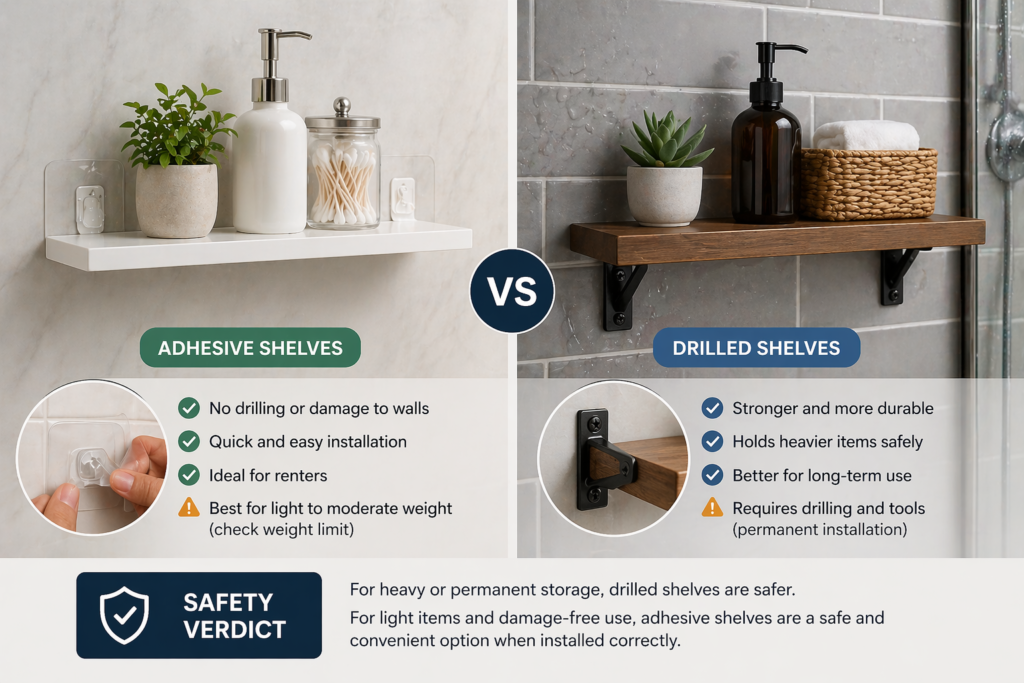
Adhesive vs Drilled Bathroom Shelves: Which Is Safer?
This is one of the most misunderstood decisions.
Adhesive Shelves
Pros:
- No drilling required
- Easy installation
- Ideal for rentals
Cons:
- Limited load capacity (3–5 kg)
- Fails in humid environments
- Weak on textured surfaces
Drilled Shelves
Pros:
- Strong and stable
- Suitable for heavy loads
- Long-term durability
Cons:
- Requires tools
- Permanent installation
Key Insight:
Adhesive shelves are temporary solutions.
Drilled shelves are structural storage systems.
DIY vs Professional Shelf Installation
DIY:
- lower cost
- suitable for light shelves
Professional:
- safer for heavy installations
- ensures proper alignment
Bathroom Shelf Storage Planner (Smart System)
Step 1: Categorize Items
- daily use
- weekly use
- rare use
Step 2: Assign Zones
| Zone | Placement |
| top | rare items |
| middle | daily items |
| bottom | heavy items |
Bathroom Shelf Comparison Tool
| Feature | Floating | Bracket | Corner | Recessed |
| Space Saving | High | Medium | Very High | High |
| Storage | Medium | High | Medium | Medium |
| Installation | Medium | Easy | Easy | Hard |
Expert Insight: What Most Homeowners Get Wrong
Most people choose shelves based on design.
In reality:
- 70% of failures come from poor installation
- 20% from wrong material
- 10% from overloading
What Most Homeowners Get Wrong About Bathroom Shelves
Most users focus on aesthetics.
In reality:
- 70% of failures come from poor installation
- 20% from wrong material
- 10% from overloading
Structure matters more than design.
Bathroom Shelf Decision Matrix (Advanced)
| Factor | Floating | Bracket | Corner | Recessed |
| Load Strength | Medium | High | Medium | Medium |
| Space Efficiency | High | Medium | Very High | High |
| Installation Difficulty | Medium | Easy | Easy | Hard |
| Durability | Medium | High | Medium | High |
Real-World Case Study: Small Bathroom Shelf Optimization
A compact bathroom lacked storage and relied on cluttered countertops.
Problem:
- no vertical storage
- items scattered
- poor accessibility
Solution:
Installed floating shelves + corner units.
Result:
- 45% increase in storage
- cleaner layout
- improved usability
Bathroom Shelf Buying Checklist (Expert QC Guide)
Use this before purchasing:
- Wall compatibility checked
- Load capacity matches usage
- Moisture-resistant material selected
- Installation method confirmed
- Proper spacing planned
Homeaholic Recommendation:
Never choose shelves based only on design.
Always validate structural capability first.
FAQ Section
Can bathroom shelves hold heavy items?
Yes, if properly anchored with brackets.
Are adhesive shelves safe?
Only for light items.
What is the best material for bathroom shelves?
Metal and glass offer the best durability.
Can shelves be installed on tiles?
Yes, but require proper drilling tools.
How to prevent shelves from falling?
Use wall anchors and avoid overloading.
Are floating shelves strong?
Yes, but only when properly installed.
What is the best height for shelves?
Typically 4–5 feet from floor level.
Can bathroom shelves damage tiles?
Yes, improper drilling can crack tiles.
What wall type holds the most weight?
Concrete and brick walls.
Do floating shelves bend?
Yes, if overloaded or poorly installed.
Can adhesive shelves fail due to humidity?
Yes, humidity weakens adhesive bonding.
What is the safest shelf type?
Bracket-mounted shelves with anchors.
