
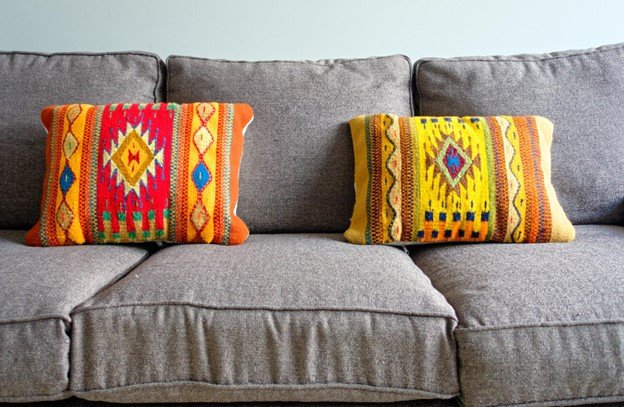
Colorful throw pillows are one of the easiest ways to refresh a room, but they’re also one of the fastest ways to create visual chaos if used without rules. The right mix of color, quantity, size, and pattern can energize a space while keeping it balanced. Successful styling relies on contrast, repetition, and proportion rather than random mixing.
How Do You Style Colorful Throw Pillows Without Making a Room Look Busy?
Short answer: Limit color dominance and repeat shades intentionally.
Beyond limiting color dominance, visual calm comes from clear hierarchy. One color should clearly lead, one should support, and any additional color should appear only as a small accent. When all colors shout equally, the eye has nowhere to rest.
Texture also plays a role. A solid velvet pillow reads differently from a flat cotton one, even in the same color. Mixing textures allows you to keep colors bold without increasing visual noise. This is especially effective in modern and minimalist interiors where texture replaces ornament.
If a setup feels off, remove one pillow and reassess. Overstyling is far more common than understyling, and restraint almost always improves balance.
How Many Colorful Throw Pillows Should You Use on a Sofa or Bed?
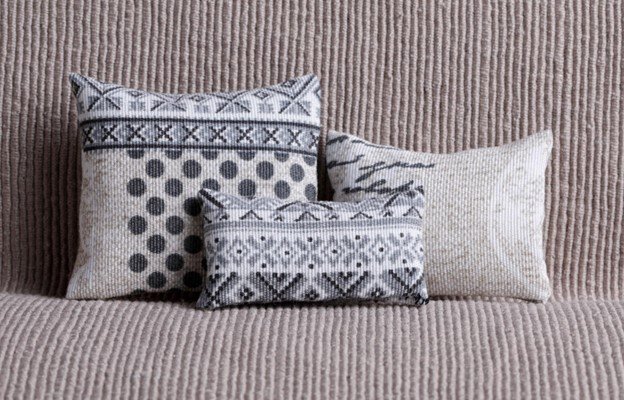
Short answer: Fewer pillows create more impact.
Another important factor is visual weight, not just quantity. Darker or more saturated colors visually weigh more than light ones. A sofa with three deep jewel-toned pillows can feel fuller than one with five light pastel pillows. This means color intensity should always be considered alongside count.
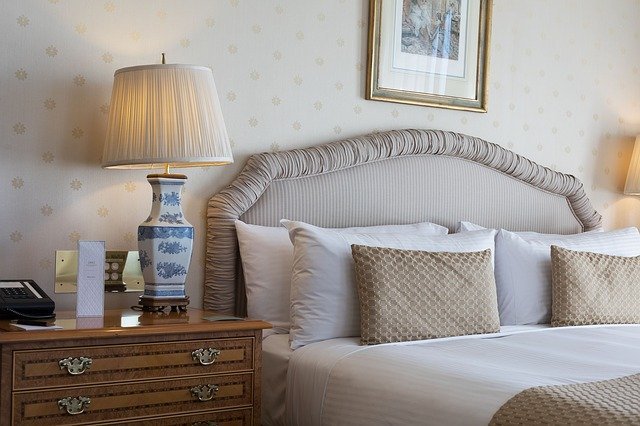
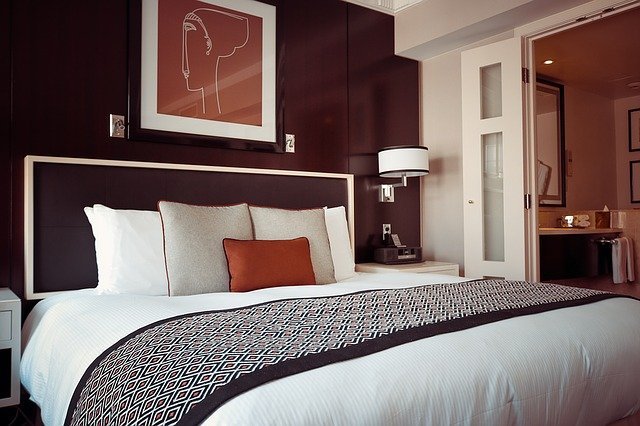
Furniture style also matters. Structured, modern sofas benefit from fewer, cleaner arrangements. Softer, casual sofas can handle an extra pillow without looking overstyled. On beds, pillow count should never interfere with daily use. If pillows are constantly removed and stacked elsewhere, the arrangement is impractical.
The most reliable test is distance. Step back to the doorway. If pillows dominate your first impression, reduce the count by one.
Which Colors Work Best With Neutral Furniture?
Short answer: High-contrast colors create energy, muted tones create calm.
Beyond matching undertones, consider color role assignment. Every color should have a job. One color anchors the arrangement, one adds contrast, and any additional shade should be minimal. When colors lack roles, they compete.
Another overlooked aspect is surface finish. Matte fabrics soften bold colors, while shiny fabrics intensify them. A bright color in velvet feels richer and calmer than the same color in a flat weave. This allows bolder choices without overwhelming the room. If neutral furniture already has texture, like boucle or tweed, keep pillow colors simpler. Texture plus color can quickly feel busy if both are pushed too far at once.
How Do You Mix Patterns and Colors in Throw Pillows?
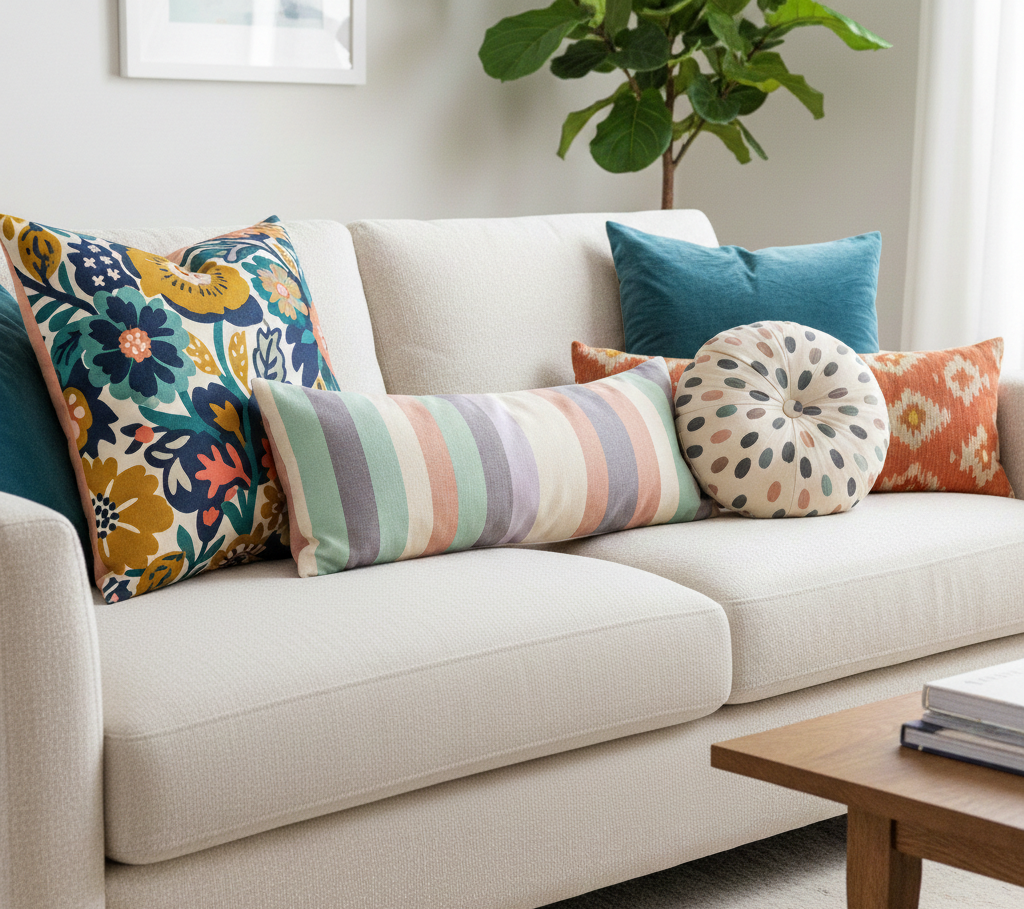
Short answer: Vary scale, not chaos.
Pattern success depends on negative space. Patterns need visual breaks to breathe. Solid-colored pillows act as resting points between patterned ones, preventing overload.
Direction also matters. Mixing horizontal, vertical, and organic patterns adds interest without clutter, as long as color overlap exists. When all patterns run in the same direction, the arrangement can feel flat or rigid.
Avoid novelty patterns unless the room already leans playful. Novelty designs age quickly and are harder to integrate with future updates. If used, limit them to one pillow and support them with simple solids so they don’t dominate the arrangement.
Are Colorful Throw Pillows Suitable for Small Rooms?
Short answer: Yes, when used strategically.
Small rooms benefit from controlled focal points. Colorful pillows should guide attention toward seating, not scatter it across the room. This is why placing all pillows on one primary seating piece often works better than spreading them around.
Wall color also influences suitability. White or light walls amplify color contrast, making bold pillows feel stronger. Dark walls absorb color, allowing brighter pillows without visual overload. Adjust intensity accordingly.
In compact spaces, pillows should also stay visually light. Overly thick or bulky pillows reduce perceived space. Slimmer profiles maintain openness while still adding color.
What Throw Pillow Sizes and Shapes Look Best Together?
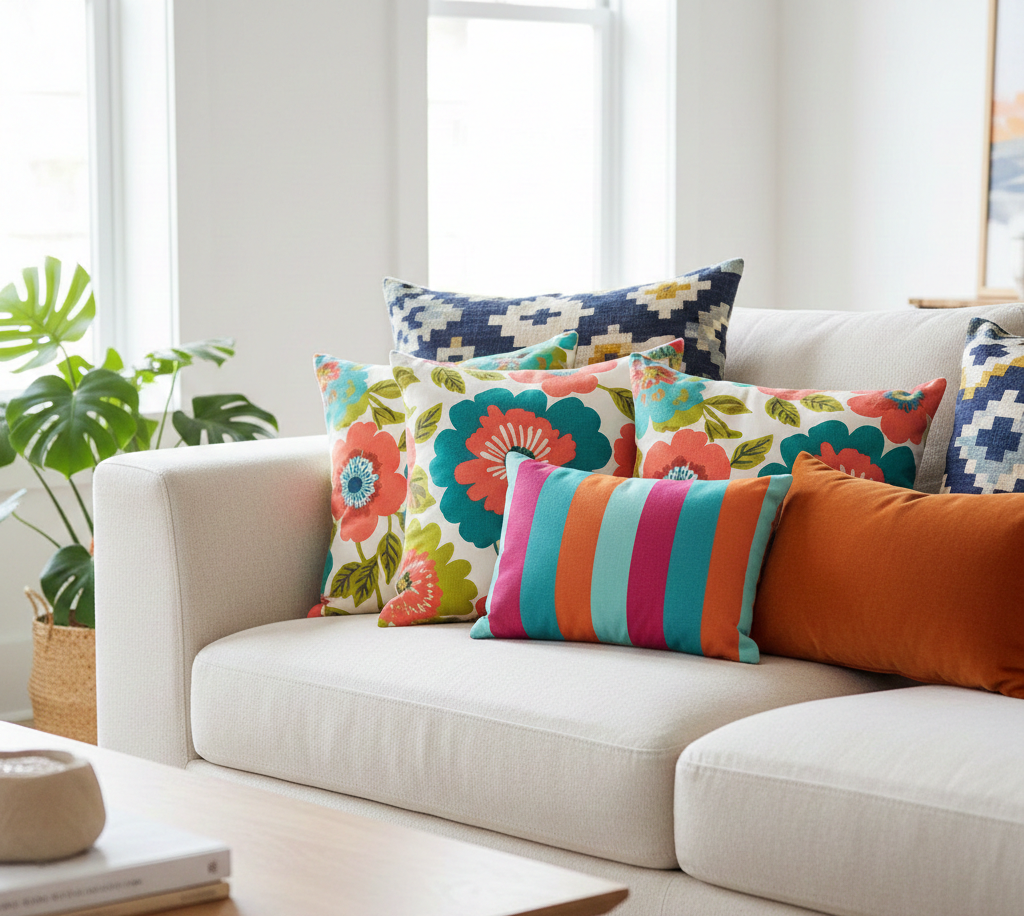
Short answer: Layer large to small.
Another key factor is seat depth. Deep seats require thicker or larger pillows to provide back support. Shallow seats look better with slimmer pillows that don’t push users forward.
Shape repetition creates order. If you use rectangular lumbar pillows, repeating that shape once more creates rhythm. Random single shapes often look accidental rather than styled.
Round pillows should be used sparingly. They work best as a contrast piece rather than a core component. Too many unconventional shapes disrupt structure and make arrangements harder to refresh later.
Which Fabrics Hold Color Best Over Time?
Short answer: Tightly woven fabrics last longer.
Color longevity also depends on dye quality, not just fabric type. Solution-dyed fabrics retain color better than surface-dyed ones, especially in bright hues. While not always visible at purchase, higher-quality brands often disclose this.
Maintenance habits play a role. Frequent washing accelerates fading, especially in hot water. Spot cleaning and gentle cycles preserve color longer. Using pillow covers that can be removed independently protects inner inserts from wear.
If pillows sit near windows, rotating them every few weeks prevents uneven fading. This simple habit significantly extends visual lifespan.
Are Colorful Throw Pillows Seasonal or Timeless?
Short answer: Both, depending on color choice.
Seasonality is often driven by emotional response, not rules. Bright colors feel energizing in warmer months, while deeper tones feel grounding in cooler seasons. Understanding this helps with intentional rotation.
Timelessness comes from adaptability. Pillows that work with multiple throws, rugs, or wall colors stay relevant longer. Highly specific colors tied to a single palette limit flexibility.
If budget or storage is limited, prioritize versatile colors and update seasonality through texture rather than hue. Fabric swaps can change mood without replacing color entirely.
What Are the Most Common Colorful Throw Pillow Mistakes to Avoid?
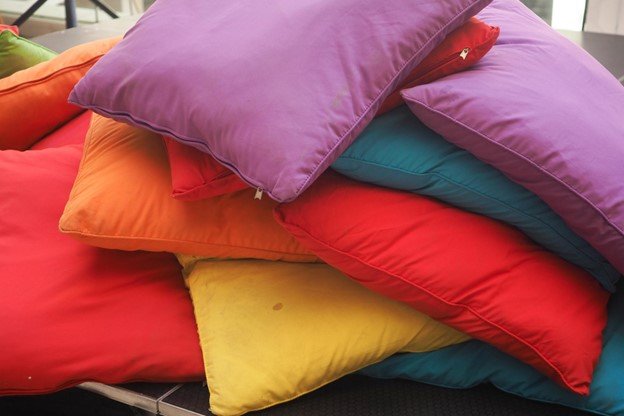
Short answer: Overuse and randomness.
Another frequent mistake is ignoring context. Pillows don’t exist in isolation. Nearby artwork, rugs, and lighting all affect how colors are perceived. A pillow that looks perfect online may clash in your actual space.
People also underestimate lighting temperature. Warm lighting softens colors, while cool lighting sharpens them. This can drastically change how pillows read at night versus day.
Finally, many people stop adjusting too soon. Styling is iterative. Small tweaks over time usually lead to better results than one-time decisions.
Colorful Throw Pillow Styling Rules by Sofa Size and Room Type
| Sofa or Space Type | Ideal Pillow Count | Best Color Strategy | Pattern Advice |
| Small sofa or loveseat | 2–3 | One dominant color | Mostly solid |
| Standard 3-seater sofa | 3 | Two related colors | One subtle pattern |
| Sectional sofa | 4–5 | Repeated accent colors | One bold pattern |
| Bed (queen/king) | 2–4 | Calm, coordinated tones | Minimal patterns |
| Accent chair | 1 | Strong single color | Solid or textured |
This table simplifies decisions and prevents overstyling. Use this table as a starting framework, not a final answer. Real rooms have quirks that charts can’t fully capture. Arm width, back height, and cushion firmness all influence how pillows sit.
After applying the guidelines, sit in the space. Comfort is a critical validation step often skipped. If pillows shift constantly or feel intrusive, adjust size or number.
The best styling rules are flexible. They guide decisions but always yield to real-life usability.
Colorful Throw Pillow Balance Checklist
Before finalizing your setup, check the following:
Color palette is limited and intentional
Pillow count suits furniture size
Patterns vary in scale
Colors repeat elsewhere in the room
Fabric suits light exposure and use
Arrangement feels comfortable, not staged
If all boxes are checked, the pillows will enhance the room rather than overwhelm it.
This checklist also helps when editing existing setups. Remove one pillow at a time and reassess rather than replacing everything. Subtraction often reveals what truly matters.
Balance should be felt intuitively. If the arrangement feels calming and easy to live with, it’s working. If it feels fragile or overly precious, it’s too complex. The goal isn’t perfection. It’s visual ease that holds up over time.
Real-World Styling Example: When Less Color Creates More Impact
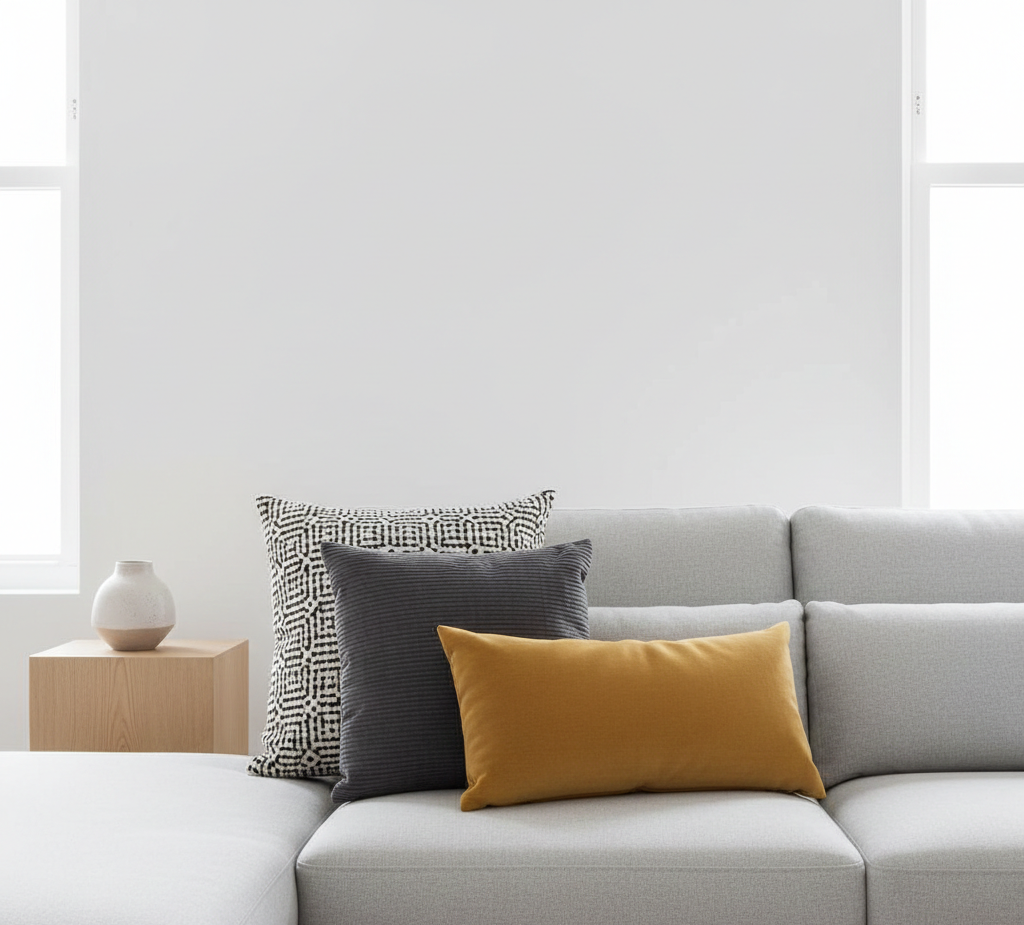
In a 12×14 living room with a medium-gray sofa and white walls, using five brightly colored throw pillows initially made the space feel visually crowded, especially in evening lighting. Reducing the setup to three pillows—two in a muted rust tone and one patterned pillow repeating both rust and gray—immediately restored balance. The room felt calmer, seating felt more usable, and the colors appeared richer rather than overwhelming.
This outcome highlights a common pattern. Visual comfort improves when color intensity is paired with restraint. Fewer, well-chosen colorful throw pillows often deliver stronger results than larger, mixed collections.
Why Homeaholic Approaches Colorful Throw Pillows With Balance
Design choices should support daily life. Colorful throw pillows are meant to enhance comfort and expression, not create maintenance or decision fatigue.
By focusing on proportion, comfort, and long-term satisfaction, styling remains flexible as tastes evolve. This approach avoids constant replacement cycles and keeps spaces feeling intentional.
When balance leads the process, color becomes a lasting asset rather than a short-lived statement.
Frequently Asked Questions About Colorful Throw Pillows
Can colorful throw pillows make a room look messy?
Yes, if too many colors or patterns are used without repetition.
How many throw pillows are too many?
More than five on a standard sofa usually feels excessive.
Do colorful pillows fade quickly?
They can, especially in direct sunlight. Fabric choice and rotation help.
Are colorful pillows good for minimalist homes?
Yes, when used sparingly as controlled accents.
Should throw pillows match curtains or rugs?
They don’t need to match exactly, but repeating tones creates harmony.
Are bold pillows still in style?
Yes. Balance and restraint matter more than trends.










0 Comments