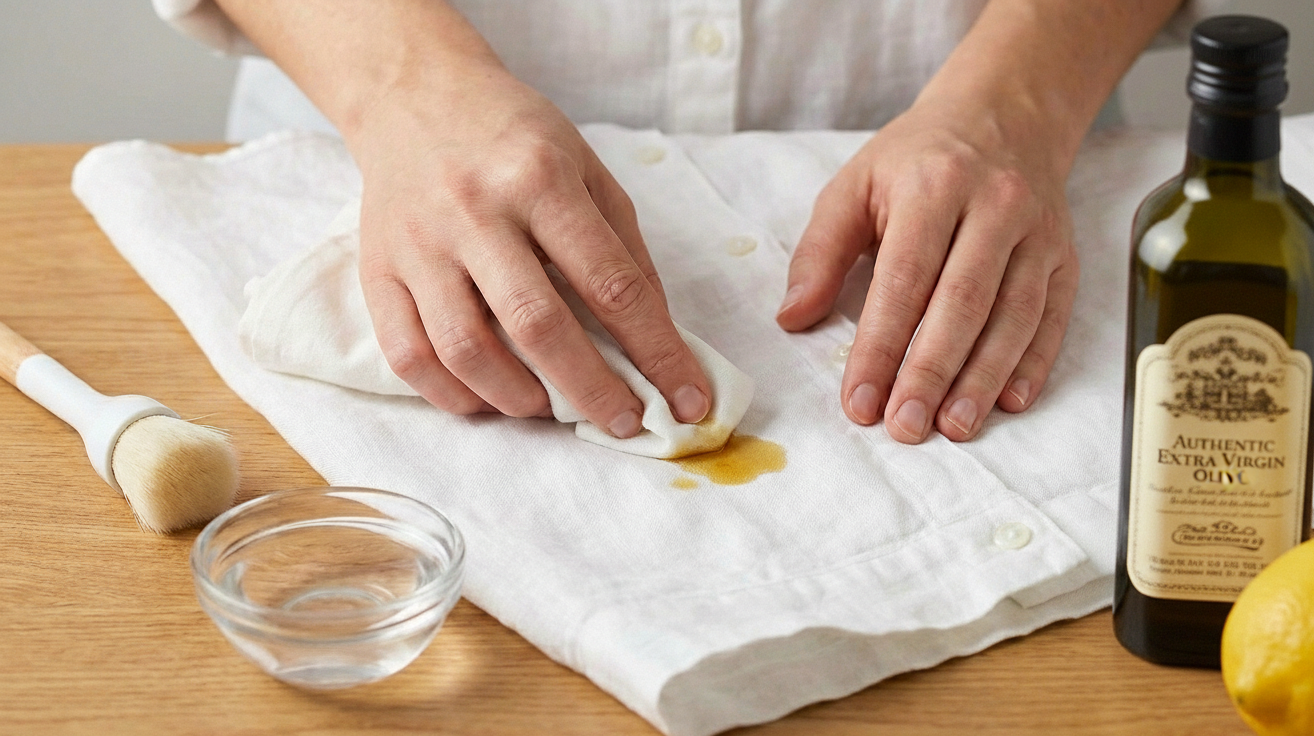
Olive oil stains can be removed by absorbing excess oil first, then breaking it down with dish soap or liquid detergent using cold water. Heat must be avoided until the stain is fully gone, as heat permanently sets oil into fabric fibers. This guide provides a comprehensive insight into the workings and methods involved in “how to get olive oil out of clothes“, cracking all the mysteries surrounding it.
Why Olive Oil Stains Are Harder Than They Look
Olive oil isn’t just another food spill. It’s a pure fat stain, meaning it doesn’t evaporate or dissolve in water. Instead, it seeps into fabric fibers and clings to them.
Unlike tomato sauce or coffee, olive oil often looks faint at first. The real problem appears after washing and drying, when heat oxidizes the oil and turns it into a dark, set stain.
That delayed damage is why olive oil stains feel “impossible” to remove. They aren’t impossible. They’re just misunderstood.
The Two Golden Rules of Olive Oil Stain Removal
Before touching any cleaner, lock these in:
Rule one: Absorb first, clean second.
Rule two: No heat until the stain is 100 percent gone. Break either rule and you make the stain harder to remove.
Step One: Act Immediately on Fresh Olive Oil Stains
If the stain is fresh, speed matters more than technique.
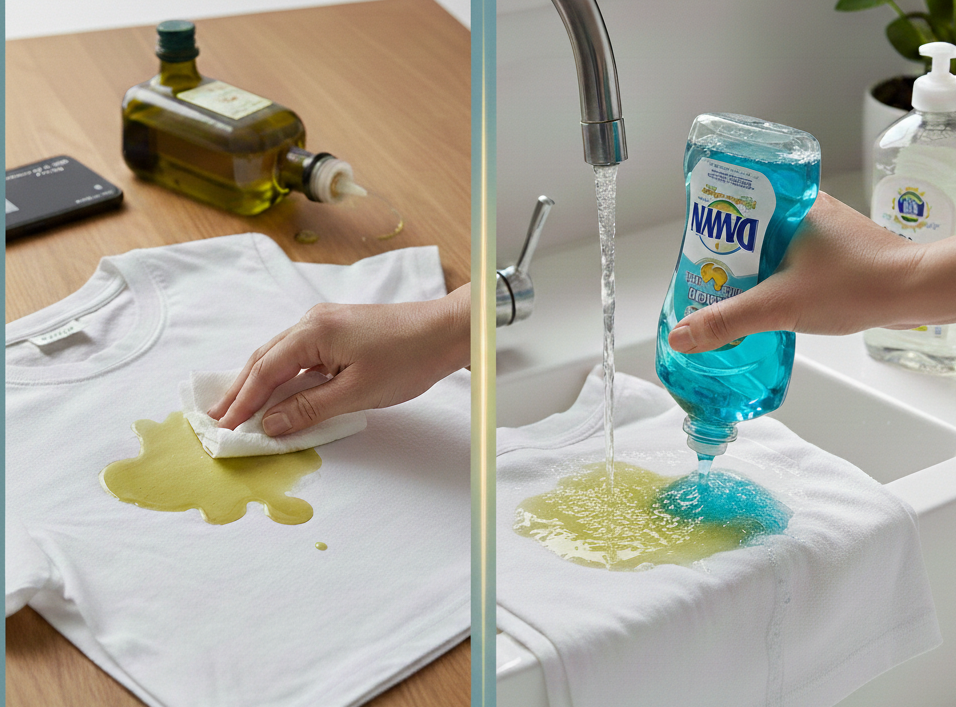
Start by blotting the area with a clean paper towel or cloth. Do not rub. Rubbing spreads the oil outward and deeper.
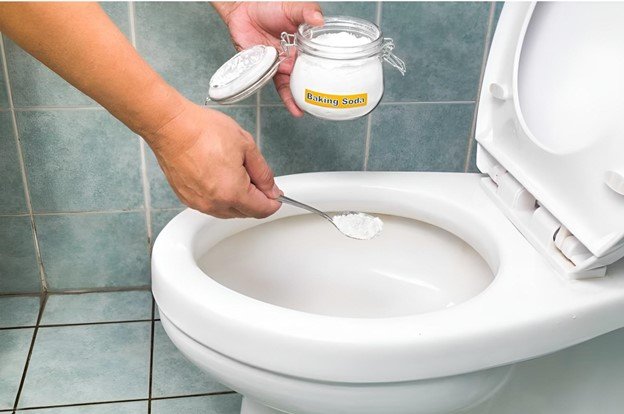
Next, apply an absorbent powder directly onto the stain. Baking soda, cornstarch, baby powder, or even plain flour will work. These powders pull oil out of the fibers.
Let it sit for at least 15 minutes. For heavier stains, 30 minutes is better. Brush the powder off gently.
At this stage, many stains already look lighter. Now you move to cleaning.
Step Two: Break the Oil Bond With Dish Soap
Dish soap is the most effective first-line cleaner for olive oil stains because it’s designed to dissolve grease.
Apply a few drops of liquid dish soap directly onto the stain. Use your fingers or a soft brush to gently work it into the fabric. Focus on the fibers, not the surface.
Rinse with cold water, flushing from the back of the fabric whenever possible. This pushes oil out instead of driving it deeper.
Inspect the area closely. If the stain is still visible, repeat before washing.
How to Remove Dried or Set-In Olive Oil Stains
Dried stains are tougher, but not a lost cause.
First, dampen the stained area with cold water. This rehydrates the fibers and loosens the oil.
Apply dish soap or liquid laundry detergent directly to the stain. Let it sit for 15–20 minutes. Gently work it in, then rinse thoroughly with cold water.
If the stain persists, move to an oxygen-based stain remover. These cleaners release oxygen bubbles that lift oil without damaging fabric.
Repeat as needed. Do not dry until the stain is completely gone.
Why Heat Makes Olive Oil Stains Permanent
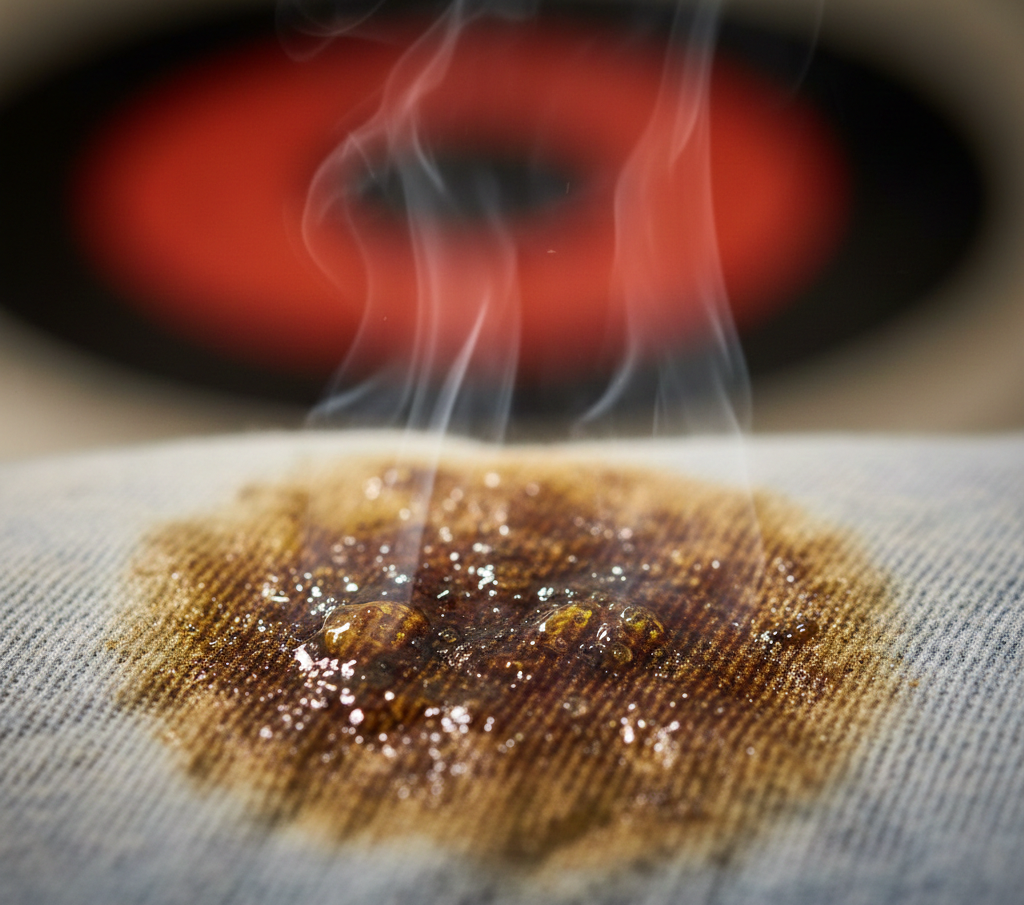
Heat changes oil chemically. When olive oil is heated inside fabric fibers, it oxidizes and bonds to the material.
This is why stains often appear faint before washing, then darken after drying. Once heat sets the stain, removal becomes far more difficult. Always air-dry stained garments until you’re certain the stain is gone.
Fabric-Specific Olive Oil Removal Methods
Cotton
Cotton absorbs oil deeply but responds well to dish soap and oxygen cleaners. Multiple gentle treatments work better than harsh scrubbing.
Polyester and Synthetics
Synthetic fibers resist water but trap oil. Dish soap is especially effective here. Rinse thoroughly to avoid residue buildup.
Denim
Denim hides oil well but holds onto it. Treat both sides of the fabric. Avoid aggressive brushing that can fade the dye.
White Clothes
White fabrics allow stronger treatments, including hydrogen peroxide after degreasing. Always remove oil first. Whitening before degreasing locks stains in.
Colored Clothes
Stick to dish soap, liquid detergent, and color-safe oxygen cleaners. Avoid lemon juice or sunlight, which can fade dyes unevenly.
Absorbents vs Detergents: When to Use Each
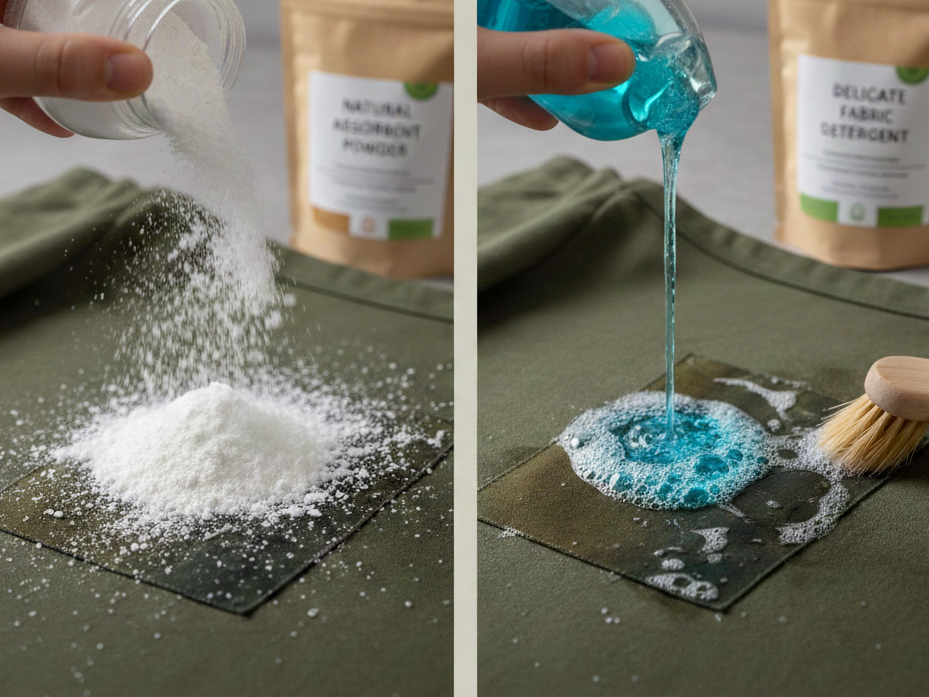
Absorbents remove excess oil. Detergents remove oil residue.
Using detergent without absorbing first often spreads the stain. Using absorbents alone may leave a shadow that darkens later.
The most effective method always uses both, in the correct order.
Common Olive Oil Stain Removal Mistakes
Rubbing Instead of Blotting
Rubbing pushes oil deeper into fibers and expands the stain.
Using Hot Water Too Soon
Hot water melts oil and spreads it before detergent can break it down.
Drying “Just to Check”
Dryers set stains permanently. Checking always comes before drying.
Using Bleach on Oil Stains
Bleach does not remove oil. It reacts with it, often turning stains yellow or brown.
Natural Remedies: What Works and What Doesn’t
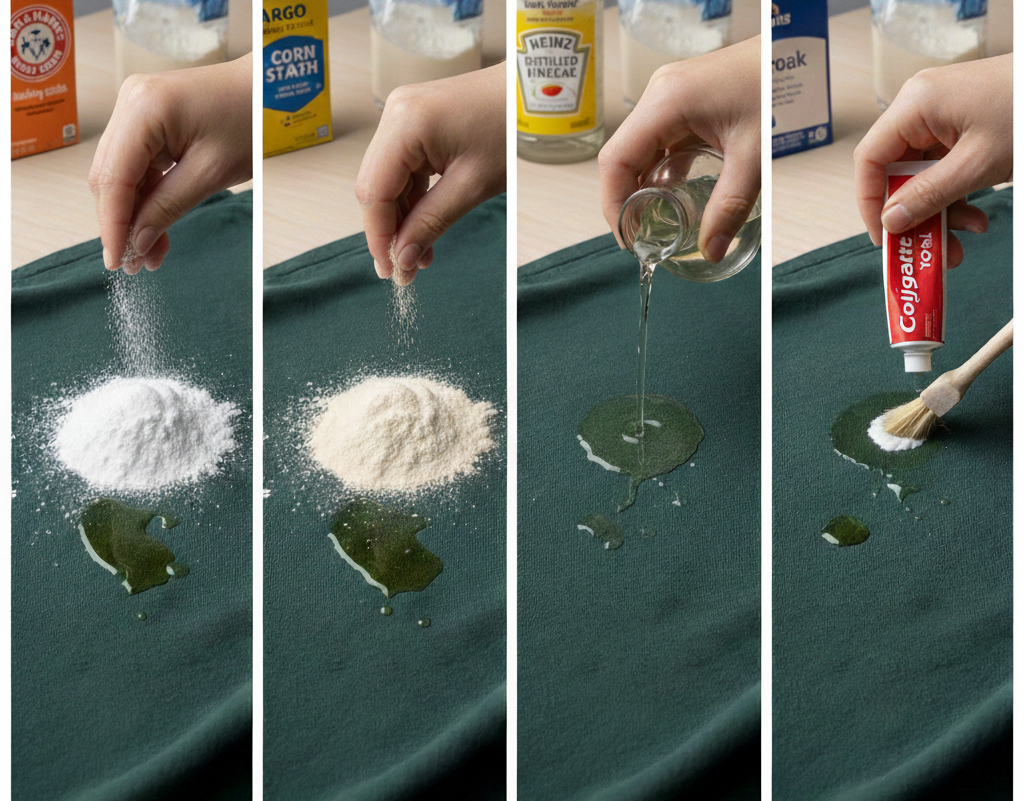
Baking Soda
Excellent for absorption, weak for cleaning. Best used before detergent.
Cornstarch
Highly effective at pulling oil out, especially on delicate fabrics.
Vinegar
Does not dissolve oil. Useful only after degreasing to remove soap residue.
Toothpaste
May help very light stains but inconsistent and risky on colors.
Dish soap remains more reliable than most “natural hacks” because it targets grease directly.
When Olive Oil Stains Can’t Be Fully Removed
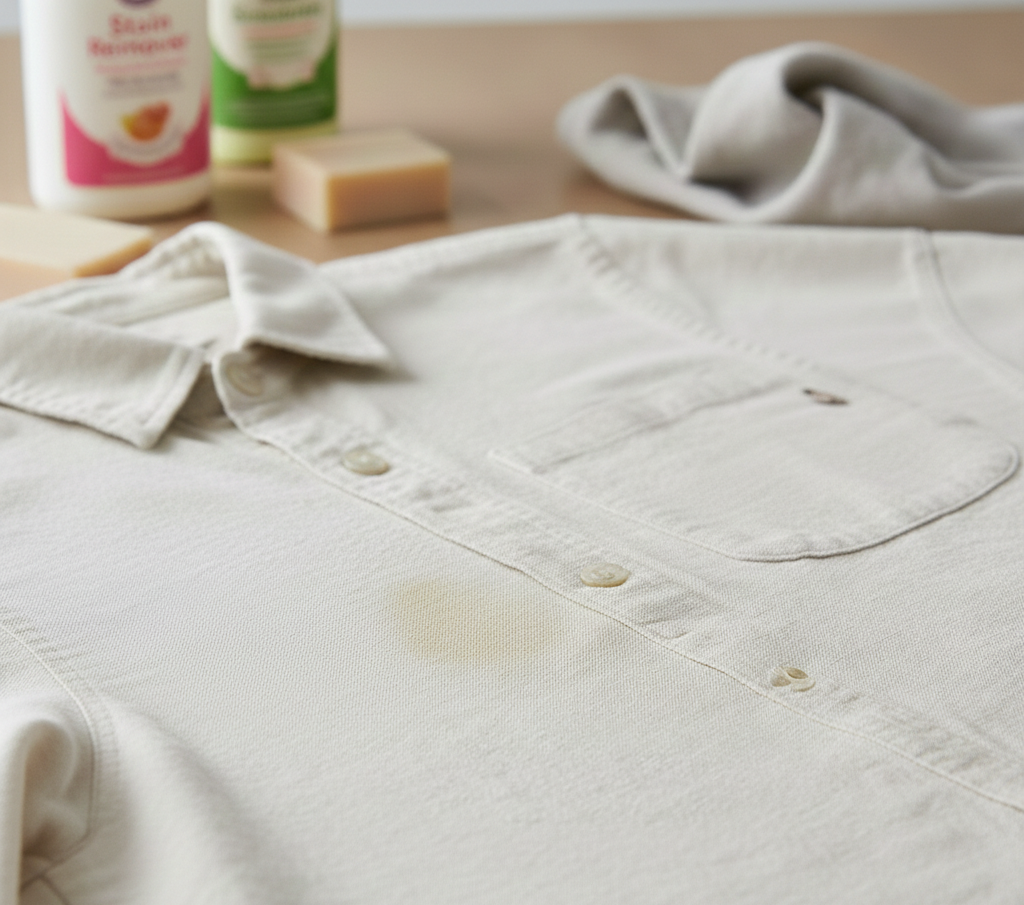
Some stains have already been heat-set multiple times. In these cases, you may reduce visibility but not fully erase the mark.
At this point, professional cleaners can use solvent-based treatments not available for home use. For valuable garments, this is the safest option.
Long-Term Prevention Tips on How to get Olive Oil Out of Clothes
Aprons prevent most kitchen oil stains. Acting immediately prevents nearly all permanent damage. Washing oily clothes separately avoids cross-contamination.
The best stain is the one that never sets.
Brand Authority Note
Fabric-care guides like this reflect how Homeaholic approaches everyday household problems. The focus is accuracy, material safety, and methods that work consistently, not viral shortcuts.
Final Takeaway on How to get Olive Oil out of Clothes
Olive oil stains don’t win because they’re powerful. They win because people rush, rub, and apply heat too early. Absorb first. Break the oil bond second. Wash cold. Dry last. Follow that order, and even stubborn olive oil stains lose their grip.
Olive oil stains aren’t permanent if you act in the right order. Absorb excess oil first, then break it down with dish soap using cold water only. Never apply heat until the stain is completely gone, or it will set permanently. Patience and fabric-safe methods beat aggressive scrubbing every time.
FAQ Section
Can olive oil stains be removed after drying?
Yes, but removal becomes harder after drying. Rehydration, dish soap, and oxygen cleaners can still lift many dried stains if heat exposure was limited.
Does dish soap really work on olive oil?
Yes. Dish soap is designed to break down grease, making it one of the most effective treatments for olive oil stains.
Can baking soda remove olive oil stains completely?
Baking soda absorbs oil but does not break it down. It should be followed by detergent for full removal.
Is olive oil harder to remove than other oils?
Olive oil behaves similarly to other cooking oils but often penetrates fabric deeply due to its viscosity.
Why do oil stains reappear after washing?
Residual oil oxidizes during drying, darkening the stain. This happens when oil wasn’t fully removed before washing.