
Bathroom sink cabinets do far more than hide plumbing. They determine how well a bathroom handles moisture, how easy it is to stay organized, and whether the space feels calm or constantly cluttered. The best bathroom sink cabinet ideas prioritize material durability, smart storage, and sink compatibility before appearance.
When those fundamentals are right, style becomes effortless. This guide is a cornerstone foundation when it comes to discussing different bathroom sink cabinet ideas, stamping several deciding factors to help you decide the right bathroom sink cabinet for you.
How Do You Choose the Right Bathroom Sink Cabinet?
The right bathroom sink cabinet is chosen by solving practical problems first. Moisture exposure, plumbing layout, storage needs, and sink type all shape what will work long term.
Start with the environment. Bathrooms experience humidity, splashes, and temperature changes daily. A cabinet that performs well in a bedroom or hallway can fail quickly in a bathroom. Material choice and construction quality matter more here than almost anywhere else in the home.
Next, consider storage behavior. Ask what needs to live inside the cabinet. Towels, cleaning supplies, toiletries, and spare rolls all require different access patterns. A cabinet that looks sleek but forces items to pile up on the countertop quickly becomes frustrating.
Finally, confirm sink compatibility. Not every cabinet supports every sink type. Choosing these elements together avoids expensive rework later.
What Types of Bathroom Sink Cabinets Are Available?
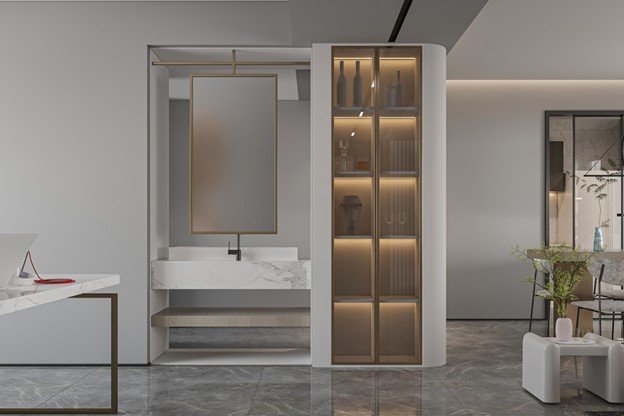
Bathroom sink cabinets fall into a few main structural categories, each suited to different layouts and preferences.
Freestanding cabinets sit directly on the floor and offer strong structural support. They hide plumbing easily and tend to be forgiving during installation. Floating cabinets mount to the wall, creating a lighter visual look and making floor cleaning easier, but they require solid wall support.
Corner cabinets make use of tight layouts where standard cabinets would block movement. Compact vanities are designed for powder rooms and small bathrooms where space is limited. Full-width cabinets work best in master bathrooms where storage demand is higher.
Understanding these categories helps narrow choices quickly.
Which Materials Work Best for Bathroom Sink Cabinets?
Material choice determines how well a cabinet survives moisture over time.
Solid wood offers strength and natural beauty but must be sealed properly to resist humidity. Plywood performs well in bathrooms because it resists swelling better than many alternatives. MDF is common in mid-range cabinets but is vulnerable to water damage if coatings fail.
In real-world bathroom conditions, MDF cabinets exposed to frequent humidity or minor leaks often show edge swelling or surface bubbling within 3–5 years if protective coatings are compromised. This is why sealed edges and proper ventilation matter as much as the material itself.
Particle board is the least durable option in wet environments. It may look fine initially but can swell and crumble when exposed to leaks or repeated humidity. Metal and PVC cabinets resist moisture well but have a more limited aesthetic range.
As a general rule, moisture resistance and edge sealing matter more than surface finish alone.
Are Floating Bathroom Sink Cabinets Better Than Freestanding Ones?
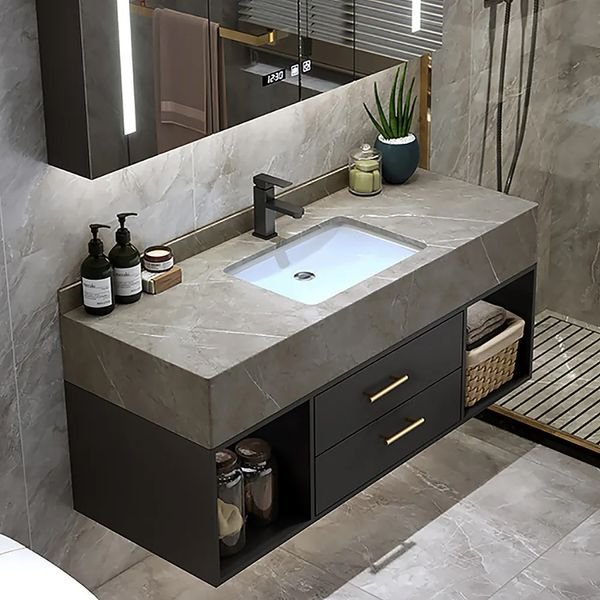
Floating cabinets are popular because they make bathrooms feel larger and more modern. They expose more floor space and create a clean visual break between wall and floor.
However, durability depends on installation quality. Floating cabinets must be anchored into studs or reinforced walls to support the weight of the cabinet, sink, and contents. Poor installation leads to sagging or wall damage over time.
Freestanding cabinets distribute weight to the floor and tolerate heavier sinks more easily. They are often better for traditional bathrooms or where wall reinforcement is limited.
Neither option is universally better. The right choice depends on structure, sink weight, and long-term expectations.
Which Sink Types Work With Different Cabinet Designs?
Sink type and cabinet design are tightly linked.
Vessel sinks sit on top of the cabinet and require lower cabinet heights to remain comfortable. They reduce internal storage because plumbing must rise higher inside the cabinet. Undermount sinks integrate smoothly with countertops and preserve interior space, making them practical for storage-focused designs.
Integrated sinks are molded into the countertop and simplify cleaning while reducing joint failures. Drop-in sinks are flexible and budget-friendly but create visible edges that collect moisture if not sealed carefully.
Matching sink type to cabinet structure avoids awkward ergonomics and wasted space.
Are Drawers Better Than Doors in Bathroom Sink Cabinets?
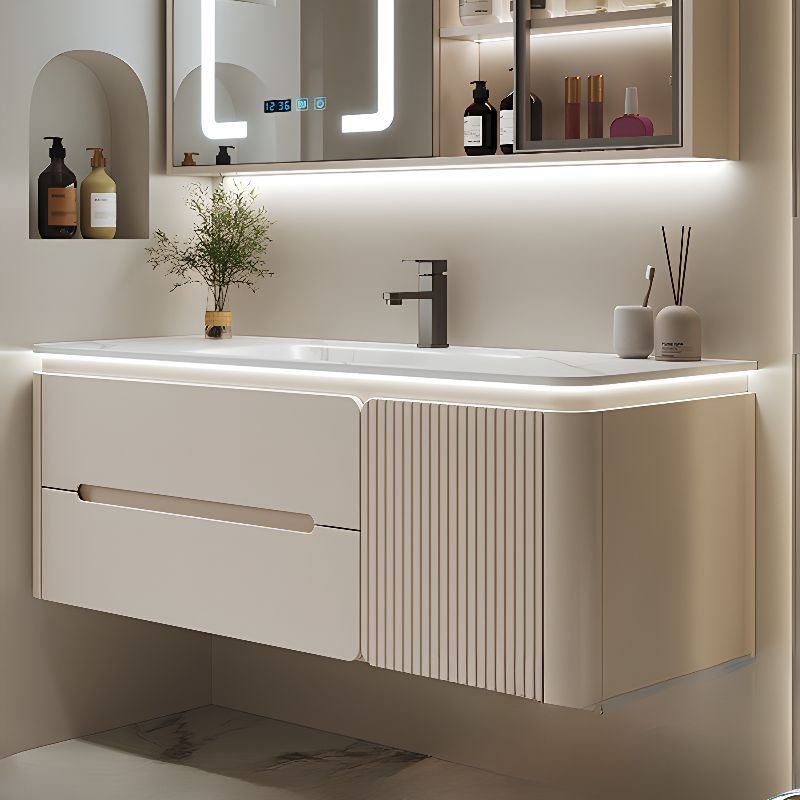
In most cases, drawers outperform doors for daily storage.
Drawers allow full visibility and prevent items from disappearing into the back of the cabinet. Deep drawers can increase usable storage by 25 to 40 percent compared with standard shelves. They also make it easier to organize smaller items.
The challenge is plumbing. Sink traps and supply lines can block drawer space if not planned correctly. Many modern cabinets use U-shaped drawers or split configurations to work around pipes.
Doors still make sense for large items or where plumbing layouts are unpredictable. The best cabinets often combine both.
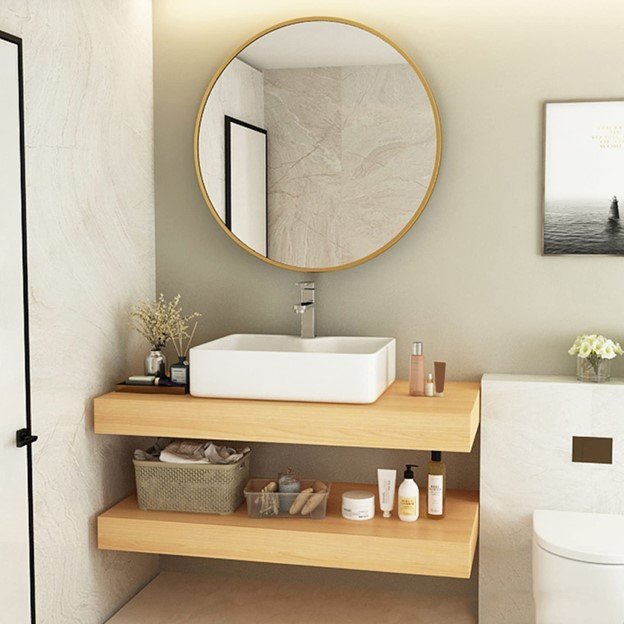
What Bathroom Sink Cabinet Ideas’ Sizes
Work Best for Small Bathrooms?
Small bathrooms demand careful proportioning.
Cabinets between 24 and 36 inches wide suit most compact layouts. Floating cabinets visually expand the room by exposing floor space. Shallow-depth cabinets reduce crowding without sacrificing basic storage.
Tall storage should be placed elsewhere rather than forcing oversized cabinets under the sink. In tight spaces, fewer but better-designed storage zones outperform bulky furniture.
Choosing the smallest cabinet that meets real storage needs keeps the room functional and comfortable.
How Long Do Bathroom Sink Cabinets Last and What Affects Longevity?
A quality bathroom sink cabinet typically lasts 10 to 20 years, depending on materials, installation, and maintenance.
Moisture exposure is the biggest factor in failure. Cabinets fail when water penetrates seams, edges, or unsealed cutouts. Poor ventilation accelerates this process.
Hardware quality also matters. Soft-close hinges and runners reduce stress and extend lifespan. Cheap hardware often fails long before the cabinet body does.
Regular wiping of spills and occasional inspection of seals significantly extends cabinet life.
What Are the Most Common Bathroom Sink Cabinet Mistakes to Avoid?
Many cabinet problems come from decisions made too early or too quickly.
One common mistake is choosing materials based on appearance alone. Cabinets that look premium can still fail if their cores are not moisture resistant. Another issue is ignoring plumbing clearance, which leads to unusable drawers or awkward storage.
Overcrowding is another frequent error. Installing the largest possible cabinet often restricts movement and makes the bathroom feel cramped. Finally, inadequate ventilation allows humidity to linger and damage cabinetry over time. Avoiding these mistakes requires thinking beyond the showroom display.
Bathroom Sink Cabinet Ideas’ Materials Compared
| Material | Moisture Resistance | Durability | Cost Range | Best Use Case |
| Solid Wood | Moderate | High | High | Well-ventilated bathrooms |
| Plywood | Good | High | Mid | Long-term durability |
| MDF | Moderate | Medium | Mid | Budget-conscious designs |
| Particle Board | Low | Low | Low | Short-term or low-use spaces |
| PVC / Metal | Excellent | High | Mid to High | High-humidity environments |
This comparison helps align expectations with reality.
Bathroom Sink Cabinet Selection Checklist
Before finalizing a cabinet, confirm the following.
Material resists bathroom moisture
Sink type matches cabinet height and structure
Drawer layout accommodates plumbing
Cabinet size fits the room comfortably
Installation method supports long-term load
Ventilation reduces humidity buildup
If all boxes are checked, the cabinet is likely to perform well for years.
In small apartment bathrooms, one of the most common renovation regrets is choosing a deep cabinet that blocks movement and traps moisture behind the sink. Switching to a shallower floating cabinet with proper wall clearance often solves both issues without reducing usable storage, proving that proportion matters more than size.
What Bathroom Sink Cabinet Sizes Work Best for Small Bathrooms?
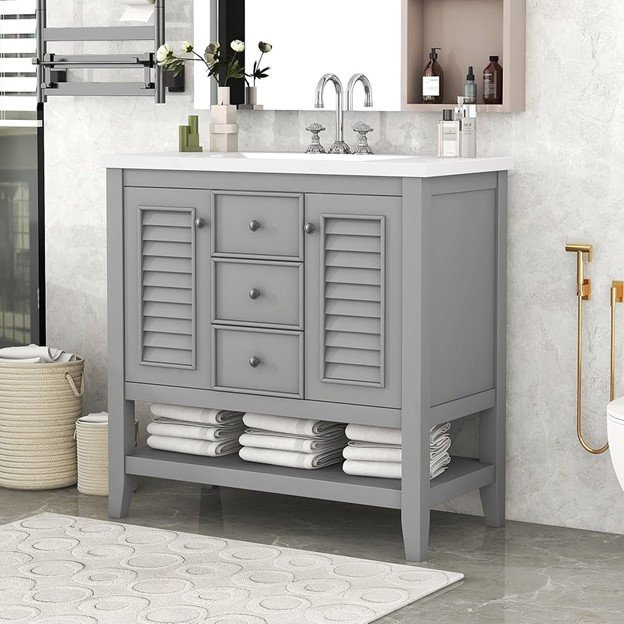
At Homeaholic, bathroom sink cabinets are treated as functional systems, not just furniture. Material behavior, plumbing clearance, moisture exposure, and daily use patterns are considered before visual style is finalized.
This approach prevents common failures like swelling, sagging drawers, and wasted storage. When cabinets are designed around real conditions, they stay reliable and visually calm long after trends fade.
Frequently Asked Questions About Bathroom Sink Cabinets
What material is best for bathroom sink cabinets?
Plywood and properly sealed solid wood perform best in most bathrooms.
Are floating bathroom cabinets durable?
Yes, when installed correctly into reinforced walls.
Do drawers work under bathroom sinks?
They do if designed to accommodate plumbing.
How long should a bathroom sink cabinet last?
Quality cabinets often last 10 to 20 years with proper care.
Are cheap bathroom cabinets worth it?
They can work short term but often fail faster in humid environments.
Do bathroom cabinets need ventilation?
Yes. Ventilation reduces moisture buildup and extends lifespan.












0 Comments