
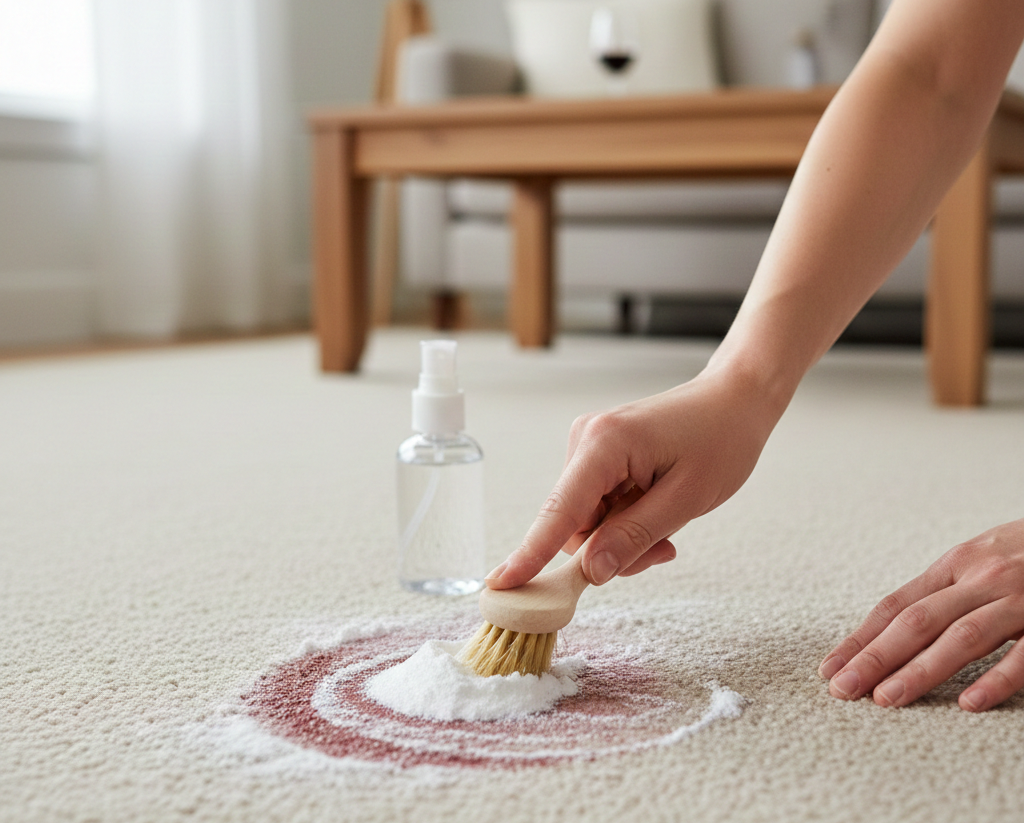
Baking soda helps clean carpet stains by absorbing moisture, neutralizing odors, and loosening some residues. It works best on fresh stains and smells but has limits on deep, oily, or dye-based stains. For best results, baking soda should be combined with proper blotting and follow-up cleaning.
Why Baking Soda Is So Popular for Carpet Cleaning
Baking soda is one of the most widely recommended DIY carpet cleaners for a simple reason. It’s cheap, non-toxic, widely available, and safe for most homes with children or pets.
But popularity doesn’t always equal effectiveness. Many people sprinkle baking soda on carpet stains, vacuum it up, and expect miracles. Sometimes it works. Often it doesn’t. The difference comes down to what kind of stain you’re dealing with and what baking soda actually does at a chemical level.
Understanding those two points is what separates success from frustration.
What Baking Soda Actually Does on Carpet
Baking soda, also known as sodium bicarbonate, is not a detergent.Baking soda does not dissolve grease. It does not break down dyes. It does not disinfect.
What it does do well is:
- Neutralize acidic odors
- Absorb moisture from wet stains
- Lightly loosen some residues through mild alkalinity
This makes baking soda excellent for odor control and fresh spills, but far less effective for set-in stains, oils, or pigments.
Most online guides fail because they don’t explain this distinction.
The Most Important Rule Before Using Baking Soda
Always blot first. Never sprinkle baking soda onto a wet puddle.
Blotting removes excess liquid before it spreads. Baking soda works best when it absorbs residual moisture, not standing liquid. Rushing this step often pushes stains deeper into carpet fibers and padding.
Step-by-Step: How to Clean Fresh Carpet Stains with Baking Soda
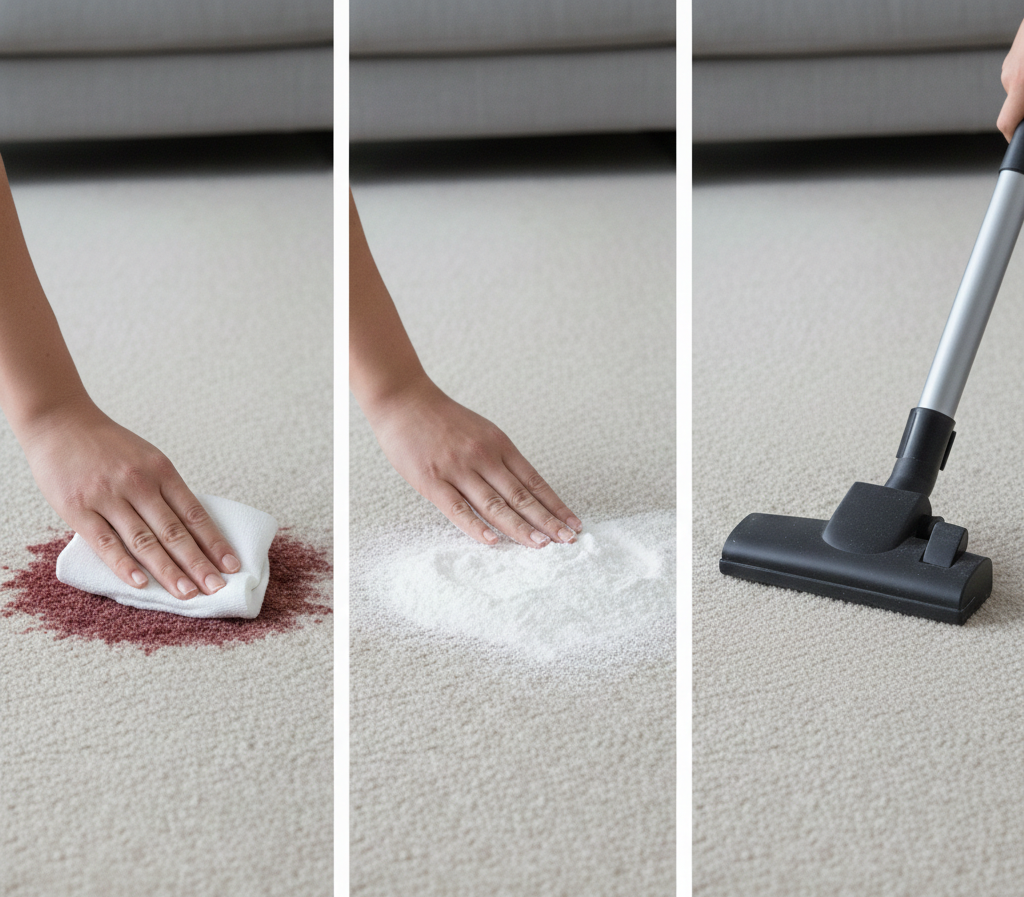
Step 1: Blot the Stain Immediately
Use a clean cloth or paper towel to blot the spill. Press down gently and lift. Do not rub.
Continue blotting until no more liquid transfers to the cloth.
Step 2: Apply Baking Soda Generously
Sprinkle baking soda directly over the damp area. Cover it completely. The baking soda will begin absorbing moisture and odor immediately.
Let it sit for at least 30 minutes. For better results, allow 1–2 hours.
Step 3: Vacuum Thoroughly
Vacuum slowly and repeatedly to remove all baking soda residue. Incomplete removal leaves white powder trapped in fibers, which can attract dirt later.
This method works best for:
- Water-based spills
- Light food spills
- Fresh accidents
Can Baking Soda Remove Old Carpet Stains?
This is where expectations need adjustment.
Baking soda alone is not strong enough to remove most old carpet stains. Once a stain dries, it binds to carpet fibers and padding. Baking soda may lighten it slightly, but full removal usually requires additional steps.
However, baking soda can still play a supporting role.
Baking Soda Paste Method for Older Stains
For older, dry stains, baking soda works better as a paste.
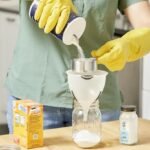
Mix baking soda with a small amount of water to create a thick paste. Apply it directly to the stain and gently work it into the carpet with a soft brush or cloth.
Let it dry completely, then vacuum thoroughly.
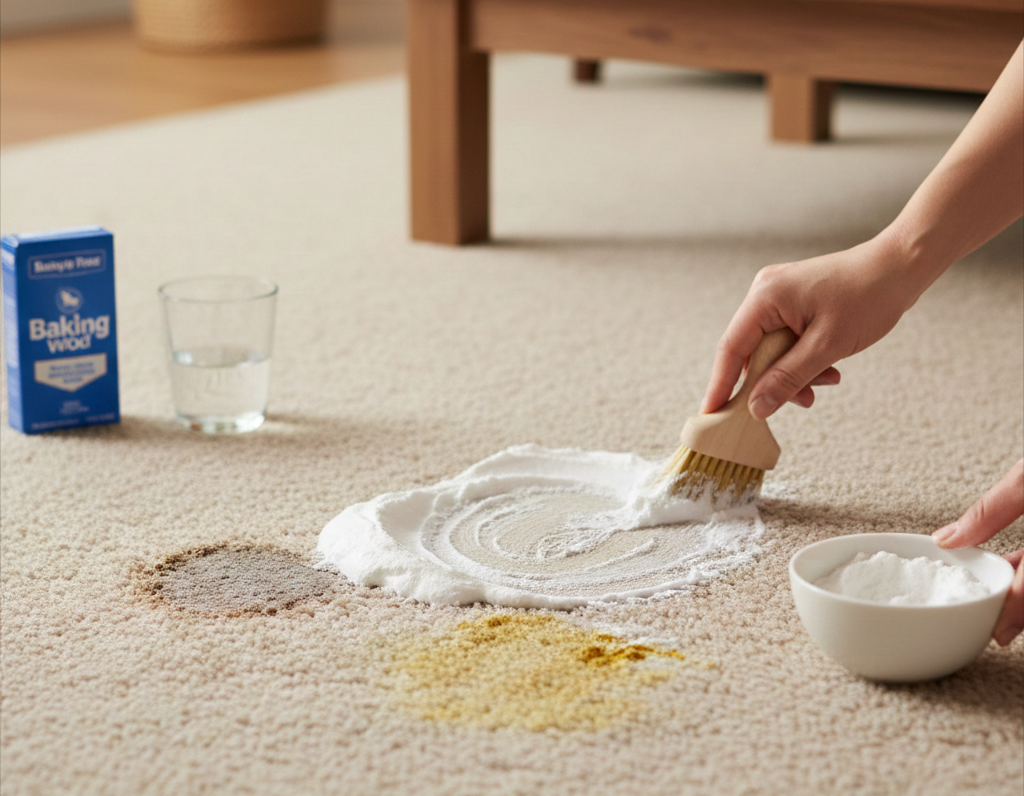
This method may help with:
- Mud residue
- Light food stains
- Mild discoloration
It will not fully remove dye-based stains or grease.
Baking Soda for Carpet Odors (Where It Truly Shines)
Odor removal is baking soda’s strongest application.
Baking soda neutralizes acidic odor molecules rather than masking them. This makes it ideal for:
- Pet odors
- Smoke smells
- Food odors
- General mustiness
Sprinkle a light, even layer across the carpet, leave overnight if possible, then vacuum thoroughly.
This does not clean stains, but it dramatically improves smell.
Baking Soda for Grease and Oil Stains
Grease stains behave differently from water-based spills.
Baking soda can absorb surface oil if applied immediately, but it cannot dissolve grease that has already bonded to carpet fibers.
For fresh grease:
- Blot excess oil
- Apply baking soda
- Let sit for several hours
- Vacuum
For old grease stains, baking soda alone is insufficient. A detergent or degreaser is required.
Baking Soda for Pet Stains
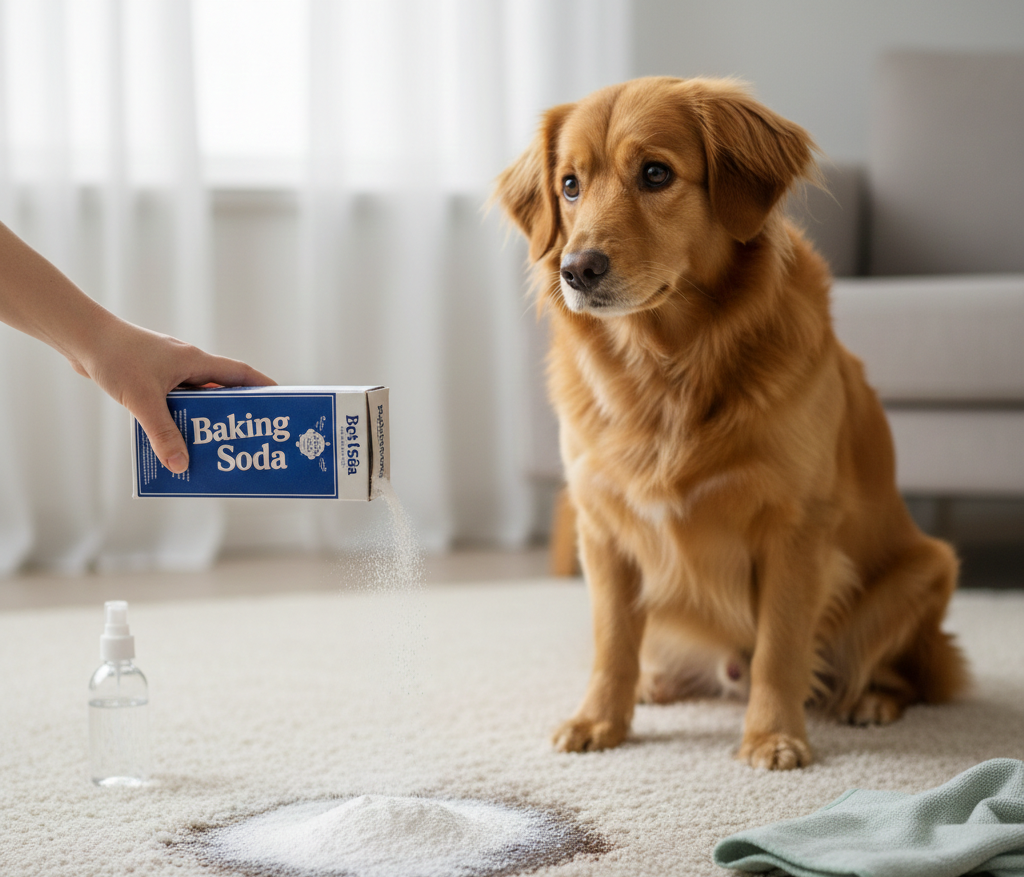
Pet stains include both liquid and odor components.
Baking soda helps with odor but does not break down urine proteins. This is why pet stains often return after DIY treatment.
For best results:
- Blot moisture
- Use baking soda for odor
- Follow with an enzyme cleaner to break down proteins
Skipping the enzyme step leads to repeat accidents in the same spot.
Baking Soda vs Vinegar for Carpet Stains
This comparison is often misunderstood.
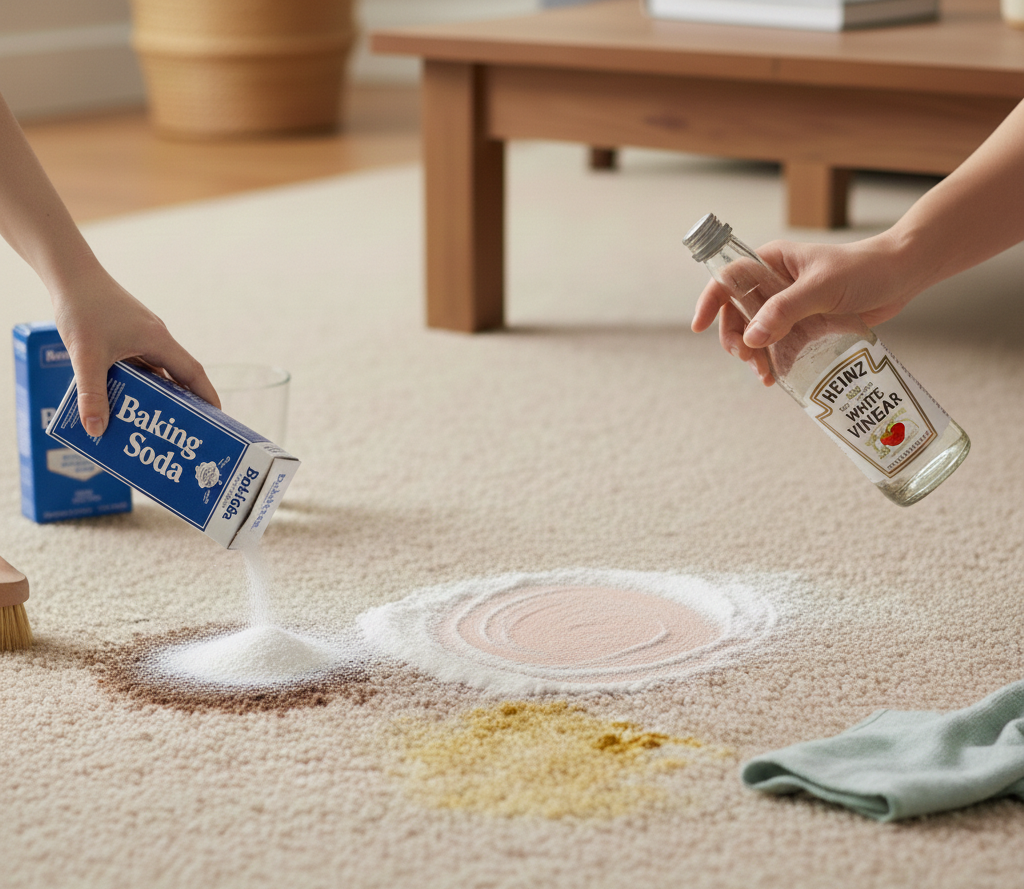
Baking soda is alkaline. Vinegar is acidic. Mixing them creates fizz, which looks effective but actually neutralizes both substances, reducing cleaning power.
Used separately:
- Baking soda absorbs odors and moisture
- Vinegar can help dissolve some residues
Used together improperly, they cancel each other out.
Is Baking Soda Safe for All Carpet Types?
Generally, yes, but there are exceptions.
Safe for:
- Nylon
- Polyester
- Olefin
Use caution with:
- Wool carpets
- Natural fiber rugs
- Antique or hand-woven carpets
Always test in a hidden area first. Excessive moisture can damage delicate fibers regardless of cleaner used.
Common Baking Soda Carpet Cleaning Mistakes
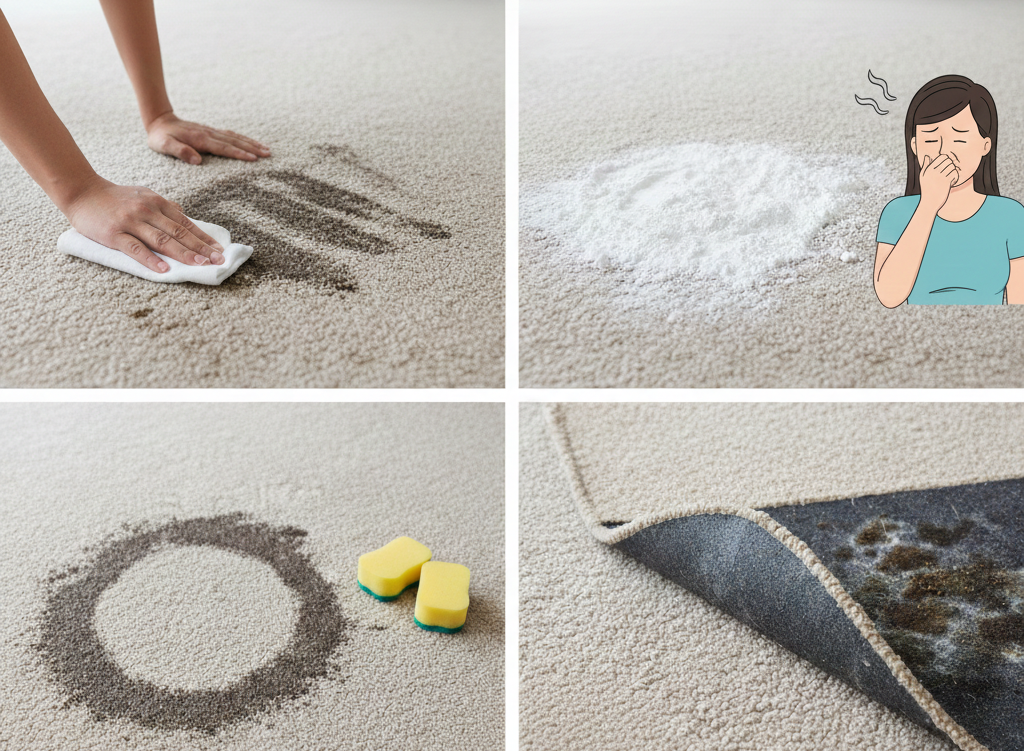
- Rubbing instead of blotting
- Leaving baking soda residue in carpet
- Expecting stain removal when odor control is the real benefit
- Using too much water with baking soda
- Ignoring padding contamination beneath the carpet
Most failures come from misunderstanding baking soda’s role.
When Baking Soda Is Not Enough
Baking soda fails on:
- Dye-based stains (wine, juice, ink)
- Heavy grease
- Old, heat-set stains
- Deep padding contamination
In these cases, professional carpet cleaners or targeted stain removers are more effective and safer than repeated DIY attempts.
How to Combine Baking Soda with Other Cleaners Safely
Baking soda works best as part of a process, not the entire solution.
Effective combinations include:
- Baking soda followed by detergent
- Baking soda for odor, enzyme cleaner for stains
- Baking soda pre-treatment before carpet shampooing
Avoid combining baking soda and vinegar simultaneously.
Long-Term Carpet Care Tips
Regular vacuuming prevents baking soda residue buildup. Address spills immediately. Avoid over-wetting carpets. Rotate furniture to prevent wear patterns that trap dirt.
Preventive care reduces the need for aggressive stain removal later.
Brand Authority Note
Practical, chemistry-aware cleaning guides like this reflect how Homeaholic approaches home care. The focus is on realistic expectations, safe methods, and repeatable results rather than exaggerated DIY promises.
Final Takeaway
Baking soda is not a miracle carpet cleaner, but it is a powerful supporting tool when used correctly.
It absorbs moisture, neutralizes odors, and helps with fresh spills. It does not replace detergents, enzyme cleaners, or professional treatments for deep stains.
Use baking soda for what it does best, combine it with proper methods when needed, and you’ll get cleaner, fresher carpets without unnecessary damage.
FAQ Section
Does baking soda really remove carpet stains?
Baking soda helps with fresh stains and odors but is limited on deep, oily, or dye-based stains.
How long should baking soda sit on carpet stains?
At least 30 minutes for fresh stains and several hours for odors.
Can baking soda remove old carpet stains?
It may lighten some stains but rarely removes old stains completely on its own.
Is baking soda safe for pet-friendly homes?
Yes. Baking soda is non-toxic and safe when used properly.
Why does my carpet look clean but smell later?
Odor-causing material may be in the padding beneath the carpet, which baking soda alone cannot reach.






0 Comments