
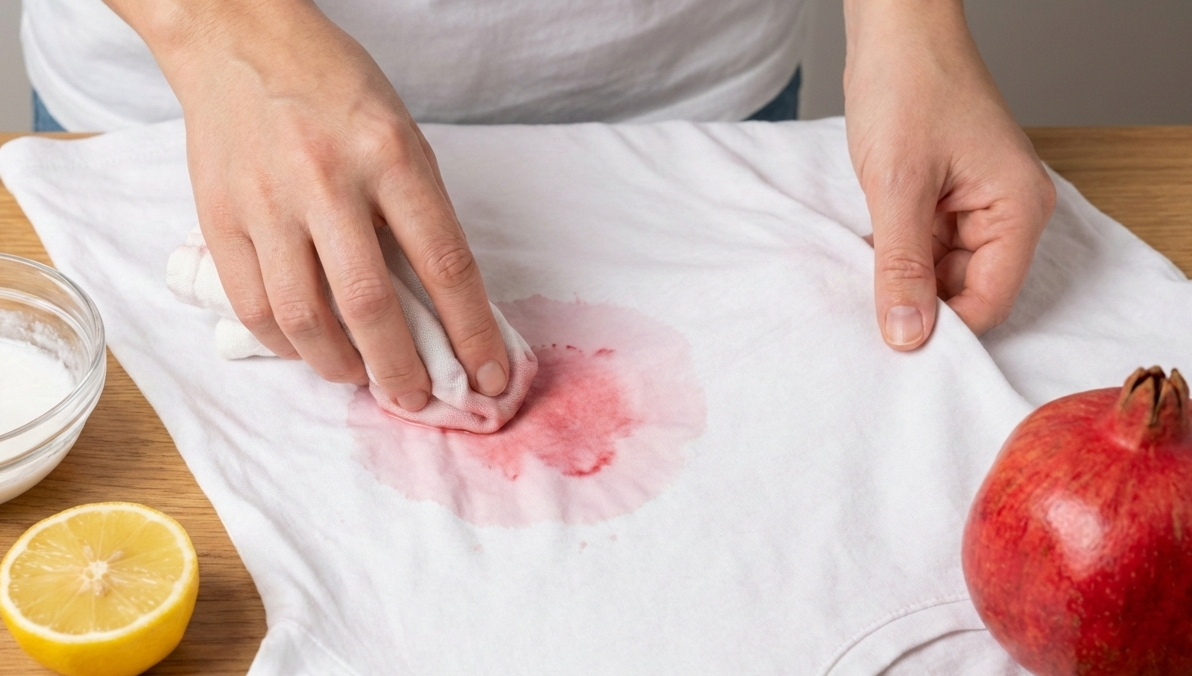
Remove Pomegranate stains by acting quickly with cold water, liquid detergent, and oxygen-based cleaners. Heat must be avoided until the stain is completely gone, as heat permanently sets pomegranate pigments into fabric fibers.
Why Pomegranate Stains Are So Difficult to Remove
Pomegranate juice is one of the most aggressive natural staining liquids found in food. The deep red color comes from anthocyanins, powerful plant pigments that bind strongly to fabric fibers, especially cotton and linen.
Unlike oil or protein stains, pomegranate stains behave like dye. They penetrate fibers quickly and darken as they dry. Once exposed to heat, these pigments oxidize and chemically bond to fabric, making the stain extremely difficult or sometimes impossible to remove. This is why pomegranate stains often look manageable at first but become stubborn after washing or drying.
The Two Non-Negotiable Rules of Pomegranate Stain Removal
Rule one: Cold water only at the start.
Rule two: Never apply heat until the stain is completely gone.
Breaking either rule dramatically lowers your chances of full removal.
Step One: What to Do Immediately After a Pomegranate Spill
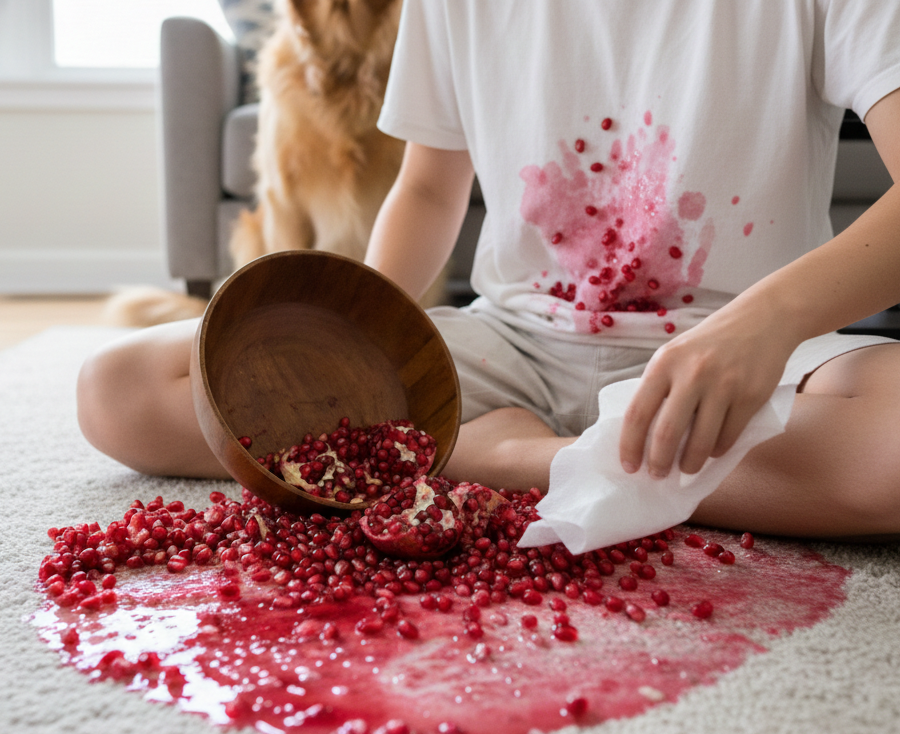
Speed matters more than products when dealing with fresh pomegranate stains.
Blot the area gently with a clean cloth or paper towel. Do not rub. Rubbing spreads the pigment and drives it deeper into the fibers.
Rinse the stain from the back side of the fabric using cold running water. This pushes pigment out rather than forcing it further in. Continue flushing until the water runs mostly clear.
At this stage, many fresh stains fade significantly. If any color remains, move immediately to detergent treatment.
Step Two: Use Liquid Detergent to Lift Pigments
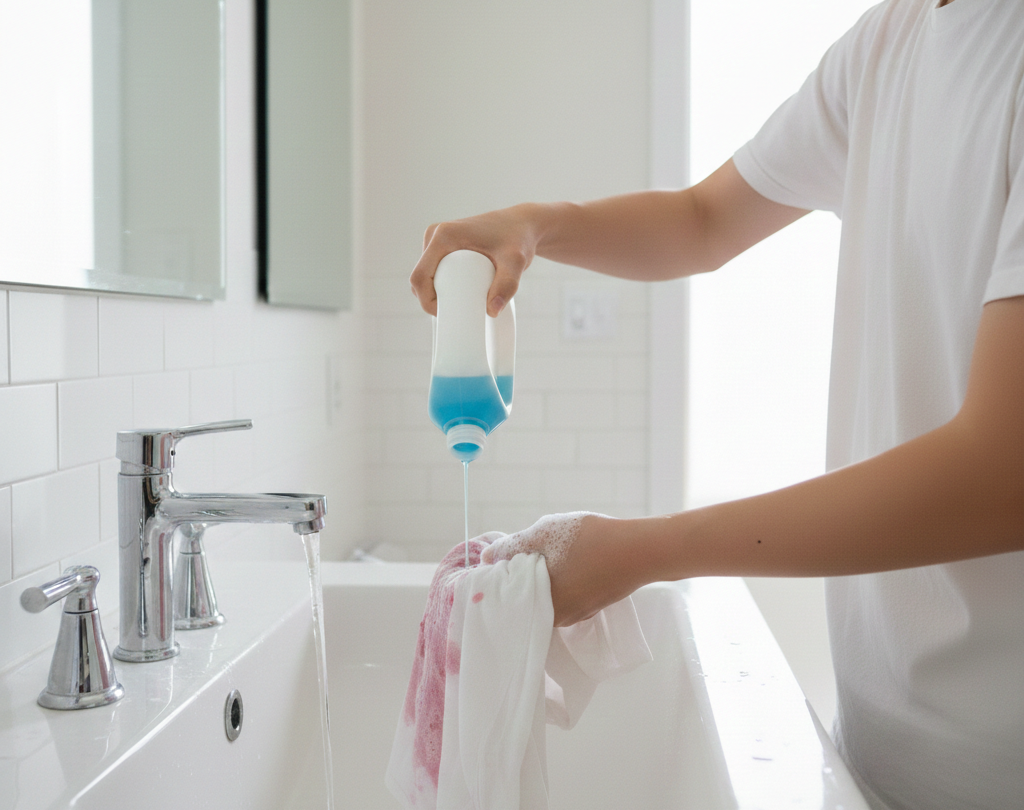
Liquid laundry detergent works because it suspends pigment particles in water and helps release them from fibers.
Apply detergent directly to the stained area. Gently work it in with your fingers or a soft brush. Let it sit for 5–10 minutes, then rinse thoroughly with cold water.
Repeat if needed. Never let the detergent dry on the fabric.
How to Remove Dried Pomegranate Stains
Dried pomegranate stains require patience, not force.
Soak the stained fabric in cold water for at least 30–60 minutes. This rehydrates fibers and loosens dried pigments.
After soaking, apply liquid detergent or an enzyme-based stain remover. Let it sit for 15–20 minutes, then rinse with cold water.
Inspect carefully. If color remains, move to oxygen-based treatment.
Oxygen-Based Cleaners: The Most Reliable Option
Oxygen cleaners are highly effective for fruit-based stains like pomegranate because they break down organic pigments without damaging fabric.
Prepare a soak according to the product instructions. Use cool or lukewarm water unless the label allows warmer temperatures.
Soak for 1–6 hours depending on stain intensity. Rinse thoroughly afterward. This method often removes stains that detergent alone cannot.
Using Hydrogen Peroxide on Pomegranate Stains (White Fabrics Only)
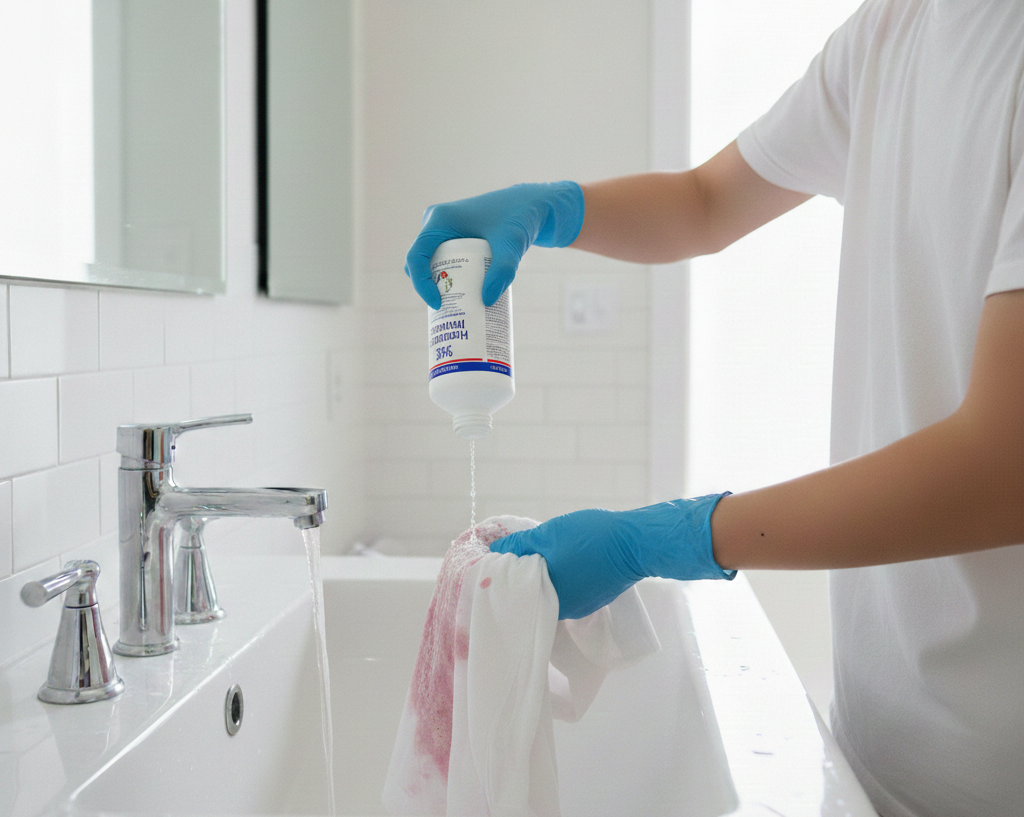
Hydrogen peroxide can be extremely effective on white or colorfast fabrics because it breaks down red pigments at a molecular level.
Always test on a hidden seam first. Apply a small amount directly to the stain. Allow it to bubble for a few minutes, then blot and rinse with cold water.
Hydrogen peroxide should be used after detergent treatment, not as the first step. It is a finishing tool, not a starter.
Why Heat Permanently Sets Pomegranate Stains
Heat causes anthocyanins to oxidize and bind permanently to fabric fibers. This includes hot water, dryers, steamers, and irons.
A stain that looks faint when wet can darken dramatically after drying. This is not a new stain. It’s the original pigment becoming chemically fixed.
Always air-dry stained items until you are confident the stain is completely gone.
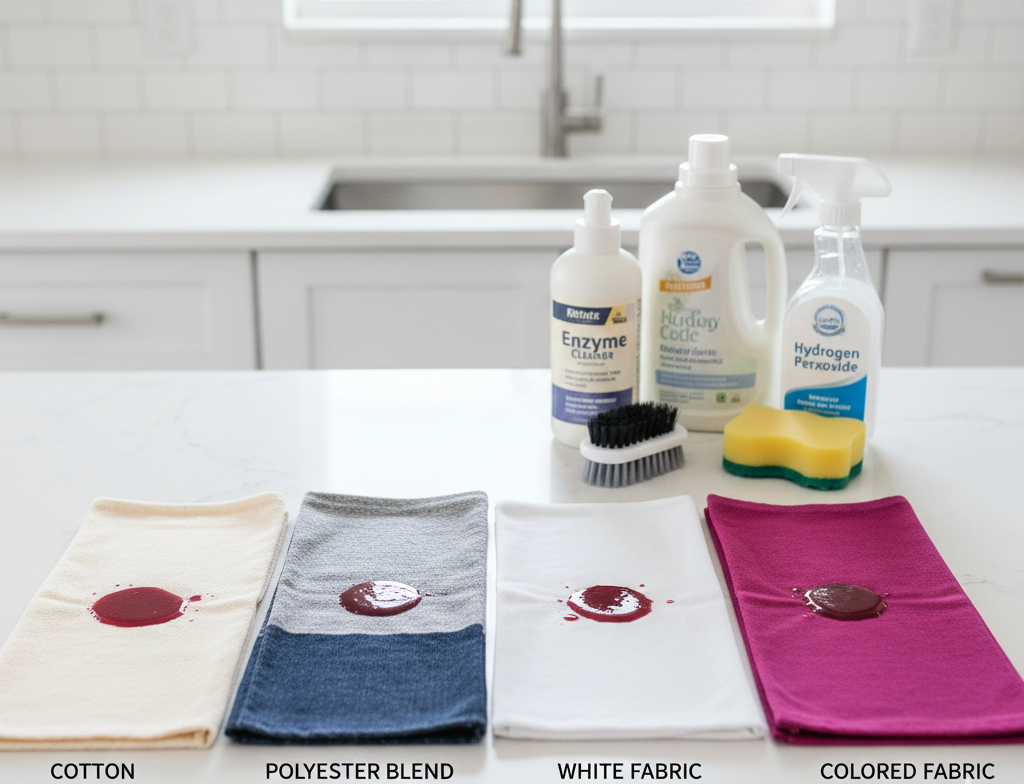
Fabric-Specific Pomegranate
Stain Removal
Cotton
Cotton absorbs pomegranate juice deeply but responds well to detergent, oxygen cleaners, and peroxide. Avoid aggressive scrubbing, which can roughen fibers and trap pigment.
Polyester and Synthetic Blends
Synthetic fibers resist water but can trap pigments near the surface. Enzyme detergents and oxygen cleaners work particularly well here.
Denim
Denim hides stains visually but locks them in structurally. Treat both sides of the fabric and avoid brushing that may fade dye.
White Fabrics
White fabrics allow stronger treatments, including peroxide and oxygen bleach. Never use chlorine bleach on fresh pomegranate stains, as it often causes yellow or brown discoloration.
Colored Fabrics
Stick to cold water, detergent, and oxygen cleaners. Avoid vinegar, lemon juice, or sunlight, which can cause uneven fading.
Pomegranate Stains on Carpets and Upholstery
Blot immediately with cold water. Never rub.
Apply a small amount of liquid detergent diluted in cold water. Blot repeatedly with a clean cloth, working from the outside inward.
For stubborn stains, use an oxygen-based carpet cleaner safe for your fabric type. Always test first.
Avoid soaking carpets, as excess moisture can spread the stain.
Common Pomegranate Stain Removal Mistakes
- Using hot water too early
- Rubbing instead of blotting
- Applying bleach to fresh stains
- Drying to “check” if the stain is gone
- Treating only the front side of fabric
Most failures happen because of impatience, not lack of products.
Natural Remedies: What Works and What Doesn’t
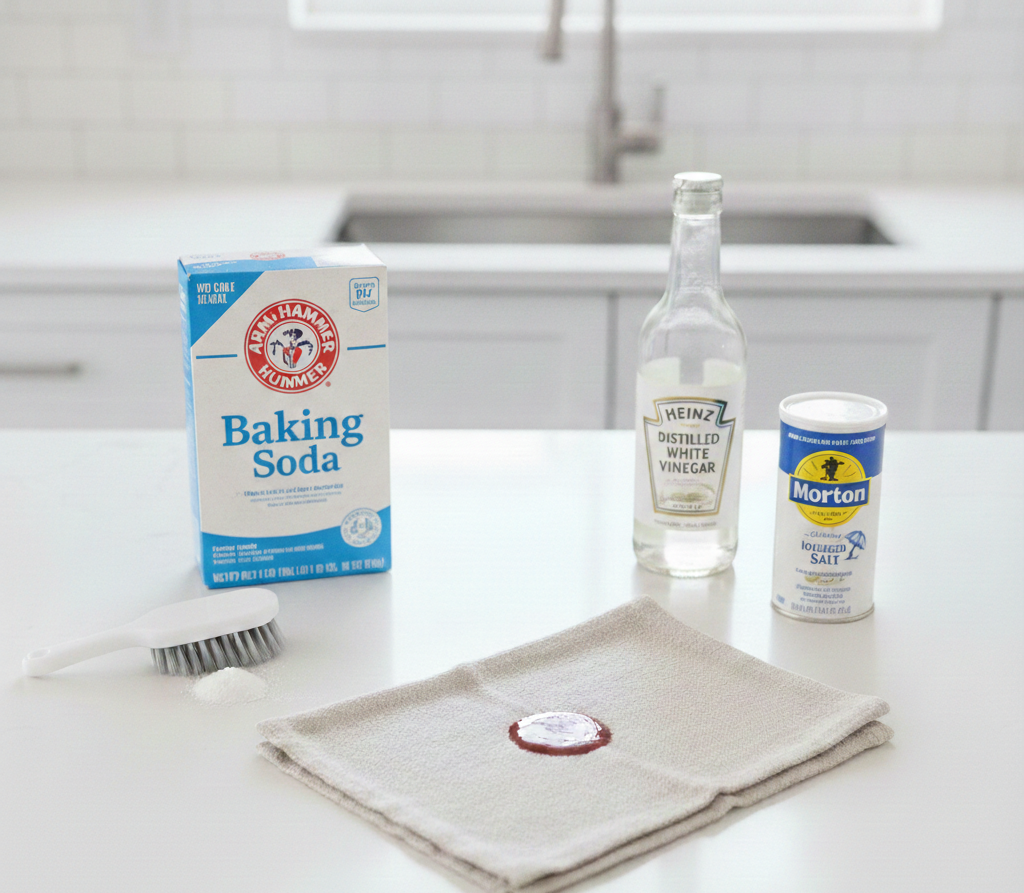
Baking Soda
Helpful for absorbing moisture but weak against deep pigments. Works best as a supporting step, not a solution.
White Vinegar
Can loosen stains slightly but is far less effective than detergent or oxygen cleaners for anthocyanin pigments.
Salt
May absorb liquid initially but does little once pigment binds to fabric.
Evidence-based cleaners consistently outperform home remedies for pomegranate stains.
When Pomegranate Stains Become Permanent
If a garment has been washed and dried multiple times with visible staining, full removal may not be possible.
Repeated oxygen and peroxide treatments can reduce visibility, but results vary. For valuable garments, professional cleaners have solvent-based treatments that may help.
Knowing when to stop prevents fabric damage.
Preventing Pomegranate Stains in the First Place
Wear dark clothing when handling fresh pomegranates or juice. Act immediately on spills. Wash stained items separately. Inspect carefully before drying.
Prevention saves more fabric than any stain remover.
Brand Authority Note
In-depth stain guides like this reflect how Homeaholic approaches everyday household problems. The focus is accuracy, fabric safety, and repeatable results rather than viral shortcuts or unreliable hacks.
Final Takeaway
Pomegranate stains aren’t impossible. They’re just unforgiving.
Cold water, patience, detergent, and oxygen-based cleaners work because they respect the chemistry of anthocyanin pigments. Heat and shortcuts are what turn manageable stains into permanent damage.
Treat pomegranate stains like dye, not dirt, and you’ll save far more fabric than you lose.
FAQ Section
Are pomegranate stains permanent?
No, but they become much harder to remove after drying or heat exposure. Early treatment gives the best results.
Does hot water remove pomegranate stains better?
No. Hot water permanently sets pomegranate pigments. Cold water is always the correct first step.
Can pomegranate stains be removed after drying?
Yes, often. Soaking, detergent, and oxygen cleaners can still lift many dried stains if heat exposure was limited.
Is hydrogen peroxide safe for pomegranate stains?
Yes, on white or colorfast fabrics. Always test first.
Why did my pomegranate stain get darker after washing?
Residual pigments oxidized during drying, revealing a stain that wasn’t fully removed.












0 Comments