
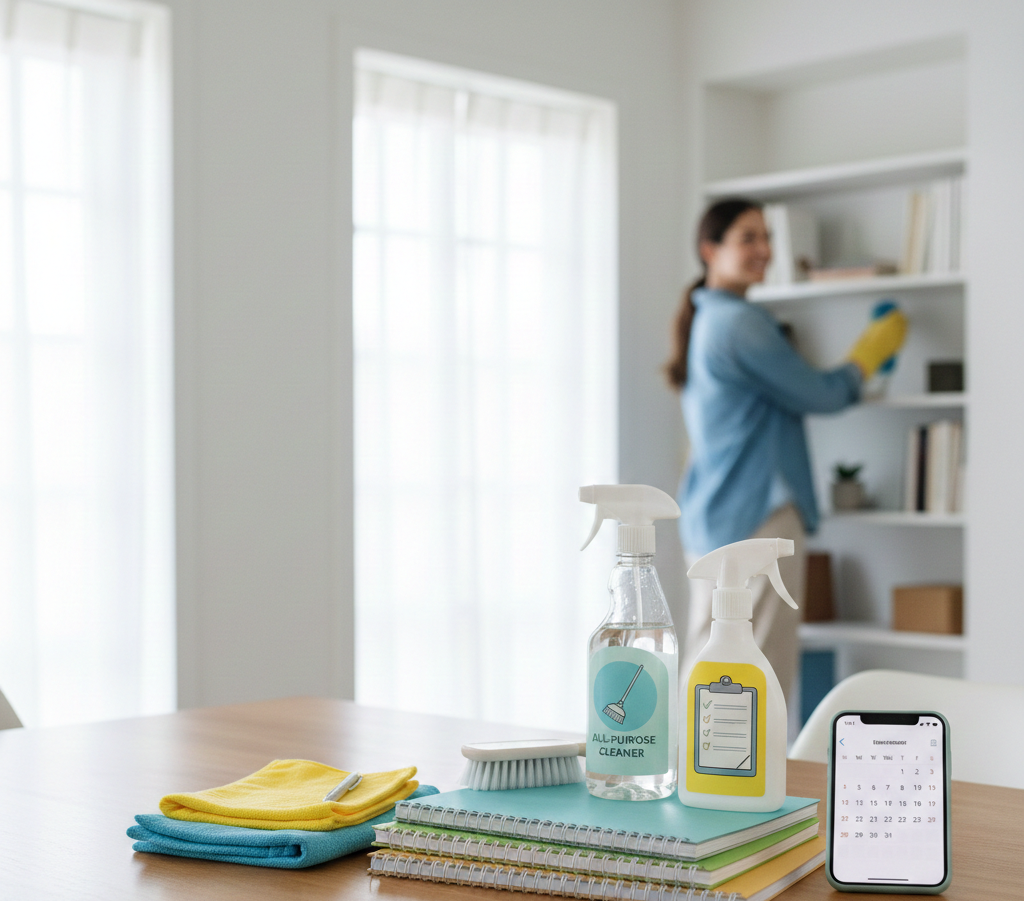
House cleaning is not about perfection. It is about control, hygiene, and mental clarity. When cleaning is approached as a system instead of a long list of random chores, it becomes predictable, faster, and far less exhausting. The most effective house cleaning routines focus on order, frequency, and the right tools rather than constant effort.
This guide explains how to clean a house properly, why professionals follow specific systems, and how you can build a routine that fits real life instead of fighting it.
What Is the Correct Order to Clean a House?
Short answer: Clean top to bottom and dry to wet.
The correct order of house cleaning is what separates efficient routines from endless rework. When surfaces are cleaned in the wrong sequence, dust and dirt fall onto areas that were already cleaned, doubling the effort.
Professional cleaners follow a top-to-bottom, dry-to-wet system. This means starting with high surfaces like shelves, ceiling fans, and light fixtures, then moving down to furniture, countertops, and finally floors. Dry tasks such as dusting and sweeping come before wet tasks like mopping and wiping.
This order works because gravity is predictable. Dust falls. Liquids spread. Cleaning against those forces wastes time.
A full-house cleaning order looks like this:
- Declutter visible surfaces
- Dust high areas and furniture
- Clean mirrors and glass
- Wipe surfaces and countertops
- Clean bathrooms and kitchens
- Vacuum and mop floors last
Following this sequence prevents re-cleaning and keeps results consistent.
A practical way to make the cleaning order stick is to divide the house into two lanes.
Lane 1 is Dry Cleaning
Dusting, vacuuming, sweeping, and removing crumbs. This removes loose particles so you don’t smear dirt into damp surfaces later.
Lane 2 is Wet Cleaning
Wiping, scrubbing, mopping, and disinfecting. Wet cleaning becomes faster because the dust layer is already gone.
A second rule that professionals use is cleaning by “zones,” not rooms. For example, handle all glass in the house at once, then all dusting, then all bathrooms. This prevents constantly changing tools and products, which saves time and reduces mistakes.
If you feel overwhelmed, use a “minimum viable flow” on busy weeks. Do only the tasks that prevent the home from sliding backward:
- Kitchen surfaces and sink
- Toilet and bathroom sink
- Floors in the main pathway
- Trash out
This system preserves hygiene even when time is limited.
How Often Should You Clean Different Areas of Your House?
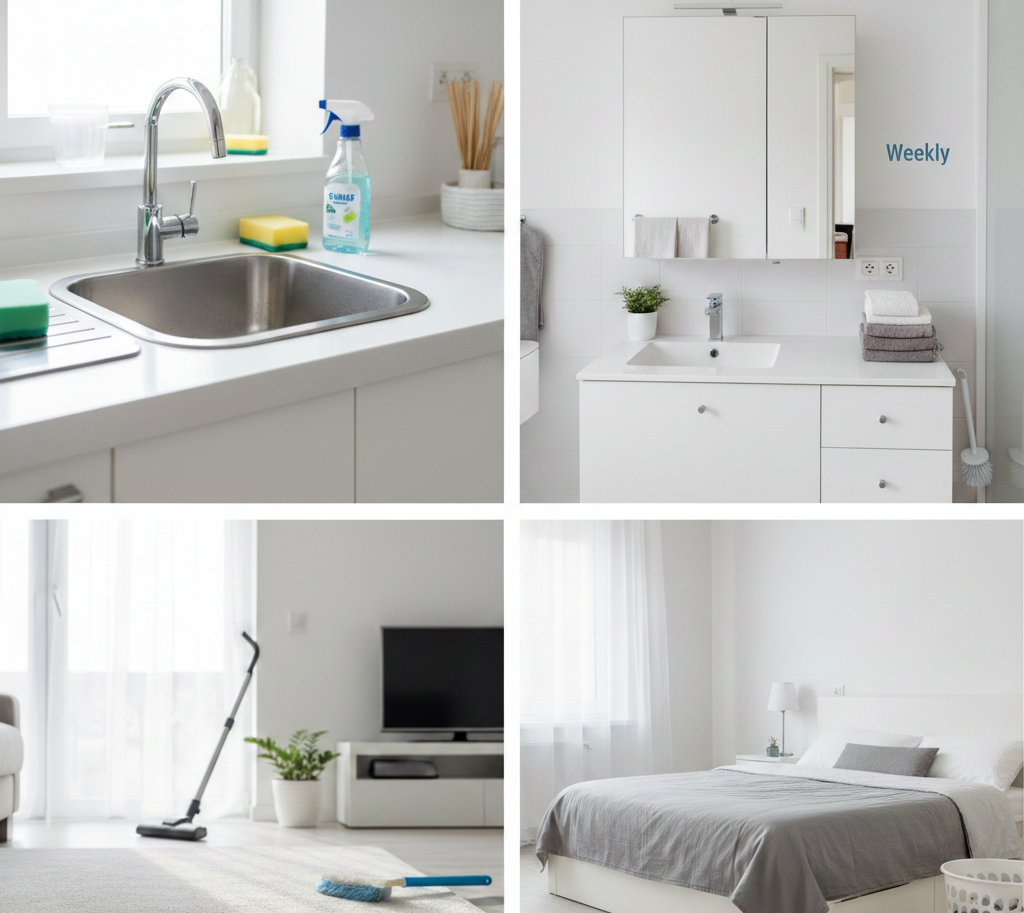
Short answer: Cleaning frequency should match use, not appearance.
Not every part of a house needs the same level of attention. Overcleaning low-use areas wastes energy, while undercleaning high-use zones creates hygiene problems.
High-touch and high-moisture areas need frequent cleaning. These include kitchens, bathrooms, entryways, and floors. Bedrooms and storage areas can be cleaned less often without negative effects.
A realistic frequency breakdown looks like this:
- Daily: Kitchen counters, sink, high-touch surfaces
- Weekly: Bathrooms, floors, trash areas
- Bi-weekly: Dusting furniture, mirrors, baseboards
- Monthly: Windows, appliances, vents
- Seasonal: Deep cleaning, decluttering, storage areas
Households with pets, children, or allergies often need higher frequency in floors and fabrics. The goal is prevention, not reaction.
Frequency should also reflect risk level, not just usage.
High-risk zones are places where moisture, food residue, or body contact occurs. They need routine attention because bacteria and odors build up faster:
- Kitchen sink and drain area
- Bathroom toilet zones
- Trash cans
- Pet feeding areas
Medium-risk zones include:
- Floors
- Couch arms
- Remote controls
- Entryways
Low-risk zones include:
- Guest rooms
- Decorative shelves
- Storage closets
If you want a simple approach, follow the 3-layer routine:
- Daily reset (5–10 minutes): clear counters, wipe sink, quick trash check
- Weekly clean (60–180 minutes): bathrooms, floors, dust, linens
- Monthly maintenance (30–90 minutes): appliances, baseboards, vents, deep clutter zones
This structure is easier to maintain than trying to “clean everything” every week.
What Is the Difference Between Regular Cleaning and Deep Cleaning?
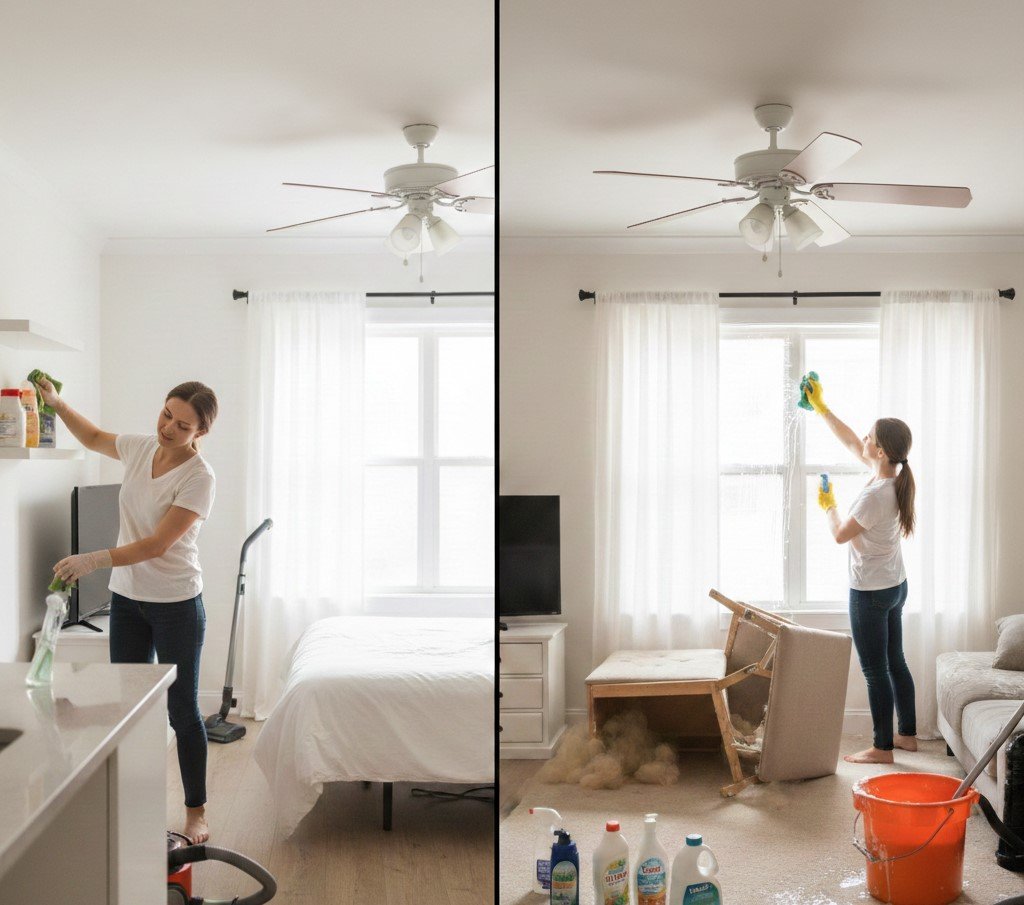
Short answer: Regular cleaning maintains, deep cleaning resets.
Regular cleaning focuses on visible dirt and daily hygiene. It keeps surfaces usable and the home comfortable. Deep cleaning targets buildup that regular routines miss, such as grime behind appliances, soap residue, and dust in hidden areas.
Regular cleaning includes:
- Wiping counters
- Vacuuming floors
- Cleaning toilets and sinks
- Light dusting
Deep cleaning includes:
- Scrubbing grout and tile
- Cleaning inside appliances
- Washing baseboards and doors
- Removing buildup from fixtures
- Deep fabric and upholstery cleaning
Deep cleaning is not meant to be constant. Most homes need it two to four times a year. Without regular cleaning, deep cleaning becomes harder and more frequent.
Understanding this distinction prevents burnout and unrealistic expectations.
A useful way to define deep cleaning is: deep cleaning targets buildup, edges, and hidden contact points.
Regular cleaning keeps things usable. Deep cleaning prevents long-term damage and recurring issues like:
- Bathroom soap scum that becomes permanent
- Kitchen grease film that attracts dust
- Mold growth in corners
- Odors trapped in fabric and drains
Deep cleaning also includes inspection, not just scrubbing. While cleaning, you spot problems early:
- Slow drains
- Loose caulk
- Water leaks under sinks
- Swelling cabinet panels
- Cracked grout
That inspection layer is why deep cleaning saves money long term. You catch small problems before they become repair jobs.
Which House Cleaning Tasks Matter Most for Health and Hygiene?
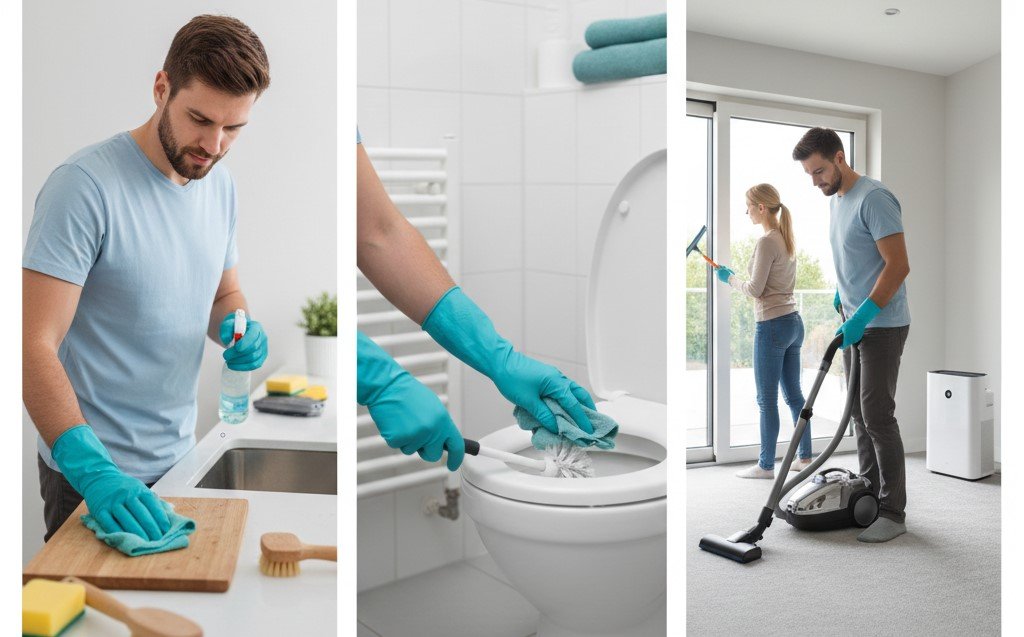
Short answer: High-touch surfaces and moisture zones matter most.
Not all cleaning tasks impact health equally. Some tasks improve appearance, while others reduce bacteria, allergens, and mold. Health-focused cleaning prioritizes areas where germs and moisture accumulate.
Key health-critical zones include:
- Kitchen sinks and cutting surfaces
- Bathroom toilets, showers, and drains
- Door handles, switches, and remotes
- Floors in entryways and kitchens
Dust buildup affects indoor air quality, especially for people with allergies or asthma. Fabric surfaces like carpets, sofas, and curtains trap allergens and should be cleaned regularly.
Disinfection should be targeted, not constant. Overuse of disinfectants creates unnecessary chemical exposure without added benefit in low-risk areas.
Health-first cleaning improves when you separate cleaning vs disinfecting.
Cleaning removes dirt, grease, and debris.
Disinfecting kills germs on surfaces after they’re cleaned.
Disinfecting a dirty surface is low value because grime blocks the disinfectant from doing its job. That’s why the correct sequence is:
- Remove visible dirt and residue
- Apply disinfectant to high-touch surfaces
- Allow the proper contact time
- Air out the room
Focus disinfection on:
- Door handles
- Light switches
- Bathroom faucet handles
- Toilet flush handles
- Phone screens and remotes
For allergy-sensitive homes, the priorities shift. Your biggest wins come from:
- Vacuuming with proper filtration
- Washing bedding consistently
- Cleaning soft furniture zones
- Managing dust traps like curtains and rugs
This is how cleaning turns into a health-support routine, not cosmetic work.
What Tools and Supplies Make House Cleaning Faster and Easier?
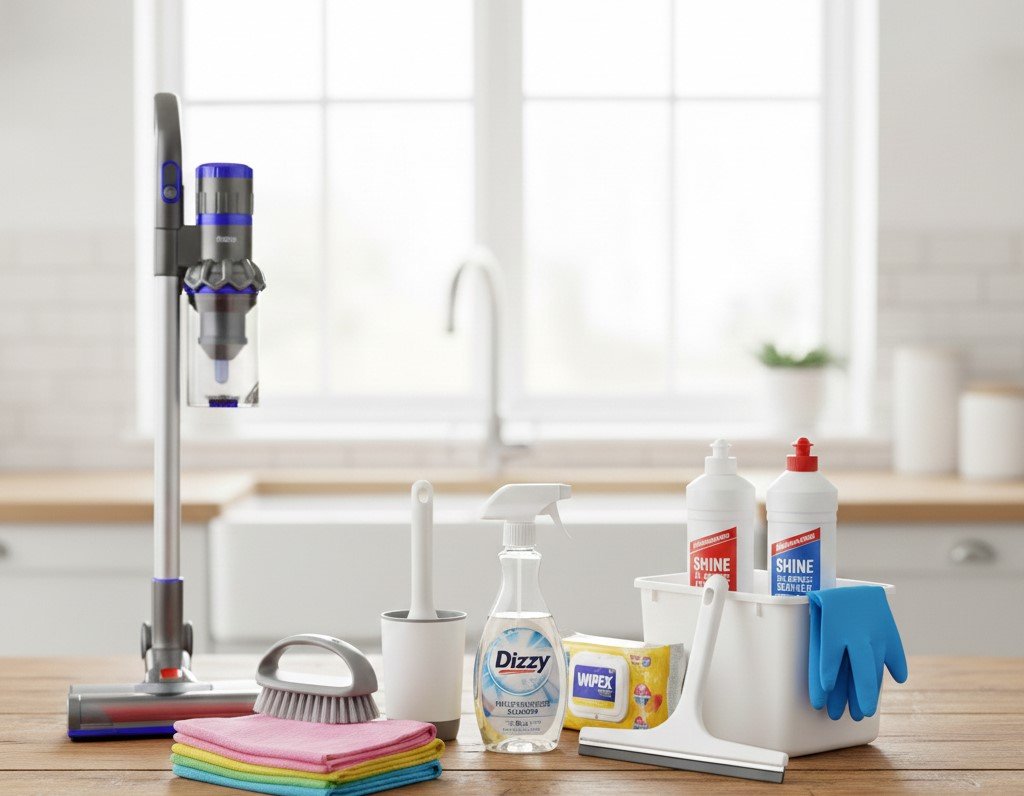
Short answer: The right tools reduce effort more than extra time.
Cleaning efficiency depends heavily on tools. Poor tools turn simple tasks into exhausting work. Good tools reduce physical strain and improve results.
Essential tools for most homes include:
- A quality vacuum with attachments
- Microfiber cloths for dust and wiping
- A mop suitable for your floor type
- Scrub brushes in multiple sizes
- Spray bottles for controlled product use
Microfiber is particularly effective because it traps dust instead of spreading it. Using one cloth per task prevents cross-contamination.
Avoid buying dozens of specialized products. A small, well-chosen set of tools outperforms cluttered supplies.
The fastest setups are built around tool standardization.
Instead of carrying random sprays, build a simple “cleaning kit”:
- Microfiber cloths (at least 8–12 so you can rotate)
- One all-purpose cleaner
- One degreaser for kitchen buildup
- One bathroom cleaner
- One glass cleaner
- One disinfectant used only when needed
- Scrub brush and an old toothbrush for edges
- Gloves
The key is not mixing products. Mixing chemicals is a common safety risk, especially bleach with ammonia-based products. Keep it simple and label spray bottles.
Also, pick the mop that matches your floors. A bad mop wastes more time than you think because it pushes dirty water around. For many homes, a flat microfiber mop is the best balance of speed and control.
Are Natural and Eco-Friendly Cleaners Effective?
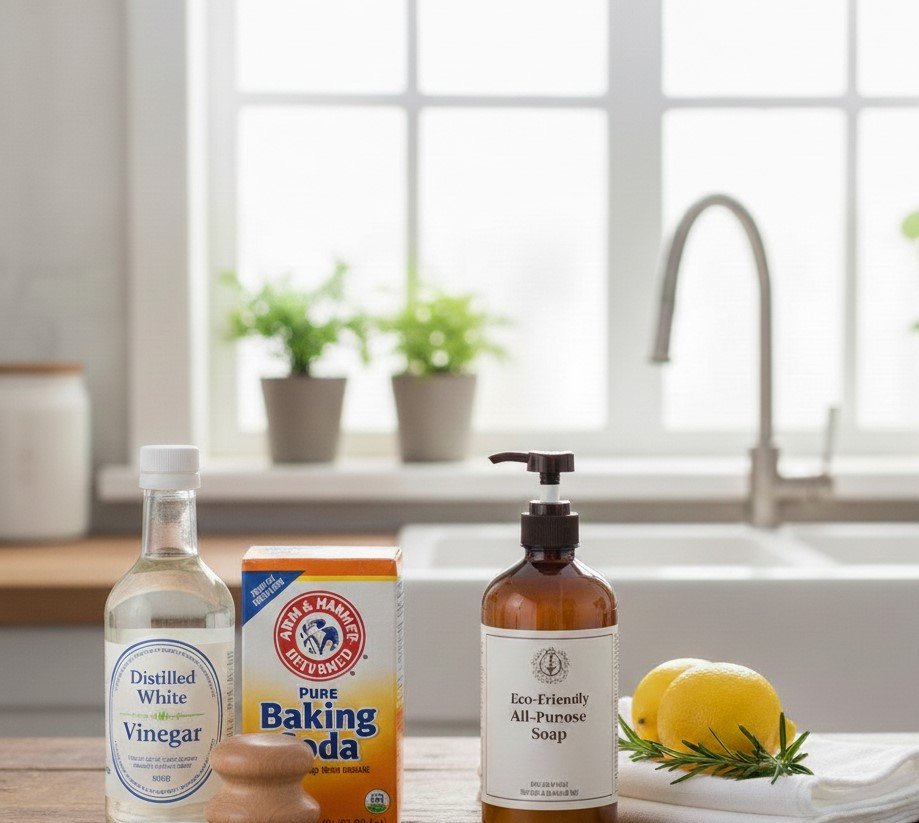
Short answer: Yes, for most everyday cleaning.
Natural cleaners such as vinegar, baking soda, and mild soap are effective for removing dirt, grease, and odors. They are safer for frequent use and reduce chemical buildup in indoor air.
However, natural cleaners are not disinfectants. They clean but do not kill all bacteria. In kitchens and bathrooms, occasional use of disinfectants is appropriate, especially after illness.
Eco-friendly commercial cleaners bridge the gap by offering effective cleaning with lower toxicity. The best approach is mixed use: natural products for daily cleaning and targeted disinfectants when necessary.
Safety improves when products are used intentionally rather than excessively.
How Long Should House Cleaning Take?
Short answer: A full weekly clean should take 1.5 to 3 hours.
Time expectations are often unrealistic. Social media cleaning videos show extreme results without showing the hours behind them. In reality, cleaning time depends on house size, clutter level, and routine consistency.
A well-maintained home takes less time to clean than a neglected one. Consistency reduces buildup, which reduces effort.
Approximate time ranges:
- Small apartment: 60–90 minutes
- Medium house: 2–3 hours
- Large home: 3–4 hours
Breaking cleaning into short daily sessions is often more sustainable than marathon cleaning days.
Most people underestimate how much time is lost to setup and switching. If you reduce switching between rooms, tools, and sprays, the total time drops fast.
Use time blocks:
- 15-minute reset: surfaces, trash, quick wipe
- 30-minute zone clean: bathroom or kitchen
- 60-minute weekly sweep: floors + dust + bathroom
A realistic weekly plan for a busy household could look like:
- Day 1: Bathroom (30–40 minutes)
- Day 2: Floors (30–45 minutes)
- Day 3: Kitchen reset and appliances (30 minutes)
- Day 4: Dust and bedding (30 minutes)
That’s less overwhelming than doing everything in one long session.
Mini Case: How a System-Based Cleaning Routine Cut Weekly Cleaning Time by 45%
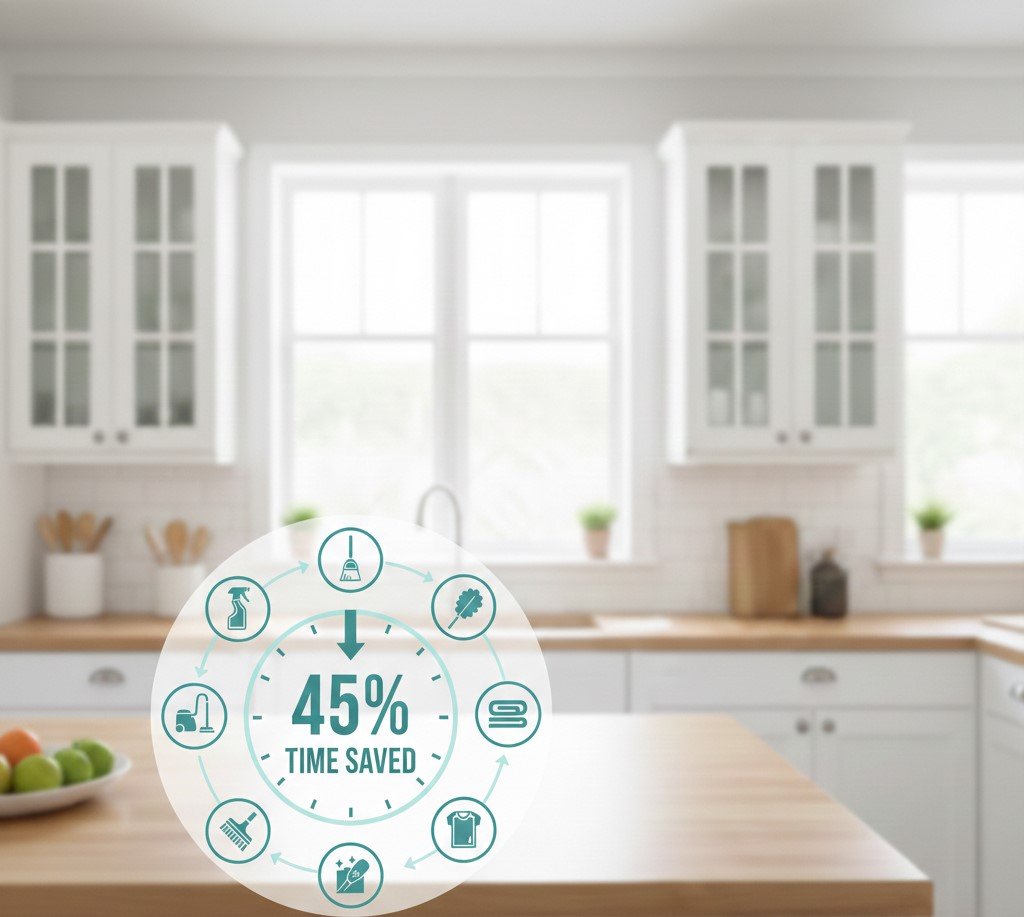
A four-person household in a medium-sized home was spending nearly 4 hours every weekend on house cleaning. Tasks were done randomly, often starting with floors and ending with surfaces, which led to repeated work and frustration.
After switching to a top-to-bottom, zone-based cleaning system, the routine changed:
- Daily 10-minute resets replaced long weekday neglect
- Bathrooms and kitchens were cleaned in focused 30-minute sessions
- Floors were cleaned last, once per week instead of multiple times
Within three weeks, total weekly cleaning time dropped to just over 2 hours, without any visible decline in cleanliness. More importantly, cleaning felt predictable instead of overwhelming, making it easier to stay consistent.
This example shows that cleaning systems reduce effort more than speed, and that structure matters more than motivation.
What Are the Most Common House Cleaning Mistakes to Avoid?
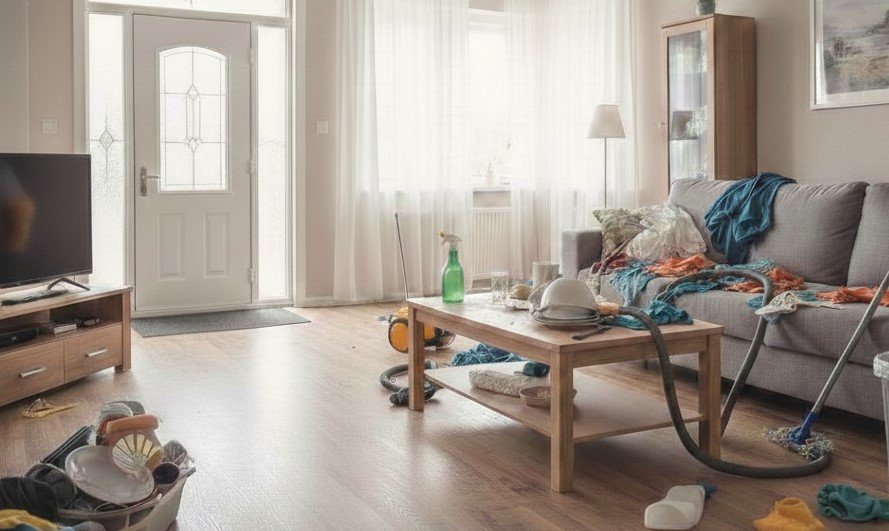
Short answer: Cleaning without a system.
The most common mistake is cleaning randomly. This leads to repeated work and frustration. Another mistake is using the wrong product on the wrong surface, which causes damage over time.
Other frequent errors include:
- Cleaning floors before dusting
- Mixing chemicals unsafely
- Using dirty cloths across rooms
- Overcleaning low-impact areas
- Ignoring ventilation
Cleaning should simplify life, not dominate it. Systems prevent mistakes before they happen.
One major mistake is using too much product. More soap does not mean more clean. It often leaves residue, which attracts dust and makes surfaces feel dirty again sooner.
Another mistake is treating every surface the same. Different materials react differently:
- Marble and stone can be damaged by acidic cleaners
- Wood hates excess water
- Stainless steel streaks when wiped incorrectly
A third mistake is skipping “drying.” Bathrooms in particular stay dirty longer when they stay damp. A quick squeegee or towel dry reduces water spots and slows mold growth.
Finally, many people clean while stressed and rush the wrong tasks. If you only have limited time, prioritize the tasks that prevent hygiene decline:
- Kitchen surfaces and sink
- Toilet zone
- Floors in high traffic areas
- Trash and odor sources
This keeps your house stable even on hectic weeks.
When Is It Worth Hiring Professional House Cleaning Services?
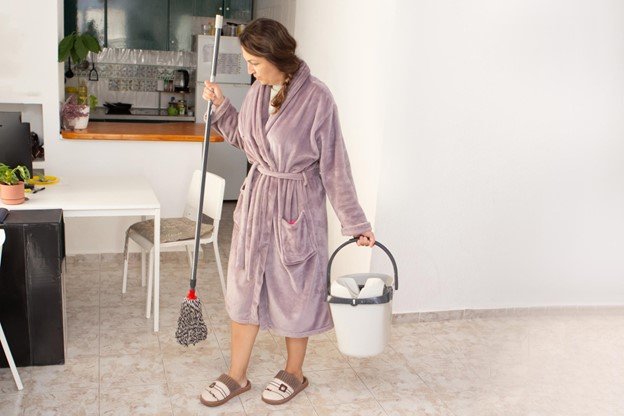
Short answer: When time, health, or consistency becomes a problem.
Professional cleaning is not a failure. It is a tool. Many households use professional services for deep cleaning, seasonal resets, or during busy life stages.
Professional cleaning is worth considering when:
- Time is limited
- Physical ability is reduced
- Allergies require deeper cleaning
- Moving in or out
- Routine cleaning is falling behind
The goal is support, not replacement of personal responsibility. Even with professionals, maintaining daily habits keeps homes comfortable.
Hiring professionals makes the most sense when you need a reset, not minor touch-ups. The strongest use cases are:
- Move-in and move-out cleaning
- Post-renovation dust control
- Allergy seasons when deeper cleaning helps
- A quarterly deep clean to protect surfaces
To avoid disappointment, define the scope. Many people book cleaning without agreeing on priorities like:
- Inside appliances
- Baseboards
- Windows
- Shower grout
- Cabinet interiors
Even if you are hiring help, the best outcomes happen when the home is lightly decluttered first. It allows cleaners to spend time cleaning instead of moving objects.
DIY House Cleaning vs Professional Cleaning Services
| Factor | DIY House Cleaning | Professional Cleaning Services |
| Time Investment | 1.5–4 hours per week, depending on house size and routine consistency | 2–5 hours per visit, but your personal time is near zero |
| Consistency | Varies with schedule, energy, and motivation | High consistency due to fixed schedules |
| Cleaning Depth | Good for daily and weekly maintenance | Strong for deep cleaning, buildup removal, and resets |
| Cost | Low direct cost (supplies only) | Higher recurring cost (weekly, bi-weekly, or monthly fees) |
| Health & Hygiene Control | High control over products used | Depends on service policies and product choices |
| Equipment Quality | Limited to household tools | Access to commercial-grade tools and methods |
| Surface Protection | Depends on user knowledge | Generally safer when handled by trained cleaners |
| Flexibility | Very flexible, can clean anytime | Fixed appointment windows |
| Best Use Case | Routine upkeep, budget-conscious households | Deep cleaning, busy schedules, health limitations |
| Stress Reduction | Can feel burdensome over time | Significantly reduces mental and physical load |
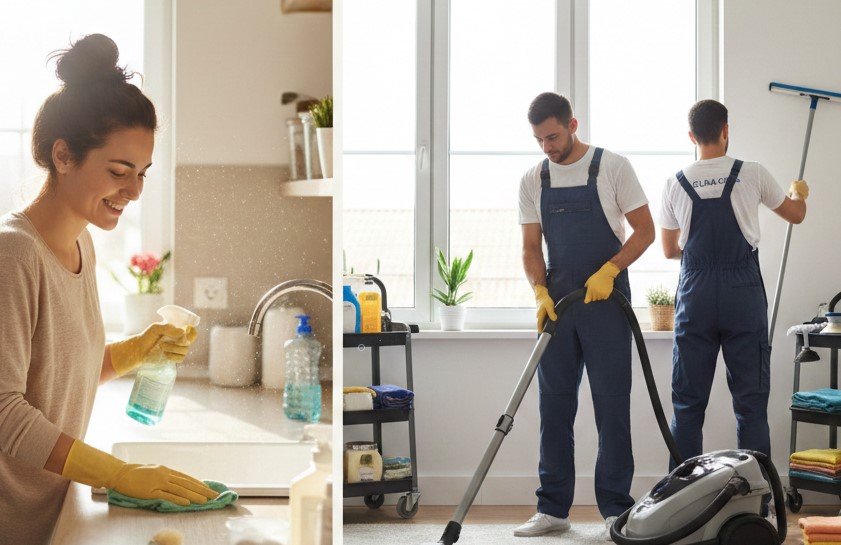
How to Choose Between DIY and
Professional Cleaning
DIY house cleaning works best when:
- You follow a system-based routine
- Time is available weekly
- You want full control over products
- The home is already maintained
Professional cleaning is usually worth it when:
- Cleaning has fallen behind
- Deep cleaning is overdue
- Allergies or health concerns exist
- Time or physical energy is limited
- You need a reset after renovation or moving
Many households find the best balance by combining both:
- DIY for weekly maintenance
- Professional cleaning once per quarter for deep resets
This hybrid approach maximizes cleanliness while controlling cost and effort.
House Cleaning Tasks by Frequency and Health Impact
| Task | Frequency | Health Impact |
| Kitchen counters | Daily | High |
| Bathroom cleaning | Weekly | High |
| Floors | Weekly | Medium |
| Dusting | Bi-weekly | Medium |
| Appliances | Monthly | Medium |
| Upholstery | Quarterly | Medium |
| Windows | Seasonal | Low |
This table helps prioritize effort where it matters most.
Step-by-Step House Cleaning Flow (Top-to-Bottom System)
- Declutter visible items
- Dust ceilings, shelves, and furniture
- Clean glass and mirrors
- Wipe surfaces and fixtures
- Clean bathrooms and kitchen
- Vacuum and mop floors
This flow minimizes wasted effort and improves results.
Weekly House Cleaning Checklist (Realistic Version)
- Clear surfaces
- Wipe kitchen counters and sink
- Clean bathroom surfaces
- Vacuum main areas
- Mop kitchen and bathroom floors
- Take out trash
This checklist is achievable and sustainable.
How Do You Build a House Cleaning Routine You Can Actually Stick To?

The best routine is the one you can repeat without mental resistance. The secret is to reduce decision-making.
Start by defining a “daily reset” that takes under 10 minutes:
- Clear kitchen counters
- Wipe sink area
- Quick trash check
- Put items back in their zones
Then build a weekly routine around one idea: one focus per day, not “everything Saturday.” For example:
- Monday: bathroom surfaces
- Tuesday: floors
- Wednesday: dust and glass
- Thursday: kitchen deeper wipe
- Friday: laundry and bedding
This spreads the workload and prevents burnout. Cleaning becomes maintenance, not punishment.
What Is the Best Room-by-Room House Cleaning Method?
Room-by-room works best when you follow the same internal sequence:
- Declutter
- Dust high to low
- Wipe surfaces
- Clean touch points
- Floors last
Kitchen: focus on grease and food contact zones
- Degrease stove area
- Clean sink and drain edge
- Wipe counters and handles
- Finish with floor sweep and mop
Bathroom: focus on moisture and buildup
- Spray shower and toilet first, let it sit
- Wipe mirror and surfaces
- Scrub toilet and shower
- Rinse and dry high-moisture zones
This method works because it uses dwell time. Sprays work while you do other tasks.
How Do You Clean Faster Without Cutting Corners?
Speed comes from removing friction:
- Keep supplies in a portable caddy
- Use fewer products consistently
- Do one category at a time (all glass, then all dust)
- Use timers to prevent over-cleaning
Try a simple rule: clean until the room feels clean, not until it is perfect. Most people waste time chasing tiny details while ignoring bigger wins like floors, sinks, and trash.
A strong fast-clean strategy is the “visibility sweep”:
- Clear the surfaces people see first
- Fix odors and trash second
- Floors last
This produces the biggest perceived improvement quickly.
How Do You Clean Safely Around Kids, Pets, and Sensitive Skin?
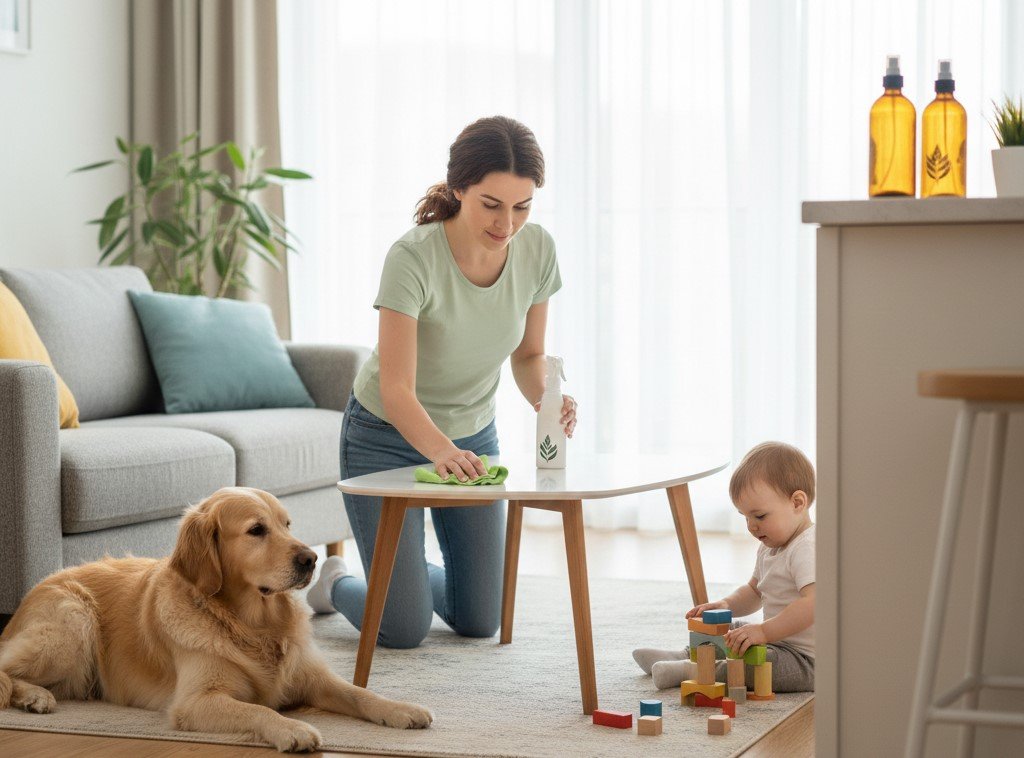
If your home includes kids or pets, cleaning should avoid unnecessary chemical exposure.
Safer practices include:
- Ventilate rooms when using sprays
- Avoid mixing cleaners
- Store products locked away
- Use fragrance-free products if skin sensitivity exists
- Rinse surfaces that contact food, hands, or pet areas
For pet homes, prioritize:
- Regular vacuuming in fur zones
- Washing pet bedding
- Cleaning feeding areas
- Odor control at trash bins and litter zones
This keeps hygiene high while keeping the home safer.
What Are the Best House Cleaning Checklists for Daily, Weekly, and Monthly Cleaning?
Checklists reduce decision fatigue.
Daily (5–10 minutes)
- Counter reset
- Sink wipe
- Trash check
- Quick sweep of high-traffic crumbs
Weekly (60–180 minutes total)
- Bathroom clean
- Floors vacuum and mop
- Dust main surfaces
- Bedding wash
Monthly (30–90 minutes)
- Appliance wipe down
- Baseboards in main zones
- Vent and fan dusting
- Cabinet handle and door wipe
These lists are designed to be realistic. If a checklist is too long, it gets abandoned.
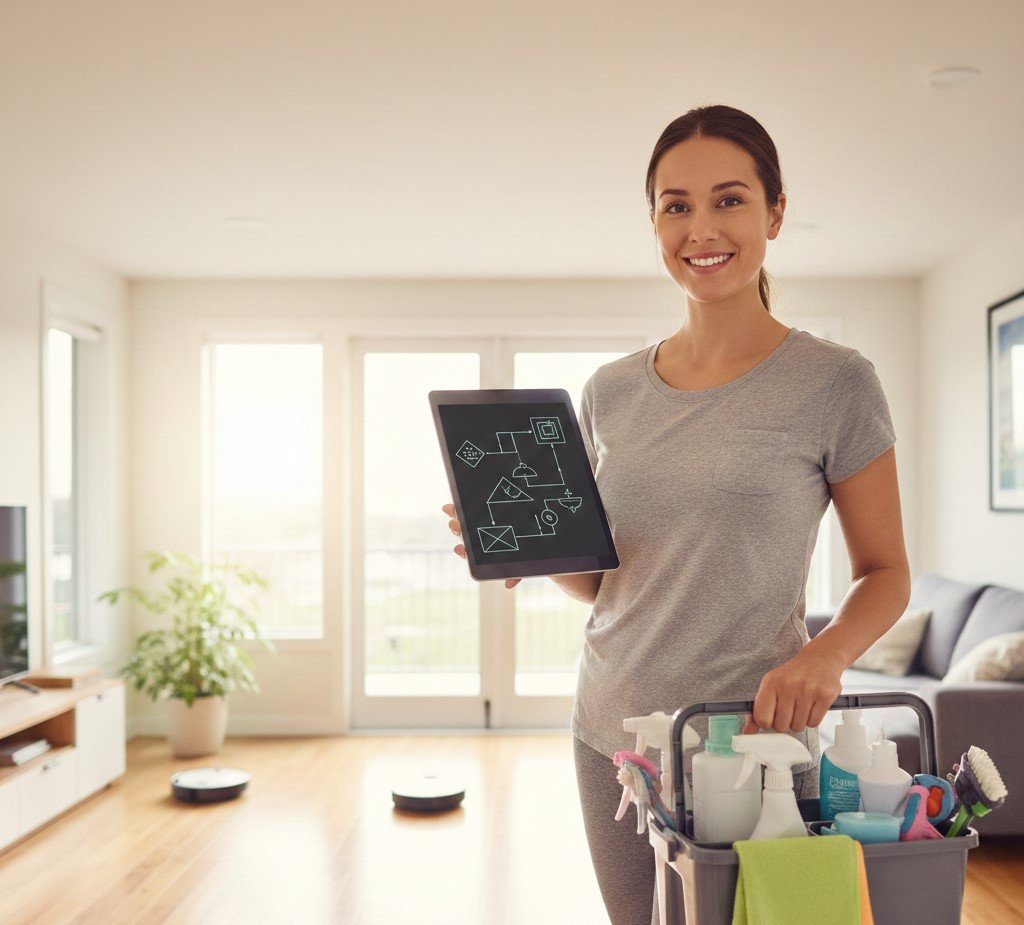
Why Homeaholic Treats House Cleaning as Home Maintenance, Not Chores but as a System
Home cleaning works best when it is tied to comfort and protection. The goal is not to “look perfect.” It is to protect surfaces, improve air quality, prevent odors, and keep daily life smooth.
At Homeaholic, we treat cleaning as a system with:
- Clear frequency rules
- Correct cleaning order
- Minimal product confusion
- High-impact hygiene priorities
- Sustainable routines that reduce burnout
When cleaning is structured like maintenance, it stops feeling endless.
At Homeaholic, house cleaning is approached as part of home management, not punishment. Systems reduce decision fatigue and help people maintain clean homes without stress.
When cleaning follows logic instead of emotion, it becomes predictable. Predictability is what turns cleaning into a habit instead of a burden.
Frequently Asked Questions About House Cleaning
How often should a house be cleaned?
Most homes benefit from weekly cleaning with daily maintenance.
What is the correct order to clean a house?
Top to bottom, dry to wet.
Is deep cleaning necessary?
Yes, a few times a year to remove buildup.
Are natural cleaners effective?
Yes, for daily cleaning, with disinfectants used selectively.
How long should cleaning take?
Between 1.5 and 3 hours weekly for most homes.
Is professional cleaning worth it?
Yes, when time or health limits consistency.
