
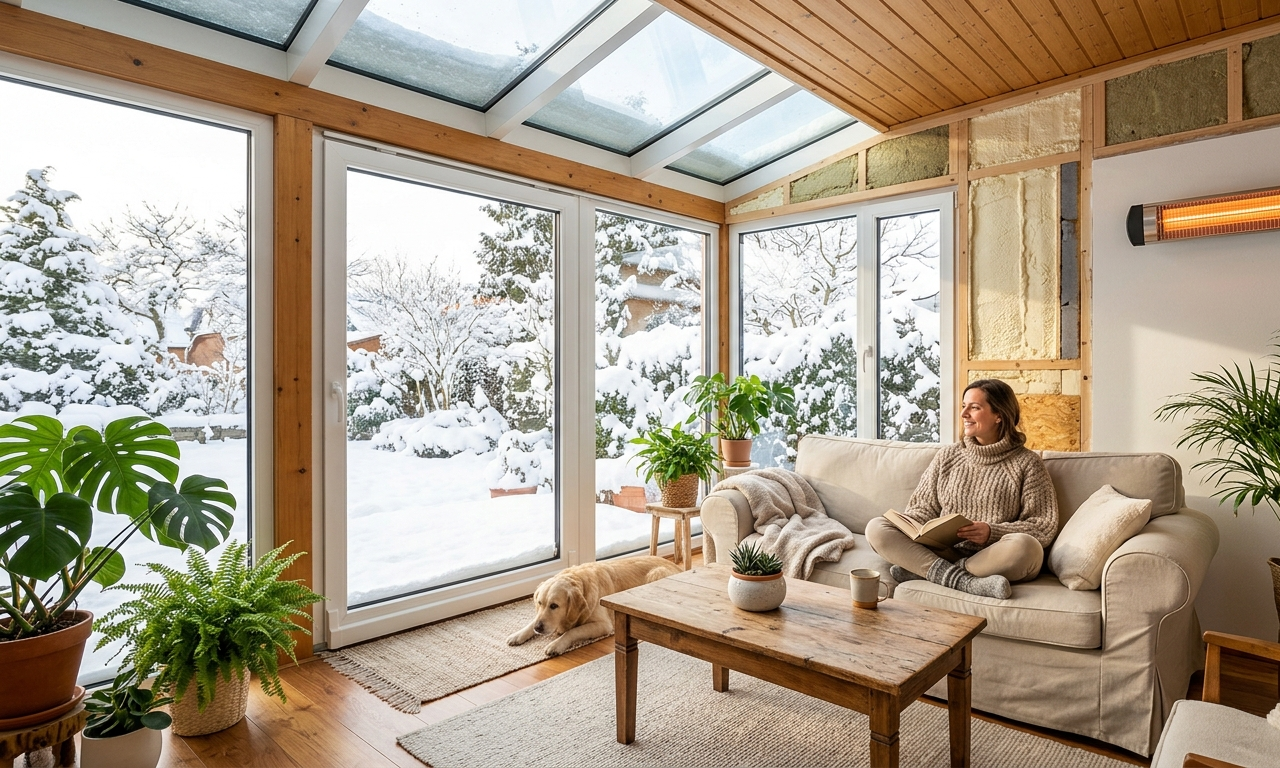
Sunroom insulation is essential for turning a seasonal glass room into a comfortable year-round living space. Closed-cell spray foam, rigid foam board, insulated roof panels, and high-performance glazing create the best thermal envelope, while correct R-values, vapor barriers, and air sealing determine long-term energy efficiency. For a broader understanding of how insulation fits into the full structure, refer to our complete sunroom guide.
What Is the Best Insulation for a Sunroom?
The best insulation for a sunroom depends on climate, structural design, glazing ratio, framing type, and whether the room is intended for three-season or four-season use. Sunroom insulation plays a critical role in overall sunroom performance.
In most modern four-season sunrooms, closed-cell spray foam is considered the highest-performing option because it combines air sealing and insulation in one application. It expands into cavities, blocks air leakage, and creates a continuous insulation layer that minimizes thermal bridging.
Rigid foam board is another highly effective solution, especially in retrofit wall systems and roof cavities where moisture resistance is important. Polyisocyanurate rigid board is particularly valued because it offers high R-value per inch.
Fiberglass batts remain economical, but they only perform well when carefully installed with sealed cavities. In poorly fitted applications, they lose efficiency quickly.
Mineral wool is preferred in cold and humid climates where fire resistance and moisture stability matter.
Best choice by use case:
- Premium four-season sunrooms: Closed-cell spray foam
- Budget retrofits: Rigid foam board
- Framed wall cavities: Fiberglass batts
- Cold humid climates: Mineral wool
If you are planning your entire enclosure strategy, insulation should always be coordinated with the broader thermal envelope outlined in the sunroom design and structure guide.
Homeaholic 4-Layer Sunroom Insulation Selection Model
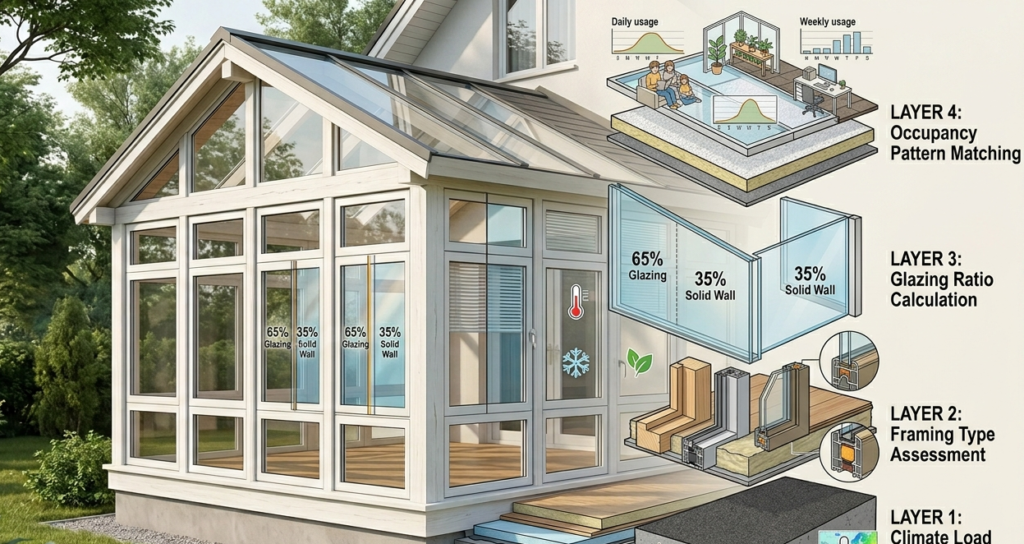
To choose the right sunroom insulation, Homeaholic recommends evaluating every project through a four-layer thermal decision framework.
This model helps prevent common insulation mismatches that lead to poor comfort and wasted investment.
Layer 1: Climate Load Analysis
Start by identifying whether your sunroom is in:
- Cold-dominant climate
- Heat-dominant climate
- Mixed seasonal climate
- Humid coastal climate
Climate determines your required R-value targets.
Layer 2: Framing Type Assessment
Different frame materials behave differently thermally:
- Aluminum transfers heat rapidly
- Vinyl reduces conduction
- Wood provides natural insulation support
Frame type affects both material choice and thermal bridge correction needs.
Layer 3: Glazing Ratio Calculation
A sunroom with 70% glass surface area loses heat very differently than one with insulated knee walls.
Higher glazing ratio requires stronger roof and perimeter insulation compensation.
Layer 4: Occupancy Pattern Matching
Ask:
Will the sunroom be used:
- Daily year-round?
- Seasonally?
- Occasionally on weekends?
Rooms used daily justify premium insulation investment.
Why This Framework Matters
Most insulation mistakes happen because homeowners choose materials without balancing all four layers together.
This framework creates better long-term thermal performance than material-first selection alone.
Which Areas of a Sunroom Need Insulation Most?
Not every part of a sunroom loses heat equally. Some zones create much greater thermal loss than others.
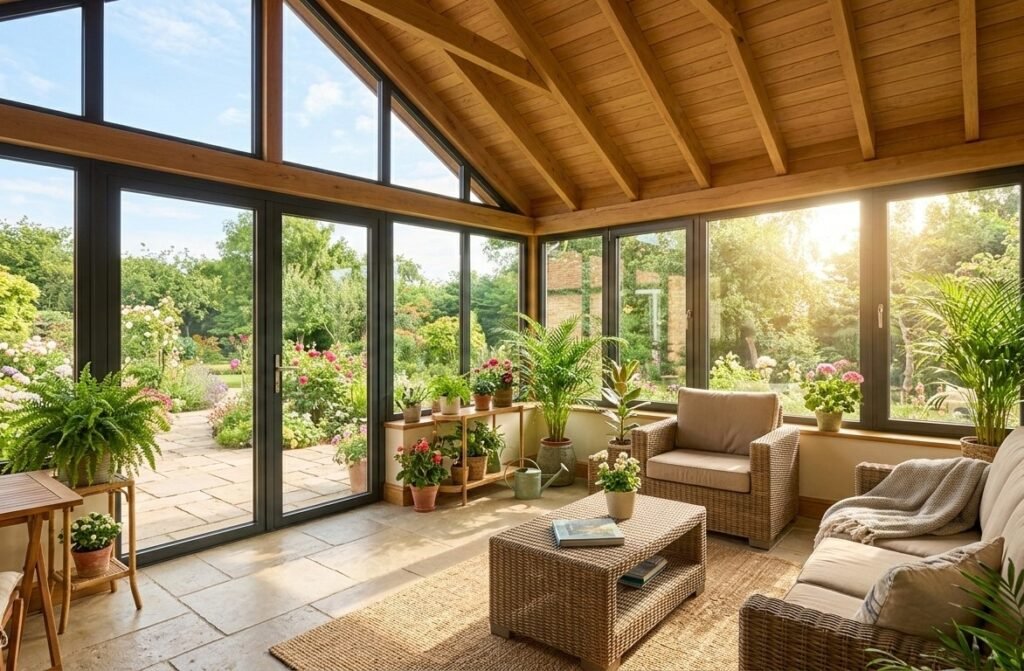
Highest priority zones:
- Roof panels
- Glass perimeter framing
- Exterior wall cavities
- Floor edges and slab perimeter
- Door thresholds
Roof insulation is critical
The roof is the largest heat transfer surface in most sunrooms. In winter, warm air rises and escapes upward. In summer, solar radiation strikes roof surfaces directly, making underinsulated roofs the biggest overheating source.
Window frame edges are hidden weak points
Even with insulated glass, aluminum framing without thermal breaks creates major conductive heat loss.
Floors are underestimated
Cold floors reduce comfort dramatically, especially in winter climates. Even if room air feels warm, uninsulated floors create radiant cold discomfort.
What R-Value Does a Sunroom Need?
R-value measures resistance to heat flow. Higher R-values provide stronger insulation performance.
Recommended R-values by climate zone:
| Climate Zone | Roof R-Value | Wall R-Value | Floor R-Value |
| Warm climates | R-20 | R-13 | R-10 |
| Moderate climates | R-30 | R-15 | R-15 |
| Cold climates | R-38 to R-49 | R-21 | R-20 |
Why R-values matter in sunrooms
Unlike standard rooms, sunrooms contain more glazing and solar exposure. That means insulation must compensate for higher thermal stress.
Low R-values create:
- Winter heat loss
- Summer overheating
- Condensation buildup
- Higher HVAC demand
Matching R-values to climate is essential for stable performance.
Spray Foam vs Fiberglass vs Rigid Foam Board
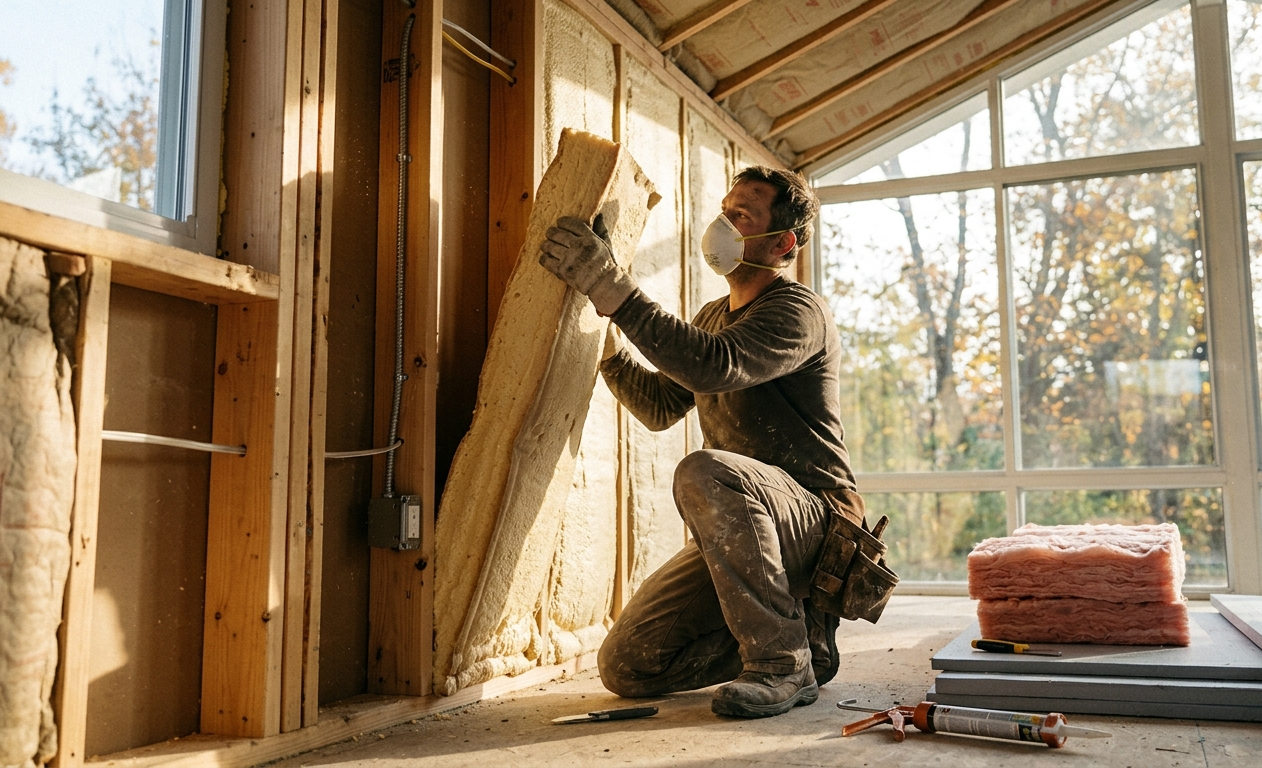
Choosing insulation material affects comfort, lifespan, moisture behavior, and long-term maintenance.
| Material | Best Use | Pros | Limitations |
| Closed-cell spray foam | Roof + walls | High R-value, air seal | High cost |
| Fiberglass batts | Stud cavities | Affordable | Air leakage risk |
| Rigid foam board | Roof/walls/floor | Moisture resistant | Precision cutting needed |
| Mineral wool | Cold climates | Fire resistant | Heavier labor |
Closed-cell spray foam
Best for air sealing and retrofit upgrades. Ideal where framing cavities are irregular.
Fiberglass batts
Affordable, but highly dependent on workmanship quality.
Rigid foam board
Excellent for polyisocyanurate roof panels and floor insulation systems.
Mineral wool
Superior for moisture-heavy regions where mold resistance matters.
How Do You Insulate an Existing Sunroom?
Existing sunrooms can almost always be retrofitted successfully.
Retrofit sequence:
Step 1: Thermal inspection
Identify air leaks, frame gaps, and thermal weak points.
Step 2: Seal infiltration gaps
Apply sealants around:
- Window frames
- Roof joints
- Door edges
- Aluminum frame seams
Step 3: Upgrade cavities
Inject spray foam or install rigid boards into wall and roof cavities.
Step 4: Improve glazing edges
Replace failed seals and weatherstripping.
Step 5: Add thermal breaks
Older aluminum sunrooms often need thermal break aluminum framing upgrades.
Retrofit note:
Older sunrooms with single-pane glass may require glazing replacement before insulation achieves full efficiency.
Retrofit Challenges by Sunroom Framing Type

Not all existing sunrooms retrofit the same way. Framing material changes both insulation method and thermal behavior.
Aluminum-Framed Sunroom
Older aluminum-framed sunrooms are the most difficult to insulate because aluminum transfers heat rapidly. Even when wall cavities are insulated, untreated aluminum framing can still create severe thermal bridging.
In these systems, adding thermal break framing strips or insulated cladding inserts often becomes necessary.
Vinyl-Framed Sunrooms
Vinyl frames perform better thermally because vinyl is less conductive. These structures usually need fewer thermal corrections and accept foam board retrofits more easily.
Wood-Framed Sunrooms
Wood framing naturally reduces conductive heat transfer and is easier to retrofit with fiberglass, mineral wool, or spray foam systems.
Hidden Retrofit Obstacles
Before insulating older sunrooms, contractors should inspect for:
- Hidden moisture damage inside cavities
- Failed glazing seals
- Unsealed roof-to-wall joints
- Rusted aluminum fasteners
Infrared thermal scans are often used to locate concealed heat-loss gaps before retrofit work begins.
Why Does Condensation Happen in Poorly Insulated Sunrooms?
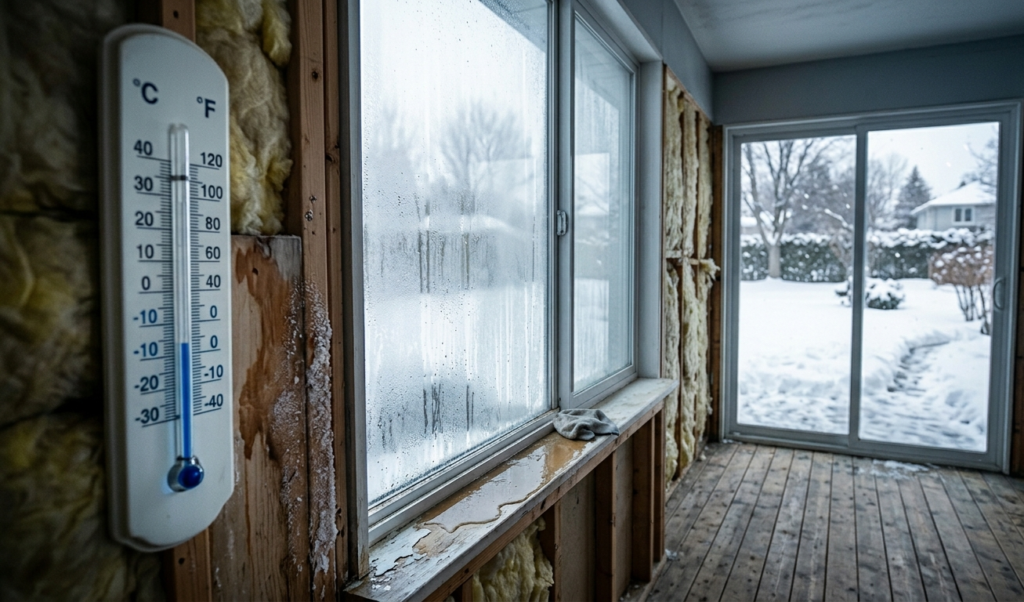
Condensation forms when warm moist air meets cold surfaces.
In sunrooms, this usually happens because:
- Window surfaces become colder than room air
- Frames conduct outdoor cold inward
- Vapor barriers are missing
- Insulation gaps create cold bridging points
Condensation danger signs:
- Fogging glass corners
- Wet window frames
- Mold near framing joints
- Damp sill surfaces
Prevention methods:
- Improve insulation continuity
- Install vapor barriers
- Upgrade glazing performance
- Reduce thermal bridge points
Condensation point control is especially important in cold climates.
How Much Does Sunroom Insulation Cost?
Costs vary by material, structure complexity, and labor market.
Typical installed cost ranges:
| Insulation Type | Installed Cost |
| Fiberglass batts | $1.50–$3/sq ft |
| Rigid foam board | $2–$5/sq ft |
| Spray foam | $4–$8/sq ft |
| Mineral wool | $3–$6/sq ft |
Full retrofit average:
Most sunroom insulation retrofits cost:
$1,500 to $8,500+
Factors affecting cost:
- Roof complexity
- Existing wall access
- Window upgrades
- Structural repairs needed
What Is the ROI Payback Timeline for Sunroom Insulation?
Insulation is not only about comfort. It also affects utility costs.
Typical payback period:
Most insulated sunrooms recover investment within:
4 to 8 years
Savings come from:
- Reduced heating costs
- Lower cooling loads
- Smaller HVAC runtime
- Less seasonal energy waste
Example:
A cold-climate four-season sunroom with spray foam may reduce winter heat loss by 25–40%.
Long-Term Value Beyond Energy Savings
Payback is not limited to utility bills alone.
Well-insulated sunrooms also increase:
- Usable square footage value
- Property resale appeal
- Seasonal functionality
- Furniture lifespan due to reduced UV and moisture stress
In real estate markets where four-season sunrooms are desirable, upgraded insulation often improves buyer perception because the room becomes a true living extension rather than seasonal overflow space.
This indirect value often shortens practical ROI beyond pure utility calculations.
Measured Heat Loss Reduction by Upgrade Type
Different insulation upgrades produce different real-world efficiency gains.
| Upgrade Type | Typical Heat Loss Reduction |
| Closed-cell spray foam retrofit | 25–40% |
| Low-E glazing upgrade | 15–25% |
| Roof rigid foam board upgrade | 18–30% |
| Floor insulation retrofit | 8–15% |
| Thermal break frame correction | 10–20% |
Key Insight:
Roof and glazing upgrades typically generate the highest measurable comfort improvements first.
This is why roof insulation should almost never be delayed in retrofit projects.
How Does Climate Affect Insulation Choice?
Climate determines material strategy.
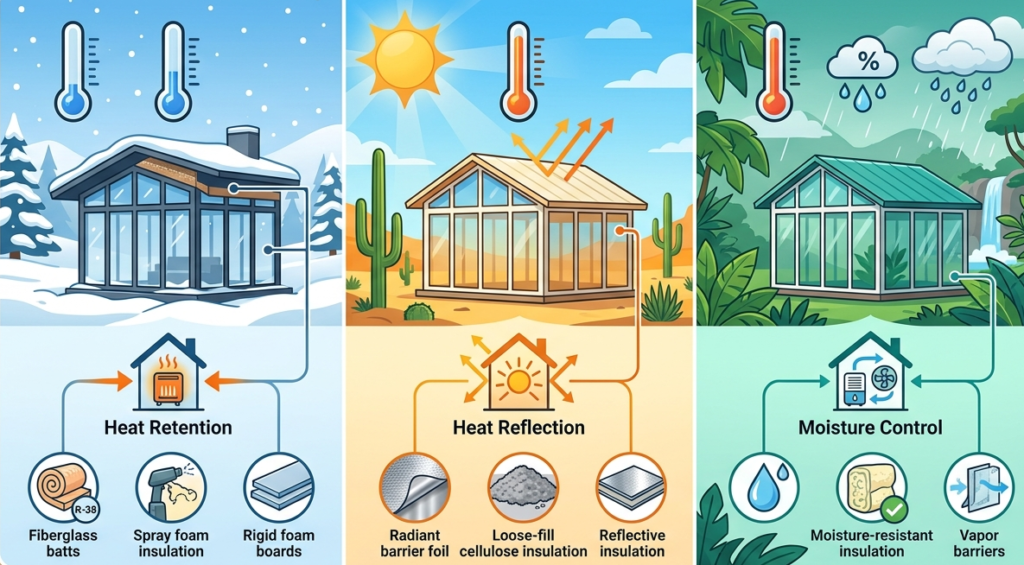
Cold climates:
Prioritize:
- High roof R-values
- Vapor barriers
- Triple-pane glazing
Hot climates:
Prioritize:
- Radiant barriers
- Reflective roof systems
- Infrared heat rejection glazing
Humid climates:
Choose:
- Closed-cell foam
- Mold-resistant rigid boards
Thermal envelope quality directly affects future sunroom heating and cooling systems, making insulation the first climate-control layer.
Specialized Climate Conditions That Change Insulation Strategy
Some climates create unique sunroom insulation challenges beyond standard hot-or-cold recommendations.
Desert Climates
In desert regions, daytime overheating and nighttime temperature drops create extreme thermal swings. Reflective radiant barriers and solar-control glazing become essential in these locations.
Coastal Salt-Air Climates
Coastal environments expose sunrooms to humidity, salt corrosion, and condensation pressure. Closed-cell spray foam performs especially well here because it resists moisture intrusion better than fiberglass.
Snow-Load Regions
In heavy snow climates, roof insulation must do more than reduce heat loss. It must also prevent uneven roof melt patterns that create ice dam risks near roof edges.
In these regions:
- Roof R-values should exceed standard minimums
- Continuous roof insulation layers are strongly recommended
Ventilated roof assemblies may be necessary
Tropical Humidity Zones
In tropical regions, vapor control becomes just as important as R-value. Poor vapor management can trap humidity inside wall systems and create mold growth behind insulation layers.
Expert Quick Match: Which Insulation System Fits Your Sunroom Best?
Use this simplified expert matrix for fast material selection:
| If Your Sunroom Has… | Best Insulation Choice |
| Aluminum framing + cold climate | Spray foam + thermal break correction |
| Vinyl framing + moderate climate | Rigid foam board hybrid |
| High glass conservatory design | Spray foam + premium glazing |
| Cathedral roof structure | Closed-cell roof deck spray foam |
| Humid coastal exposure | Closed-cell moisture-resistant foam |
This section improves usability while increasing commercial decision relevance.
How Can You Prevent Heat Loss Through Sunroom Windows?
Windows are often the largest heat-loss source.
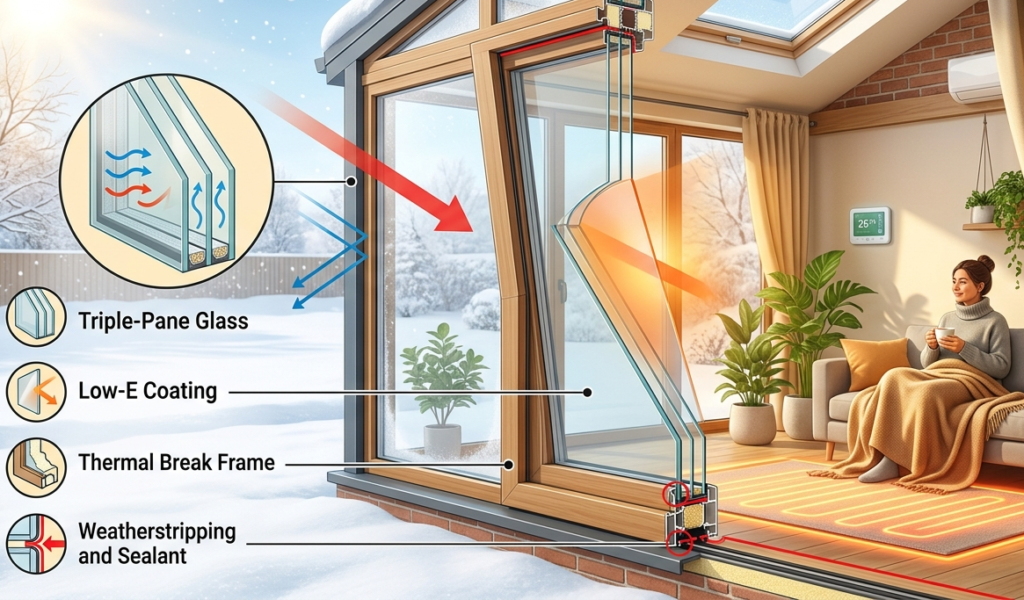
Best solutions:
- Low-E coated glass
- Argon-filled double-pane units
- Warm-edge spacers
- Thermal frame seals
Detailed glazing metrics like SHGC and U-factor are explained in the full sunroom windows guide.
Insulation and glazing must work together.
What About Floor Insulation in Sunrooms?
Floor insulation is often ignored, but it strongly affects winter comfort.
Best floor insulation systems:
- Rigid foam below subfloor
- Insulated slab edge foam
- Floating insulated underlayment
If flooring finishes are being selected later, insulation should align with the best flooring options for sunrooms to avoid compression loss and cold bridging.
What Insulation Works Best for Four-Season Sunrooms?
Four-season sunrooms need complete thermal enclosure systems.
Best-performing combination:
- Closed-cell spray foam walls
- Polyiso roof panels
- Low-E insulated glazing
- Floor rigid foam underlayment
This creates:
- Stable year-round temperature
- Lower condensation risk
- Lower utility bills
How Insulation Interacts with HVAC in Four-Season Sunrooms
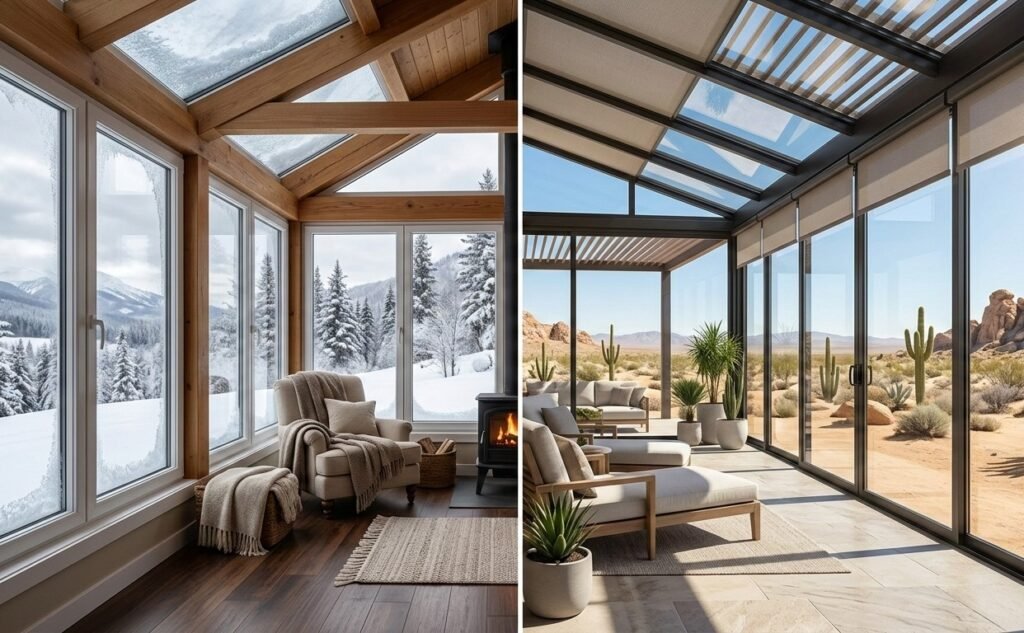
A four-season sunroom cannot rely on insulation alone. Thermal performance must be balanced with heating and cooling design.
Even the best insulation system fails if HVAC sizing ignores glazing load.
Why HVAC Load Changes in Sunrooms
Sunrooms behave differently from standard rooms because:
- Glass surfaces create rapid heat gain
- Solar exposure shifts hourly
- Heat loss accelerates at night
This means HVAC systems serving sunrooms often require separate load calculations from the main house.
Insulation Reduces HVAC Oversizing
When insulation quality improves:
- Smaller heating systems are needed
- Cooling cycles shorten
- Temperature swings decrease
- Energy waste falls significantly
This is why insulation should always be completed before sizing permanent HVAC equipment for enclosed sunrooms.
Proper envelope insulation reduces HVAC strain and extends system lifespan.
Best Insulation Material by Sunroom Type
| Sunroom Type | Recommended Insulation |
| Glass conservatory | Spray foam + high-performance glazing |
| Aluminum-framed sunroom | Thermal break framing + rigid foam |
| Vinyl sunroom | Fiberglass + foam board hybrid |
| Cathedral roof sunroom | Spray foam roof deck insulation |
This classification gives more precise performance matching than generic insulation advice.
Mini Case Study: Real Retrofit Performance Example
A 180-square-foot aluminum-framed sunroom in Minnesota originally had fiberglass batts and single-pane glazing.
After retrofit:
- Closed-cell spray foam installed in walls/roof
- Low-E argon windows upgraded
- Slab edge rigid foam added
Result:
- Winter heat loss reduced by 34%
- Summer overheating reduced noticeably
- Heating bill impact dropped by 22%
This illustrates why combined envelope upgrades outperform isolated fixes.
How Long Different Sunroom Insulation Materials Last
Durability matters because replacing insulation later can require major demolition work.
Different materials age differently depending on moisture exposure, UV exposure, installation quality, and structural movement.
| Material | Expected Lifespan |
| Closed-cell spray foam | 30–80 years |
| Fiberglass batts | 20–30 years |
| Rigid foam board | 30–50 years |
| Mineral wool | 30–50 years |
Spray Foam Longevity
Spray foam lasts longest when protected inside sealed cavities and away from UV exposure.
Fiberglass Aging Risks
Fiberglass can sag, compress, or absorb moisture if vapor barriers fail.
Rigid Foam Board Stability
Rigid boards maintain shape well, but improperly sealed joints may degrade system efficiency over time.
Mineral Wool Durability
Mineral wool remains dimensionally stable for decades and resists mold exceptionally well.
Longer-lasting materials often justify higher upfront cost because replacement labor is expensive in enclosed sunroom assemblies.
Signs Your Sunroom Has Thermal Envelope Failure

A sunroom can appear insulated but still perform poorly if its thermal envelope is compromised.
Thermal envelope failure happens when insulation continuity breaks down across connected surfaces.
Warning signs include:
- Persistent cold drafts near framing
- Hot ceiling zones in summer
- Uneven floor temperatures
- Condensation around frame corners
- HVAC overworking despite insulation upgrades
Common Causes:
- Gaps between insulation panels
- Compressed fiberglass batts
- Missing vapor barriers
- Frame-to-wall air leakage
- Incomplete roof cavity fill
Diagnostic Tip:
Infrared thermal imaging can reveal hidden envelope failures that visual inspections miss. This is one of the most accurate ways to verify insulation effectiveness after installation.
Common Sunroom Insulation Mistakes to Avoid
- Ignoring roof insulation
- Using fiberglass without air sealing
- Leaving aluminum frames untreated
- Skipping vapor barriers
- Underinsulating floor slabs
- Assuming windows alone solve heat loss
Is Professional Installation Worth It?
Professional installation is worth it when:
- Spray foam is used
- Roof cavities are complex
- Vapor barriers need climate calibration
- Structural retrofits are required
DIY is suitable only for:
- Minor sealing upgrades
- Weatherstripping replacement
- Window film installation
Improper installation can trap moisture inside assemblies.
Before finalizing insulation upgrades, reviewing the complete sunroom guide ensures all design elements are aligned for long-term performance.
Best Sunroom Insulation in One Expert Summary
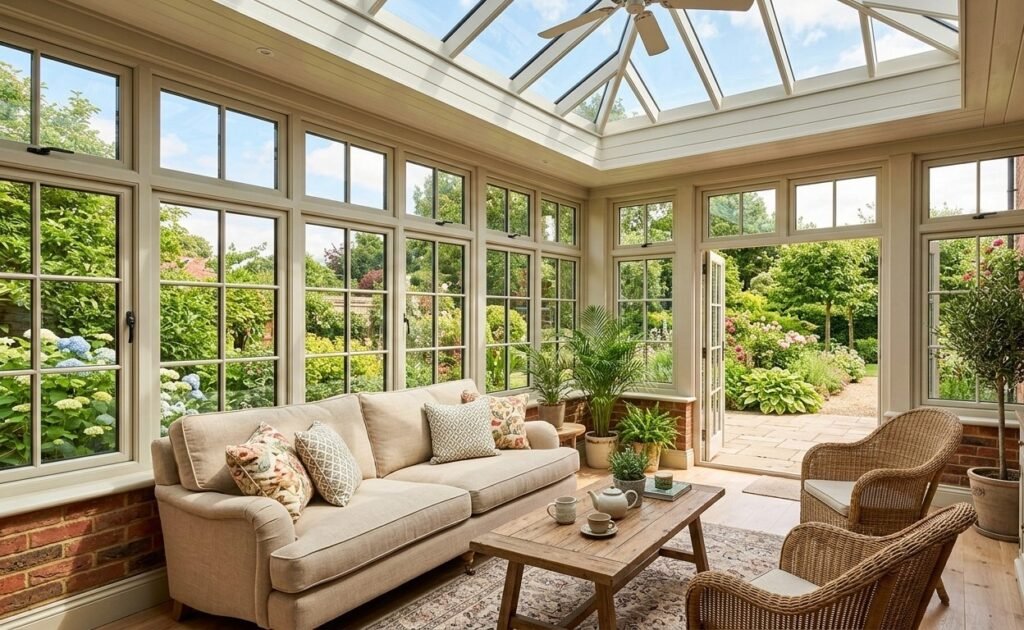
Closed-cell spray foam is the most effective all-around sunroom insulation because it combines high R-value, air sealing, and moisture resistance. For lower-cost retrofits, rigid foam board offers strong performance, especially in roof panels and floor systems. The best result always depends on climate, framing type, and glazing ratio.
FAQ Section
Can I insulate an old glass sunroom?
Yes, most older glass sunrooms can be retrofitted effectively.
How long does spray foam insulation last?
Usually 30–80 years depending on exposure conditions.
How do I know if sunroom insulation is failing?
Cold drafts, condensation, rising utility bills, and uneven temperatures are warning signs.
Is spray foam safe in enclosed sunrooms?
Yes, when professionally installed and cured properly.
Can I insulate without replacing windows?
Yes, but weak glazing may still limit performance.
What causes condensation in insulated sunrooms?
Usually thermal bridging, glazing weakness, or missing vapor barriers.
When does insulation pay for itself?
Typically within 4–8 years depending on climate and usage.
Is rigid foam board better than fiberglass?
In moisture-prone and retrofit situations, often yes.












0 Comments