
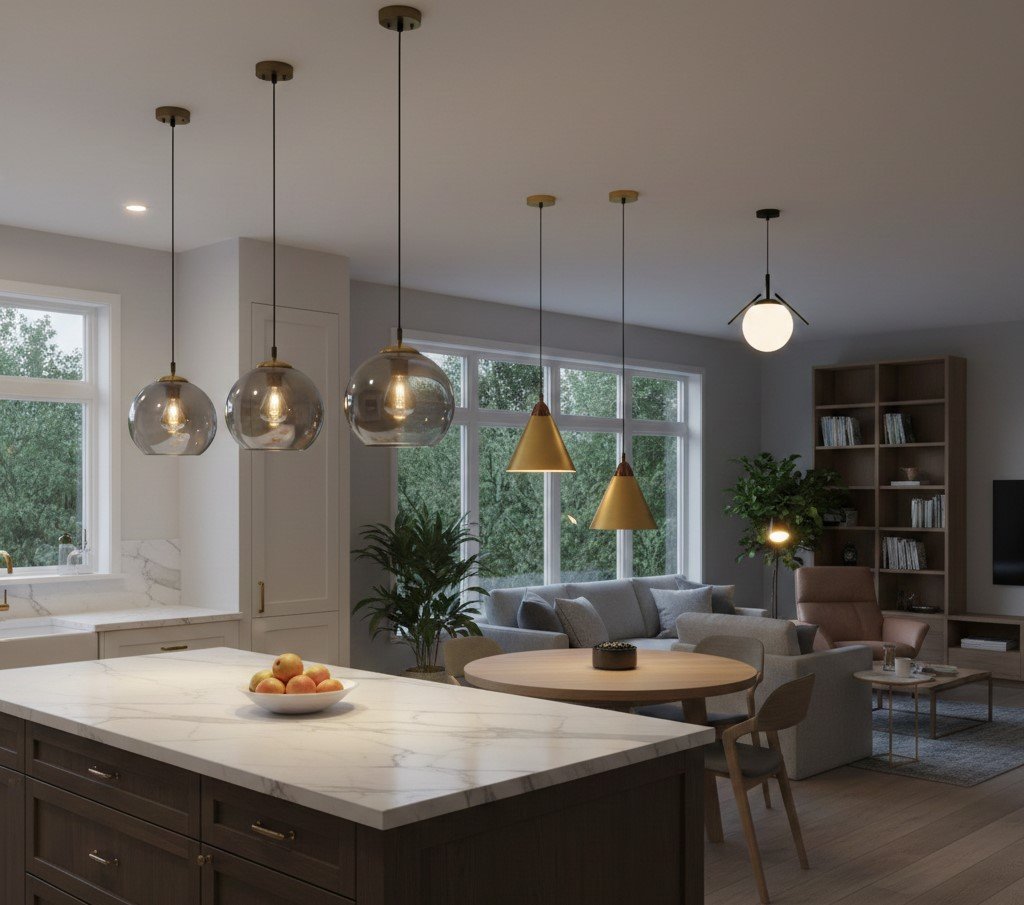
Short answer: Mini pendant lights are compact hanging fixtures designed to deliver focused, controlled lighting without visually overwhelming a space. When selected, spaced, and installed correctly, they outperform larger pendants and many ceiling fixtures in kitchens, dining areas, and task-focused zones by combining function, balance, and long-term flexibility.
Mini pendant lights are not a trend item. They are a response to how modern homes are used. Kitchens have become workspaces, social zones, and visual focal points. Lighting in these areas must work harder, not louder. This guide explains how mini pendant lights actually work, when they succeed, when they fail, and how to use them without regret.
What Are Mini Pendant Lights and How Do They Differ From Standard Pendants?
Mini pendant lights are scaled-down pendant fixtures, typically featuring smaller shades, narrower profiles, and lighter visual weight than standard or oversized pendants. Their purpose is not decoration first. Their purpose is precision lighting.
Standard pendants are often chosen as statement pieces. They draw attention and visually anchor a room. Mini pendant lights behave differently. They are designed to be used in multiples, spaced deliberately, and aligned with work surfaces rather than dominating them.
The most important differences are scale and intent. A standard pendant might be 12 to 20 inches wide and intended to stand alone. A mini pendant is usually under 10 inches wide and intended to work as part of a system. Because of this, mini pendants offer more control over spacing, brightness distribution, and visual balance.
Another key difference is adaptability. Mini pendant lights can be rearranged, replaced, or updated without redesigning an entire room. That makes them safer long-term choices in kitchens and multi-use spaces where layouts evolve.
Why Mini Pendant Lights for Kitchen Are Best?
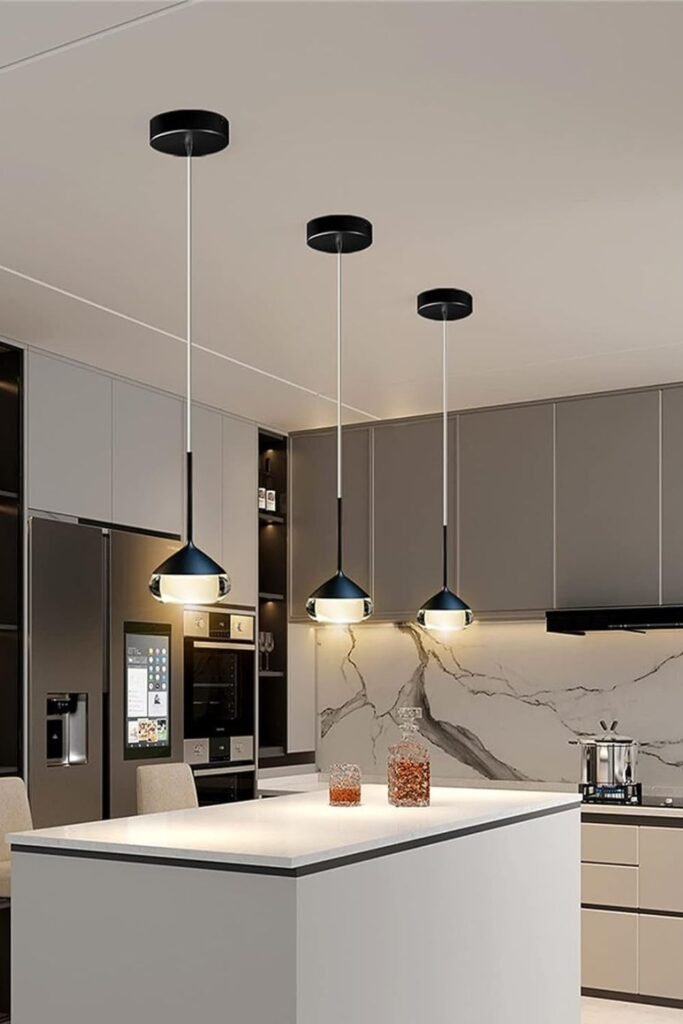
Mini pendant lights are best for kitchens because kitchens demand task accuracy, visual clarity, and balance, not just brightness.
Kitchens are where chopping, reading, pouring, and serving happen. Overhead lighting alone often creates shadows on countertops because the light source is behind the person working. Mini pendant lights solve this by positioning light directly above the work surface, reducing shadowing and improving visibility exactly where it is needed.
Scale is another reason mini pendants work better than large fixtures in kitchens. Kitchen islands are long and horizontal. A single large pendant often looks heavy and creates uneven lighting. Multiple mini pendant lights distribute light evenly across the island while maintaining visual openness. Sightlines remain clear, which is especially important in open-plan kitchens.
Mini pendants also allow layout flexibility. They can be spaced to match island length, cabinet alignment, or seating placement. This control is not possible with one oversized fixture.
Equally important, mini pendant lights layer well with other kitchen lighting. They complement recessed lights, under-cabinet lighting, and ambient ceiling fixtures rather than competing with them. This layered approach is what creates kitchens that feel bright without being harsh.
Finally, mini pendants add style without locking the kitchen into a single aesthetic. Because they are smaller and easier to replace, they allow future updates without major renovation.
How Many Mini Pendant Lights Should You Use Over a Kitchen Island?
The correct number of mini pendant lights depends on island length, pendant width, and the visual balance you want to achieve.
As a practical rule, most kitchen islands work best with two to four mini pendant lights. Short islands often look best with two. Longer islands typically require three. Very long islands may support four, but only if spacing and scale are handled carefully.
The mistake most people make is assuming more pendants equal better lighting. Overcrowding pendants creates visual clutter and can actually reduce usable light by overlapping light pools.
Island length should guide the decision. A 5- to 6-foot island usually supports two mini pendants. A 7- to 8-foot island often needs three. Islands longer than 9 feet may support four, but only if the pendants are very slim.
Visual balance matters as much as math. Sometimes fewer pendants look better and function just as well when paired with strong recessed or under-cabinet lighting. The goal is even illumination without visual noise.
How Far Apart Should Mini Pendant Lights Be Spaced?
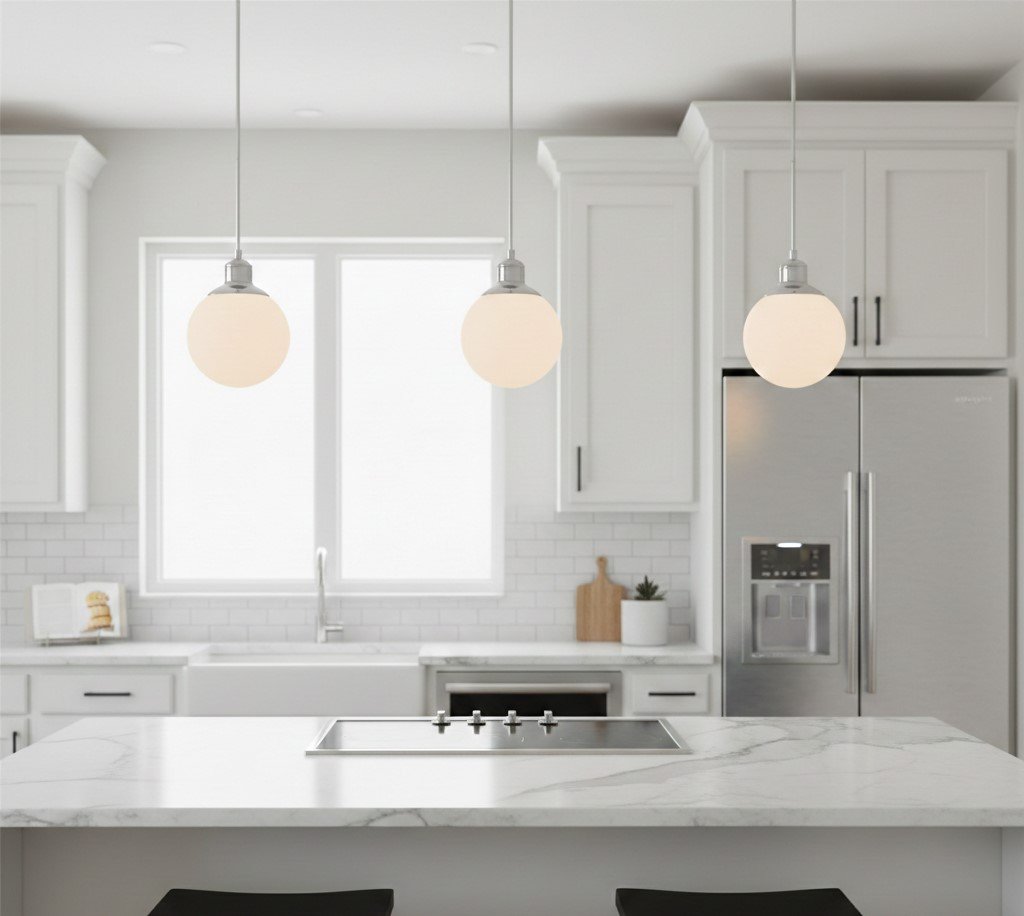
Spacing determines whether mini pendant lights look intentional or awkward.
Spacing is measured center to center, not edge to edge. In most kitchens, mini pendants are spaced 24 to 30 inches apart. However, this is not a fixed rule. Shade width, island length, and ceiling height all affect ideal spacing.
Wider shades need more space to breathe. Narrow, cylindrical pendants can be spaced closer together. The key is visual rhythm. The gaps between pendants should feel equal and proportional to the island below.
Another common mistake is centering pendants strictly on the island length without considering seating or cabinet alignment. In many kitchens, aligning pendants with bar stools or cabinet panels creates a more cohesive look.
Spacing should also prevent light overlap. When pendants are too close, light pools merge and create glare rather than clarity.
How High Should Mini Pendant Lights Hang Above Counters and Tables?
Height errors are one of the most common reasons pendant lighting fails.
Over kitchen counters and islands, mini pendant lights usually hang 30 to 36 inches above the countertop. This height provides sufficient task lighting while keeping sightlines open.
Over dining tables, pendants typically hang slightly lower, around 28 to 34 inches above the table surface, because diners are seated and glare risk is lower.
Ceiling height matters. In rooms with higher ceilings, pendants may hang slightly higher to maintain proportion. In lower ceilings, adjustable cords or shorter drops are essential to avoid head clearance issues. The purpose of correct height is comfort. Pendants that hang too low block views and cause glare. Pendants that hang too high lose their task-lighting advantage and behave like weak ceiling lights.
Are Mini Pendant Lights Bright Enough for Kitchens?
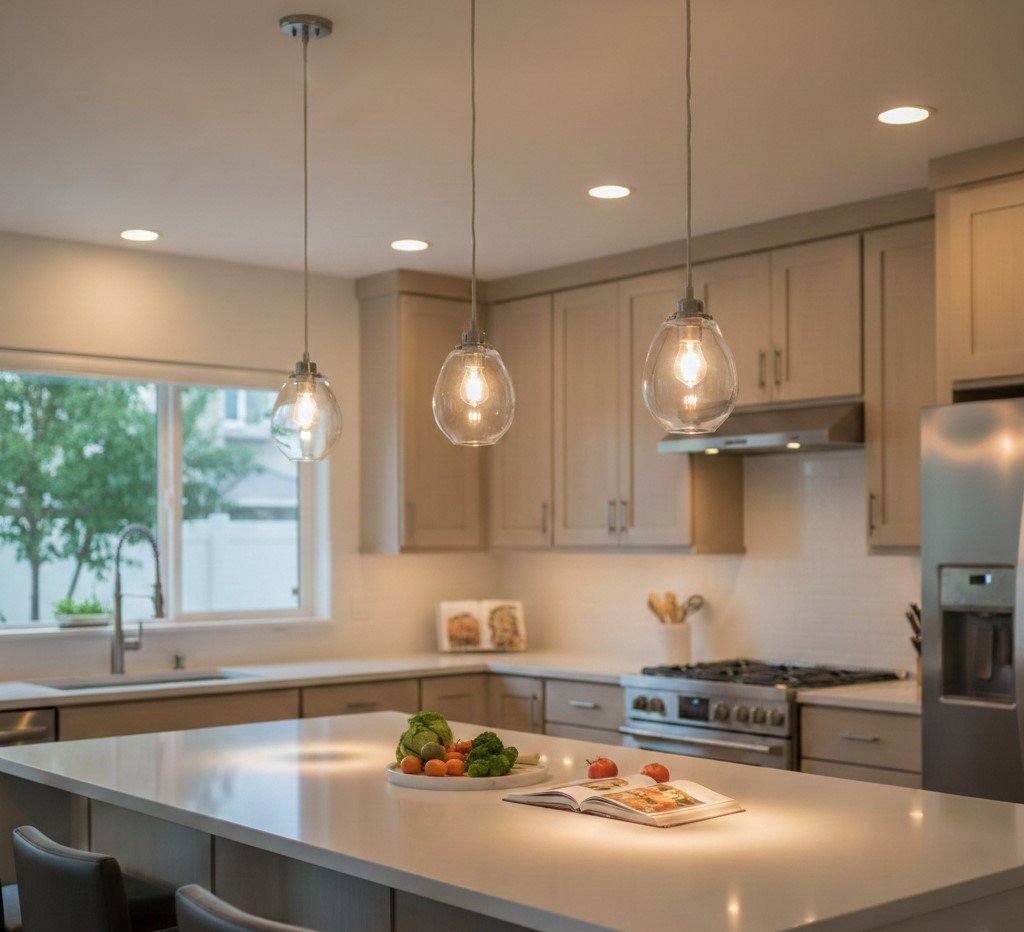
Mini pendant lights can be bright enough, but they are rarely sufficient on their own.
Each mini pendant typically produces localized brightness. This is excellent for task zones but does not always fill the entire room evenly. For this reason, mini pendants work best as part of a layered lighting system.
In kitchens, mini pendants are usually paired with recessed ceiling lights and under-cabinet lighting. Together, these layers provide both general illumination and focused task lighting.
Trying to compensate by using extremely bright bulbs in mini pendants often creates glare and discomfort. It is better to use moderate brightness and rely on supporting lights for overall coverage.
What Bulbs and Color Temperature Work Best in Mini Pendant Lights?
Bulb choice dramatically affects comfort and appearance.
For kitchens, bulbs between 2700K and 3000K provide warm but clear light. Cooler temperatures can feel harsh and uninviting, especially in the evening.
Brightness should usually fall between 400 and 800 lumens per pendant, depending on shade opacity and number of pendants used.
Dimmable bulbs are strongly recommended. They allow the same fixture to serve both task and ambient roles at different times of day.
What Dimming Options Work Best for Mini Pendant Lights?
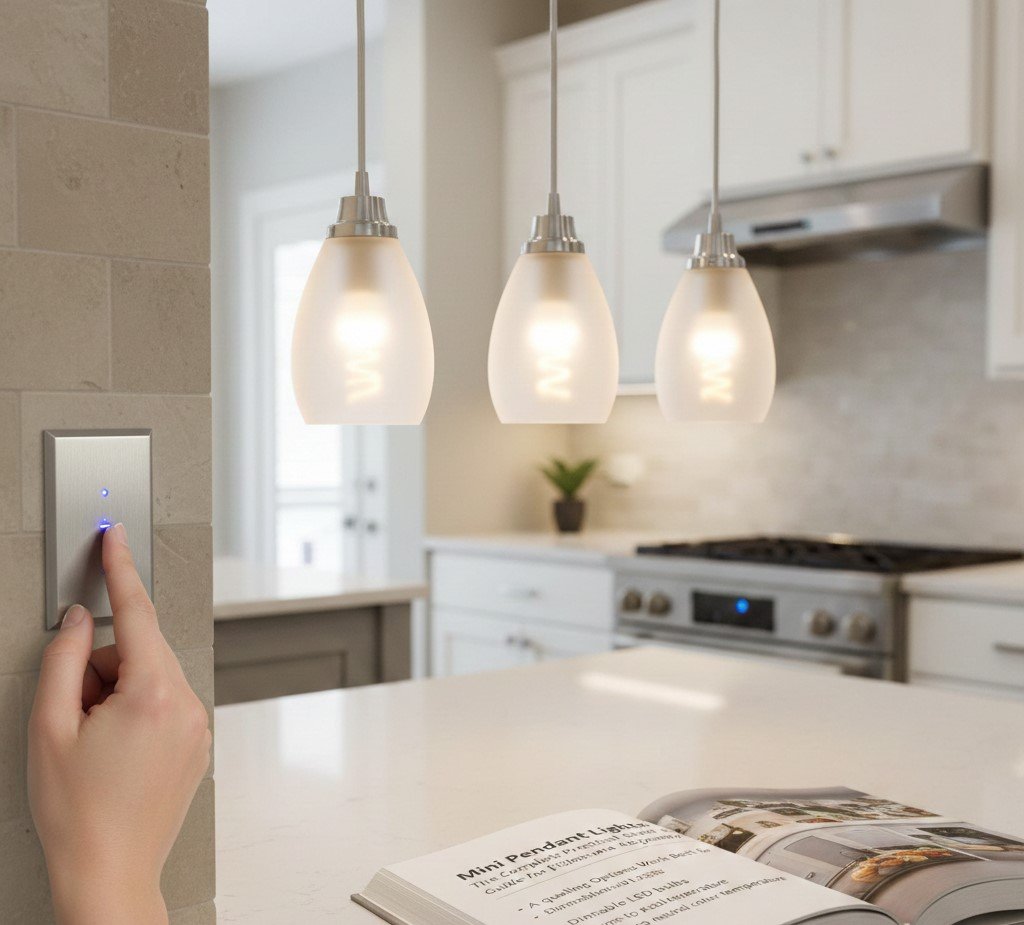
Short answer: Dimmable mini pendants are worth it because kitchens shift from task lighting to ambient lighting throughout the day.
A kitchen is not one lighting scenario. Cooking needs clarity, but evenings often need softer light. Dimming is what makes mini pendant lights feel premium and adaptable.
There are three common dimming approaches:
- Wall dimmers (most common)
- Smart dimming via smart bulbs or smart switches
- Integrated dimming controls built into the fixture
Compatibility matters. Not all LED bulbs dim smoothly, and not all dimmers work well with modern LED drivers. Poor dimming creates flicker or buzzing, which instantly lowers perceived quality.
The safest approach for most households is:
- A quality wall dimmer rated for LED
- Dimmable LED bulbs
- Warm to neutral color temperature
This also improves energy efficiency without sacrificing function.
How Do You Choose the Right Size Mini Pendant Lights?
Short answer: Choose mini pendants based on shade diameter, ceiling height, and the surface size below, not just style.
Mini pendant size is usually defined by shade diameter and visual bulk. In most homes, “mini” pendants fall in the 4–8 inch diameter range, but the right size depends on what they hang over.
Over a kitchen island, size must match the island’s length and depth. A shade that is too wide makes the island feel crowded. A shade that is too small looks underpowered and may not distribute light well.
A practical way to avoid proportion mistakes is to balance three factors:
- Surface size (island or table width and length)
- Fixture count (two, three, or four pendants)
- Visual openness (open-plan kitchens need lighter visual weight)
If the kitchen already has strong visual elements such as bold cabinetry or thick range hoods, smaller and simpler mini pendants tend to look more intentional. If the kitchen is minimalist, slightly larger mini pendants can add needed presence without becoming heavy.
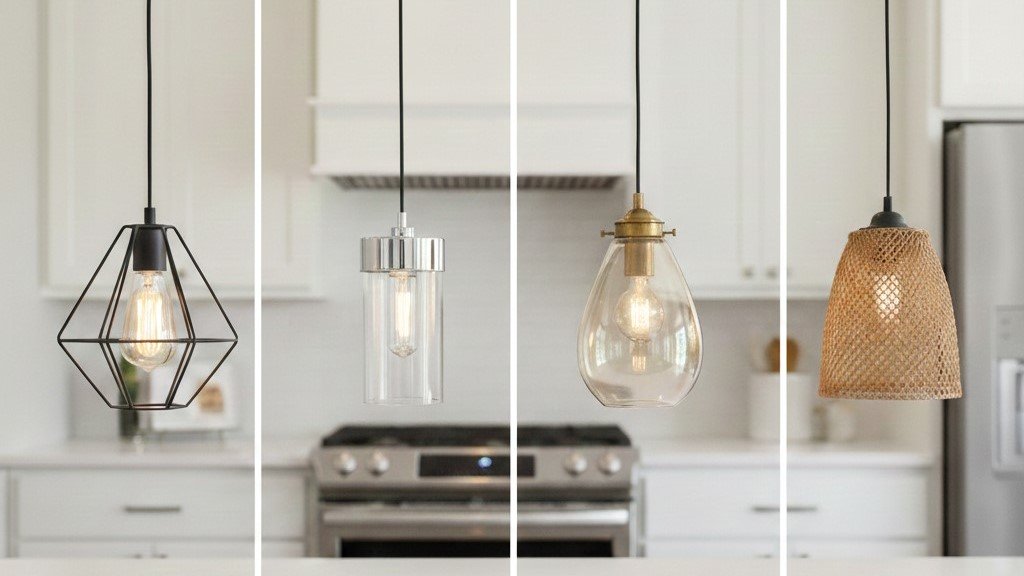
What Mini Pendant Light Styles and Materials Work Best?
Short answer: The best style is the one that matches your kitchen’s finishes and controls glare through shade material.
Materials affect both appearance and performance.
- Clear glass looks airy but can cause glare unless paired with frosted bulbs or filament-style bulbs that are not harsh.
- Frosted or opal glass diffuses light and is usually the safest choice for comfort.
- Metal shades direct light downward and are excellent for task lighting, but they can create strong shadows if used alone.
- Fabric shades soften light but are less common in kitchens due to grease and dust maintenance.
- Mixed materials (metal plus glass, wood accents) work well in transitional kitchens.
Style alignment should be intentional. Matte black, brushed nickel, and warm brass are common finishes because they integrate easily with faucets and cabinet hardware. The goal is not matching every element perfectly. The goal is coherent repetition of finishes.
This is also where long-term flexibility matters. Choosing a neutral finish with a classic shape helps the fixture survive future kitchen updates.
Should You Use Clear Glass Mini Pendant Lights or Frosted Glass?
Short answer: Frosted glass is usually better for comfort, while clear glass is better for visual lightness but needs glare control.
Clear glass mini pendants are popular because they feel lightweight and don’t visually block space. The tradeoff is glare. If the bulb is exposed, you’ll see bright points of light at eye level, especially when seated at an island.
Frosted or opal glass diffuses the bulb and spreads light more evenly. This typically creates a calmer kitchen atmosphere and reduces eye strain.
If you prefer clear glass, you can reduce glare by:
- Using lower-lumen bulbs and adding support lighting
- Choosing bulbs with a frosted finish
- Using dimmers to control brightness at night
- Avoiding ultra-cool color temperatures
This section matters because clear-glass glare is one of the biggest hidden sources of buyer regret.
Where Else Can Mini Pendant Lights Be Used Besides Kitchens?
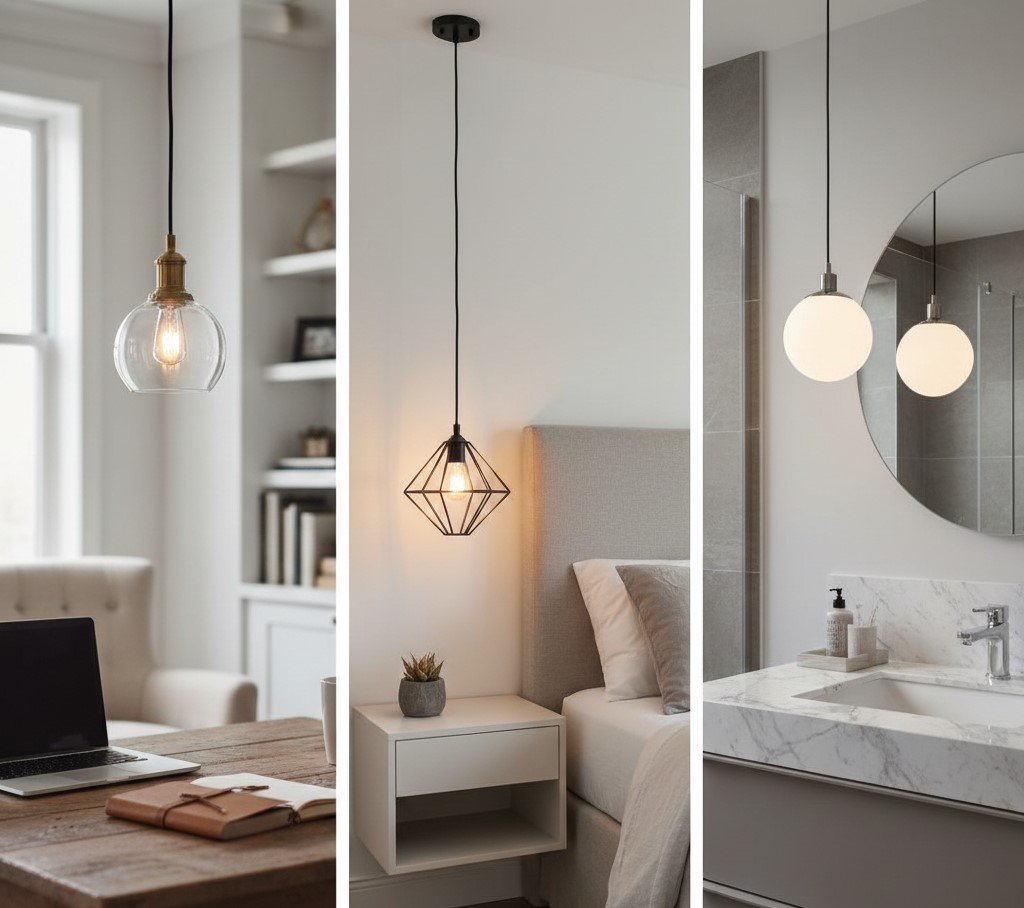
Mini pendant lights are often associated with kitchen islands, but limiting them to kitchens leaves significant functional and design potential unused. Their compact scale and directional light make them suitable for several other areas where traditional fixtures underperform.
In dining areas, mini pendant lights work especially well over rectangular or narrow tables. Instead of a single chandelier that can feel oversized or cast uneven light, two or three mini pendants provide balanced illumination while keeping the visual focus on the table. This approach also makes dining spaces feel more intimate without sacrificing brightness.
In bedrooms, mini pendant lights are increasingly used as bedside lighting. Hanging pendants on either side of the bed frees up nightstand space and provides focused reading light without glare. This is particularly effective in smaller bedrooms where table lamps consume valuable surface area.
Bathrooms are another strong use case. Mini pendants installed over vanity areas can replace or supplement wall sconces, especially in modern or minimalist bathrooms. When placed correctly, they provide direct task lighting for grooming while adding vertical interest to the space.
Mini pendant lights also work well in hallways and entryways, where they offer visual guidance and soft illumination without overwhelming narrow spaces. In these areas, scale matters more than brightness, and mini pendants strike the right balance.
Finally, home bars, breakfast nooks, and stair landings benefit from mini pendant lighting because these areas often need accent lighting rather than full-room illumination. Mini pendants help define these zones without introducing bulky fixtures.
Are Mini Pendant Lights Good for Dining Tables?
Short answer: Yes, mini pendants work very well over dining tables, especially in sets of two or three for longer tables.
For dining tables, the goal is even table illumination without harsh downward glare. Mini pendants excel when:
- The table is long or rectangular
- You want a lighter visual look than a chandelier
- You want adjustable brightness for mood settings
Mini pendants can also be used to create symmetry in dining areas, especially when the table is centered under a ceiling junction box that would otherwise force a single large fixture.
The key difference versus kitchens is comfort. Dining light should feel warm and flattering. Warmer bulbs and diffused shades usually perform better here than metal shades designed for task light.
Mini Pendant Lights vs One Large Pendant: Which Is Better?
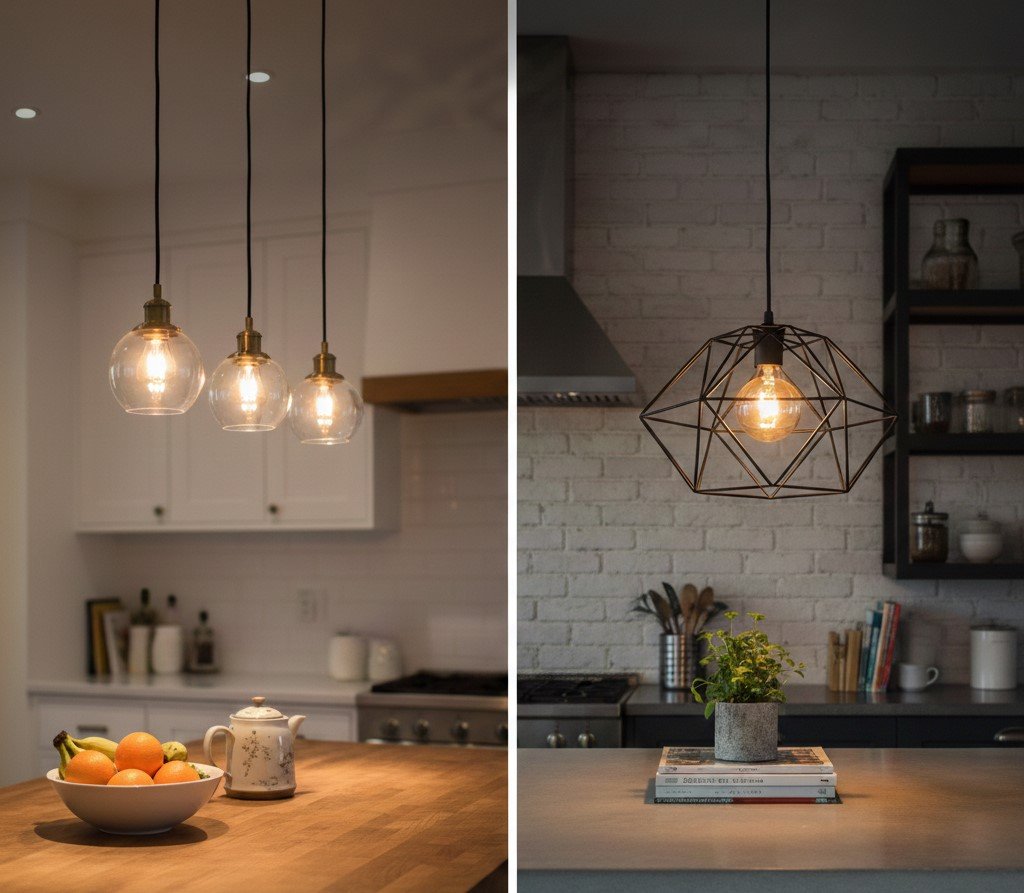
Choosing between multiple mini pendant lights and a single large pendant is less about style preference and more about function, proportion, and flexibility.
A single large pendant acts as a focal point. This works well in spaces where the fixture itself is meant to draw attention, such as a formal dining room or a high-ceiling entryway. However, in most functional areas, large pendants create uneven lighting. Brightness concentrates in one spot, leaving surrounding areas dim.
Mini pendant lights distribute light more evenly across a surface. This makes them better suited for islands, long tables, and work zones where consistent illumination matters. They also allow better alignment with furniture, seating, or architectural elements.
Another advantage of mini pendants is adaptability. If one pendant fails or needs replacement, it can be addressed individually. With a large pendant, any change affects the entire lighting scheme. From a visual standpoint, mini pendants maintain openness. Large pendants can block sightlines, especially in open-plan homes. Mini pendants preserve flow and make spaces feel less crowded.
Do Mini Pendant Lights Work With Low or Sloped Ceilings?
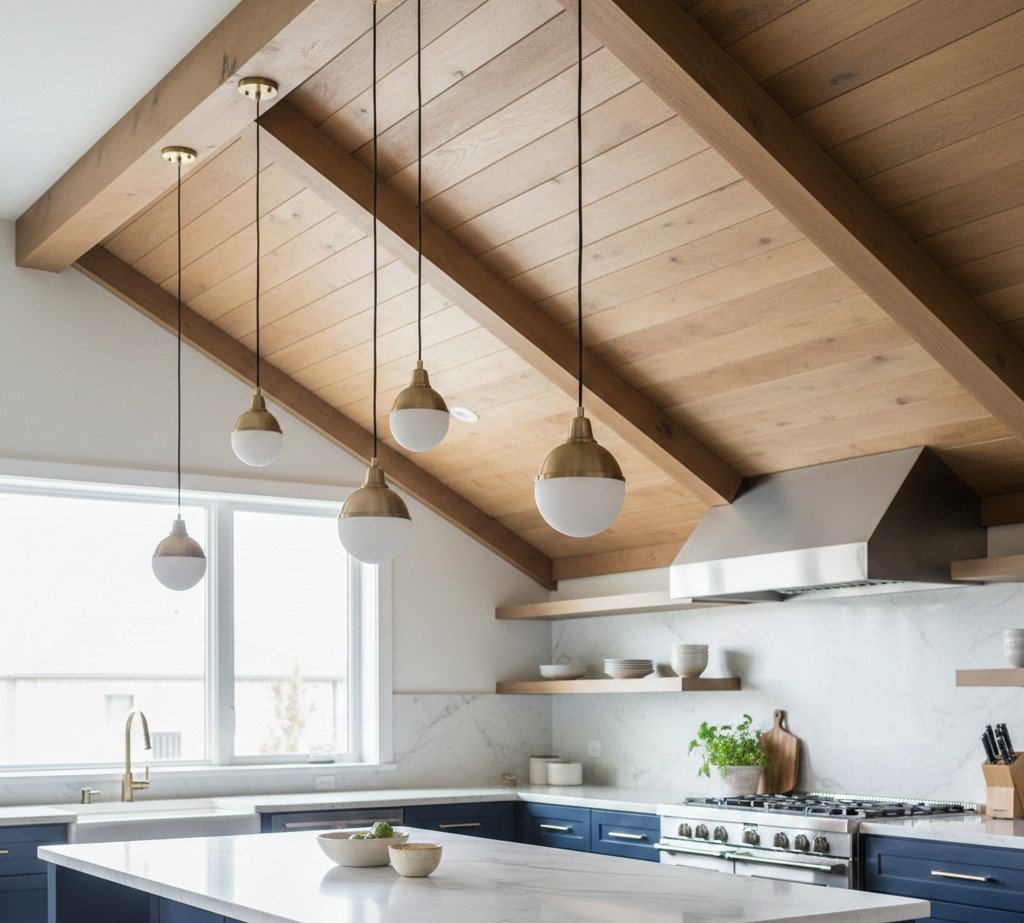
Mini pendant lights can work in low or sloped ceilings, but only when selected with precision.
For low ceilings, the key is minimizing drop length and shade size. Short-stem or cord-adjustable mini pendants prevent head clearance issues and reduce visual clutter. Flush or semi-flush alternatives should be considered if ceiling height is extremely limited.
In sloped ceilings, compatibility depends on the mounting system. Some mini pendants are designed with swivel canopies that allow vertical hanging even when the ceiling is angled. Without this feature, pendants may hang awkwardly or direct light incorrectly.
Shade design also matters. Narrow or cylindrical shades perform better in constrained spaces because they focus light downward without expanding visually outward. Wide shades can exaggerate ceiling limitations.
When low or sloped ceilings are ignored during selection, mini pendants become liabilities rather than assets. When accounted for correctly, they remain highly effective.
Do Mini Pendant Lights Need Support Lighting or Can They Stand Alone?
Mini pendant lights rarely function well as the sole light source in a room. Their strength lies in focused illumination, not broad coverage.
In kitchens, they pair best with recessed ceiling lights and under-cabinet lighting for balanced illumination. For dining areas, ambient wall or ceiling lighting helps prevent harsh contrast between lit and unlit spaces. When used in bedrooms, mini pendants work best alongside ceiling fixtures or wall sconces.
The mistake many people make is assuming brightness equals coverage. A mini pendant can feel bright directly beneath it while leaving surrounding areas dim. This creates visual imbalance and eye strain. Layered lighting solves this problem. Mini pendants handle task and accent lighting, while other fixtures provide ambient coverage. Together, they create comfort and flexibility.
Can You Install Mini Pendant Lights Yourself or Should You Hire a Professional?
Short answer: If you’re replacing an existing fixture with the same wiring, DIY may be possible, but multiple pendants, new wiring, and sloped ceilings usually require a professional.
Mini pendant installations vary in complexity.
DIY is often reasonable when:
- There is already a ceiling junction box
- You are replacing one fixture with one fixture
- No new electrical work is needed
Professional installation is strongly recommended when:
- Installing multiple pendants across an island
- Moving junction boxes or adding new ones
- Working with sloped ceilings or complex canopies
- Kitchens require precise alignment and spacing
This is not just about safety. It’s also about visual precision. Poor alignment makes even expensive mini pendants look cheap.
How Much Do Mini Pendant Lights Cost and What Affects the Price?
Short answer: Cost depends on materials, finish quality, brand, and whether the pendant uses integrated LED or standard bulbs.
Mini pendant lights range widely in price. The most important price drivers are:
- Glass quality and thickness
- Finish durability (cheap finishes scratch and fade)
- Canopy and wiring quality
- Bulb type and dimming compatibility
- Integrated LED design and warranty support
Instead of shopping by price alone, evaluate value through:
- Comfort (glare control)
- Durability (finish and build)
- Flexibility (bulb replacement, dimming, adjustability)
A mid-range pendant with good diffusion and reliable dimming often outperforms a cheaper pendant that looks good in photos but fails in daily use.
How Do You Plan Mini Pendant Lighting With Other Kitchen Lights?
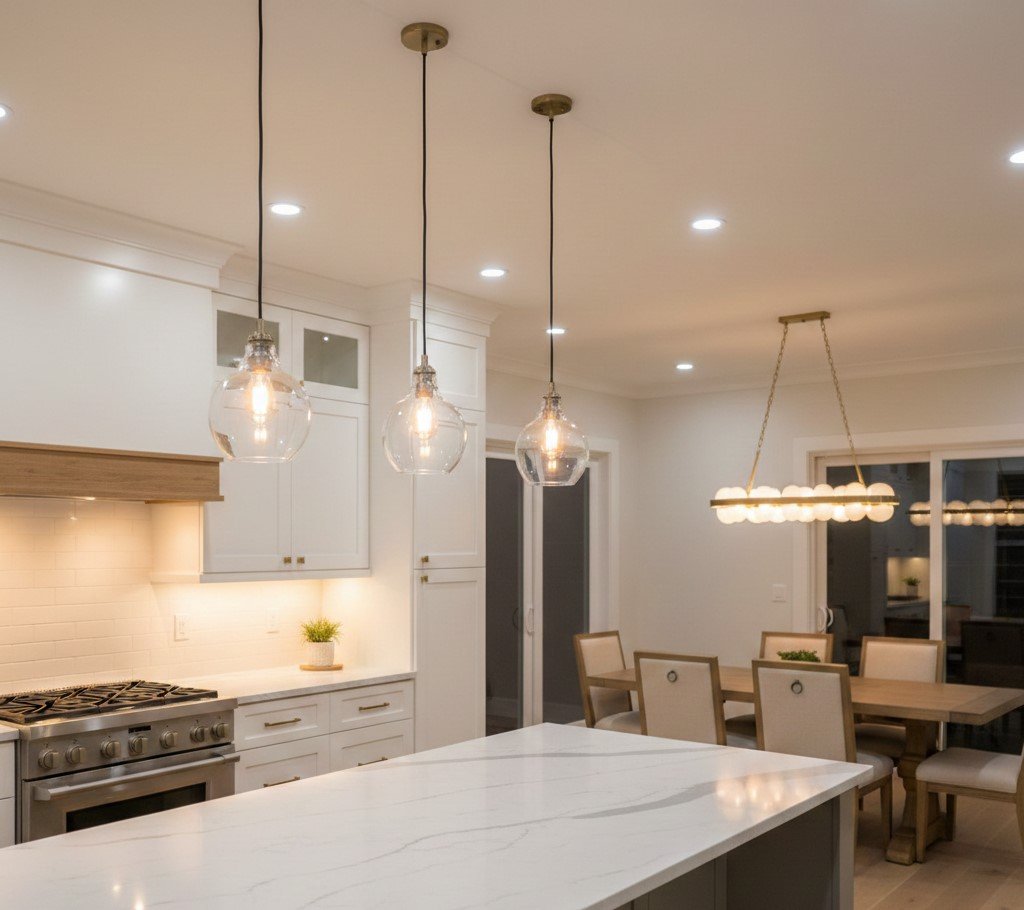
Short answer: Plan mini pendants as task and visual anchors, then use recessed and under-cabinet lighting for coverage.
Mini pendant lights should not be treated as the only lighting layer in a kitchen. A complete plan typically looks like this:
- Mini pendants over islands for focused task light
- Under-cabinet lighting for countertops
- Recessed lights for general coverage and navigation
- Optional accent lighting for depth
This prevents the “spotlight island” problem where the island is bright but the rest of the kitchen feels dim.
The simplest rule is distribution. Many small, controlled light sources create a better kitchen than one overly bright source.
How Mini Pendant Lights Affect Visual Balance and Room Proportion
Lighting is not just about illumination. It affects how a room feels and how its proportions are perceived.
Mini pendant lights emphasize vertical lines. This can make ceilings feel taller when used correctly. In contrast, oversized fixtures can compress vertical space, especially in rooms with standard ceiling heights.
Using multiple small pendants instead of one large fixture helps distribute visual weight evenly. This is especially important in open spaces where lighting is visible from multiple angles.
In minimalist or modern interiors, mini pendants reinforce clean lines and intentional spacing. In traditional interiors, they can provide contrast without overpowering decorative elements.
Maintenance, Cleaning, and Long-Term Care of Mini Pendant Lights
Mini pendant lights are generally low-maintenance, but neglecting upkeep affects both appearance and performance.
Dust accumulation on shades reduces light output and dulls finishes. Regular light cleaning with a microfiber cloth keeps fixtures performing as intended. In kitchens, grease buildup may require gentle cleaning solutions.
Bulb accessibility should also be considered. Fixtures that make bulb changes difficult become frustrating over time. Choosing pendants with easy access reduces maintenance friction.
Finish durability matters long-term. Painted finishes may chip in high-use areas, while metal and glass finishes typically age better.
Safety and Installation Considerations You Should Not Ignore
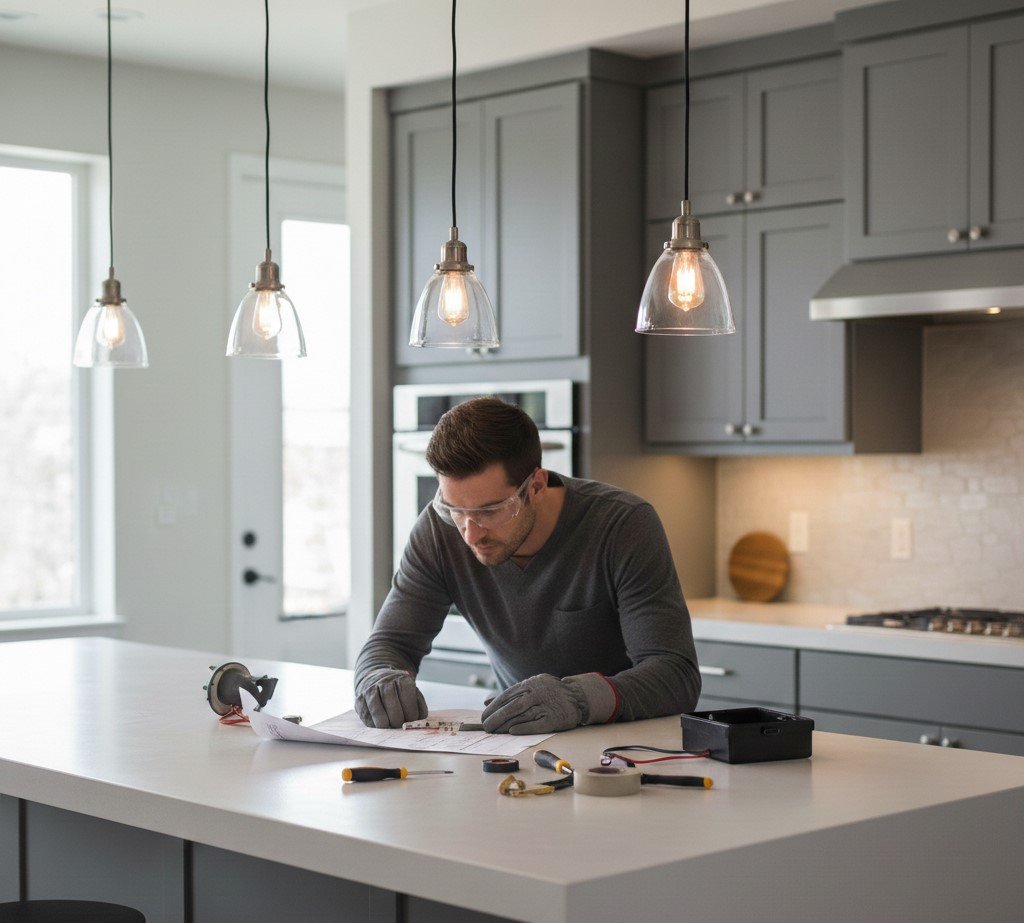
Installation quality directly affects safety and performance.
Mini pendant lights must be securely mounted and properly wired. Loose fixtures create vibration, noise, and potential hazards. In kitchens and bathrooms, moisture-rated fixtures are essential.
Weight limits matter, especially when installing multiple pendants on shared mounting systems. Exceeding these limits risks ceiling damage.
Professional installation is often recommended when adjusting ceiling wiring, installing multiple pendants, or working with sloped ceilings.
Are Mini Pendant Lights a Good Long-Term Investment?
Mini pendant lights are a strong long-term choice because they balance durability, adaptability, and timeless design.
Unlike trend-driven fixtures, their simple forms age well. They can be updated with new bulbs or shades without replacing the entire fixture. This makes them cost-effective over time.
Their ability to adapt to layout changes also adds value. When kitchens or dining areas are remodeled, mini pendants often remain usable with minor adjustments.
When Mini Pendant Lights Are the Wrong Choice
Despite their versatility, mini pendant lights are not always appropriate.
They are poor choices in rooms requiring uniform overhead illumination without layering. They may also feel unnecessary in spaces where wall or recessed lighting already performs well.
Recognizing when not to use mini pendants is part of making smart lighting decisions.
Final Guidance Before You Choose Mini Pendant Lights
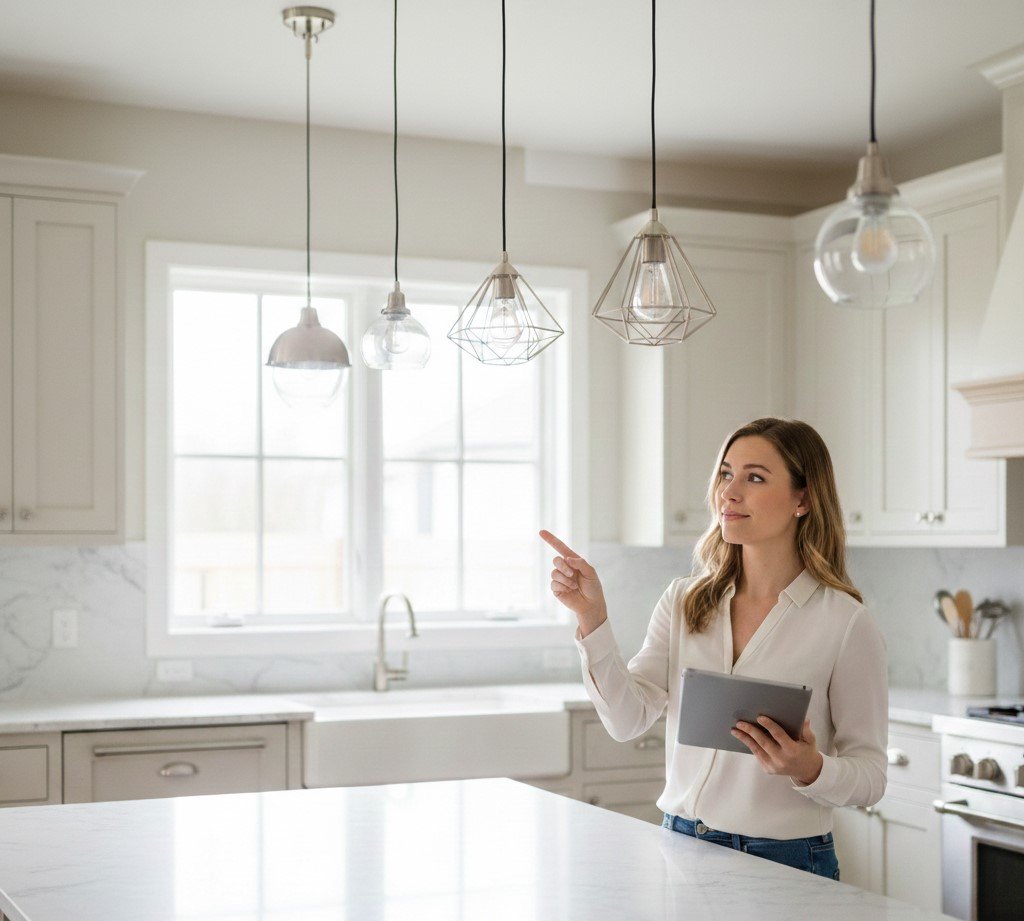
Mini pendant lights succeed when function leads design. They fail when selected purely for appearance.
If you define the task, respect proportions, layer lighting properly, and account for ceiling conditions, mini pendants deliver clarity, balance, and longevity.
Used thoughtfully, they are not just fixtures. They are tools.
FAQs
1) What are mini pendant lights?
Mini pendant lights are small hanging ceiling fixtures, usually under 10 inches wide, designed to provide focused light over a specific area like a kitchen island, bar, or table.
2) How many mini pendant lights should you use over a kitchen island?
Most kitchen islands look best with 2–3 mini pendant lights. Use 2 for shorter islands, 3 for longer islands, and only use 4 when the island is very long and the pendants are slim.
3) How far apart should mini pendant lights be spaced?
A common spacing range is 24–30 inches center-to-center. Wider shades need more spacing, while narrow cylinder pendants can be spaced slightly closer.
4) How high should mini pendant lights hang above a countertop?
Mini pendant lights typically hang 30–36 inches above the countertop. This keeps sightlines open and delivers usable task light without glare.
5) Are mini pendant lights bright enough for a kitchen?
Mini pendants provide strong task lighting over the island but usually do not replace full kitchen lighting. They work best with recessed lights and under-cabinet lights for complete coverage.
6) What size mini pendant light should you choose?
Choose size based on the surface below and visual balance. In most kitchens, mini pendants with a 4–8 inch diameter work well, especially when used in pairs or sets of three.
7) Is clear glass or frosted glass better for mini pendant lights?
Frosted glass is better for comfort because it diffuses light and reduces glare. Clear glass looks lighter but often needs careful bulb selection and dimming to avoid harsh brightness.
8) What bulbs and color temperature are best for mini pendant lights?
For kitchens, use LED bulbs around 2700K–3000K for warm-clean light. Aim for a high CRI (90+) to keep food and finishes looking natural.
9) Do mini pendant lights work with low ceilings or sloped ceilings?
Yes, but you need the right hardware. For low ceilings, choose short drops or compact shades. For sloped ceilings, use pendants with a sloped-ceiling canopy or adjustable hanging system.
10) Can you install mini pendant lights yourself?
DIY is possible when replacing an existing fixture with the same wiring. If you’re installing multiple pendants, moving junction boxes, or working with sloped ceilings, hiring a professional is safer and usually looks cleaner.










0 Comments