
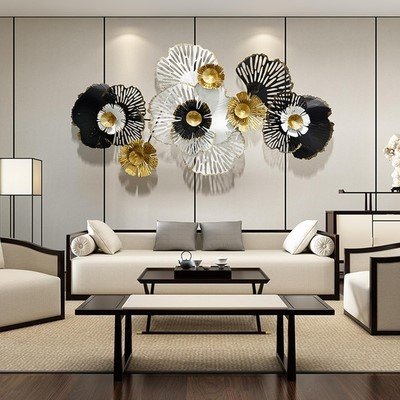
Metal wall art is a durable, sculptural form of indoor wall décor made from steel, iron, or aluminum. It adds depth, texture, and long-term visual impact compared to canvas or prints, making it ideal for modern living rooms, bedrooms, offices, and feature walls.
What is metal wall art, exactly?
Metal wall art is decorative artwork crafted from metal sheets or rods and designed to be mounted on interior walls. Unlike printed art, it creates physical depth through cutouts, layering, and shadows. Most indoor pieces are laser-cut or welded, then finished with paint or powder coating for protection and color stability.
Metal art is a form of interior wall décor created from solid or layered metal components that are cut, shaped, and finished for visual display. Unlike flat artwork such as canvas prints or posters, metal wall art introduces physical depth, meaning the artwork interacts with light and shadow throughout the day.
Most indoor metal wall art is produced using laser cutting or CNC cutting, allowing precise patterns, clean edges, and consistent thickness. Designs range from abstract silhouettes to detailed geometric or botanical forms. Because the artwork is structural rather than printed, it becomes part of the room’s architecture rather than a surface decoration.
A key distinction is that metal wall art is not defined by color alone. Its visual impact comes from negative space, layering, and the way it stands slightly away from the wall. This is why metal art often looks different depending on lighting conditions and viewing angle, something flat artwork cannot achieve.
What materials are used in indoor metal wall art?
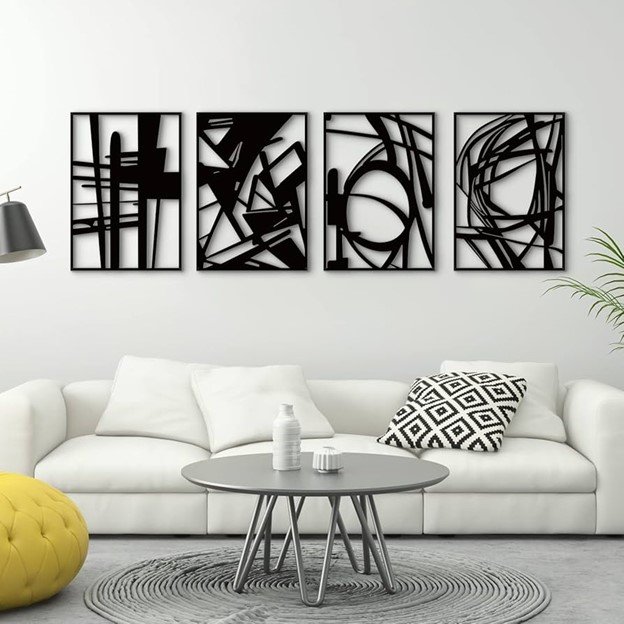
Short answer: steel, iron, and aluminum dominate indoor use.
Steel is the most common because it balances strength and cost. Iron feels heavier and more industrial, often used in bold statement pieces. Aluminum is lightweight and corrosion-resistant, making it easier to mount on drywall. For indoor settings, corrosion resistance matters less than finish quality and edge treatment.
Indoor metal wall art commonly uses three primary materials, each with practical implications.
Steel is the most widely used material. It offers strength, rigidity, and affordability. Steel allows thin profiles without bending and works well for medium to large pieces. For indoor use, steel is almost always coated, so corrosion is not a concern in normal living conditions.
Iron is heavier and often used in more traditional or industrial-style designs. It gives a sense of solidity but requires more careful mounting due to weight. Iron is less common in minimalist interiors but remains popular for bold statement pieces.
Aluminum is significantly lighter than steel or iron. It’s ideal for large wall art where weight is a concern or for rental properties where mounting flexibility matters. Aluminum does not rust, which adds a margin of safety even in humid indoor environments.
For indoor décor, material choice is less about weather resistance and more about weight, finish quality, and edge precision.
Which finishes work best for indoor spaces?
Short answer: powder-coated and matte finishes perform best indoors.
Powder coating seals the surface evenly, resists chipping, and keeps colors stable over time. Matte black remains the most popular because it reduces glare and fits modern interiors. Hand-painted finishes add character but need more careful cleaning. Glossy finishes reflect light and should be used sparingly in bright rooms.
Finish quality determines how metal wall art ages over time.
Powder-coated finishes are the most reliable for indoor use. The coating is baked onto the metal, forming a uniform protective layer that resists chipping and fading. Matte powder coats are especially popular because they reduce glare and hide fingerprints.
Painted finishes offer more artistic variation but are more sensitive to scratches. Hand-painted metal art often has unique texture but should be placed in low-contact areas.
Raw or distressed finishes are sometimes used intentionally for industrial interiors. These should always be sealed for indoor use to prevent residue or staining on walls.
Finish choice affects not only appearance but also cleaning frequency, durability, and how forgiving the surface is to daily life.
Is metal wall art heavy and safe to hang indoors?
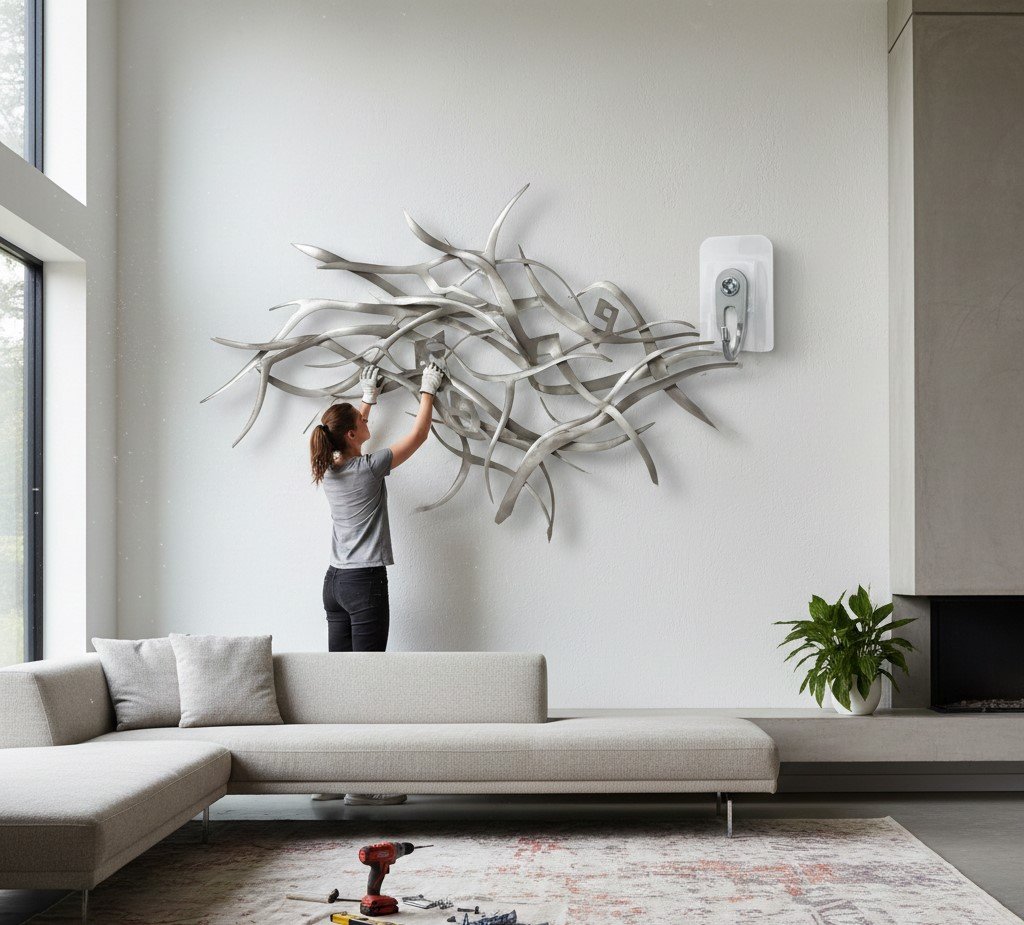
Short answer: most indoor metal wall art is safe on drywall when mounted correctly.
Small to medium pieces usually weigh between 2 and 8 kg. Proper mounting matters more than weight. Keyhole slots, wall anchors, or standoff mounts distribute load safely. For large pieces placed above sofas or beds, stud mounting is recommended for peace of mind.
Weight alone does not determine safety. Mounting design does.
Most indoor metal wall art weighs between 2 kg and 12 kg, depending on size and thickness. Well-designed pieces distribute this weight evenly using rear mounting points, keyhole slots, or standoff systems.
For drywall installation:
- Lightweight to mid-weight pieces can use quality wall anchors
- Larger pieces should be mounted into studs or masonry
- Standoff mounts reduce pressure on paint and drywall
Safety concerns usually arise from improper installation, not the artwork itself. A correctly mounted metal wall piece is as safe as a mirror or shelving unit.
How do you choose the right size for your wall?
Short answer: fill 60–75% of the available wall width.
Above a sofa, metal wall art should be roughly two-thirds the sofa width. In dining areas, horizontal pieces work better than tall vertical designs. Oversized art works best on uncluttered walls where shadows can breathe. Triptychs suit long corridors or wide feature walls.
Scale is one of the most misunderstood aspects of wall décor.
A reliable guideline is the 60–75% rule. The artwork should occupy roughly two-thirds of the width of the furniture below it. Smaller pieces tend to look lost, while oversized pieces overwhelm confined spaces.
Vertical designs work best on tall walls or staircases. Horizontal pieces suit sofas, beds, and dining tables. Multi-panel designs allow flexibility and visual rhythm across wide surfaces.
Spacing matters as much as size. Metal wall art benefits from visual breathing room, allowing shadows to form naturally.
Does metal wall art work with all interior styles?
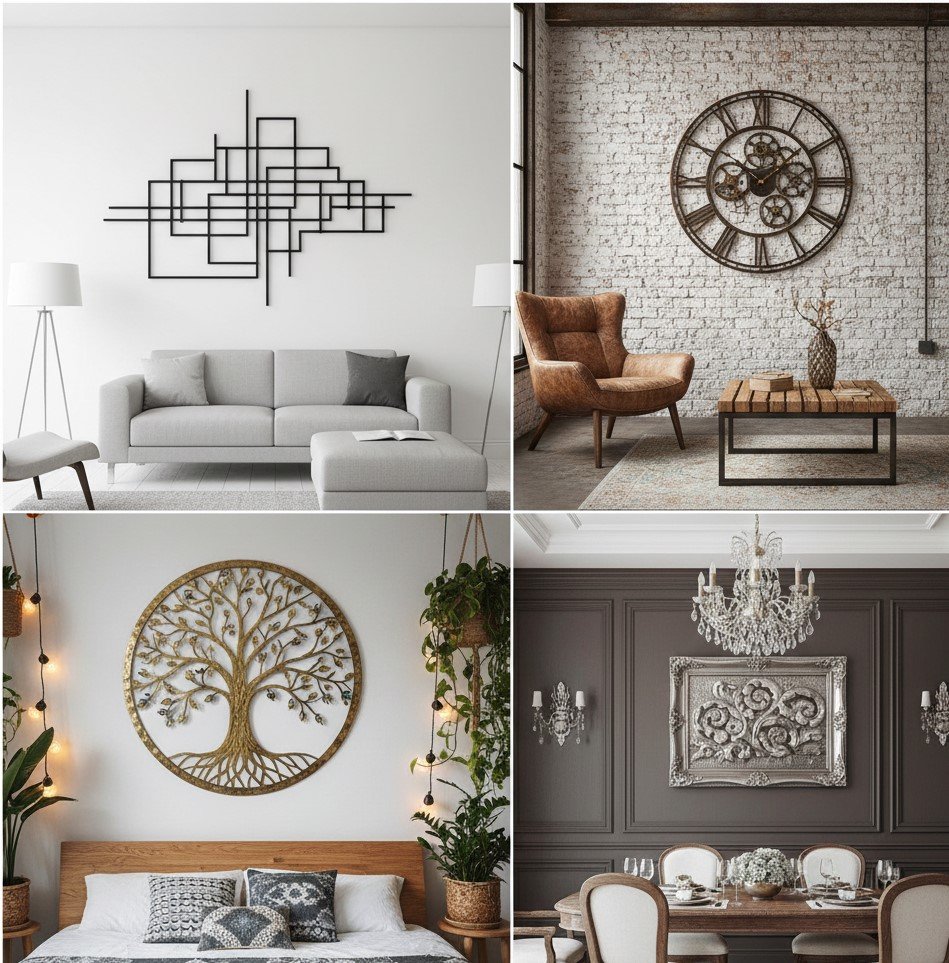
Short answer: yes, if the design matches the space.
Modern and minimalist rooms pair well with geometric or abstract metal designs. Industrial interiors favor raw or dark finishes. Floral or organic metal art softens contemporary spaces. In neutral rooms, metal art often becomes the focal point without overpowering furniture.
Metal wall art adapts to most interiors because design, not material, defines compatibility.
- Modern interiors favor geometric, linear, or abstract designs
- Minimalist spaces benefit from single-piece silhouettes
- Industrial rooms pair well with darker finishes and layered metal
- Transitional interiors often use organic or nature-inspired patterns
The neutrality of metal allows it to act as a visual anchor without clashing with textiles, wood, or stone.
Metal wall art is style-agnostic only when design, finish, and scale are chosen intentionally. The mistake many guides make is claiming universal compatibility without explaining why or how. In reality, metal wall art adapts because it functions as a structural visual element, not a decorative surface.
What matters is not the metal itself, but how its form language aligns with the room.
Modern and contemporary interiors
Modern interiors favor clarity and restraint. Metal wall art works exceptionally well here because it introduces contrast without visual noise. Clean lines, geometric forms, and negative space reinforce the architectural feel of modern rooms.
Matte black, charcoal, or monochrome finishes integrate seamlessly. Designs with sharp edges or continuous outlines echo modern furniture and lighting profiles. In these spaces, metal wall art often replaces traditional paintings entirely.
Minimalist interiors
Minimalism demands discipline. One strong piece is better than several smaller ones.
Metal wall art suits minimalist spaces when it acts as a singular focal anchor. Thin-profile designs, single-color finishes, and simple silhouettes prevent clutter. The shadows created by metal add depth without adding objects.
The key mistake to avoid in minimalist rooms is over-detail. Intricate or busy designs break the visual calm.
Industrial and loft-style interiors
Industrial interiors almost seem designed for metal art, but they still require control.
Raw textures, exposed brick, concrete walls, and visible ductwork pair naturally with metal. Darker finishes, layered metal designs, or heavier visual weight feel appropriate here. Industrial spaces can support larger and bolder pieces without overwhelming the room.
However, untreated raw metal should still be sealed indoors to prevent dust residue and wall staining.
Scandinavian and neutral interiors
Scandinavian interiors rely on light, balance, and warmth. Metal wall art works here when it is visually light, not physically heavy.
White, soft gray, or muted metallic finishes blend well with pale walls and natural wood. Organic shapes or nature-inspired designs prevent the metal from feeling cold or harsh.
In these spaces, metal wall art should complement the room, not dominate it.
Traditional and transitional interiors
Metal wall art can work in traditional spaces, but only with the right design language.
Curved forms, floral motifs, symmetrical patterns, and warmer finishes integrate better than abstract geometry. Thin black metal often feels too modern here, while bronze or dark neutral tones feel more at home.
In transitional interiors, metal wall art acts as a bridge between classic furniture and modern accents.
How metal wall art influences visual balance in a room
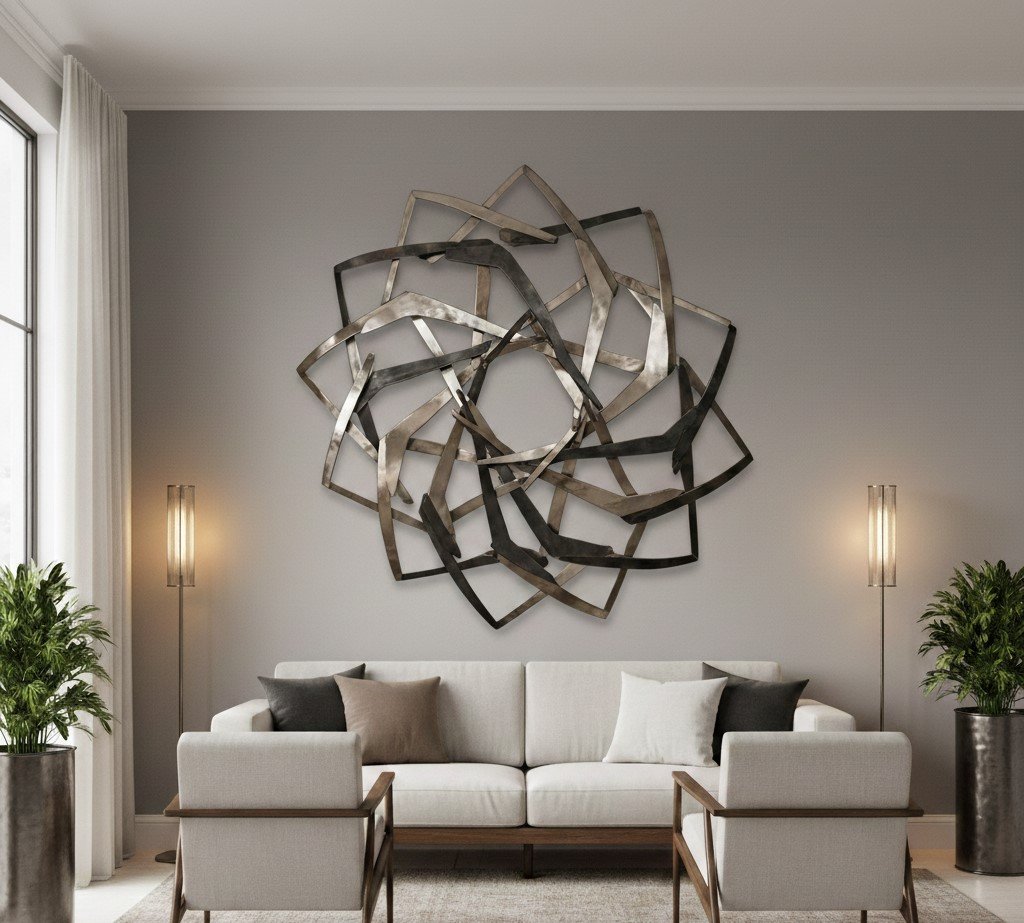
Metal wall art affects how a room feels proportionally.
Because it has physical depth, it carries more visual weight than flat artwork. This means placement matters. Centering a heavy metal piece on a narrow wall can make the room feel compressed. On a wide wall, the same piece can ground the space.
Vertical designs visually raise ceiling height. Horizontal designs widen the room. This makes metal wall art a subtle architectural tool, not just decoration.
How texture and negative space change room perception
Metal wall art introduces negative space, areas where the wall shows through the design.
Negative space reduces visual density and prevents the artwork from feeling bulky. This is why large metal wall art often feels lighter than large canvas pieces of the same size.
Texture also plays a role. Smooth surfaces feel modern and controlled. Cut or layered textures add depth and interest, especially on plain walls.
When metal wall art does NOT work well indoors?
There are situations where metal wall art is a poor choice.
- Extremely small rooms with busy walls
- Spaces already overloaded with décor
- Rooms with fragile wall surfaces and no mounting flexibility
- Interiors where softness and fabric dominate every surface
In these cases, metal can feel intrusive rather than complementary. Knowing when not to use metal wall art is a sign of good design judgment.
How metal wall art interacts with furniture and layout
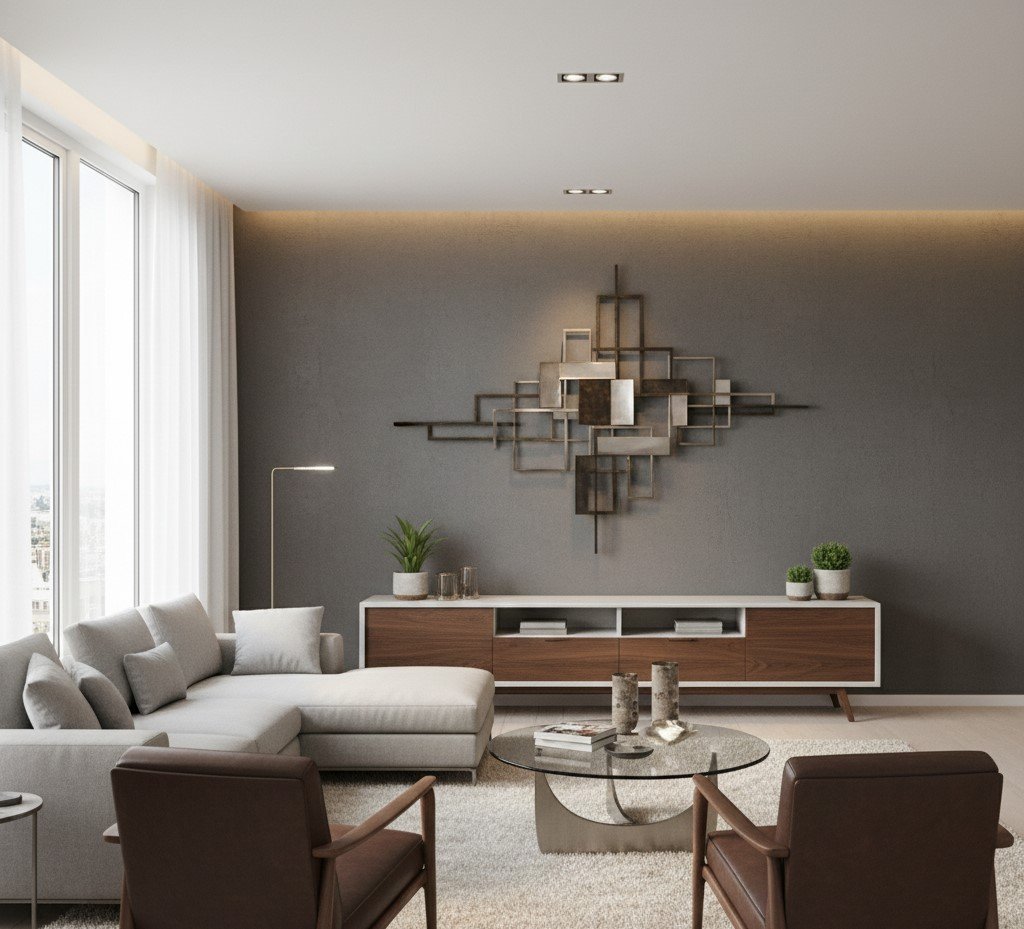
Metal wall art should relate to furniture, not float independently.
Above sofas, beds, or consoles, the artwork should visually anchor the furniture. A common mistake is hanging metal wall art too high, which disconnects it from the room’s layout.
The bottom edge should typically sit 20–30 cm above furniture. This keeps the visual flow grounded and intentional.
Color psychology and metal wall art finishes
Color matters even when the art is metal.
Black communicates strength and structure. White feels airy and calm. Metallic tones introduce sophistication but can reflect light unpredictably.
In neutral interiors, metal wall art often replaces color with form-based contrast, which feels more timeless than trend-based palettes.
Why metal wall art feels “timeless” compared to other décor
Metal wall art ages differently.
It does not rely on printed imagery, pop culture, or seasonal color trends. Its appeal comes from form, proportion, and material presence. This is why metal wall art often stays relevant even as furniture, textiles, or paint colors change.
This longevity is one of the strongest reasons people choose metal wall art for primary living spaces.
Metal wall art vs canvas or framed prints
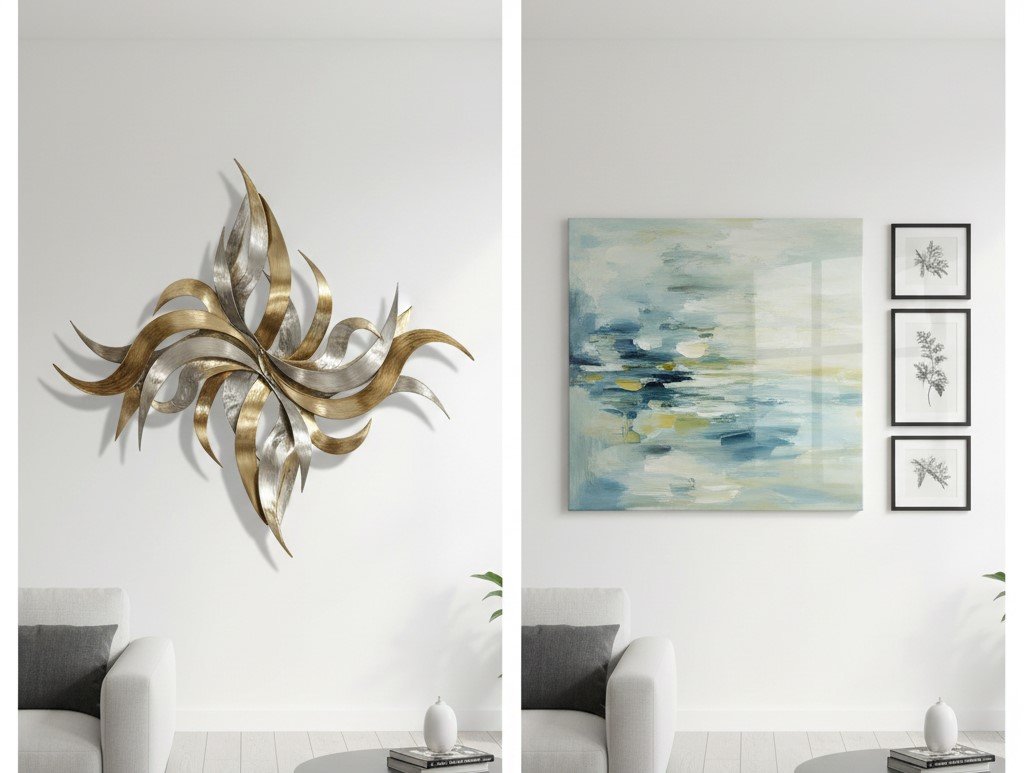
Short answer: metal lasts longer and adds depth.
Canvas and prints rely on color and imagery. Metal wall art adds texture, shadow, and structure. It does not sag, fade easily, or warp with humidity. For long-term interior décor, metal holds visual authority better, especially in high-traffic rooms.
Canvas and framed prints rely on imagery. Metal wall art relies on form.
Canvas can fade, stretch, or warp over time. Frames collect dust and require alignment. Metal wall art maintains its structure indefinitely under indoor conditions.
Another key difference is permanence. Metal wall art is chosen less frequently but kept longer, making it better suited for feature walls and long-term interior planning.
Metal wall art by room type: what actually works in real homes
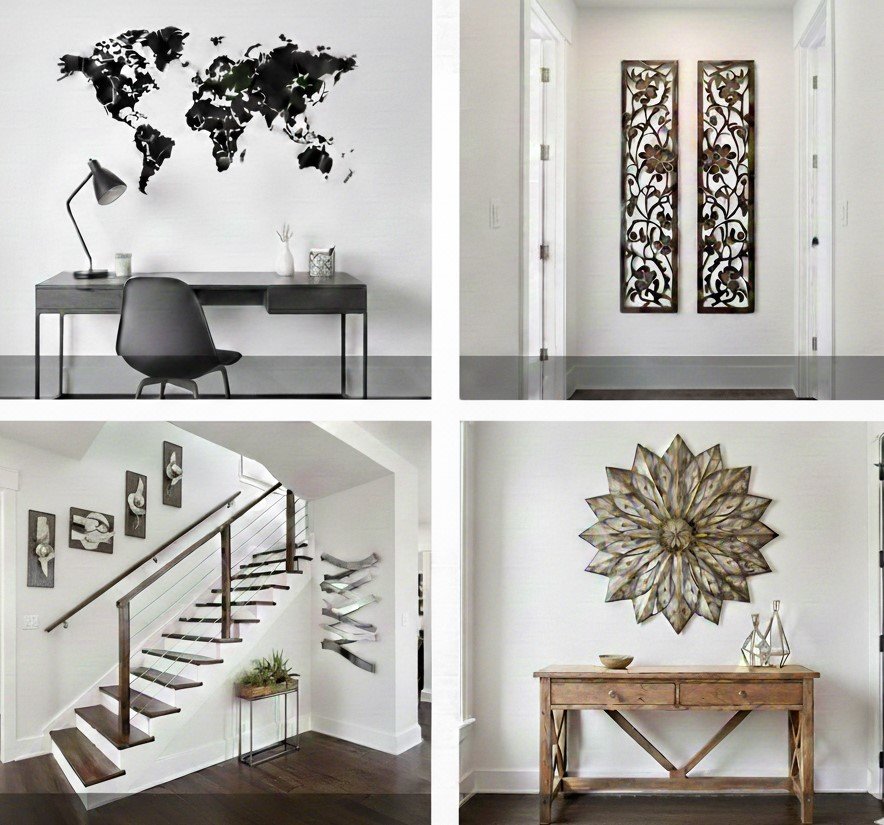
Art performs differently depending on how a room is used, how long people stay in it, and how visual weight is distributed. Treating all rooms the same is a common design error. Below is room-specific logic that helps users choose correctly and helps search systems understand applied intent.
Metal wall art for living rooms
The living room is where metal wall art performs best and is most commonly used.
Living rooms can support larger scale pieces because walls are usually wider and furniture layouts are more stable. Metal wall art works especially well above sofas, sectionals, or console tables where it visually anchors the seating area.
Best practices:
- Choose a width that fills 60–75% of the sofa width
- Horizontal or multi-panel designs work better than tall vertical pieces
- Matte or textured finishes reduce glare from windows and TVs
- Avoid overly intricate designs if the room already has strong patterns
In living rooms, metal wall art often replaces traditional framed artwork because it feels more architectural and permanent.
Metal wall art for bedrooms
Bedrooms require restraint.
Metal wall art works best when it supports calm and balance rather than visual dominance. Above the bed, safety and weight distribution become more important than scale.
Best practices:
- Choose lightweight designs or aluminum when mounting above beds
- Prefer organic, flowing shapes over sharp geometry
- Keep finishes matte to avoid reflective distraction
- Maintain adequate clearance above headboards
In bedrooms, metal wall art should feel intentional but quiet, adding texture without disrupting rest.
Metal wall art for dining rooms
Dining rooms benefit from metal wall art because walls are often uninterrupted and visible for long periods.
Metal designs with symmetry or rhythm work well here. Horizontal pieces above sideboards or centered feature walls help define the dining zone.
Best practices:
- Align artwork with the center of the dining table, not the wall
- Avoid high-gloss finishes that reflect overhead lighting
- Use designs that complement table shape and lighting fixtures
In dining spaces, metal wall art often reinforces a sense of formality and structure.
Metal wall art for home offices
Home offices demand clarity, not distraction.
Metal wall art works when it reinforces focus and professionalism. Abstract or geometric designs outperform decorative or narrative art in workspaces.
Best practices:
- Place art within peripheral vision, not directly behind screens
- Use minimal designs with clean lines
- Keep size moderate to avoid visual dominance
- Neutral finishes reduce mental fatigue
In professional environments, metal wall art often communicates intentional design and stability, which subtly affects how the space feels during long work sessions.
Metal wall art for hallways and corridors
Hallways are transition spaces, which makes them ideal for metal wall art.
Long, narrow walls benefit from linear or multi-panel metal designs that guide the eye forward. Because people move through hallways quickly, bold shapes work better than fine detail.
Best practices:
- Use slimmer profiles to avoid physical intrusion
- Maintain consistent spacing if using multiple pieces
- Vertical designs help visually stretch short corridors
Metal wall art in hallways adds identity to otherwise overlooked spaces.
Metal wall art for staircases
Staircases are visually complex areas, but metal wall art can enhance them when planned correctly.
Vertical compositions work well alongside stairs because they mirror upward movement. The key is alignment, not symmetry.
Best practices:
- Follow the slope of the staircase visually
- Use lighter designs to avoid visual heaviness
- Avoid sharp protrusions near handrails
Metal wall art in staircases often becomes a signature feature of the home.
Metal wall art for entryways and foyers
Entryways form first impressions.
Metal wall art works here when it is clear, confident, and uncluttered. Oversized pieces can work surprisingly well if the wall is open and unobstructed.
Best practices:
- Choose a single statement piece
- Keep mounting height aligned with eye level
- Avoid overly detailed designs that require close inspection
In entry spaces, metal wall art sets the tone for the rest of the interior.
Small rooms vs large rooms: scaling rules that matter
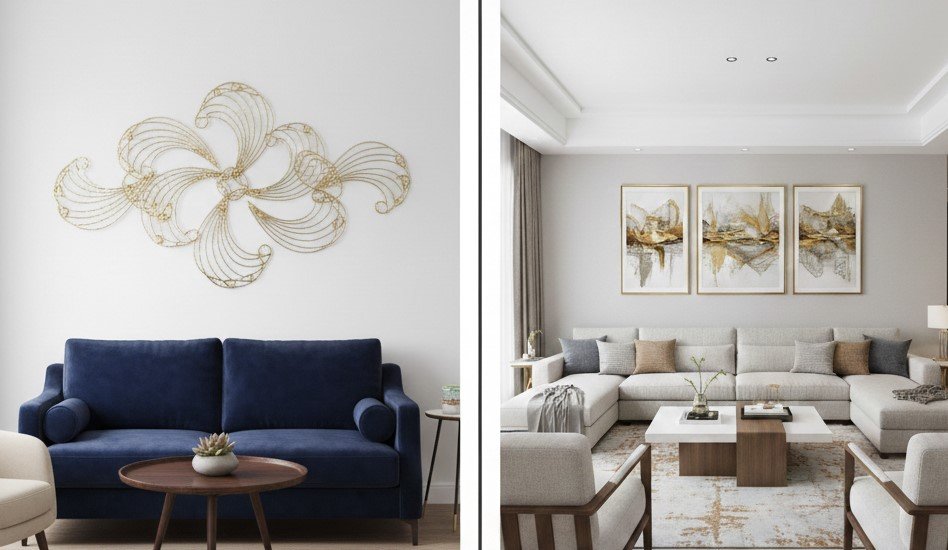
Metal wall art does not scale linearly.
Small rooms need visual lightness, not small art. Thin designs with open negative space work better than compact, dense pieces. Large rooms can support both scale and complexity.
A common mistake is shrinking artwork too much in small spaces, which makes walls feel unfinished rather than balanced.
Ceiling height considerations
Ceiling height influences orientation.
- Low ceilings benefit from vertical designs
- High ceilings allow stacked or layered compositions
- Avoid placing heavy horizontal art too high on tall walls
Metal wall art can subtly correct proportions when orientation is chosen deliberately.
Room-by-room metal wall art comparison table
| Room Type | Recommended Size Range | Best Material | Finish Preference | Mounting Method | Key Design Rule |
| Living Room | 90–180 cm width (or triptych) | Steel or Aluminum | Matte black, textured | Wall anchors or studs | Fill 60–75% of sofa width |
| Bedroom | 60–120 cm width | Aluminum or thin steel | Matte, low-glare | Studs or heavy anchors | Prioritize safety and calm |
| Dining Room | 80–150 cm width | Steel | Matte or satin | Anchors or studs | Align with table center |
| Home Office | 50–100 cm width | Aluminum | Neutral matte | Anchors | Avoid visual distraction |
| Hallway | Linear or multi-panel | Aluminum | Matte | Anchors | Guide eye through space |
| Staircase | Vertical compositions | Aluminum or steel | Matte | Studs | Follow stair direction |
| Entryway | 70–140 cm width | Steel | Matte or subtle metallic | Anchors or studs | Single statement piece |
How to read this table correctly
Many readers misinterpret size recommendations.
The size range refers to visual width, not wall width. A 150 cm metal wall art piece does not need a 150 cm wall. It needs enough negative space around it to allow shadows and form to breathe.
Material choice is driven by weight tolerance and mounting flexibility, not durability for indoor use.
Common mis-matches this table helps avoid
- Heavy steel art above beds without stud support
- Oversized art in narrow hallways
- Glossy finishes in rooms with strong natural light
- Dense designs in already busy interiors
Avoiding these mismatches prevents regret and reinstallation.
How to test placement before installing
Before installation:
- Measure the artwork and mark dimensions with painter’s tape
- Step back and view from typical seating positions
- Observe lighting changes throughout the day
- Confirm anchor points and wall structure
This planning step prevents most placement regrets and reinstallation damage.
Will metal wall art damage walls or paint?
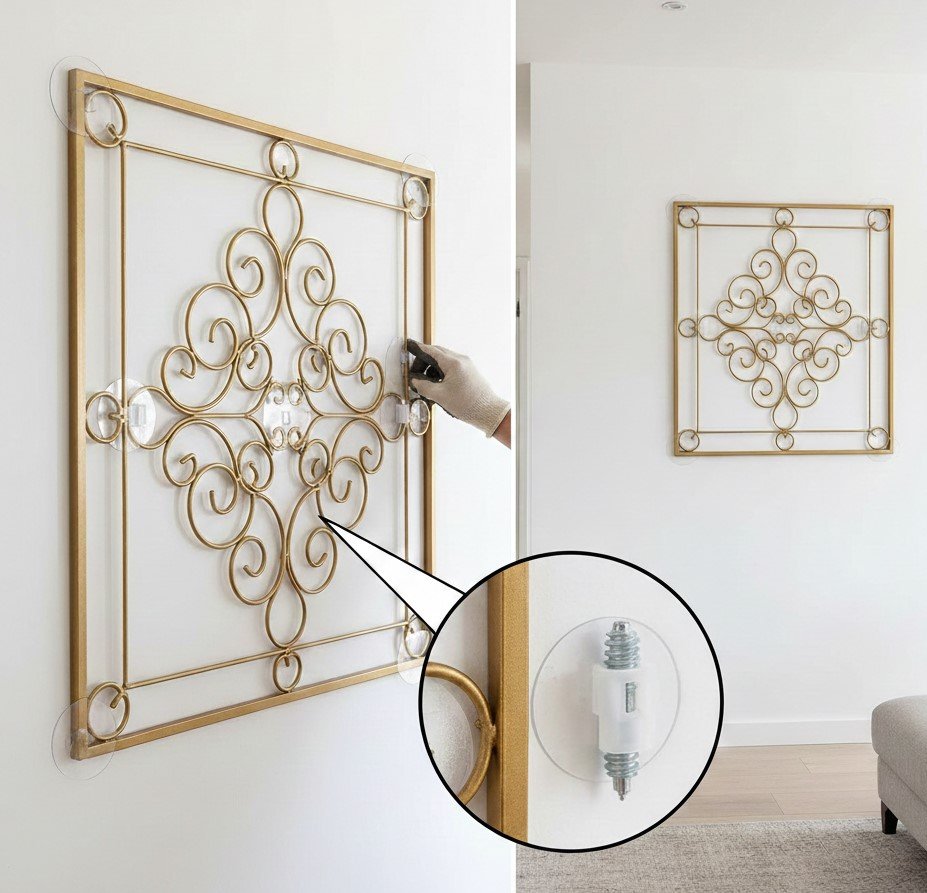
Short answer: not when mounted correctly.
Most quality pieces include spacers or rear mounts that prevent direct wall contact. Felt pads or standoff mounts eliminate friction marks. Damage usually comes from poor installation, not the material itself.
Quality indoor metal wall art is designed to minimize wall contact.
Rear spacers, felt pads, or standoff mounts prevent abrasion. Damage typically occurs when artwork is mounted flush without protection or shifted repeatedly. Once installed correctly, metal wall art remains stable and does not rub against the wall surface.
Does indoor metal wall art rust?
Short answer: no, if it’s made for indoor use.
Indoor metal wall art is sealed with paint or powder coating. Rust only becomes a concern in bathrooms or kitchens with constant moisture. Even there, coated steel performs well with basic ventilation.
Rust is not a concern for indoor metal wall art when it’s properly finished.
Powder-coated or sealed metal resists oxidation. Even in kitchens or bathrooms, normal ventilation is sufficient to prevent moisture buildup. Rust issues usually indicate poor coating quality or misuse of outdoor-unrated pieces indoors.
How do lighting and shadows affect metal wall art?
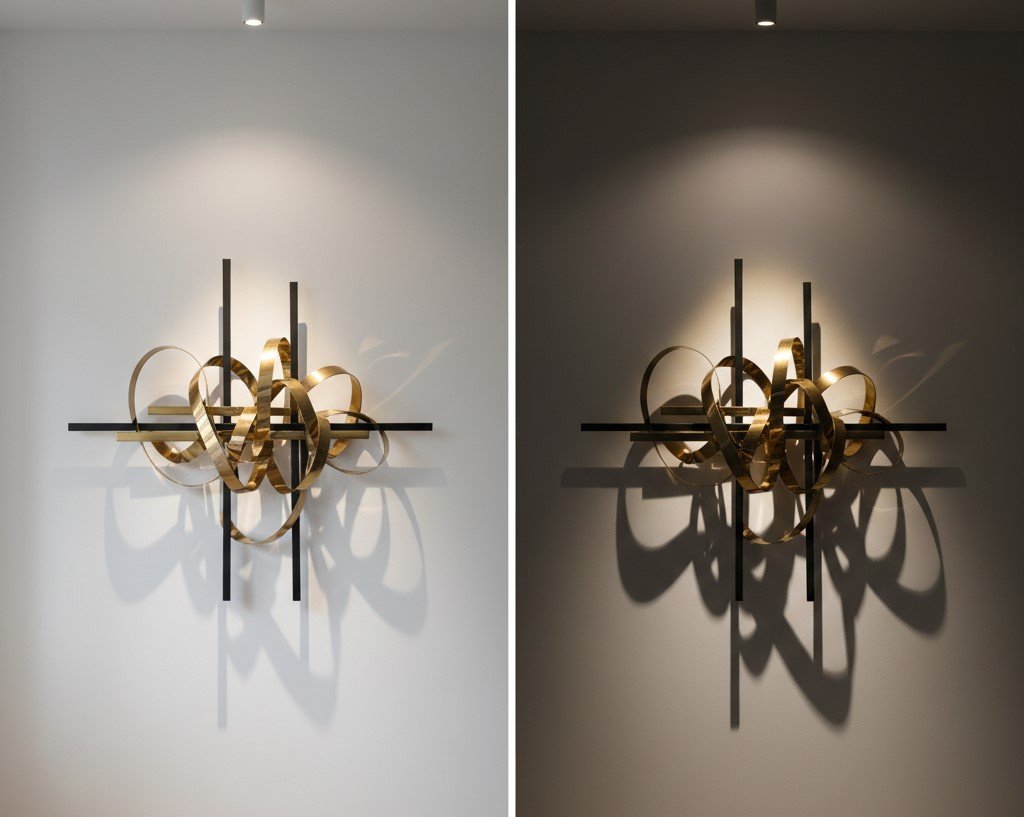
Lighting is part of the design.
Metal wall art interacts with light differently than flat décor. Directional lighting creates shadows that enhance depth. Soft ambient lighting produces subtle contrast. Glossy finishes reflect light, while matte finishes absorb it.
This dynamic quality is one reason metal wall art remains visually engaging over time.
How do you clean and maintain metal wall art?
Short answer: dry dusting is usually enough.
Use a soft microfiber cloth. Avoid abrasive sponges or chemical cleaners. For fingerprints, a lightly damp cloth works. Indoor metal wall art typically needs attention only a few times a year.
Maintenance is minimal.
A microfiber cloth removes dust. For smudges, a lightly damp cloth is enough. Avoid abrasive cleaners or chemical sprays. Indoor metal wall art does not require polishing, sealing, or special treatments.
How long does indoor metal wall art last?
Short answer: 10–25 years with minimal care.
Quality indoor pieces outlast most wall décor. Powder-coated finishes retain color and structure for decades. Unlike wood or canvas, metal does not warp, stretch, or sag.
Well-made indoor metal wall art can last 10 to 25 years or longer.
The metal itself does not degrade under indoor conditions. Lifespan depends almost entirely on finish quality and mounting stability. Compared to most décor materials, metal has one of the longest functional lifespans.
Is metal wall art suitable for rental homes?
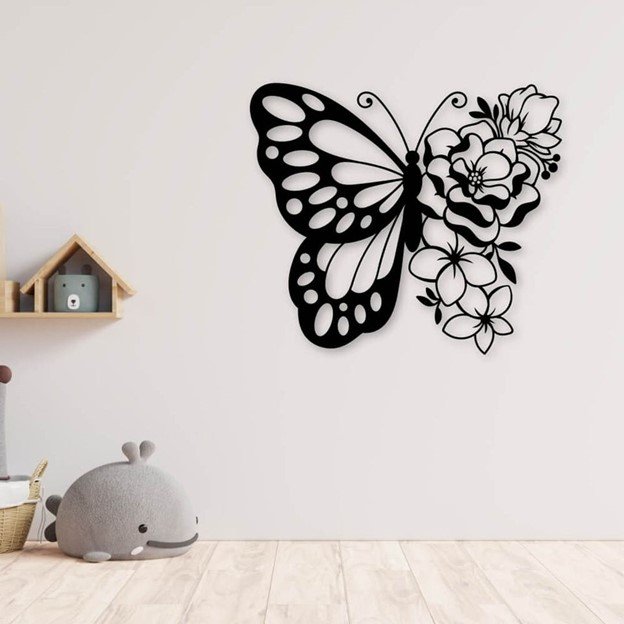
Short answer: yes, with removable anchors.
Lightweight aluminum pieces and smaller steel designs can be mounted using removable drywall anchors. This allows clean removal without major wall repair.
Yes, especially when weight is considered.
Aluminum or thin steel pieces can be mounted with removable anchors. Many designs allow clean removal with minimal wall repair, making them suitable for temporary living spaces.
What separates quality metal wall art from cheap pieces?
Short answer: finish, edges, and mounting design.
Quality pieces have smooth, deburred edges, consistent coating, and secure mounting points. Cheap art often has sharp edges, uneven paint, and weak hangers. The back of the piece usually reveals the truth.
Several indicators reveal quality immediately:
- Smooth, deburred edges
- Even coating without bubbles or thin spots
- Balanced mounting points
- Rigid structure without flexing
The back of the artwork often reveals whether it was designed thoughtfully or mass-produced cheaply.
Common mistakes people make when buying metal wall art
- Choosing size too small for the wall
- Ignoring mounting requirements
- Using glossy finishes in bright rooms
- Buying outdoor-style art for indoor walls unnecessarily
- Prioritizing price over finish quality
Avoiding these mistakes prevents disappointment and reinstallation costs.
How to plan metal wall art placement before buying
Measure the wall. Mark approximate dimensions with tape. Observe lighting during the day. Check wall structure for studs or anchors. Planning reduces guesswork and ensures the artwork fits both visually and structurally.
Metal wall art pre-purchase checklist (read this before buying)
This checklist is designed to be scanned in under 30 seconds. If every box is mentally checked, the purchase decision is almost always correct.
1. Wall type confirmed
Know what you’re mounting into.
- Drywall only
- Drywall with studs
- Concrete, brick, or tile
Mounting failure is the #1 regret with metal wall art, not design choice.
2. Correct size relative to furniture
Ask one question only:
Does the artwork visually anchor the furniture below it?
If it fills less than half the furniture width, it’s too small.
If it touches nearby elements, it’s too large.
3. Weight matches mounting reality
Heavier is not better.
- Aluminum is ideal when flexibility matters
- Steel is fine when studs or anchors are available
- Oversized steel without stud access is a red flag
Always match material to wall structure.
4. Finish matches lighting conditions
Observe the room during daylight and evening.
- Bright rooms need matte or textured finishes
- Directional lighting exaggerates gloss
- Neutral finishes age better than trendy colors
Light reflection mistakes are permanent annoyances.
5. Design complexity matches room density
Busy rooms need simple art.
Minimal rooms can support complexity.
If the wall already has shelves, lighting, or patterns, choose open designs with negative space.
6. Mounting system is visible and logical
Flip the piece mentally.
Quality metal wall art has:
- Clean rear mounting points
- Balanced weight distribution
- Spacers or standoffs to protect walls
If mounting feels improvised, the product likely is.
7. Clearance and safety checked
Especially important above beds, sofas, and dining tables.
- Bottom edge should not sit directly above head level
- No sharp protrusions near walkways
- Stud mounting preferred for heavy pieces
Safety confidence matters more than visual drama.
8. Longevity expectation aligned
Ask yourself this honestly:
Would I still like this design in five years?
Metal wall art is not seasonal décor. The best pieces survive furniture changes, repainting, and layout shifts.
Why Homeaholic treats metal wall art as a long-term décor choice
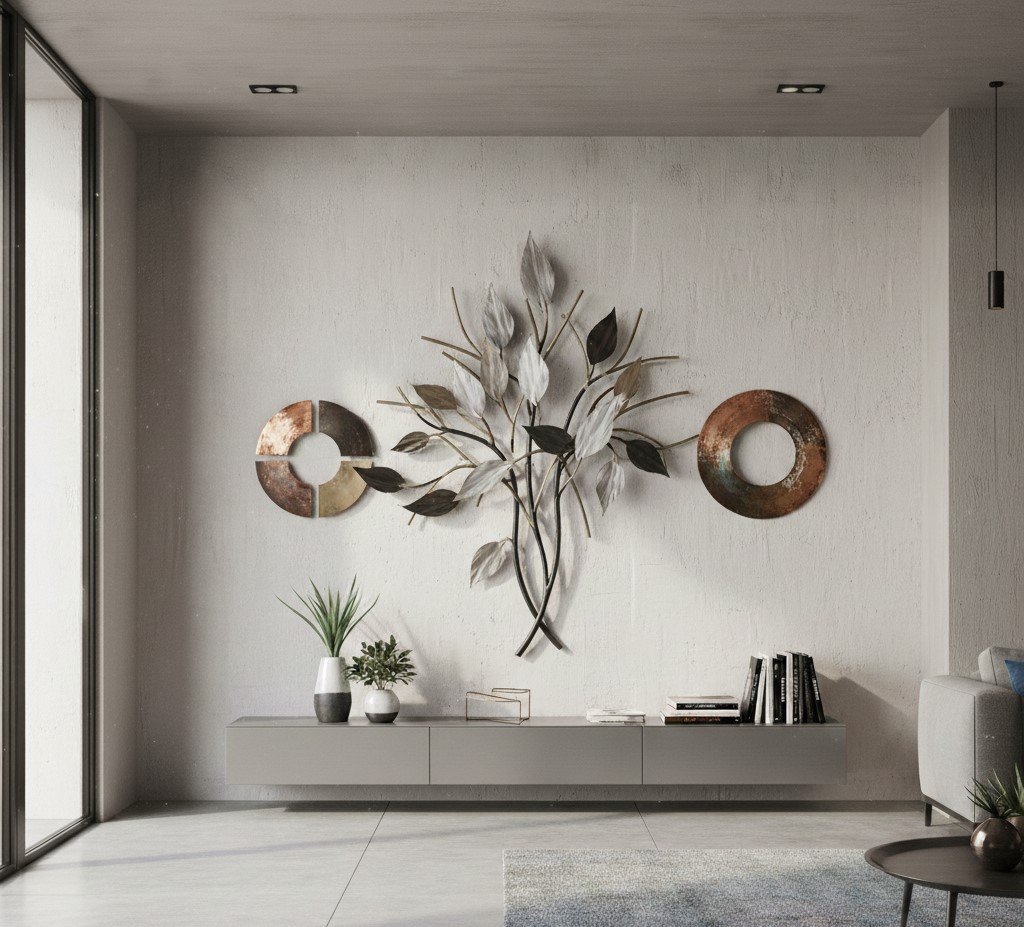
At Homeaholic, metal wall art is positioned as a structural décor investment, not a seasonal accessory. The focus is on indoor-safe materials, balanced weight, refined finishes, and mounting designs that work in real homes, not showrooms.
Frequently Asked Questions
Is metal wall art outdated or still trendy?
Metal wall art remains popular because it adapts to modern and minimalist interiors without relying on trends.
Can metal wall art be hung on tile or concrete walls?
Yes. Masonry anchors or concrete screws work well with heavier pieces.
Does metal wall art reflect too much light?
Matte and textured finishes minimize glare. Glossy finishes should be used carefully.
Is metal wall art safe above a bed?
Yes, when stud-mounted or installed with heavy-duty anchors.
Can metal wall art be customized in size or shape?
Many designs allow custom scaling, but weight and mounting must be adjusted accordingly.
Does metal wall art fade over time?
Indoor pieces with quality coatings resist fading far better than prints or canvas.









0 Comments