
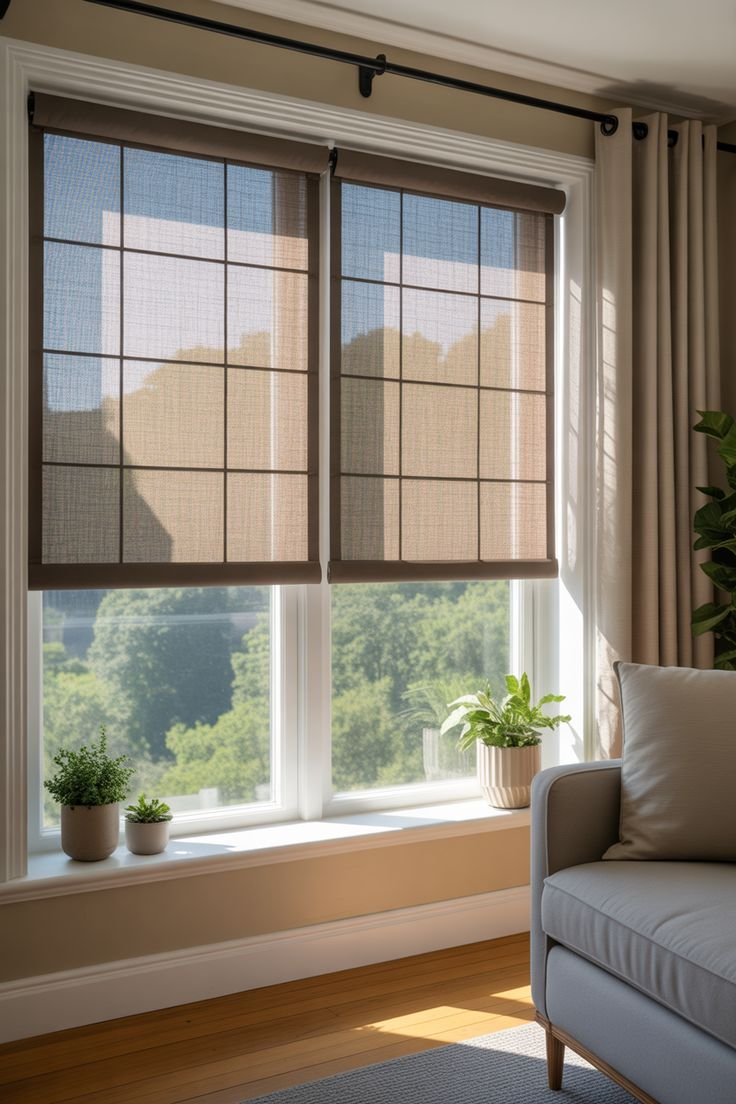
Sunroom windows are specialized glazing systems designed to maximize daylight while managing insulation, ventilation, and seasonal temperature swings. The right system depends on whether the room is 3-season or 4-season, your climate zone, frame material durability, and glass performance ratings like U-factor and SHGC.
What are sunroom windows and how are they different from regular house windows?
Short answer: Sunroom windows are designed for higher glass exposure and seasonal climate variability compared to standard house windows.
Unlike typical residential windows installed in insulated wall cavities, sunroom windows often occupy larger surface areas and face direct solar exposure for extended hours. This changes thermal load dynamics.
Key differences:
- Greater glass-to-wall ratio
- Higher solar heat gain exposure
- Increased condensation risk
- Often part of modular enclosure systems
Using standard house windows in a sunroom can lead to overheating in summer or heat loss in winter if performance specs are not matched to exposure.
Most people assume sunroom windows are just “more windows.” That assumption causes performance problems.
A traditional home window is surrounded by insulated framing and integrated into a wall system designed for thermal buffering. A sunroom window often makes up 50–80% of the wall area. That changes:
- Heat load dynamics
- Air pressure behavior
- Condensation risk
- Structural stress from wind
Because glass becomes the dominant surface, its thermal characteristics matter exponentially more than in a conventional room.
In colder climates, improper glazing turns the sunroom into a cold sink. In warmer climates, it becomes a greenhouse. That is why sunroom windows must be specified differently than bedroom or kitchen windows.
What types of sunroom windows are available?
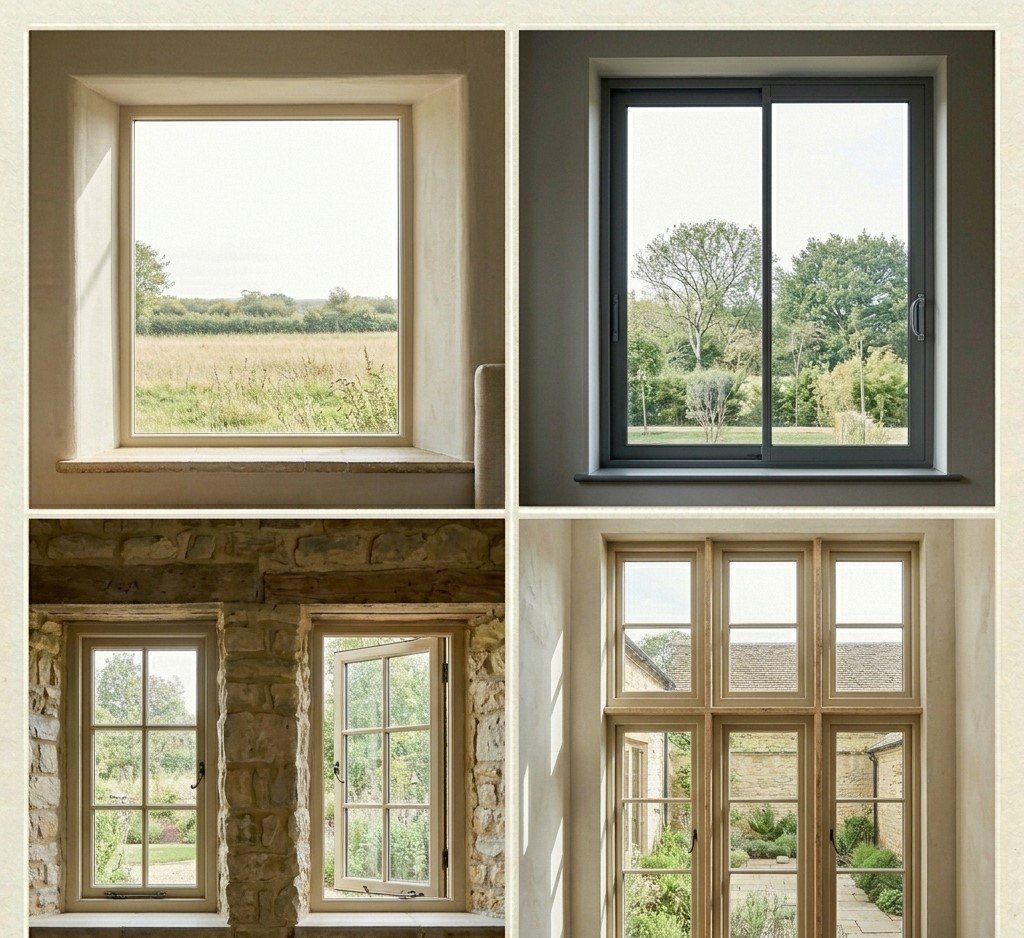
Short answer: Fixed, sliding, casement, double-hung, and floor-to-ceiling panels are most common.
Fixed Windows
Do not open. Maximize light and insulation. Best for controlled climates.
Sliding Windows
Horizontal operation. Good ventilation with moderate energy efficiency.
Casement Windows
Hinged, crank-operated. Provide excellent airflow and tight seals.
Double-Hung Windows
Vertical sliding sashes. Balanced ventilation option.
Floor-to-Ceiling Panels
Used in panoramic sunrooms. Highest daylight gain but require high-performance glass.
Beyond basic style categories, selection should be based on air exchange goals and structural configuration.
Ventilation Strategy Modeling
- Fixed + Casement combination improves airflow control.
- Sliding windows work well for screened sunrooms but leak more air in winter.
- Stacked operable windows allow seasonal adaptation.
In humid climates, ventilation capacity reduces mold risk. In dry climates, excessive ventilation increases dust infiltration.
The “type” is not aesthetic. It is environmental strategy.
Ventilation Comparison Table
| Type | Ventilation | Seal Strength | Energy Efficiency | Best Use |
| Fixed | None | Excellent | High | 4-season rooms |
| Sliding | Moderate | Good | Medium | 3-season |
| Casement | High | Excellent | High | Climate-variable |
| Double-hung | Moderate | Good | Medium | Mild climates |
What are sunroom windows in simple terms?
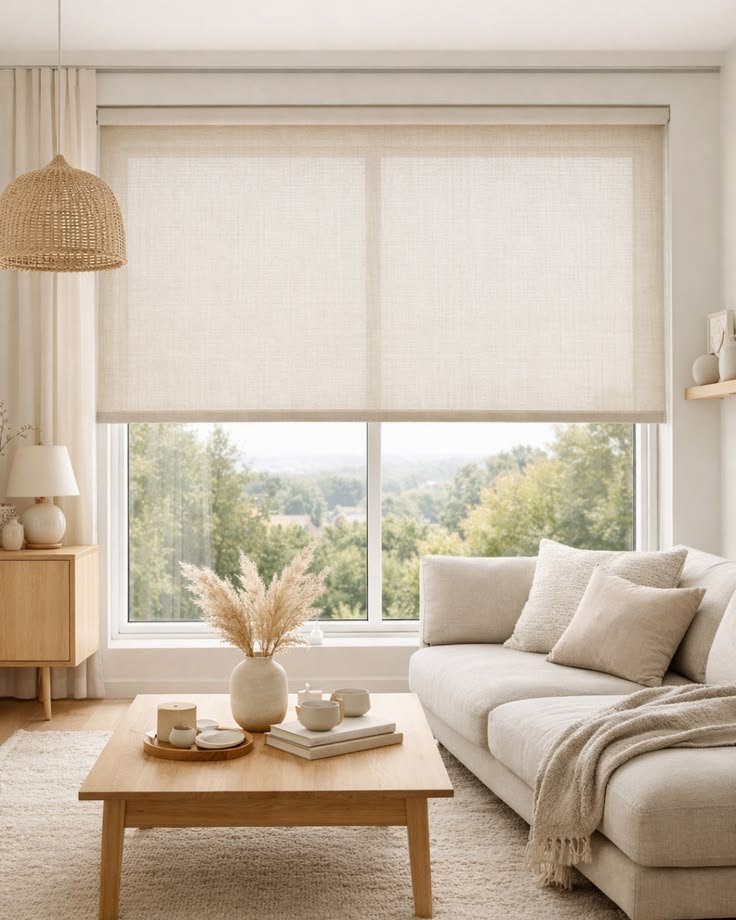
Sunroom windows are high-exposure glazing systems designed to maximize natural light while controlling heat gain, heat loss, condensation, and ventilation. Their performance depends on climate, orientation, glass specifications like U-factor and SHGC, and whether the room is 3-season or 4-season. Wanting more information on “What is a Sunroom overall in simple terms?“, head on out to our complete sunroom design guide breaking down on its different aspects, features and metrics.
Sunroom Windows in 8 Practical Rules
- Match U-factor to winter temperatures
- Match SHGC to summer sun exposure
- Design ventilation intentionally
- Consider orientation before choosing glass
- Use insulated glazing for 4-season rooms
- Choose corrosion-resistant frames in humid areas
- Plan for seal lifespan of 15–20 years
- Verify local building code compliance
If You Live in…
- A cold climate → prioritize low U-factor and insulated frames
- A hot climate → prioritize low SHGC and shading
- A humid climate → prioritize ventilation and condensation control
- A mixed climate → choose balanced SHGC and double-pane Low-E
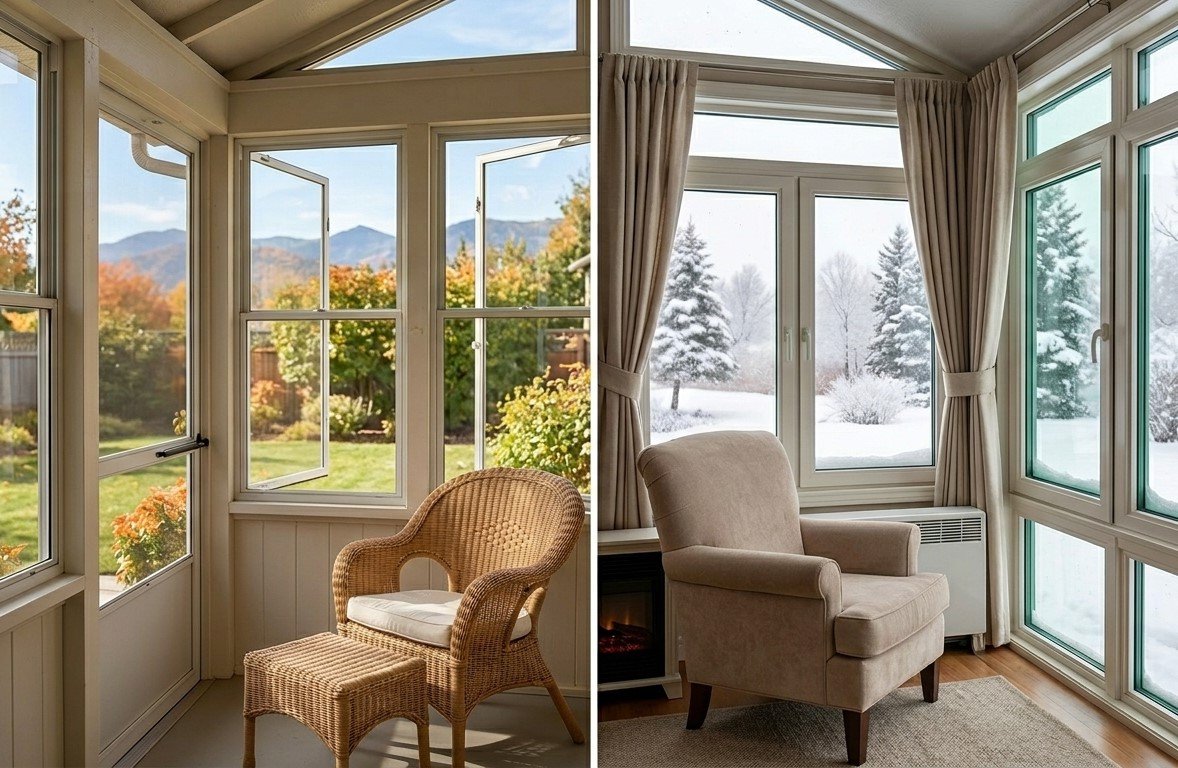
What is the difference between 3-season and 4-season sunroom windows?
Short answer: 3-season windows focus on airflow and light. 4-season windows prioritize insulation and thermal control.
3-Season Sunroom Windows
- Usually single or double pane
- Minimal insulation
- Not designed for freezing climates
Ideal for spring through fall
4-Season Sunroom Windows
- Double or triple pane
- Low-E coatings
- Insulated frames
- Compatible with HVAC systems
4-season windows require lower U-factor ratings and controlled SHGC to prevent energy loss.
The difference is insulation performance under thermal gradient stress.
In a 3-season room, glass only needs to block wind and moderate rain. Insulation is secondary.
In a 4-season room, glass must manage:
- Interior heat retention in winter
- Solar heat control in summer
- Condensation resistance
- HVAC compatibility
A double-pane window with a U-factor of 0.30 performs dramatically better in winter than a single-pane unit with a U-factor above 1.0.
Failure to account for this difference leads to heating bills that rival full home additions.
3-Season vs 4-Season Sunroom Windows (Quick Comparison)
| Feature | 3-Season | 4-Season |
| Insulation | Minimal | High |
| Glass Type | Single or Basic Double | Double or Triple Pane |
| HVAC Compatible | No | Yes |
| Winter Use | Limited | Full |
| Cost | Lower | Higher |
Understanding Window Ratings (In 30 Seconds)
- U-factor measures heat loss. Lower is better in cold climates.
- SHGC measures solar heat gain. Lower is better in hot climates.
- STC measures sound reduction. Higher reduces outside noise.
The Most Common Sunroom Window Mistake
Choosing glass based on price instead of climate and orientation.
This often causes:
- Overheating in summer
- Condensation in winter
- Higher energy bills
Sunroom Windows Are Not Ideal When:
- The structure cannot support insulated glass weight
- No ventilation is possible
- West-facing exposure lacks shading in hot climates
- Budget does not allow insulated glazing for 4-season use
Which frame materials are best for sunroom windows?
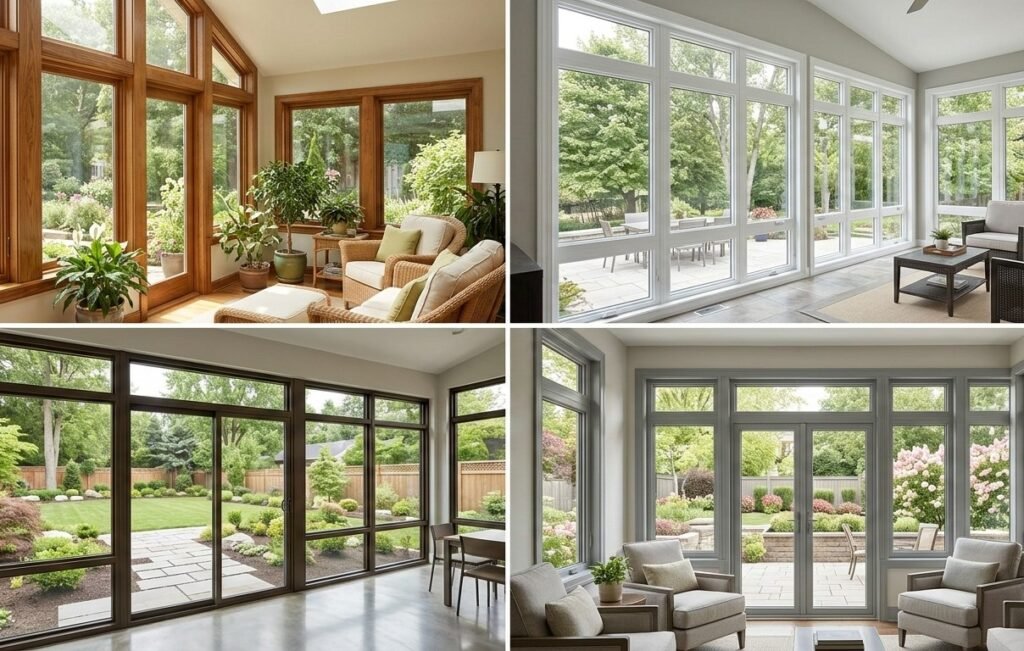
Short answer: Vinyl and aluminum dominate, but climate dictates the best option.
Vinyl
- Low maintenance
- Strong insulation
- Affordable
- Ideal for cold climates
Aluminum
- Lightweight
- Slim profile
- Conducts heat more easily
- Better in warm climates
Fiberglass
- High durability
- Stable in extreme climates
- Higher cost
Wood
- Strong insulation
- High maintenance outdoors
Frame selection affects condensation resistance and lifespan more than aesthetics alone.
Frames create thermal bridges.
Aluminum frames transfer heat quickly. In hot climates, that may not matter. In cold climates, it causes interior condensation.
Vinyl frames insulate better but may expand and contract more in extreme heat.
Fiberglass frames offer high dimensional stability and thermal performance but at higher cost.
The choice is not about durability alone. It is about thermal conductivity vs environmental stress.
What glass options work best for sunrooms?
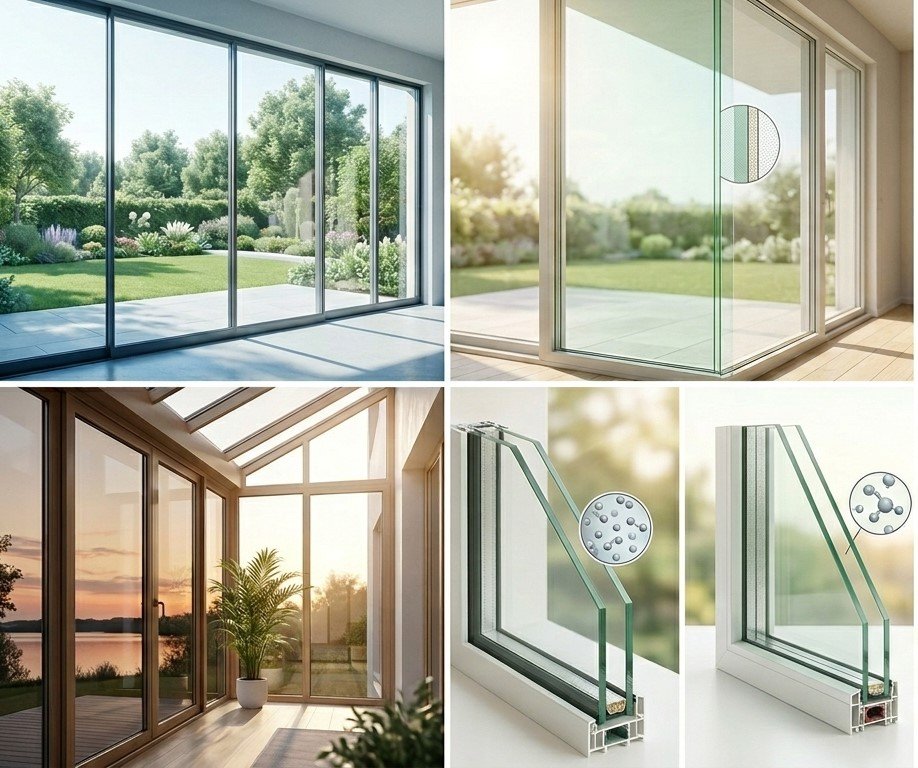
Short answer: Double-pane Low-E glass with argon gas is the standard for energy efficiency.
Single Pane
Low cost. Minimal insulation. Best only for mild climates.
Double Pane (IGU)
Two glass layers separated by spacer. Reduces heat transfer significantly.
Triple Pane
Highest insulation. Suitable for extreme cold climates.
Low-E Coating
Reflects infrared heat while allowing visible light.
Argon Gas
Improves insulation between panes.
Glass technology is where sunroom performance is won or lost.
Low-E Coating Types
There are two main types:
- Hard-coat Low-E (better for colder climates)
- Soft-coat Low-E (better for solar control)
Soft-coat Low-E provides lower SHGC, reducing overheating.
Spacer Technology
Warm-edge spacers reduce condensation along glass edges. Standard aluminum spacers increase edge heat loss.
Gas Fills
Argon is common. Krypton is higher performance but more expensive.
These micro-decisions significantly affect comfort and condensation control.
Glass Performance Table
| Feature | Controls Heat Loss | Controls Heat Gain | Improves Comfort |
| Low-E | Yes | Yes | Yes |
| Argon Gas | Yes | Partial | Yes |
| Triple Pane | Yes | Yes | Yes |
| Tinted Glass | No | Yes | Moderate |
Understanding U-factor (heat loss rate) and SHGC (solar heat gain) is essential for climate matching.
Are sunroom windows energy efficient?
Short answer: Yes, when properly specified for climate and seasonal use.
Energy efficiency depends on:
- Glass layers
- Frame insulation
- Seal quality
- Installation precision
A 4-season sunroom with insulated glazing can reduce heating loss by up to 30–50% compared to single-pane systems.
Energy efficiency depends on solar orientation.
A north-facing sunroom may lose more heat than it gains in winter. A south-facing sunroom may gain excessive heat in summer.
Optimizing SHGC:
- Cold climates benefit from moderate SHGC to capture winter sun.
- Hot climates require lower SHGC to prevent overheating.
Energy efficiency is not one-size-fits-all. It is climate-matched engineering.
How do sunroom windows affect temperature control and overheating?
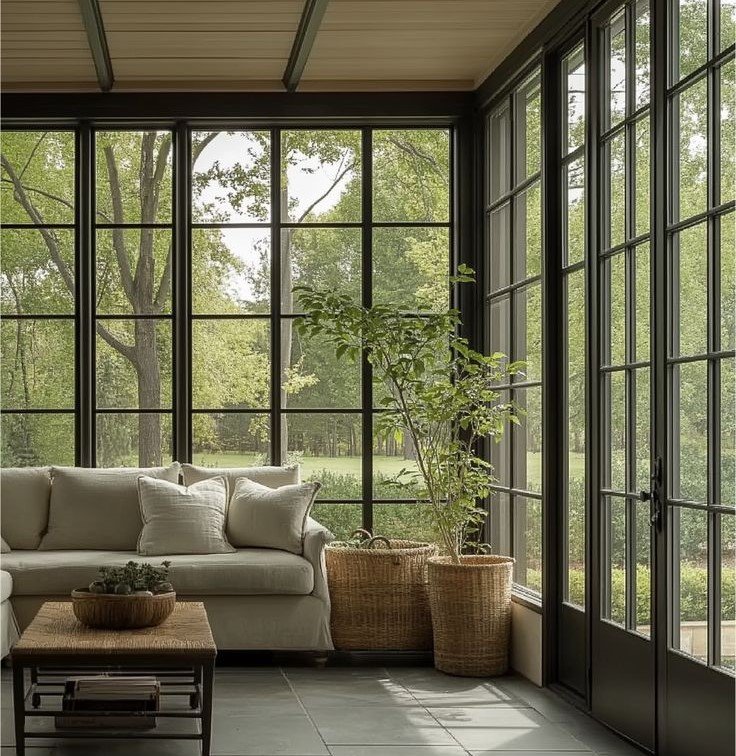
South-facing sunrooms can overheat rapidly.
Factors influencing overheating:
- High SHGC glass
- Lack of cross ventilation
- No shading solutions
Solutions:
- Low-E coatings
- Solar control glass
- Operable windows for airflow
- Exterior shading systems
Proper glazing selection prevents greenhouse effect buildup.
Sunrooms amplify solar radiation.
Direct sunlight through glass can increase interior temperature by 15–25°F above outdoor ambient levels if unmanaged.
Solutions include:
- Exterior shading systems
- Tinted or reflective glass
- Ventilation planning
- Ceiling fans for thermal circulation
Passive control reduces reliance on mechanical cooling.
Do sunroom windows provide ventilation and airflow?
Yes, depending on window style.
Casement windows allow up to 100% sash opening. Sliding windows allow 50% opening. Cross ventilation requires openings on opposing walls.
Stack effect ventilation can also be used in taller sunrooms to exhaust hot air upward.
Ventilation must be designed, not assumed.
Cross ventilation requires:
- Operable windows on opposing walls
- Vertical variation in height to create stack effect
- Adequate opening area ratio
Minimum recommendation:
Operable area equal to at least 10–15% of total floor area for effective airflow.
Without airflow planning, moisture accumulates even in insulated systems.
How much do sunroom windows cost?
Cost varies by size, glass type, and frame material.
Estimated ranges:
- 3-season systems: $300–$700 per window
- 4-season insulated windows: $600–$1,500 per unit
- Full sunroom glazing systems: $8,000–$25,000+
Installation complexity increases cost significantly.
Beyond base price, cost includes:
- Glass performance upgrades
- Custom sizing
- Structural reinforcement
- Permits
- Installation labor
- Energy code compliance
Hidden cost drivers:
- Non-standard shapes
- Large floor-to-ceiling panels
- High wind rating requirements
Always evaluate cost per square foot of glass, not per window alone.
Do sunroom windows require permits or meet building codes?
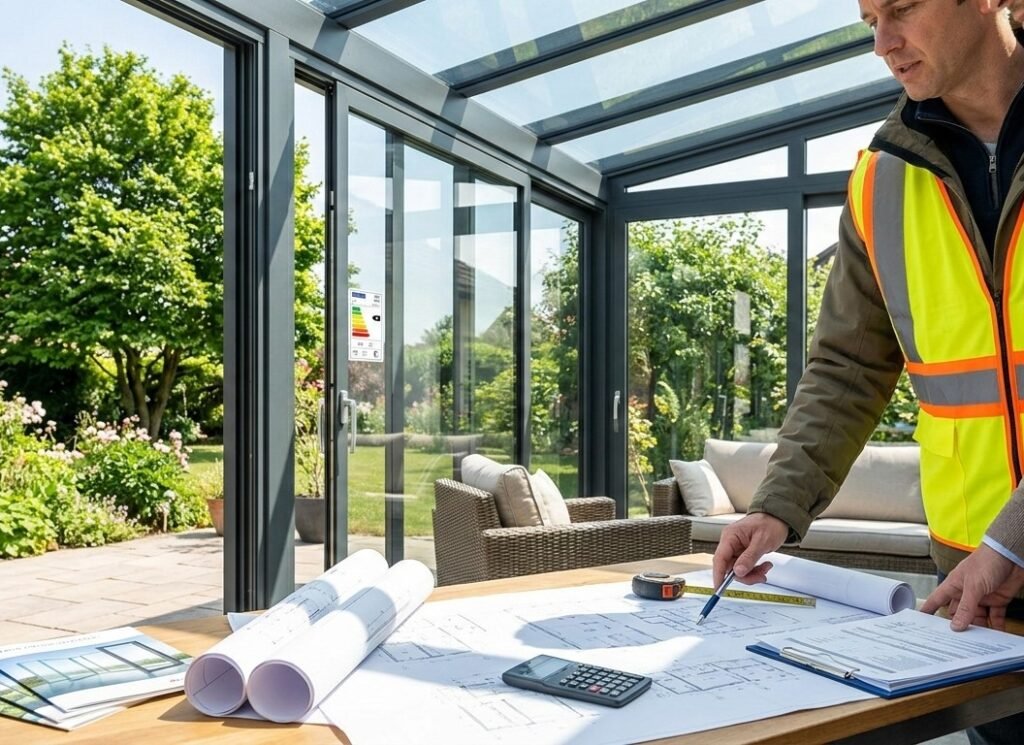
In many regions, yes.
Code considerations:
- Tempered safety glass requirements
- Energy efficiency ratings
- Structural wind load
- Hurricane impact zones
Permit requirements vary by country and local jurisdiction.
Many regions classify 4-season sunrooms as habitable space.
This may trigger:
- Energy code compliance
- Structural inspection
- Egress requirements
- Safety glazing mandates
Tempered or laminated glass is often required below certain heights for impact safety.
Ignoring compliance can complicate resale.
How long do sunroom windows last?
Lifespan varies by material and seal quality.
- Vinyl frames: 20–30 years
- Aluminum: 15–25 years
- Glass seals: 15–20 years average
Seal failure is the most common reason for replacement.
The glass seal is the weak point.
Double-pane units rely on perimeter seals to contain insulating gas. UV exposure and temperature cycling eventually degrade seals.
Signs of failure:
- Fogging between panes
- Visible condensation inside glass layers
- Reduced clarity
Seal lifespan averages 15–20 years.
Frame longevity may exceed glass longevity.
Can you replace sunroom windows without rebuilding the structure?
Often, yes.
Retrofit replacement depends on:
- Frame compatibility
- Structural integrity
- Glass sizing
Energy upgrades can usually be performed without full rebuild.
Replacement feasibility depends on frame integration.
Modular sunroom systems often allow panel replacement without structural modification.
Site-built sunrooms may require reframing.
Upgrading from single-pane to double-pane often improves comfort dramatically without altering the entire room.
What common problems occur with sunroom windows?
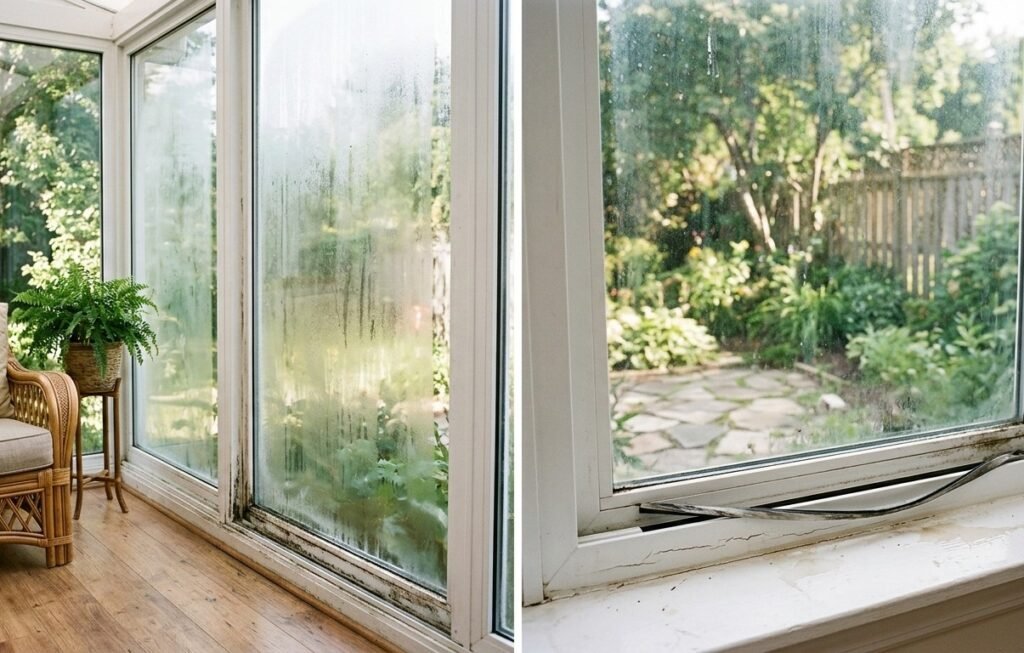
Most common issues:
- Condensation
- Seal fogging
- Drafts
- Overheating
- Glare
These issues usually trace back to improper glass selection or installation shortcuts.
Condensation
Caused by interior humidity and cold glass surface temperature.
Seal Fogging
Caused by perimeter seal failure.
Overheating
Caused by high SHGC and poor ventilation.
Glare
Caused by high visible transmittance and direct sun angles.
Each problem traces back to glass specification or airflow planning.
Are sunroom windows worth the investment?
For many homeowners, yes.
Benefits:
- Increased usable living space
- Higher property appeal
- Enhanced natural lighting
- Potential resale value improvement
Properly specified sunroom windows improve comfort and long-term usability.
Financial ROI is one factor. Lifestyle ROI is larger.
A 4-season sunroom expands usable square footage without full structural expansion.
Energy-efficient glazing reduces comfort complaints.
Property resale often benefits when sunrooms are classified as climate-controlled space.
How do sunroom windows perform in different climate zones?
Sunroom window performance is dictated by climate stress patterns, not marketing labels. The same glazing package behaves differently in Arizona, Toronto, Dubai, or London.
Performance must be modeled across four environmental stress variables:
- Temperature extremes
- Solar radiation intensity
- Humidity levels
- Wind pressure and precipitation
Ignoring any one of these produces comfort imbalance.
Sunroom Window Climate Fit Matrix
| Climate Type | Ideal U-Factor | Ideal SHGC | Frame Recommendation | Ventilation Priority | Common Risk |
| Cold / Snow | ≤ 0.30 | 0.35–0.45 | Vinyl / Fiberglass | Moderate | Condensation |
| Hot / Desert | 0.30–0.40 | ≤ 0.30 | Aluminum / Fiberglass | High | Overheating |
| Humid / Coastal | ≤ 0.35 | 0.30–0.40 | Vinyl / Corrosion-resistant Aluminum | High | Moisture buildup |
| Mixed / Temperate | 0.30–0.35 | 0.35–0.45 | Vinyl / Fiberglass | Moderate | Seasonal imbalance |
Cold & Snow-Dominant Climates
Primary challenge: heat retention and condensation prevention
In regions where winter temperatures drop below freezing, glass surface temperature becomes critical. If interior glass temperature falls below dew point, condensation forms.
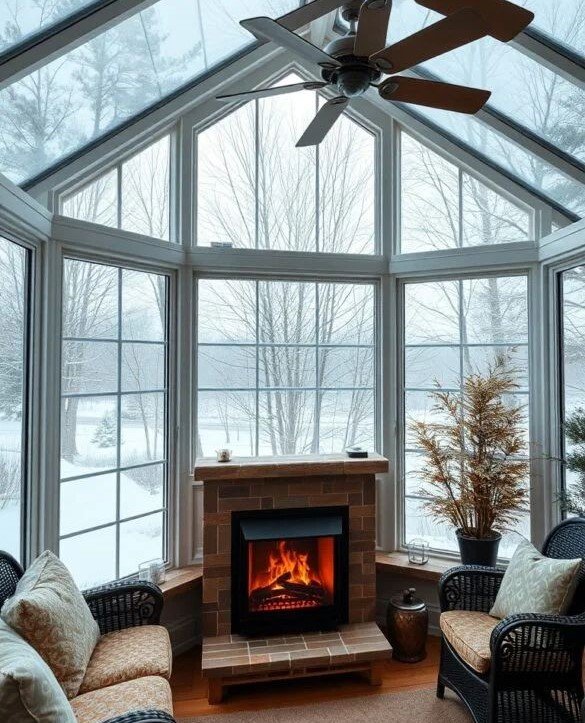
Required specifications:
- U-factor of 0.30 or lower
- Double or triple pane
- Argon or krypton gas
- Warm-edge spacers
- Thermally broken frames
Hidden insight:
Triple-pane glass reduces heat loss but also reduces solar gain. In extremely cold but sunny regions, moderate SHGC can help passive solar warming during winter.
Design must balance insulation and sunlight harvesting.
Hot & High-Solar Climates
Primary challenge: solar heat gain control
In desert or equatorial regions, overheating becomes the main risk. Glass can act like a magnifying lens.
Required specifications:
- Low SHGC (0.25–0.35 range)
- Solar control Low-E coating
- Exterior shading devices
- Cross ventilation design
Hidden insight:
Interior blinds alone do not stop heat gain. Solar heat passes through glass before blinds block visible light. External shading is far more effective. Orientation awareness matters more than window size.
Humid & Coastal Climates
Primary challenge: moisture and corrosion
High humidity increases condensation frequency. Coastal salt accelerates frame degradation.
Required specifications:
- Corrosion-resistant frames
- Insulated glass to reduce surface cooling
- Operable windows for airflow
- Proper flashing and drainage
Hidden insight:
Condensation is not always a sign of failure. It may indicate indoor humidity imbalance. Ventilation design must be paired with glazing choice.
Mixed & Temperate Climates
Primary challenge: seasonal adaptability
These regions experience both heating and cooling demands.
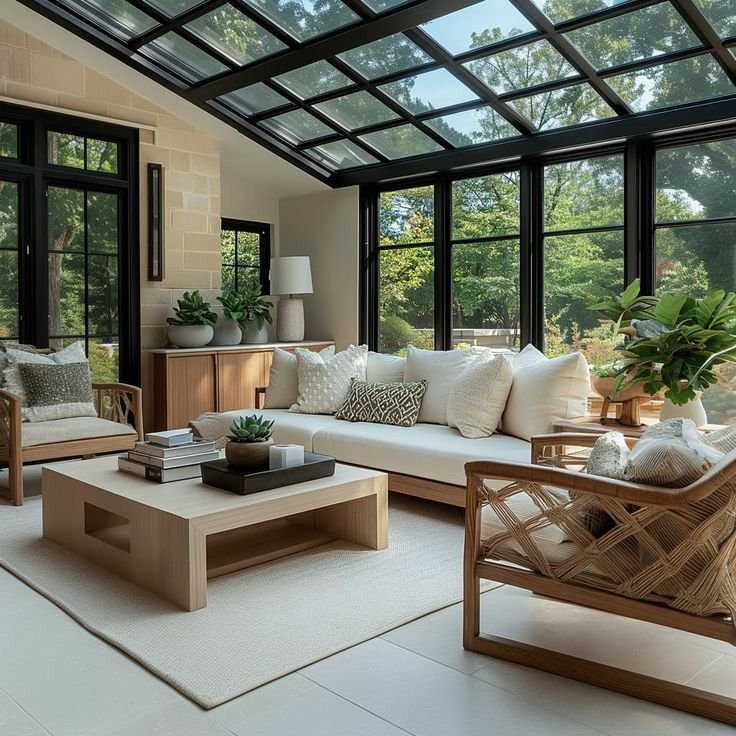
Required specifications:
- Balanced SHGC (around 0.35–0.45)
- Double-pane Low-E
- Operable ventilation
Hidden insight:
Balanced performance often outperforms extreme insulation in mixed climates. Overspecifying glass can reduce natural solar heating in winter.
Performance should match annual average exposure patterns.
How do sunroom windows impact condensation and moisture control?
Condensation occurs when warm moist air contacts a cold surface.
Glass temperature is the controlling variable.
What influences surface temperature?
- Outdoor temperature
- U-factor
- Frame conductivity
- Air leakage
Dew Point Dynamics
If interior humidity is 50 percent and glass surface temperature drops below dew point, condensation forms.
Lowering indoor humidity to 35–40 percent in winter reduces condensation risk significantly.
Hidden engineering reality
Edge-of-glass condensation is common due to spacer conductivity. Warm-edge spacers reduce this localized heat loss.
Condensation management is as much about indoor humidity control as it is about window selection.
What safety features should sunroom windows have?
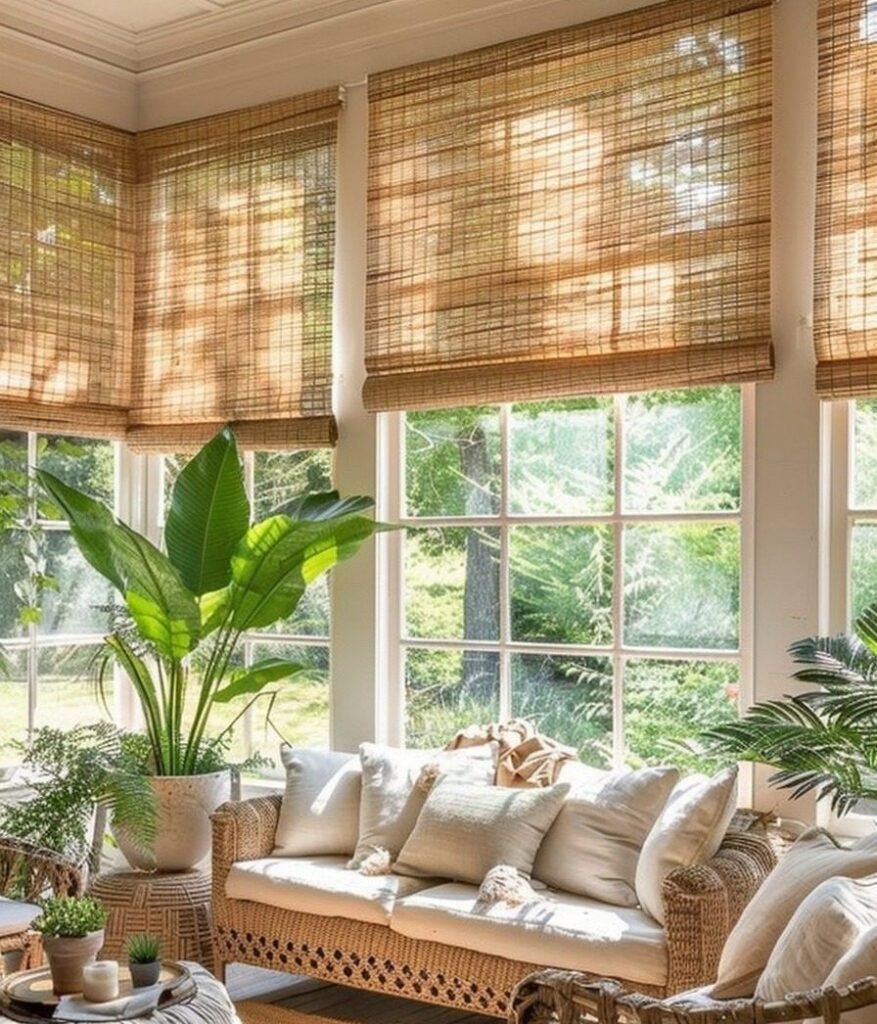
Safety glazing is often required by building codes when glass extends close to floor level.
Tempered Glass
Heat-treated for strength. Breaks into small blunt fragments.
Laminated Glass
Contains interlayer that holds fragments together upon impact.
Impact-Rated Glass
Designed for hurricane zones and high-wind areas.
Structural Load Resistance
Sunroom glazing must withstand:
- Wind pressure
- Snow load on integrated structures
- Thermal expansion
Hidden insight:
Large glass panels increase structural stress. Frame reinforcement is often overlooked but critical.
Security locking systems matter for ground-level sunrooms.
How do sunroom windows influence noise reduction?
Glass thickness and layering influence sound transmission.
STC (Sound Transmission Class)
Higher STC reduces noise infiltration.
Double-pane windows improve noise reduction over single-pane. Laminated glass provides further acoustic dampening due to interlayer absorption.
Urban settings benefit significantly from laminated insulated units.
Hidden insight:
Air gaps of varying thickness improve sound isolation. Identical glass thickness layers transmit similar frequencies more easily.
Acoustic comfort adds value beyond thermal comfort.
What maintenance do sunroom windows require?
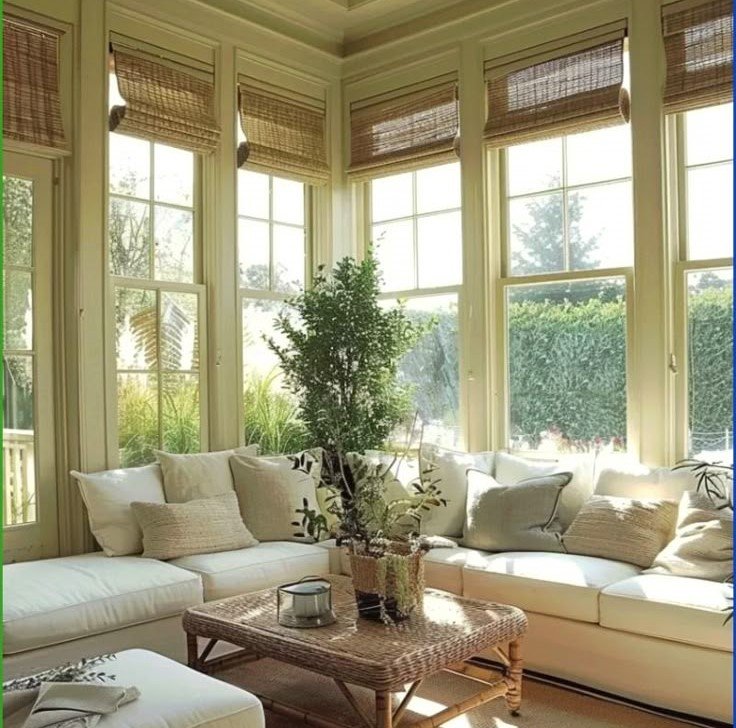
Maintenance prevents performance decline.
Routine Care:
- Clean tracks and seals
- Inspect caulking annually
- Check drainage holes
- Inspect frame expansion gaps
Seal Longevity:
Gas-filled units degrade over time. UV exposure accelerates seal aging.
Signs of performance decline:
- Fogging between panes
- Draft sensation
- Visible warping
Preventive inspection extends usable life.
How do sunroom windows affect interior furnishings and UV exposure?
Ultraviolet radiation degrades:
- Fabrics
- Wood finishes
- Flooring
- Artwork
Low-E coatings block a large portion of UV rays. However, visible light still enters.
Hidden insight:
UV exposure damage is cumulative. Even moderate daily exposure over years leads to noticeable fading.
Selecting UV-protective glazing protects interior investments.
How does sunroom window orientation affect performance?
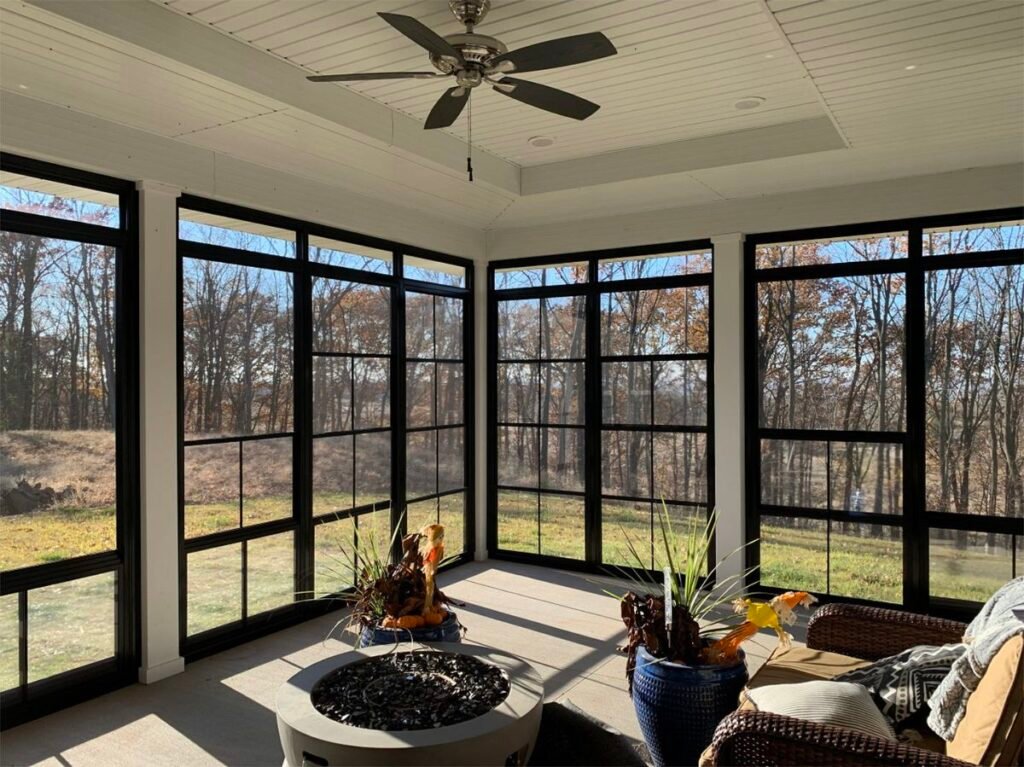
Orientation is one of the most overlooked design variables.
South-Facing
High winter gain. High summer overheating risk.
North-Facing
Lower solar gain. Greater heat loss risk in winter.
East/West
Morning and afternoon glare challenges.
Correct SHGC specification must align with orientation.
Sunroom Orientation Decision Matrix
| Orientation | Winter Impact | Summer Impact | Glass Strategy | Risk Level |
| South-Facing | Strong passive gain | High overheating risk | Moderate SHGC + shading | Medium |
| North-Facing | Heat loss dominant | Minimal overheating | Low U-factor priority | High (cold climates) |
| East-Facing | Morning glare | Mild overheating | Low SHGC + blinds | Medium |
| West-Facing | Afternoon heat spike | High glare | Low SHGC + exterior shading | High (hot climates) |
Hidden Insight
South-facing sunrooms in cold climates can reduce heating load.
West-facing sunrooms in hot climates are the hardest to manage.
Orientation is a larger performance variable than window size.
Why Condensation Happens in Sunroom Windows (And How to Prevent It)
Sunrooms have a higher glass-to-wall ratio than typical rooms. That means more surface area exposed to exterior temperature swings. If you want more information on how insulation and glazing work together in sunrooms, head onto our Sunroom Guide where it is discussed to full length.
Why Do Sunroom Windows Condense More Than Regular Windows?
Condensation forms when warm interior air contacts glass whose surface temperature falls below the dew point.
In winter:
- Exterior air is cold
- Glass surface cools rapidly
- Interior humidity touches cold glass
- Moisture forms
Sunrooms are more vulnerable because they cool faster overnight.
What Increases Condensation Risk?
- High U-factor glass
- Aluminum frames without thermal breaks
- High interior humidity
- Poor air circulation
- Edge-of-glass spacer conductivity
Edge condensation often appears before center-glass condensation.
That’s a spacer issue, not just glazing thickness.
Frame-Driven Condensation Risk Table
| Frame Type | Winter Surface Temperature | Condensation Risk |
| Aluminum (no break) | Very Cold | High |
| Aluminum (thermal break) | Moderate | Medium |
| Vinyl | Warmer | Low |
| Fiberglass | Warm | Very Low |
This is why aluminum frames fail in cold climates without thermal breaks.
How to Prevent Condensation in Sunroom Windows
- Choose lower U-factor glass
- Use warm-edge spacers
- Avoid non-thermal-break aluminum in cold zones
- Improve ventilation
- Control indoor humidity
Condensation is a design failure, not a random event.
Sunroom Window Frame Material Comparison (Structural + Thermal)
What Is the Best Frame Material for Sunroom Windows?
Frame material affects:
- Thermal bridging
- Expansion stability
- Seal longevity
- Structural rigidity
- Condensation risk
It is not just aesthetic.
Frame Material Comparison Table
| Frame Type | Thermal Performance | Expansion Stability | Maintenance | Climate Fit | Lifespan |
| Vinyl | High | Moderate | Low | Cold / Mixed | 20+ yrs |
| Fiberglass | Very High | Very Stable | Low | All climates | 25+ yrs |
| Aluminum (no break) | Low | Very Stable | Low | Warm only | 20+ yrs |
| Aluminum (thermal break) | Moderate | Very Stable | Low | Mixed / Hot | 20+ yrs |
| Wood | High | Moderate | High | Mild | 15–20 yrs |
Thermal Bridging Explained Simply
Metal conducts heat faster than vinyl or fiberglass.
In cold climates, aluminum frames without thermal breaks:
- Lower interior surface temperature
- Increase condensation
- Reduce comfort near windows
Fiberglass expands at similar rates to glass, which reduces seal stress over time.
That improves lifespan consistency.
When Frame Material Matters Most
Frame choice matters more in:
- Cold climates (condensation risk)
- Mixed climates (expansion stress)
- Humid climates (corrosion risk)
It matters less in mild coastal climates.
Window Failure Timeline
Seal failure tends to appear between years 12–20 depending on climate, spacer quality, and installation accuracy. Early fogging at edges often indicates spacer degradation rather than glass breakage. Thermal stress and frame expansion are primary contributors.
When sunroom windows may not be the best choice
Sunroom windows are not universally appropriate.
1. Extreme Budget Constraints
If insulation and climate control are unaffordable, a simple screened enclosure may be more practical.
2. Severe Heat Zones Without Shading Options
In desert climates with full west exposure and no shading, glazing alone cannot prevent overheating.
3. Structural Limitations
Older patio structures may not support insulated glass weight without reinforcement.
4. No HVAC Integration in Cold Climates
Installing high-performance windows without heating integration may still produce uncomfortable winter conditions.
5. High-Humidity Environments Without Ventilation
Without airflow design, condensation becomes unavoidable.
How do sunroom windows integrate with HVAC systems?
4-season sunrooms often connect to home HVAC.
Key considerations:
- Insulation level
- Air return pathways
- Load calculations
Oversized glazing without load adjustment stresses HVAC systems.
Mechanical integration must be planned.
What are the long-term replacement considerations?
After 15–20 years, glass seals may fail.
Retrofit strategies:
- Replace insulated glass only
- Upgrade to higher-performance units
- Reassess climate needs
Planning for eventual replacement reduces long-term cost surprises.
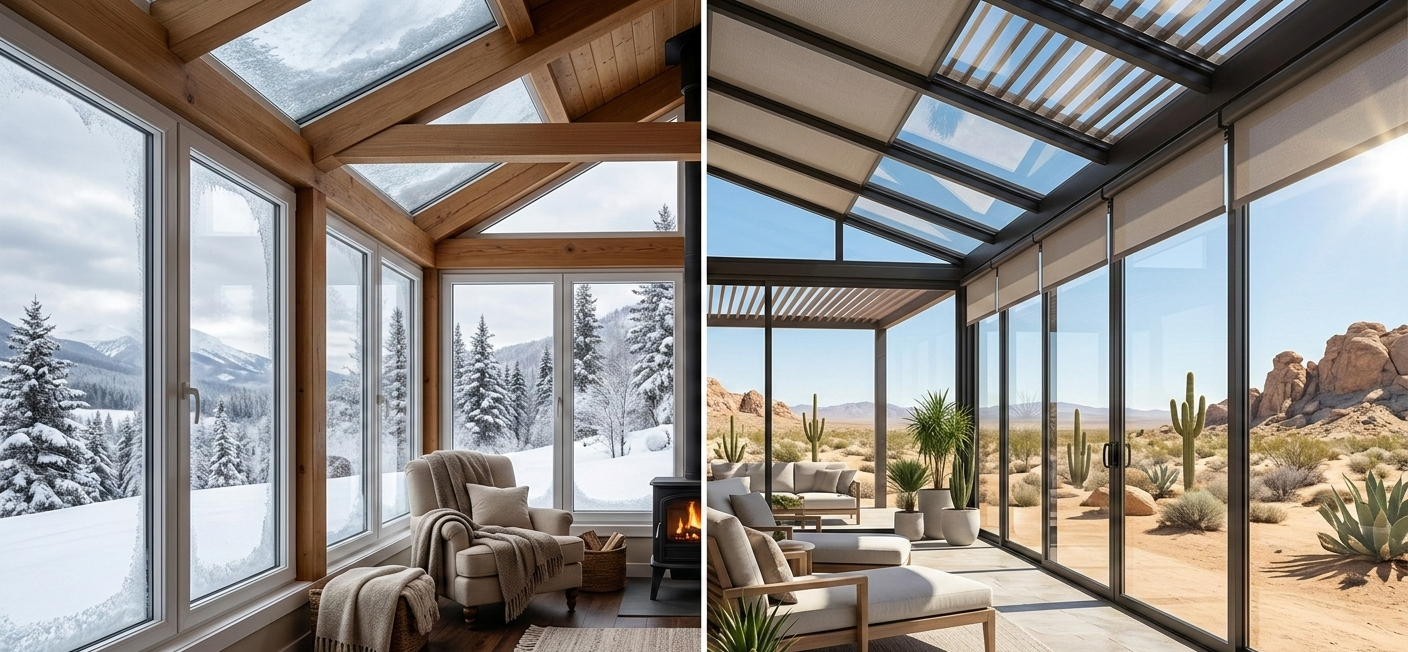
Real-World Case Study: Cold Climate vs Hot Climate Sunroom Window Design
Abstract advice is useful. Applied examples are decisive.
Below are two real-world modeling scenarios showing how the same sunroom size performs differently depending on climate and glazing decisions.
Case Study 1: Cold Climate Installation (Toronto, Canada)
Scenario
- 220 sq ft sunroom
- South-facing exposure
- Intended as 4-season usable space
- Winter lows: -15°C (5°F)
- Summer highs: 28°C (82°F)
Problem
Homeowner wanted panoramic glass but was concerned about winter heating costs and condensation.
Specification Used
- Double-pane insulated glass with soft-coat Low-E
- U-factor: 0.28
- SHGC: 0.40
- Argon gas fill
- Vinyl insulated frames
- Warm-edge spacers
- Two operable casement windows for ventilation
Why These Specs Were Chosen
- Low U-factor minimizes winter heat loss.
- Moderate SHGC allows passive solar gain during winter sun exposure.
- Vinyl frames reduce condensation risk at edges.
- South-facing orientation benefits from winter solar heating.
Outcome
- Winter interior temperature maintained within 2–3°C of main home zone with HVAC integration.
- Minimal condensation observed even during peak winter.
- Heating cost increase was moderate but manageable.
Key Insight
In cold climates, a slightly higher SHGC can be beneficial when sun exposure is strong and consistent. Over-specifying ultra-low SHGC glass would have reduced helpful winter heat gain.
The design leveraged climate instead of fighting it.
Case Study 2: Hot Climate Installation (Phoenix, Arizona)
Scenario
- 220 sq ft sunroom
- West-facing exposure
- Intended as 3-season room with occasional summer use
- Summer highs: 43°C (110°F)
- Strong afternoon sun
Problem
Previous owner installed standard double-pane glass. Room overheated rapidly in summer and was unusable by midday.
Replacement Specification
- Double-pane solar control glass
- U-factor: 0.33
- SHGC: 0.24
- Aluminum thermally broken frames
- Exterior shading screens added
- Sliding + casement mix for airflow
Why These Specs Were Chosen
- Low SHGC drastically reduced solar heat gain.
- Solar control coating reflected infrared heat.
- Exterior shading prevented direct solar radiation.
- Ventilation allowed hot air escape during evenings.
Outcome
- Peak interior temperature reduced by approximately 8–10°F compared to previous system.
- Space usable into early afternoon.
- Cooling demand significantly reduced.
Key Insight
In hot climates, SHGC matters more than U-factor. Over-focusing on insulation while ignoring solar gain creates overheating problems.
Orientation amplified the heat load. Glass had to compensate.
Comparative Performance Summary
| Variable | Cold Climate Strategy | Hot Climate Strategy |
| Primary Risk | Heat Loss | Overheating |
| Glass Priority | Low U-Factor | Low SHGC |
| Frame Priority | Insulated | Thermally Broken |
| Ventilation Role | Moderate | High |
| Solar Gain | Helpful in Winter | Problematic in Summer |
| HVAC Integration | Essential | Optional but Helpful |
What These Case Studies Prove
- The same room size performs completely differently depending on climate.
- Glass performance metrics must match orientation and regional exposure.
- Overheating and condensation are specification errors, not inevitabilities.
- Sunroom comfort depends on climate alignment more than window style.
Quantified ROI Example: Energy Cost Modeling for Sunroom Windows
Sunroom windows influence energy use through two channels:
- Heating load in winter
- Cooling load in summer
To understand return on investment, we compare two realistic glazing scenarios in the same 220 sq ft 4-season sunroom.
Scenario A: Basic Double-Pane (Standard Glass)
- U-factor: 0.48
- SHGC: 0.55
- Aluminum frame (non-thermally broken)
- No exterior shading
Estimated annual heating + cooling impact (cold-to-mixed climate):
Additional $480–$650 per year in energy use compared to insulated main house envelope.
Primary loss drivers:
- Winter heat escape through higher U-factor
- Summer heat gain from high SHGC
Scenario B: High-Performance Insulated Glazing
- U-factor: 0.28
- SHGC: 0.35
- Vinyl insulated frame
- Warm-edge spacer
- Moderate ventilation design
Estimated annual heating + cooling impact:
Additional $220–$320 per year relative to main home envelope.
Annual Energy Savings Difference
Approximate savings from high-performance glazing:
$260–$330 per year
This assumes:
- Cold-to-mixed climate
- HVAC-integrated sunroom
- Average energy costs
Cost Difference Between Systems
Typical upgrade cost from basic to high-performance glazing in a 220 sq ft sunroom:
$2,000–$3,500 additional upfront investment
Simple Payback Estimate
If energy savings average $300 per year:
- $2,500 upgrade ÷ $300 annual savings
= ~8.3 year payback period
After that point, savings become cumulative.
15-Year Horizon View
Over 15 years:
$300 × 15 years = $4,500 in energy savings
Minus $2,500 upgrade cost
= $2,000 net positive return (excluding comfort value)
This does not account for:
- Increased property value
- Reduced condensation-related damage
- Extended HVAC lifespan due to lower load
Comfort ROI (Non-Financial but Critical)
Energy savings are measurable. Comfort is harder to quantify but equally important.
High-performance glazing reduces:
- Cold drafts near glass
- Temperature swings
- Condensation damage
- Overheating complaints
Comfort improvements increase room usability, which effectively expands functional square footage.
In resale scenarios, a properly insulated 4-season sunroom may be classified as conditioned living space, increasing property appeal.
Important Modeling Notes
Energy modeling varies by:
- Climate zone
- Orientation
- Utility rates
- Occupancy patterns
- Ventilation design
The numbers above are representative averages, not universal guarantees. However, the principle holds:
Improved U-factor and optimized SHGC meaningfully reduce long-term operating costs.
Pre-Installation Checklist
- Confirm 3-season vs 4-season usage
- Check local building codes
- Match glass specs to climate
- Ensure proper ventilation plan
- Budget for insulated glazing if year-round use
Final Summary
Sunroom windows perform best when glass specifications match climate, orientation, and room usage. In cold regions, prioritize insulation. In hot regions, prioritize solar heat control. Proper ventilation and frame selection determine long-term comfort and durability. Want to know the entire dynamics of a Sunroom, check out our full sunroom system overview.
FAQ Section
Are sunroom windows insulated?
4-season models are insulated. 3-season models often are not.
Do sunroom windows reduce UV damage?
Low-E coatings block significant UV exposure.
Can I use standard house windows in a sunroom?
Not recommended unless rated for high solar exposure.
Are sunroom windows hurricane-rated?
Impact-rated models are available in hurricane zones.
Do they increase home value?
Year-round sunrooms often increase resale appeal.
Can condensation be prevented?
Proper insulation and ventilation reduce condensation risk.











0 Comments